wayground logo

Free Printable Worksheets

Font size

S
M
L
XL
Worksheets

Science 8 Final Exam Review 2025

Total questions: 115

Worksheet time: 2hrs 14mins

Name
Class
Date
1.
When should accidents be reported to the teacher?
a)
if the injury is minor, it doesn't need to be reported
b)
immediately, no matter how small
c)
at the end of class 
2.

When should spills be cleaned up?

a)

immediately

b)

at the end of class

c)

when the custodian is able to clean it up

3.

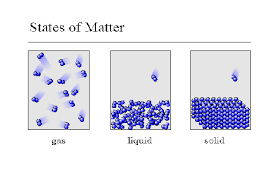
Long hair in the laboratory must be

a)

cut short

b)

held away from the experiment with one hand

c)

always neatly groomed

d)

tied back or kept entirely out of the way with a hair band, hairpins, or other confining device

4.

In the laboratory, the following should not be worn

a)

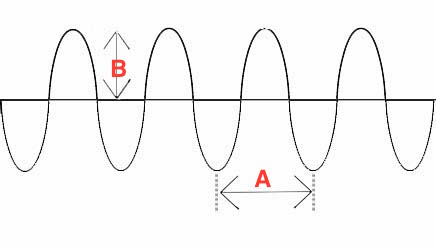
loose clothing

b)

dangling jewelery

c)

sandals

d)

all of the above

5.

True or False: Never remove chemicals or other equipment from the laboratory.

a)

True

b)

False

6.

True or False: It’s okay to pick up broken glass with your bare hands as long as the glass is placed in the trash.

a)

True

b)

False

7.
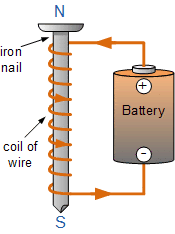
A series of steps used by scientists to solve a problem or answer a question. 
a)
scientific method
b)
recipe
c)
data collection
d)
metric system
8.
A testable explanation to a problem that has not yet been tested. 
a)
data
b)
theory
c)
hypothesis
d)
fact
9.
Testing a hypothesis often involves a(n):
a)
answer
b)
experiment
c)
problem
d)
safety check
10.
The name of the information that you get from your experiment (you organize it into charts and graphs).
a)
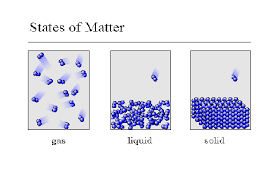
observations
conclusion
b)
data
c)
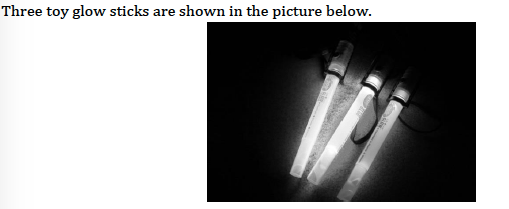
variables
d)
hypothesis
11.
What is the part of the experiment that is left alone or “natural", and is used to compare back to?
a)
Independent Variable
b)
Dependent Variable
c)
Control Group
d)
Experimental Group 
12.
The metric unit of measurement for length  is:
a)
gram
b)
liter 
c)
meter
13.
1 m = ______cm
a)
1000
b)
10
c)
100
d)
1
14.
The dip that you use to measure liquid volume is called the
a)
dip
b)
meniscus
c)
patella
d)
hibiscus
15.
This piece of lab equipment is called a  _______________.
a)
Beaker
b)
Graduated Cylinder
c)
Flask
d)
Evaporating Dish
16.
A graduated cylinder is used to measure the __________ of a liquid.
a)
temperature
b)
mass
c)
volume
d)
length
17.

What is the length of the object in centimeters?

a)

3.4 cm

b)

4.3 cm

c)

3.5 cm

d)

1 1/4 inches

18.
What is the volume of the liquid in this graduated cylinder?
a)
19 mL 
b)
35 mL 
c)
24 mL 
d)
1.9 mL
19.
What is the formula for density?
a)
density = mass x volume
b)
density = mass / volume
c)
density = mass + volume
d)
density = mass - volume
20.
Helium balloons rise on earth because
a)
helium is less dense than air
b)
helium is more dense than air
c)
helium is cooler than air
d)
helium is warmer than air
21.

What is the symbol for hydrogen?

a)

Hy

b)

H

c)

He

d)

Ho

22.

What is the symbol for carbon?

a)

Ca

b)

Cr

c)

Co

d)

C

23.

What is the symbol for aluminum?

a)

A

b)

Al

c)

Au

d)

Am

24.
What cannot be broken down into other substances?
a)
Compound
b)
Mixture
c)
Solids
d)
Element
25.
What is made up two or more elements that are chemically combined?
a)
Element
b)
Mixture
c)
Compound
d)
Solids
26.
How many elements are represented in the compound?
Na2CO3
a)
1
b)
2
c)
3
d)
4
27.
A measure of how much matter an object has is--
a)
weight
b)
gravity
c)
mass
d)
volume
28.
What is the definition of "weight"?
a)
measure of the force of gravity on your body
b)
the time it takes to get on a ride 
c)
the amount of matter in an object
d)
the size of an object
29.
The mass of an object ___________ as it moves away from the center of Earth
a)
stays the same
b)
decreases
c)
increases
d)
doubles
30.
(6.9C) When a lion eats a zebra and then uses the energy from the zebra to run, the lion's body converts- 
a)
chemical energy to mechanical energy
b)
electrical energy to chemical energy
c)
chemical energy to light energy
d)
mechanical energy to chemical energy
31.
At higher temperatures
a)
particles in an object have less energy
b)
particles in an object move faster
c)
a gas contracts
32.
A gas
a)
has a definite shape but no definite volume
b)
has a definite volume but no definite shape
c)
has fast-moving particles
33.
Particles (molecules) in a ______________________ have more energy than the other states of matter.
a)
gas
b)
solid
c)
liquid
34.
What term describes a solid changing to a gas?
a)
Deposition
b)
Sublimation
c)
Evaporation
d)
Freezing
35.
Thermal energy is...
a)
heat energy.
b)
the energy of motion
c)
energy of nuclear processes.
d)
an indication of physical change.
36.

This is a type of mixture where one substance dissolves into another

a)

Solution

b)

Miscibility

c)

Compound

d)

Solubility

37.
In a sample of salt water, NaCl would be considered the ______.
a)
Solution
b)
Solute
c)
Solvent
d)
Solvation
38.

Where is the proton found in an atom?

a)

nucleus

b)

orbiting around the nucleus

c)

protons don't exist o_O

d)

Justmir is hiding it.

39.

Where is the neutron found in the atom?

a)

protons don't exist o_O

b)

in the nucleus

c)

orbiting the nucleus

d)

Carleah has it!

40.

The atomic # tells us the # of ____________________ in an atom.

a)

protons

b)

electrons

c)

neutrons

d)

Cassietrons

41.

The number of electrons is usually the same as the number of protons.

a)

True

b)

False

c)

Only Abraham knows...

42.
Which part of the wave is shown at letter E?
a)
trough
b)
crest
c)
resting point
d)
amplitude
43.

What property of the wave is represented by the letter "A"?

a)

amplitude

b)

crest

c)

trough

d)

wavelength

44.
Many people believe that ocean waves move water.  However, ocean waves really transfer ______.
a)
wind
b)
sand
c)
energy
d)
pressure
45.

high point of a wave

a)

crest

b)

trough

c)

amplitude

d)

wavelength

46.

Reorder the following from largest amplitude to smallest amplitude.

(Left = Largest amplitude, Right = Smallest amplitude)

a)

b)

c)

1)
2)
3)
47.

Reorder the following from highest frequency to lowest frequency.

(Left = Highest frequency, Right = Lowest frequency)

a)

b)

c)

1)
2)
3)
48.

For a constant speed, as frequency increases, wavelength ​ (a)   .

Frequency and wavelength have ​ (b)   relationship.​

Choose from the below words
decreases
increases
stays the same
an inverse
a direct
no
49.

Click the option(s) that is measuring the amplitude of a wave.

50.

Click the option(s) that is measuring the wavelength of a wave.

51.

What happens when sound waves are reflected?

a)

Echo

b)

No echo

c)

Sound is heard in another room

52.

Which waves require a medium (matter) to travel?

a)

x-ray

b)

microwave

c)

sound 

d)

water

53.

6. Which of the following can act as media for a wave? (a)  

Choose from the below words
A. Solids only
B. Liquids only
C. Gases only
D. Solids, liquids, and gases
54.

How fast the wave is moving through a medium (a)  

Choose from the below words
wave speed
wavelength
amplitude
frequency
55.

When a wave bounces off of something and moves in a different direction (a)  

Choose from the below words
reflection
refraction
absorption
propagation
56.

What types of waves can travel through empty space AND mediums? (a)  

Choose from the below words
Longitudinal
Mechanical
Electromagnetic
57.

 A wave has frequency of 50 Hz and a wavelength of 10 m. What is the speed of the wave? (a)  

Choose from the below words
500 m/s
50 m/s
5 m/s
0.5 m/s
58.

Light bending as it passes through a raindrop is an example of (a)  

Choose from the below words
Reflection
Refraction
Absorption
59.
What do the lines around this magnet represent?
a)
North Pole
b)
South Pole
c)
Magnetic Declination
d)
Magnetic Field
60.
If you place the North pole of a magnet next to the South pole of another magnet, they will:
a)
Attract
b)
Repel
c)
Do nothing
d)
Shatter
61.
As the distance between two magnets increases (they get farther apart), the force between them:
a)
Increases
b)
Decreases
c)
Stays the Same
d)
Switches to the "Dark Side"
62.
What will happen when these magnets are brought close together?
a)
They will attract each other.
b)
They will repel each other.
c)
Both magnets will turn to the left
d)
Both magnets will turn to the right
63.
What device is made of coils of wire with an electrical current passing through it in order to generate a magnetic field?  
a)

Electromagnet 

b)

Generator

c)

Electron Magnet 

d)

Magneto's Helmet

64.

Electric motors are devices that convert ​ (a)   energy into  ​ (b)   energy. ​

Choose from the below words
electrical
mechanical
gravitational
solar
65.

Which of the following materials would make good conductors of electrical current?

a)

rubber

b)

steel

c)

copper

d)

wood

e)

plastic

66.

An electromagnet can only work if it has _____________

a)

magnetic poles

b)

a switch

c)

electric current

d)

a bar magnet

67.

Where on a magnet is the magnetic force the strongest?

a)

at the poles

b)

in the middle

c)

above the magnet

d)

below the magnet

68.

Which of the following are conductors. (Check all that apply)

a)

copper

b)

Rubber

c)

plastic

d)

Aluminum Foil

e)

Iron nail.

69.

Which of these circuits will not allow the lightbulb to light up

a)
b)
c)
d)
70.

Select both of the series circuits.

a)
b)
c)
d)
71.

Select both of the parallel circuits.

a)
b)
c)
d)
72.
A flow of electrons through a conductor is called:
a)
A river
b)
A spark
c)
An electron flow
d)
A current
73.
To complete a circuit the switch must be
a)
unattached
b)
open
c)
closed
74.

The measure of electrical resistance

a)

watt

b)

ohm

c)

volt

d)

ampere

75.

The unit for electric current

a)

watt

b)

ohm

c)

volt

d)

ampere

76.
What does the switch do in a circuit?
a)
It supplies the power.
b)
It carries electricity.
c)
It opens and closes the circuit.
d)
It is an insulator.
77.

Sub atomic particles that have a negative charge

a)

protons

b)

neutrons

c)

electrons

d)

circuits

78.

Electric current is the flow of ______________________

a)

electrons

b)

protons

c)

neutrons

d)

atoms

79.

What form of energy is stored in a battery?

a)

chemical energy

b)

gravitational potential energy

c)

kinetic energy

d)

thermal energy

80.

I have the most potential energy if I am:

a)

5 feet high

b)

10 feet high

c)

15 feet high

d)

20 feet high

81.
The faster an object moves, the ________ kinetic energy it has. 
a)
more
b)
less
c)
none of the above
d)
all of the above 
82.
What is kinetic energy?
a)
energy of work
b)
energy of motion
c)
energy of gravity
d)
energy of power
83.
The SI unit in which kinetic energy is measured is 
a)
Newton
b)
Kilogram
c)
Joules
d)
Metres per second
84.

Choose all of the following that show thermal energy.

a)

cheering for your favorite team

b)

sweating while you run

c)

cooking food in the microwave

d)

the inside of a car warming in the sun

85.

In the picture,what cause the Pinata to break?

a)

the shape of Piñata

b)

the energy of motion

c)

the color of Piñata

d)

the energy of excitement

86.

What energy takes place when you use a fan?

a)

Electical to Mechanical, Sound, and Thermal

b)

Mechanical to Electrical, Sound, and Thermal

c)

Electrical to Sound and Radiant

d)

Radiant to Sound and Electrical

87.

Which of the following is an example of the law of conservation of energy?

a)

Your mom turns on the stove to cook food

b)

You play an instrument in Strings class

c)

A football player throws the ball

d)

All of the above answers.

88.
a)

light and thermal energy

b)

Electrical energy is transformed into light and thermal energy.

c)

Light energy is being created

d)

Electric energy is being destroyed

89.

6. Which of the following shows that electrical energy is changed to light energy?

a)

hot iron

b)

lighted fluorescent bulb

c)

switching on the radio

d)

a boy running after drinking water

90.

On your way to school, you see a puddle of rain water on the sidewalk. On your way home from school, the puddle is almost gone. Is the second statement a hypothesis or an observation. ​ (a)  

Choose from the below words
Observation
Hypothesis
Conclusion
Science
Variable
91.

Match the following

a)

Theory

1.

Attempts to answer WHY something happens

b)

Law

2.

Observation of WHAT does happen

c)

Hypothesis

3.

Educated guess based on research

d)

Observation

4.

Information gathered through the senses

e)

Inference

5.

A guess or opinion made based on an observation

92.

Match the following

a)

Theory

1.

Attempts to answer WHY something happens

b)

Law

2.

Observation of WHAT does happen

c)

Hypothesis

3.

Educated guess based on research

d)

Observation

4.

Information gathered through the senses

e)

Inference

5.

A guess or opinion made based on an observation

93.

Match the following parts of an experiment set up

a)

things kept the same in an experiment

1.

controlled variables

b)

factor the experimenter changes

2.

independent variable

c)

factor that is measured

3.

dependent variable

d)

does NOT receive the experiment treatment

4.

control group

e)

procedure done to test a hypothesis

5.

experiment

94.

Match the following Phase Changes

a)

Melting

1.

Solid to Liquid

b)

Condensation

2.

Gas to Liquid

c)

Freezing

3.

Liquid to Solid

d)

Deposition

4.

Gas to Solid

e)

Sublimation

5.

Solid to Gas

95.

Look at the picture. Which state of matter is in beaker A?

a)

Solid

b)

Liquid

c)

Gas

d)

Blue thingys

96.

It refers to the space that matter occupies.

a)

volume

b)

mass

c)

weight

d)

density

97.

When an object undergoes phase change, its mass

a)

increases

b)

stays the same

c)

decreases

98.
What kind of energy is represented in this picture?
a)
Thermal
b)
Potential
c)
Nuclear
d)
Mechanical
99.
What kind of energy is represented in the picture?
a)
Thermal
b)
Chemical
c)
Sound
d)
Nuclear
100.
The glow sticks produce light for a short amount of time. The light from the glow stick is a conversion from what to what?
a)
thermal to light
b)
gravitational to potential
c)
radiant to electrical
d)
chemical to light
101.
On a roller coaster, where is maximum potential energy?
a)
At the bottom of a big hill
b)
When going around a corner
c)
When going upside down
d)
At the top of a big hill
102.
Energy that comes from the nucleus of an atom. A form of potential energy.
a)
chemical energy
b)
Nuclear energy
c)
Sound energy
d)
Electrical energy
103.
According to which law of energy, energy can't be created or destroyed?
a)
First law of motion
b)
The law of tacos
c)
Laws of Energy
d)
law of conservation of energy
104.
Heat energy is also called
a)
electrical energy
b)
chemical energy
c)
light energy
d)
thermal energy
105.
Sound energy needs a
a)
medium
b)
vacuum
c)
chemical
d)
light
106.
What type of energy includes both kinetic and potential energy?
a)
mechanical energy
b)
chemical energy
c)
heat energy
d)
sound energy
107.

Potential energy depends on ____________ & ______________.

a)

mass, speed

b)

mass, position

c)

speed, position

d)

mass, weight

108.

Kinetic energy depends on _____________ & _____________.

a)

mass, speed

b)

mass, position

c)

mass, weight

d)

speed, distance

109.

The highest part of a wave.

a)

Wave

b)

Amplitude

c)

Wave Crest

d)

Wave Trough

e)

Wave Height

110.
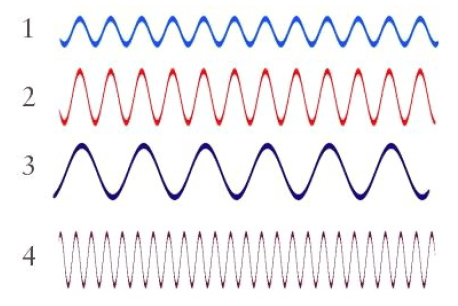
Which wave in the diagram has the greatest frequency?
111.

What does point C represent? (a)  

Choose from the below words
Amplitude
Trough
Crest
Wavelength
112.

9. The frequency of a wave is measured in (a)   .

Choose from the below words
Hertz
Crest
Trough
Compression
Rarefaction
113.
7. Which of the following occurs as the frequency of a wave decreases?
a)
A. The wavelength increases
b)
B. The wavelength decreases
c)
C. The wavelength increases and then decreases
d)
D. The wavelength remains the same
114.

Which waves require a medium (matter) to travel?

a)

x-ray

b)

microwave

c)

sound 

d)

water

115.

Waves transfer (a)  

Choose from the below words
Matter
Molecules
Energy
Atoms