
 Worksheets
Grade 7 Revision First semester
Total questions: 113
Worksheet time: 1hrs 4mins
Which of the following converts food into energy for the cell?
vacuole
mitochondria
cytoplasm
cell membrane
Which organelle takes in "sun showers" and helps plants with the process or photosynthesis?
Vacuole
Mitochondria
Cytoplasm
Chloroplast


This is a rigid structure that gives plant cells protection and support.
cell membrane
cell wall
vacuole
endoplasmic reticulum

Function of this organelle?
transport proteins
package and ship proteins
synthesize proteins
digests food and worn-out organelles


Large balloon-shaped organelle?
nucleus
vacuole
chloroplast
lysosome


This is the powerhouse of a cell
Cytoplasm
Rough ER
Ribosome
Mitochondria
This organelle is found only in plant cells
Lysosome
Chloroplast
Cell Wall
Cell Membrane

I'm a green organelle that converts sunlight into food.
mitochondria
cytoplasm
chloroplast
cell wall
Liquid that fills the region between the cell membrane and the nucleus. It is constantly moving other organelles around the cell.
cell membrane
cell wall
nucleus
cytoplasm

Large oval organelle that controls many of the cells activities.
The brain of the cell.
ribosomes
vacuoles
nucleus
mitochondria

Small round organelles that create proteins that do a lot of the work in cells. The factory.
ribosomes
mitochondria
nucleolus
vacuoles
This is a hard outer layer that is found in plant cells.
cell membrane
cell walls
nucleus
Golgi apparatus

This is what we call all the different parts of cells.
organelles
cytoplasm
endoplasmic reticulum (ER)
nucleus

This organelle creates maze like "roads" that are used to move proteins and other material. They also help ribosomes create proteins.
Golgi apparatus
ribosomes
vacuoles
endoplasmic reticulum (ER)
Receives proteins and other newly formed materials from the ER, packages them, and distributes them to other parts of the cell or to the outside of the cell.
cell membrane
Golgi apparatus
endoplasmic reticulum (ER)
lysosomes

Stores water, food, or other materials needed by the cell. It can also store waste until the waste is removed. It is found in all plant cells but not in all animal cells.
cell walls
Golgi apparatus
lysosomes
vacuoles

Rod shaped structures that are nicknamed the “powerhouses” of a cell. They convert food into energy the cell can use
nucleus
mitochondria
chloroplast
ribosomes
Which type of microscope uses light and more than one lens to view an object?
a) compound light microscope
a) scanning electron microscope
a) simple light microscope
a) transmission electron microscope
What is the advantage of electron microscopes over light microscopes?
a) lower cost
a) higher magnification and resolution
a) portability
a) simpler technology
If a healthcare worker wanted to view a highly detailed image of a virus attached to the surface of a cell, which microscope would be the best choice?
a) compound light microscope
a) scanning electron microscope
a) simple light microscope
a) transmission electron microscope
Who was the first scientist to use a microscope to observe and identify cells?
a) Anton van Leeuwenhoek
a) Aristotle
a) Carolus Linnaeus
a) Robert Hooke
To be able to clearly see two points that are a certain distance from each other under a microscope is a measure of which property?
a) adjustability
a) focus
a) magnification
a) resolution
A microscope with one lens is called a __________ microscope.
a) simple
a) compound
a) concave
a) systemic
__________ is the change in apparent size produced by a microscope.
a) Objective
a) Eyepiece
a) Magnification
a) Membrane
To view extremely small organisms, which might you use?
a) a magnifying glass
a) an eyepiece lenses
a) a concave lens
a) an electron microscope
What is magnification?
a) the ability to clearly see two points that are a certain distance away from each other
a) placing organisms into larger and larger groups
a) the ability to make objects appear larger than they are
a) giving an object the ability to generate a magnetic field
What was discovered by Robert Hooke using a microscope that greatly increased our understanding of living things?
a) blood
a) cells
a) minerals
a) protons
Which of these is an organelle in cells?
lipid
mitochondrion
a) nucleic acid
a) carbohydrate
Which of the following is found in a prokaryotic cell?
a) a nucleus
a) endoplasmic reticulum
a) mitochondria
a) cytoplasm
What are the components of the cell membrane?
a) lipids and proteins
a) lipids and carbohydrates
a) proteins and carbohydrates
a) carbohydrates and nucleic acids
What is the liquid part of the cell inside the cell membrane called?
vacuole
chloroplast
cytoplasm
cytoskeleton
What is the smallest unit of life in all living things called?
a) an atom
a) a molecule
a) bacteria
a) a cell
DNA in organisms is formed by ___________.
a) lipids
a) proteins
a) nucleic acids
a) carbohydrates
One of the cell membrane's functions is to __________.
a) help create new cells
a) protect the cell
a) keep wastes in the cell
a) keep light out of the cell
Cytoplasm is made mostly of _________.
chemicals
gelatin
vitamins
water
Which one of these makes a plant cell different from an animal cell?
a) mitochondria
a) chloroplasts
a) cell membranes
a) a nucleus
Which cell structure produces proteins?
a) nucleus
a) mitochondria
a) Golgi apparatus
a) ribosomes

Which form of energy is represented by the arrow in this image?
kinetic
thermal
sound
radiant
Which type of energy is stored in the bonds between atoms?
electrical
chemical
a) nuclear
a) thermal
Energy is the ability to cause which?
a) heat
a) power
a) change
a) work
What is the mechanical energy of an object?
a) the sum of its kinetic and potential energy
a) the sum of its kinetic and thermal energy
a) the sum of its potential and thermal energy
a) its kinetic energy minus its potential energy
The energy carried by an electromagnetic wave is called what?
a) mechanical energy
a) thermal energy
a) radiant energy
a) potential energy
Which is the energy stored in an object due to its position?
a) potential energy
a) kinetic energy
a) thermal energy
a) seismic energy
Thermal energy is the __________ of the particles in a material.
a) potential energy
a) temperature
a) average kinetic energy
a) total energy

Which of the following is the type of energy light has?
a) potential
a) thermal
a) radiant
a) electrical
Which of the following is an example of electrical energy?
a) Lightning
a) the Sun warming a windowsill
a) burning wax producing a flame
a) your body utilizing food to maintain your internal temperature

What type of energy is represented here?
thermal
chemical
electrical
radiant
Which has the most gravitational potential energy?
a) two-pound brick three feet off the ground
a) two-pound brick five feet off the ground
a) four-pound brick three feet off the ground
a) four-pound brick five feet off the ground

What type of energy transformation occurs during photosynthesis in plants?
a) thermal to chemical
a) radiant to chemical
a) thermal to mechanical
a) radiant to mechanical
In what situation can energy be created or destroyed?
a) in a nuclear reaction
a) during photosynthesis
a) when work is done
a) never
In which situation is work done on an object?
a) when the energy of the object decreases
a) when the object transfers energy to another object
a) when the object moves in the direction in which force is applied to it
a) when the object remains stationary when force is applied to it
when the object remains stationary when force is applied to it
a) potential energy
a) thermal energy
a) chemical energy
a) radiant energy

What force causes the transformation from kinetic to thermal energy illustrated here?
a) work
a) waste energy
a) electricity
a) friction
During energy transformations, energy is never __________.
a) released as heat
a) used to increase an object's potential energy
a) created or destroyed
a) completely transformed
Which is a force that resists motion between two surfaces that are in contact?
a) friction
a) acceleration
a) inertia
a) resistance

What is a sign that work is being done?
density
matter
mass
motion
What is the scientific formula for work?
a) W = F + d
a) W = F × d
a) W = F - d
a) W = F ÷ d
What is transferred when work is done?
velocity
mass
matter
energy
What does the law of conservation of energy state?
a) that energy cannot be transformed from one form to another
a) that one form of energy cannot be transformed into two other forms at the same time
a) that energy cannot be created or destroyed
a) that energy can be created or destroyed only during energy transformations
Which energy transformation occurs when fossil fuels are burned to provide power for things like televisions and computers?
a) radiant to thermal
a) radiant to electrical
a) thermal to electrical
a) chemical to electrical

Which three units are used in the equation for work?
a) watts, joules, meters
a) joules, newtons, meters
a) watts, newtons, meters
a) watts, joules, newtons
A thin, flexible barrier that surrounds a cell and controls what things come in and out of a cell. The door of the cell.
cell walls
cell membrane
cytoplasm
endoplasmic reticulum (ER)

The roller coaster cart has the most kinetic energy at position-
W
X
Y
Z
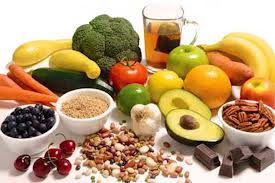
What kind of energy is represented in the picture?
Thermal
Chemical
Sound
Kinetic


What type of energy transformation happens in hydro-electric power?
kinetic to potential
sound to mechanical
chemical to electrical
mechanical to electrical

What is energy?
The ability to do work
A force
Electricity
The ability to transform work

