wayground logo

Free Printable Worksheets

Font size

S
M
L
XL
Worksheets

Life Sciences Review

Total questions: 111

Worksheet time: 1hrs 13mins

Name
Class
Date
1.
Evolution typically happens...
a)
in a few weeks
b)
over millions of years
c)
never
d)
in 100 years
2.
Bird's beaks evolve mainly due to the type of ___________________ available.
a)
food
b)
water
c)
shrubs
d)
mates
3.
If an organism can't adapt fast enough, this might happen.
a)
hibernate
b)
stay the same
c)
live longer
d)
become extinct
4.
Darwin said that within a species there will be _________________________
a)
nothing different
b)
variation/differences
5.
Organisms with differences/variations that are helpful will ______________________
a)
live longer
b)
become extinct
c)
show no change
6.
What can happen to a species over time if some of the organisms have an advantage?
a)
The population will decrease
b)
The population will become extinct
c)
The population will slowly increase
7.
The change over time in populations of related species.
a)
biological evolution
b)
transition
c)
variation
d)
adaptation
8.
A slight difference in an inherited trait between individual members of the same species.
a)
variations
b)
adapatations
c)
homologous structures
d)
analogous structures
9.
When an organism of a species is born with a variation in a trait that gives it an advantage in its environment, we call that trait an adaptation.
a)
true
b)
false
10.
When an organism of a species has an adaptation, it will compete for resources better, survive longer and pass that adaptation on to it's offspring. This process is called
a)
evolution by natural selection
b)
artificial selection
c)
inbreeding
d)
outbreeding
11.
When an organism has a trait that allows it to blend in with its environment, we call that ____.
a)
mimicry
b)
camouflage
c)
lucky
d)
sonic hedgehog gene
12.
The English naturalist that developed the theory of how evolution works.
a)
Charles Darwin
b)
Charles M. Schulz
c)
Charles Dickens
d)
Charles Norris
13.

Adaptations can be:

a)

camouflage

b)

ability to survive cold weather

c)

hunting skills

d)

all of the above

14.

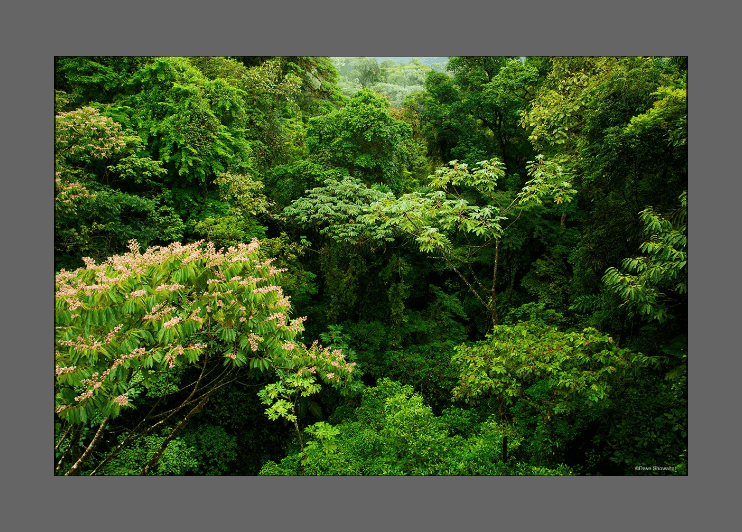
A yellow morph and green morph of an insect lives in the rainforest canopy. You would expect:

a)

the green population to increase and the yellow to decrease

b)

both populations should stay the same

c)

both populations will increase

d)

the green population to decrease and the yellow to increaseThis is a wrong answer

15.

How do you "win" at natural selection?

a)

survive

b)

go extinct

c)

survive & reproduce

16.
When every organism of a species has died.
a)
Evolution
b)
Natural Selection
c)
Extinction
d)
Artificial Selection
17.
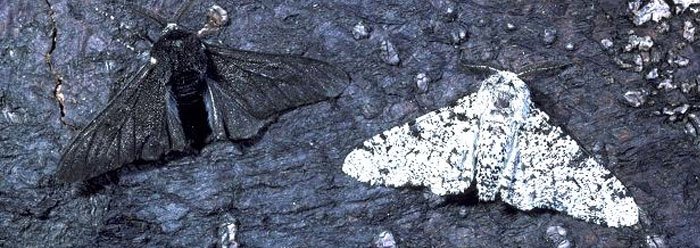
The trees these moths used to live on were white, but have been covered in soot from coal factories. Which moth will be more successful in this environment?
a)
Dark moth
b)
Light moth
c)
Both will be equally successful
d)
Neither will be successful
18.
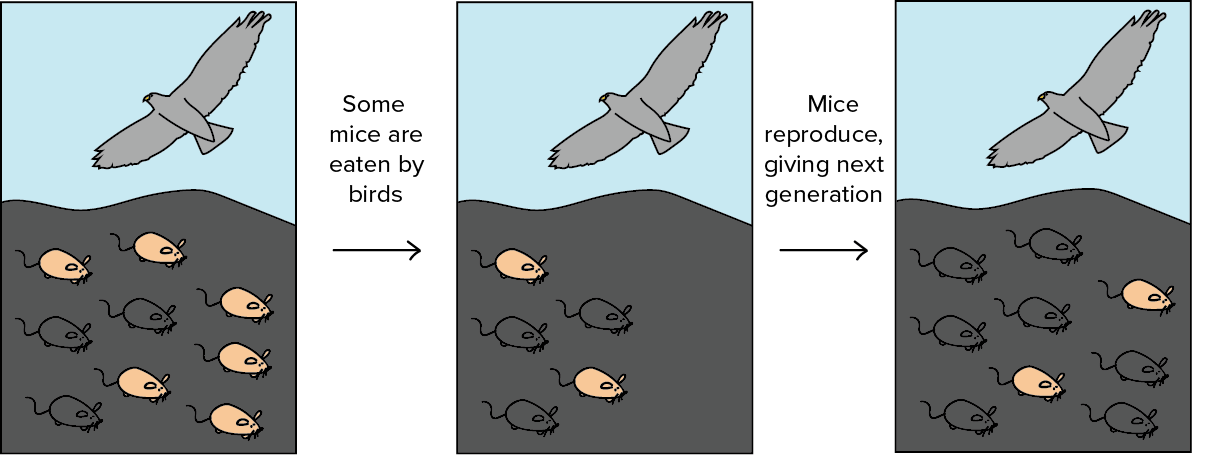
Why is the mouse population changing over time?
a)
The light mice can reproduce more successfully than the dark mice
b)
The hawks eat more dark mice than light mice because the dark mice taste better
c)
The hawks eat more light mice than dark mice because they can see the light mice more easily
d)
The hawks eat more dark mice than light mice because they can see the dark mice more easily
19.
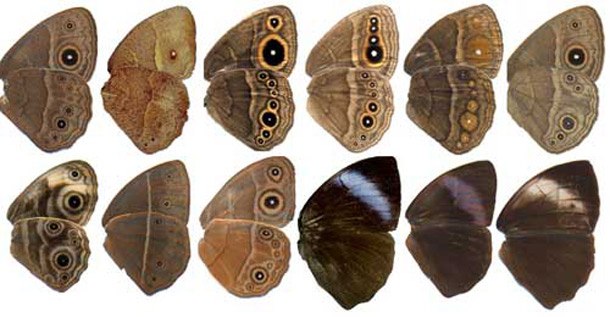
These moths are all the same species. The differences between their wings is an example of ________________
a)
Natural Selection
b)
Variation
c)
Homeostasis
d)
Extinction
20.

Biological fitness is determined by...

a)

How big is an organism

b)

How strong is an organism

c)

Hom many offspring will be left by an organism

d)

How long an organism will live

21.
Definition: fitness
a)
ability to survive and reproduce in a specific environment
b)
organisms with traits well suited to their environment survive and reproduce at a greater rate
c)
a growing population causes a scarcity of resources
d)
differences in the DNA sequence
22.

The process of choosing parent organisms for desired characteristics is called

a)

natural selection

b)

Artificial selection

c)

random selection

d)

genetic manipulation

23.
A  population of cockroaches was sprayed with an insecticide.  Some cockroaches survived and produced a population of cockroaches that was resistant to this spray.  What can BEST be inferred from this example?
a)
species will adapt no matter what the environment
b)
environment has no effect on the survival of an organism
c)
Individuals with favorable variations survive and reproduce
d)
Insecticides cause mutations that are passed on to the next generation
24.
A term that typically describes a species that no longer has any known living individuals
a)
Generation Time
b)
Fossil Record
c)
Extinct
d)
Speciation
25.
What does every food chain start with? (Even if it's not drawn or written there!)
a)
producers
b)
sun
c)
consumer
d)
decomposers
26.
An organism that needs to eat other organisms to obtain energy is known as a:
a)
Autotroph
b)
Producer
c)
Consumer
d)
Mutualist
27.
Consumer that eats plants
a)
heterotroph
b)
herbivore
c)
producer
d)
community
28.
What does a food web represent?
a)
All connections of energy flow throughout all organisms in a habitat.
b)
The specific ways that mutualism is carried out.
c)
A single pathway or energy flow between organisms. 
d)
How carnivores get their food. 
29.
relationship in which two species live closely together
a)
resource
b)
mutualism
c)
succession
d)
symbiosis
30.
The rabbit in this food web would be considered a:
a)
Decomposer
b)
Producer
c)
Secondary Consumer
d)
Primary Consumer
31.
Where an organism lives
a)
habitat
b)
niche 
c)
heterotrogh
d)
biosphere
32.
In this Food Web Pyramid Which type of consumer gets only 10% of the energy stored in plants?
a)
Herbivore
b)
Carnivore
c)
Omnivore
d)
Secondary Consumer
33.
Which one is not a consumer?
a)
anemone 
b)
bear
c)
shark
d)
vulture
34.
What is the term for each step in the transfer of energy and matter within a biological community?
a)
energy path
b)
food web
c)
trophic level
d)
food pyramid
35.
The image provided is an example of a(n):
a)
Carnivore
b)
Herbivore
c)
Producer
d)
Autotroph
36.
The amount of energy that usually transfers from one trophic level to the next...
a)
10%
b)
20%
c)
80%
d)
50%
37.
An illustration that uses arrows to show the MANY possible directions in which matter and energy can pass through the organisms in an ecosystem.
a)
Food chain
b)
Food web
c)
Energy Pyramid
d)
Succession Map
38.
The nonliving aspects of an ecosystem.
a)
Abiotic factors
b)
Biotic factors
39.
The living portions of the ecosystem.
a)
Biotic factors
b)
Abiotic factors
40.
A graphic illustration that shows each trophic level and the amount of useable energy contained within.
a)
Food chain
b)
Food web
c)
Energy Pyramid
d)
All of these
41.
A collection of organisms that make up a community as well as all of the nonliving aspects of the environment.
a)
Population
b)
Community
c)
Habitat
d)
Ecosystem
42.
As you move upward, from level to level, in an energy pyramid, energy _____.
a)
increases
b)
decreases
c)
stays the same
d)
increases exponentially
43.
 plants that convert energy from the sun
a)
decomposer
b)
primary consumer
c)
secondary consumer
d)
producer
44.
What are the Abiotic factors in this image? 
a)
water, sunlight, dirt, air
b)
birds and plants
c)
birds, water, dirt
d)
plants, water
45.
Cattle egrets forage (feed) in fields among cattle. The egret gets easy access to flying insects stirred up by the cattle, and the cattle don't care if they are there or not.
a)
mutualism
b)
commensalism
c)
competition
d)
parasitism
46.
A relationship between two organisms in which one organism benefits and the other is unharmed...
a)
Mutualism 
b)
Competition
c)
Parasitsm 
d)
Commensalism 
47.
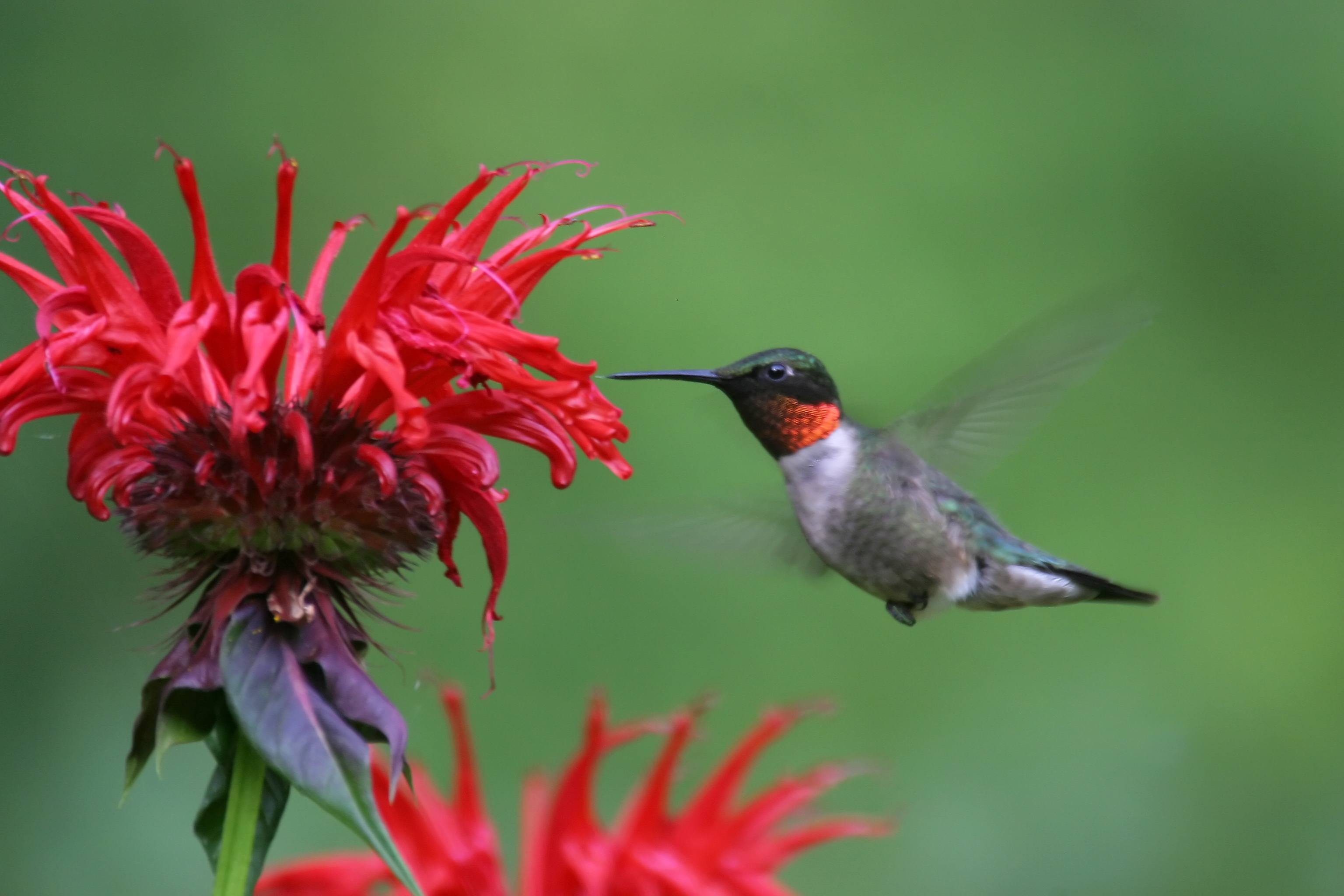
What type of symbiosis?  Hummingbirds feed on nectar from flowers.  The flowers are pollinated by hummingbirds as they move from flower to flower.
a)
commensalism
b)
mutualism
c)
parasitism
d)
predation
48.
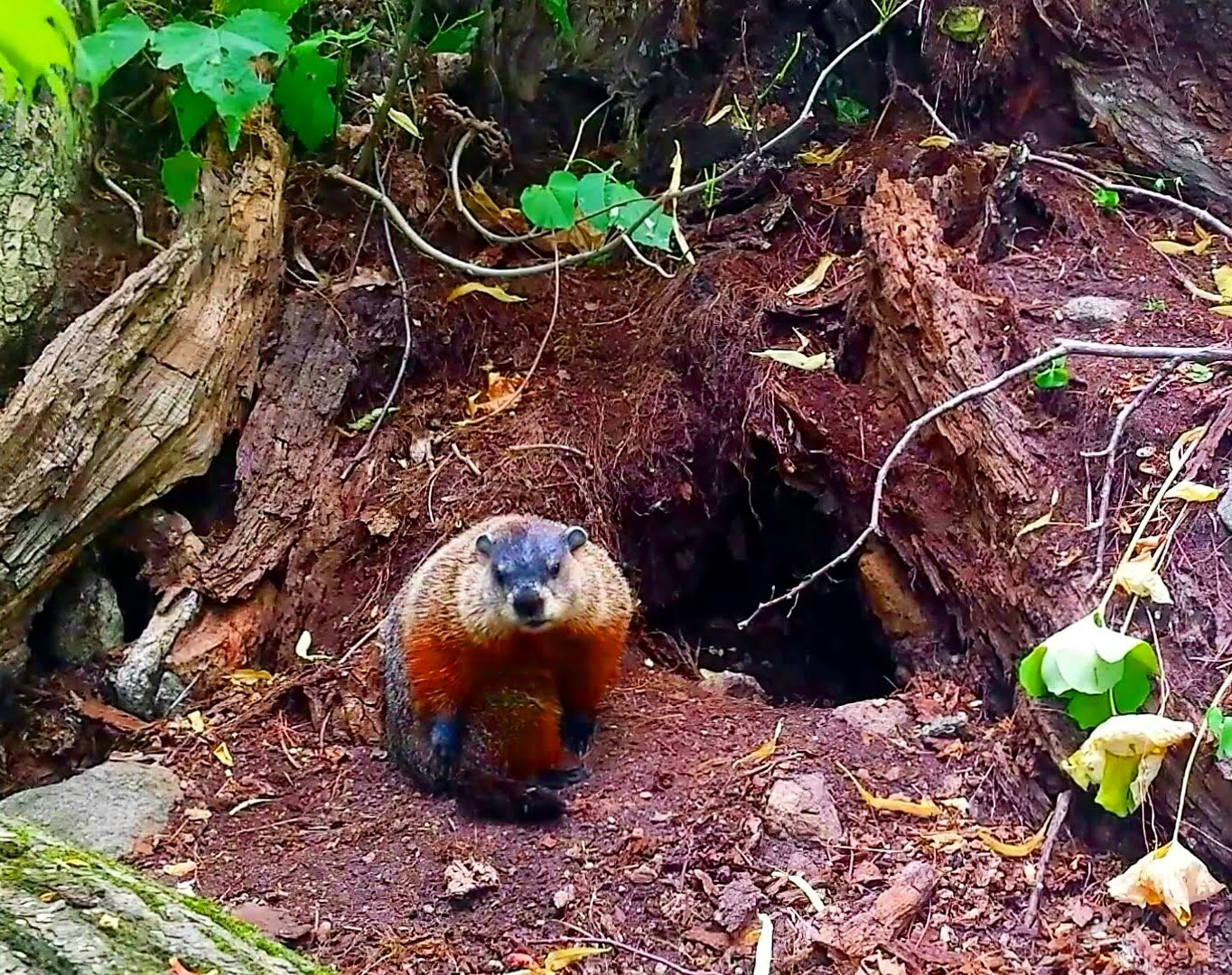
What type of symbiosis?  Skunks often live in burrows that have been dug and abandoned by woodchucks.  
a)
commensalism
b)
mutualism
c)
parasitism
d)
predation
49.
Which symbols best describe parasitism?
a)
+,+
b)
+,-
c)
+,0
d)
-,0
50.
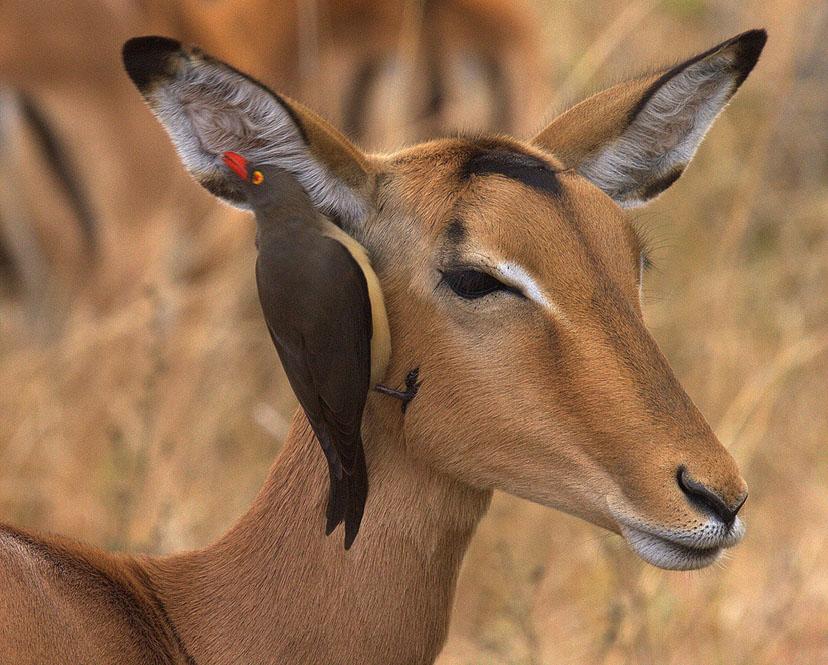
Red-billed oxpeckers are birds that often feed on parasites that infest impala.  This is an example of _______.
a)
commensalism
b)
mutualism
c)
neutralism
d)
competition
51.
A relationship between two organisms in which both organisms benefit. 
a)
Mutualism 
b)
Competition
c)
Parasitsm 
d)
Commensalism 
52.
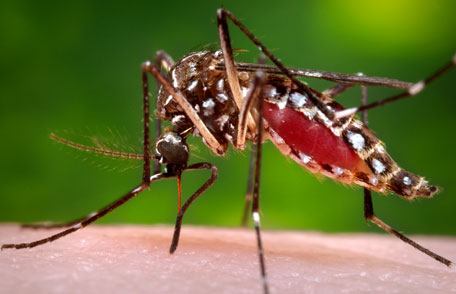
When a mosquito bites you, you are the __________ and the mosquito is the  ____________.
a)
host, hostess
b)
parasite, host
c)
host, parasite
d)
prey, predator
53.

Aphids are tiny insects that live on and eat the leaves of plants, removing vital nutrients from the plants.

a)

Predation

b)

Parasitism

c)

Commensalism

d)

Mutualism

54.
What type of symbiosis is this?
*
Hermit crabs find shells left by snails that have died and move in.
*
  Snails die and leave behind their shells.
a)
commensalism
b)
mutualism
c)
parasitism
d)
predation
55.
Which symbols best describe mutualism?
a)
+,+
b)
+,-
c)
+,0
d)
-,0
56.
Silverfish live and hunt with army ants. They share the prey.  They neither help nor harm the ants. 
a)
Mutualism 
b)
Parasitism 
c)
Commensalism 
57.
A tick and a dog have this type of relationship.
a)
mutualism
b)
commensalism
c)
neutralism
d)
parasitism
58.
Barnacles create home sites by attaching themselves to whales. This relationship neither harms nor benefits the whales. 
a)
parasitism
b)
commensalism
c)
mutualism
59.
Mistletoe extracts water and nutrients from a spruce tree. The spruce tree is harmed. 
a)
parasitism
b)
commensalism
c)
mutualism
60.
Ostriches and gazelles feed next to each other. They both watch for predators and alert each other to danger. Because their visual abilities are different, they can identify threats that the other animal would not see as readily. 
a)
parasitism
b)
commensalism
c)
mutualism
61.
Honey guide birds alert and direct badgers to bee hives. The badgers then expose the hives and feed on the honey first. Next the honey guide birds eat. Both species benefit. 
a)
parasitism
b)
commensalism
c)
mutualism
62.
A cuckoo may lay its eggs in a warbler’s nest. The cuckoo’s young will knock the warbler’s eggs out of a nest and the warbler will raise the cuckoo’s young.
a)
parasitism
b)
commensalism
c)
mutualism
63.
Oxpeckers feed on the ticks found on a rhinoceros. The oxpeckers get a meal and the rhinoceros is helped by the removal of the ticks.
a)
parasitism
b)
commensalism
c)
mutualism
64.
As bison walk through grass, insects become active and are seen and eaten by cowbirds. The relationship neither harms nor benefits the bison.
a)
parasitism
b)
commensalism
c)
mutualism
65.

What would be a positive reason to genetically alter Fraser Fir trees in North Carolina to make them more resistant to rot?

a)

By producing crops that are frost resistant

b)

By making robots to replace large farm machines

c)

The population of fir trees would increase and grow healthier.

d)

By increasing the use of wind farms that produce electricity

66.

In what way is biotechnology useful to law enforcement agencies such as the police or FBI?

a)

It can help identify who was present at the scene of a crime.

b)

It can help undercover officers disguise themselves.

c)

It might help determine who might be the victime of a future crime.

d)

It can help determine who is most likely to become a criminal in the future.

67.

How can agricultural biotechnology have a positive impact on the environment?

a)

By developing crops that are pest resistant requiring fewer pesticides to be used. 

b)

planting crops in shaded areas.

c)

Harvesting crops that have thick stems and leaves.

d)

water crops with a recycled irrigation system.

68.

How can using genetically engineered crops impact North Carolina’s economy?

a)

Improve quality of farm equipment.

b)

Decreased availability of productive land.

c)

Decreased food production and more debt for farmers.

d)

Increased food production and income for the farmers.

69.

What would be an economic benefit of bioremediation in a coastal town that just experienced an oil spill?

a)

The cost of purified water will increase resulting in more revenue for the town.

b)

Water and land areas will be cleaned of oil, encouraging more tourists to visit the town and spend money there.

c)

The oil from the spill will be recovered from bioremediation and used as fuel in future.

70.

What type of job would a person who studied biotechnology in college be likely to have?

a)

A job making medicines

b)

A job studying stars.

c)

A job studying the physical features on Earth.

71.

Scientists implant a gene into a species of tomato plant that makes them ripen faster and stay firm as they are transported to stores. What is the benefit of this technology?

a)

Increased toxins in the food.

b)

Increase shelf life and availablity.

c)

Decreased size of tomatoes.

d)

Increased seed production

72.

What are some examples of biotechnology being used in agriculture?

a)

Crop irrigation

b)

DNA fingerprinting

c)

Gentically modified crops

d)

Crop rotation

73.

How does the biotechnology industry benefit North Carolina?

a)

Many new, high paying jobs are created

b)

The average salary of the worker in NC decreased.

c)

New technologies being developed are too expensive for people here to afford.

d)

State budget increases from the construction of new facilities.

74.

What would be a negative side of genetically modified foods?

a)

Lower cost of production.

b)

Long-term health effects, such as possible allergies to proteins not found in foods before GMO’s.

c)

Ability to produce more food in less time.

d)

Ability to grow more nutritious food in less time.

75.

What would increase the money made by farmers in North Carolina through biotechnology?

a)

Tomatoes that are different in color.

b)

Tomatoes that are smaller.

c)

Tomatoes that taste the same.

d)

Tomatoes that are resistant to disease.

76.

Rice does not provide enough of certain vitamins. How could biotechnology be used to change this?

a)

Using a high nitrogen fertilzer.

b)

Using herbicide to get rid of weeds.

c)

Genetic modification of rice plants that are pest resistant and to produce vitamins they cannot make without biotechnology

d)

Using pesticide to get rid of pests that can harm the crop.

77.

What would be a direct benefit of biotechnology to agriculture in a time of severe drought?

a)

Planting crops in shaded areas.

b)

Genetically modifying crops to be resistant to changes in weather

c)

Harvesting crops to have thick stems and leaves.

78.

What are the reactants of cellular respiration?

a)

glucose and oxygen

b)

glucose and carbon dioxide

c)

carbon dioxide and water

d)

carbon dioxide and glucose

79.

In which part of the cell does cellular respiration take place?

a)

mitochondria

b)

chloroplasts

c)

cell membrane

d)

ribosome

80.

In which part of the cell does photosynthesis usually take place?

a)

mitochondria

b)

chloroplasts

c)

cell membrane

d)

ribosome

81.

What are the reactants of photosynthesis?

a)

glucose and oxygen

b)

glucose and carbon dioxide

c)

carbon dioxide and water

d)

carbon dioxide and glucose

82.

Which is NOT produced during cellular respiration?

a)

oxygen

b)

carbon dioxide

c)

water

d)

energy

83.

What are the products of photosynthesis?

a)

glucose and oxygen

b)

glucose and carbon dioxide

c)

carbon dioxide and water

d)

carbon dioxide and glucose

84.

Which statement is TRUE about photosynthesis and respiration?

a)

All reactants of photosynthesis are products of respiration.

b)

All products of photosynthesis are products of respiration too.

c)

All reactants of photosynthesis are reactants of respiration too.

d)

Products and reactants of photosynthesis and respiration are the same.

85.

Which macromolecule provides the most amount of energy to organism?

a)

carbohydrates

b)

proteins

c)

lipids

d)

fats

86.

Which molecule released by digestion is used during cellular respiration to provide energy to the body?

a)

sugar

b)

fat

c)

amino acid

d)

lipid

87.

Which statement is correct about photosynthesis?

a)

Plants use carbon dioxide and water to make glucose and oxygen.

b)

Plants use carbon dioxide and water to make proteins and carbohydrates.

c)

Plants use oxygen and water to make glucose and carbon dioxide.

d)

Plants use oxygen and glucose to release energy and produce carbon dioxide.

88.

What disease would a person will most likely develop if he/she eats food that are high in fat and sodium?

a)

heart diseases

b)

lung diseases

c)

stomach diseases

d)

infectious diseases

89.

Which food can provide the most amount of energy in the shortest time?

a)

fruit

b)

chips

c)

meat

d)

milk

90.

Which statement explains why healthy diet is important?

a)

It provides the body its needs for growth and energy.

b)

It provides the body enough rest to regain strength.

c)

It allows the body to regulate its temperature.

d)

It keeps the body's internal organs free from sicknesses.

91.

Which of the following is a healthy practice?

a)

developing daily exercise routines

b)

sleeping late at night

c)

eating junkfood

d)

skipping meals

92.

A person who has a sedentary (inactive) lifestyle takes in more calories than his required daily needs. What could probably happen if this practice continues?

a)

The person's weight will increase

b)

The person's weight will decrease

c)

The person will develop malnutrition

d)

The person will maintain a healthy weight

93.

Which biomolecule is important to repair damaged cells in the body?

a)

protein

b)

fats

c)

carbohydrates

d)

lipids

94.

What are good ways to prevent the spread of viruses and bacteria?

a)

stay home when sick

b)

wash your hands

c)

get vaccinations when recommended

d)

all of these

95.

Smallpox, yellow fever, polio, Ebola, and influenza are all caused by

a)

bacteria

b)

viruses

c)

bad genes

d)

fungi

96.

Which is true about all bacteria?

a)

they all have a nucleus

b)

they all have many cells

c)

they all have one cell

d)

they do not use energy

97.

How do viruses reproduce?

a)

they split into two (asexually)

b)

they take over a host cell

c)

by budding

d)

none of these; viruses cannot reproduce

98.

Are bacteria ever helpful?

a)

No, they all cause disease.

b)

Yes.

c)

Scientists are not sure

99.

Which is true about viruses?

a)

they have no cells

b)

they grow really fast

c)

they use energy in different ways

d)

they reproduce by splitting in 2

100.

How do bacteria reproduce?

a)

asexually; one splits into two

b)

by taking over a host cell

c)

by budding

d)

none of these; bacteria cannot reproduce

101.

Which is true about viruses?

a)

they each have one cell

b)

they use lots of energy

c)

they grow slowly

d)

they have DNA or RNA

102.

When should people use antibiotics?

a)

any time they are sick

b)

when they are sick with a virus

c)

when they are sick with a bacterial infection

d)

never

103.

What can happen if antibacterial products are used improperly?

a)

nothing

b)

bacteria may turn into viruses

c)

bacteria can become resistant to the products, making them difficult to kill

104.

What is your body's first line of defense against invaders such as bacteria?

a)

your skin and mucus

b)

your kidneys

c)

your white blood cells

d)

your stomach

105.

If invaders, such as bacteria, get past your body's first line of defense, what is your immune system's next way to fight?

a)

your skin and mucus

b)

your kidneys

c)

your white blood cells

d)

your stomach

106.

Imagine you are doing a lab on this question, "Which cleaner removes more bacteria from a lab table?" Which is the variable you would measure?

a)

type of cleaner

b)

amount of bacteria

c)

cleaning time

d)

water temp

107.

Imagine you are doing a lab on this question, "Which cleaner removes more bacteria from a lab table?" Which is the variable you would change?

a)

type of cleaner

b)

amount of bacteria

c)

cleaning time

d)

water temp

108.

Imagine you are doing a lab on this question, "Which cleaner removes more bacteria from a lab table?" Which is your control?

a)

no cleaner

b)

Pine Sol cleaner

c)

cleaning time

d)

water temp

109.

Imagine you are doing a field study on this question, "Which type of feeder do birds prefer?" What would be a variable to keep the same?

a)

type of feeder

b)

number of birds

c)

type of bird seeds

d)

no bird feeder

110.

Imagine you are doing a field study on this question, "Which type of feeder do birds prefer?" What would be the variable changed?

a)

type of feeder

b)

number of birds

c)

type of bird seeds

d)

time of day

111.

Imagine you are doing a field study on this question, "Which type of feeder do birds prefer?" What would be the variable measured?

a)

type of feeder

b)

number of birds

c)

type of bird seeds

d)

time of day