
 Worksheets
1st 9 Weeks Review
Total questions: 115
Worksheet time: 4hrs 32mins
Abiotic means
living
nonliving
What is the difference between the biotic and abiotic factors?
Biotic factors are living things and abiotic factors are nonliving things.
Biotic factors are nonliving things and abiotic factors are living things.
What is a example of a abiotic factor?
Panda
Bacteria
Butterfly
Weather
Temperature is an example of what kind of factor?
biotic
abiotic
dead
living
What is an example of a biotic factor?
bear
rocks
soil
water
Which of the following is a biotic factor?
sun
temperature
soil
grass

Termites are tiny insects that can cause severe damage to homes and other structures that consist of wood. Termites are an example of what type of factor.
Biotic
Abiotic

The Sun is the source of all energy within an ecosystem. Plants depend on light from the sun in order to perform the process of photosynthesis. Sunlight is an example of what type of factor?
Biotic
Abiotic

A black mamba is a highly venomous snake that can reach lengths of 14 feet. They are also able to slither at speeds of 12 miles per hour (mph). A black mamba is an example of what type of factor?
Biotic
Abiotic

Water is a compound that consists of 2 hydrogen atoms and 1 oxygen atom. Up to 60% of an adult human is made up of water. Water is an example of what type of factor?
Biotic
Abiotic

Air is a mixture of colorless gases. The air that makes up the Earth's atmosphere consists primarily of nitrogen and oxygen. Air is an example of which type of factor?
Biotic
Abiotic
An organism in an environment is a
abiotic factor
biotic factor
What are the 3 levels of organization in an ecosystem from smallest to largest?
Organism, Population, Community
Population, Organism, Community
Organism, Community, Population
Organism, Community, Population, Ecosystem
An ecosystem is made up of all of the _____________ and __________ in one area.
Populations, Communities
Organisms, Populations
Biotic, Abiotic
Plants, Animals
Living, or once-living, organisms in an ecosystem are....
Biotic
Abiotic
Organism
Something that is not alive
A complete living thing
Many living things
Where something lives
A population is __________________.
all organisms in an area that belong to the same species
all of the different species living together in an area
an individual living thing
all of the biotic and abiotic non-living factors in an area
A community is __________________.
all organisms in an area that belong to the same species
all of the different species living together in an area
an individual living thing
all of the biotic and abiotic non-living factors in an area
A ecosystem is __________________.
all organisms in an area that belong to the same species
all of the different species living together in an area
an individual living thing
all of the biotic and abiotic non-living factors in an area

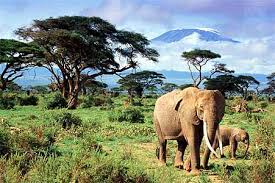
The following image is an example of a(n) ____________.
organism
population
community
ecosystem

The following image is an example of a(n) ____________.
organism
population
community
ecosystem

The following image is an example of a(n) _____________.
organism
population
community
ecosystem

The following is an example of a(n)
organism
population
community
ecosystem

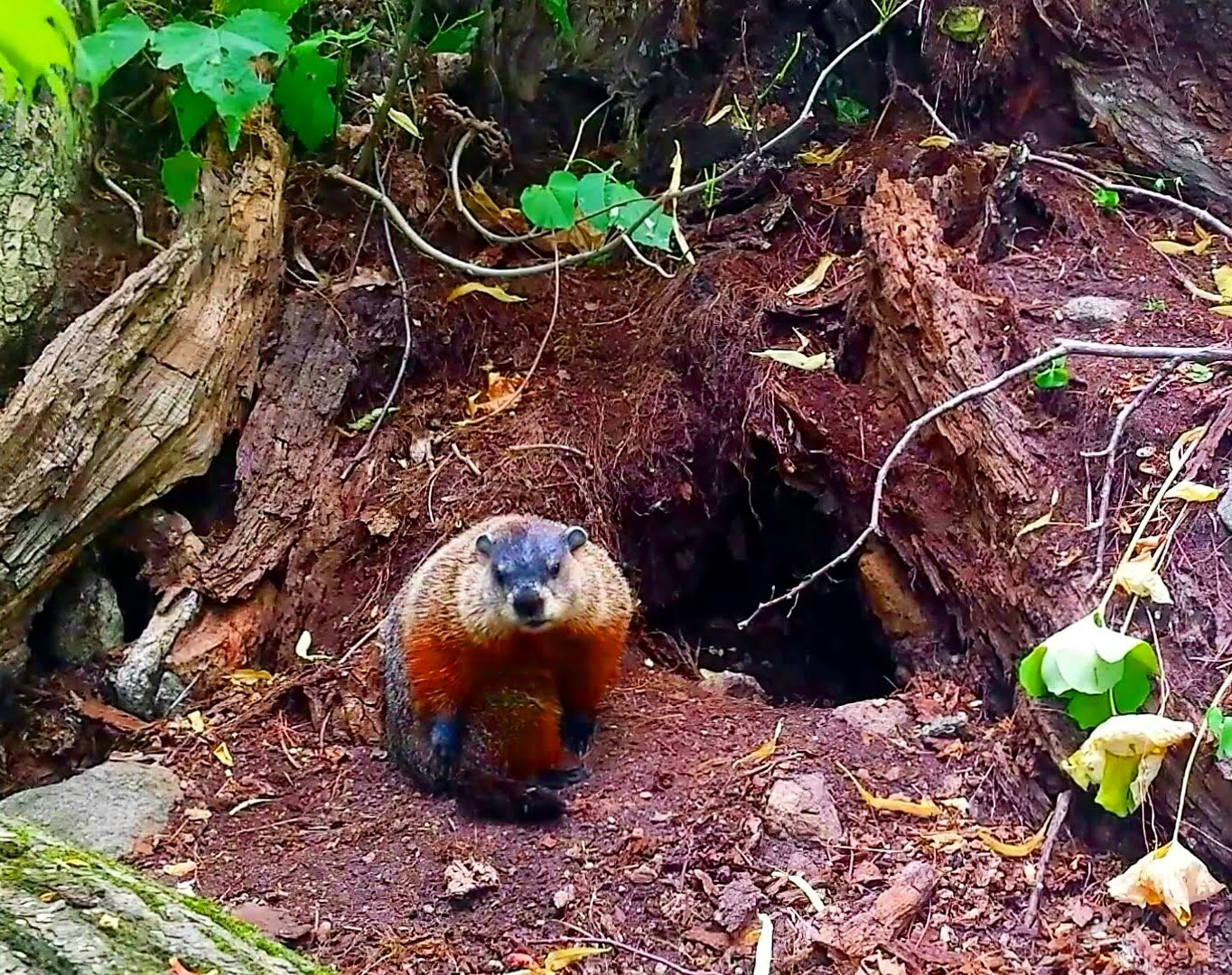
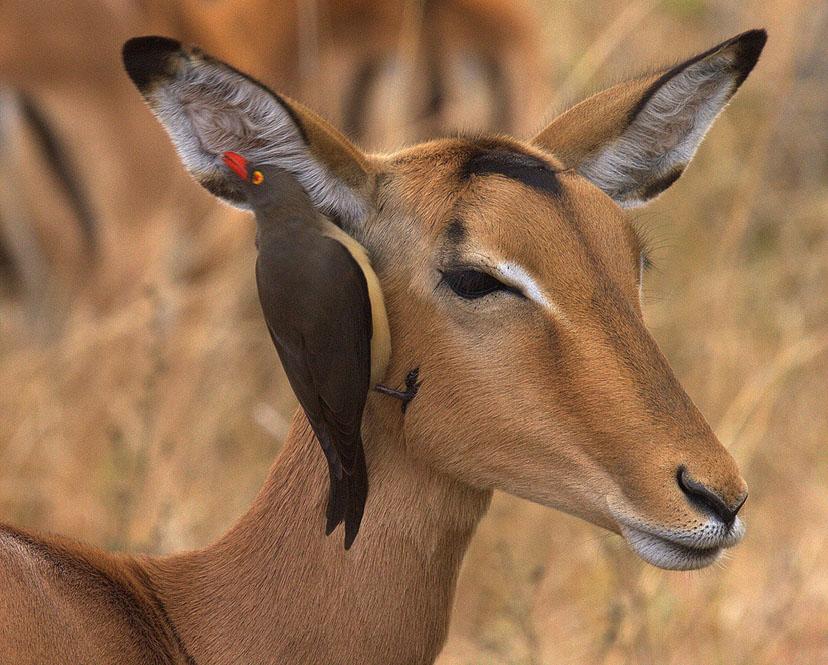
Which of the following shows the symbiotic relationship between the Rodent and the Bird?
Mutualism
Commensalism
Competition


Which of the following shows the symbiotic relationship between the Rodent and the Bird?
Mutualism
Commensalism
Competition
Hermit Crabs live in shells made and then abandoned by snails.
Commensalism
Parasitism
Competition


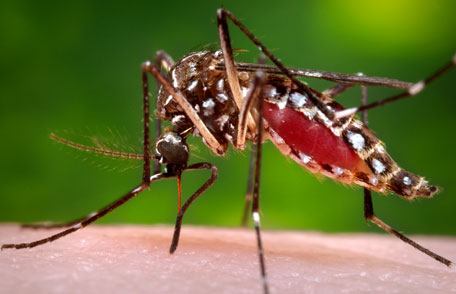

Aphids are tiny insects that live on and eat the leaves of plants, removing vital nutrients from the plants.
Predation
Parasitism
Commensalism
Mutualism

Mockingbirds will push the eggs out of a blue bird's nest and use the nest for it's own babies illustrating...
commensalism
parasitism
mutualism
predation

Clown fish live among anemones, acting as a lure for the sea anemone's prey. The clown fish get protection and shelter from the anemone. This is an example of which type of symbiosis?
Commensalism
Mutualism
Parasitism

Hookworms enter the human body by burrowing into the skin of the feet. Once in the skin, they enter the bloodstream and travel to the small intestine where they attach to the walls and begin to drink the person's blood and weaken the victim.
mutualism
commensalism
parasitism
A tick living on a dog
mutualism
commensalism
parasitism
A bird building their nest in a tree.
mutualism
commensalism
parasitism
A tapeworm living in a 6th grade students intestines.
mutualism
commensalism
parasitism
Bees and a flower
mutualism
commensalism
parasitism
Orchards that live on branches of trees.
mutualism
commensalism
parasitism
Mistletoe putting its roots into its host tree.
mutualism
commensalism
parasitism
A cuckoo may lay its eggs in a warbler's nest. The cuckoo's young will displace the warbler's young and end up being raised by the warbler. What type of symbiosis is this relationship?
Parasitism
Commensalism
Mutualism

Which organism represents a multicellular organism?


An organism with more than one cell is known as a/an
organ system
multicellular organism
unicellular organism
A cell is-
an organism made up of one cell.
a structure that stores food and water.
the smallest unit of a living organism.
The control center of the cell is known as...
cytoplasm
mitochondria
nucleus
chloroplast
The difference between a prokaryotic cell and a eukaryotic cell is that
only one has a nucleus
they are not different
one is blue, the other is red
An organism with only one cell is known best as...
a disease
plankton
multicellular organism
unicellular organism
_________is a single-celled organism that does not have a nucleus or membrane-bound organelles.
Prokaryote
Eukaryote
Unicellular
Multicellular
_________is an organism made up cells that contain their DNA in a nucleus.
Prokaryote
Eukaryote
Unicellular
Multicellular
True/False: You do not need a microscope to see cells.
True
False
____________organisms made up of one cell.
Cell
Unicellular
Organisms
Multicellular
____________a membrane bound organelle that contains the cell’s DNA.
Cell Wall
Cell Membrane
Organelle
Nucleus
Autotrophs ____
Eat other organisms
Make their own food
Consume dead organisms
Only drink water
Heterotrophs ___
Make their own food
Consume only plants
Use photosynthesis
Eat other organisms
Another word for autotroph is ___
Consumer
Predator
Producer
Decomposer
Another word for heterotroph is ___
Consumer
Decomposer
Producer
Prey
A cell without a nucleus
Prokaryotic
Eukaryotic
An organism that CANNOT make their own food is known as ______________.
Heterotroph
Heterosynthesis
Autosynthesis
Autotroph
An organism that makes their own food though photosynthesis is known as ______________
Heterotroph
Heterosynthesis
Autosynthesis
Autotroph
A plant cell has a defined nucleus which makes it a __________ cell.
Prokaryotic
Eukaryotic
Bacteria
Nucleus
A cell that does not have a nucleus is know as ____________.
Prokayotic
Eukaryotic
Plant
Animal

This is a pine tree. It makes its own food. What kind of organism is it?
Heterotroph
Autotroph

This is corn. It makes its own food through photosynthesis. What kind of organism is it?
Heterotroph
Autotroph
Which of the following would not be found in a prokaryotic cell?
genetic information
cytoplasm
nucleus


Organisms that produce their own food mostly through photosynthesis (producers). Examples are plants and algae.
Ominvore
Detritivore
Heterotroph
Autotroph

Organisms that get their energy and nutrition from other organisms (consumers).
Heterotroph
Autotroph
Decomposer
Detritivore

What is a lion?
autotroph
heterotroph

What is asparagus?
autotroph
heterotroph
Is composed of a single cell
Unicellular
Multicellular
Both
Pro means -
no
yes
maybe
potato
Eu means
false
true
maybe
potato
kary means -
carry
curry
nucleus
Potato
Uni means -
multiple
some
one
none
Multi means -
one
many
none
potato
Auto means -
you
self
drive
potato
Hetero means -
same
different
none
cat
Troph means-
paper
food
one
blue
cell means -
space
room
celery
cilantro
All cells have DNA
True
False

