
 Worksheets
Unit 2: Solar System Review
Total questions: 117
Worksheet time: 1hrs 11mins

Why is it hard to build a perfect scale model of our solar system?
The colors of the objects
The relative size and distance between objects
The composition of the objects
The shape of each object

The ________________ of the Sun causes the orbital motions of the objects in the solar system.
gravitational pull
chemical composition
brightness
ultra-violet rays

The sun is the anchor point of our solar system because of
the gas Hydrogen
its small density
its huge mass
its location
Which is needed to determine the amount of gravitational force between two objects?
distance and mass
weight and time
area and weight
What are the four outer planets?
Mercury, Venus, Earth and Mars
Jupiter, Saturn, Uranus, Neptune
Earth, mars, Jupiter, Saturn
Uranus, Neptune, Mercury, Venus
What are the terrestrial (inner) planets
Mercury, Venus, Earth, Mars
Jupiter, Saturn, Uranus, Neptune
Earth, Mars, Jupiter, Saturn
Uranus, Neptune, Mercury, Venus
All the space and the matter space contains
Space
Solar System
Universe
Sun
A(n) _____ is the curved path of an object around a point/object in space.
orbit
rotation
revolution
phase

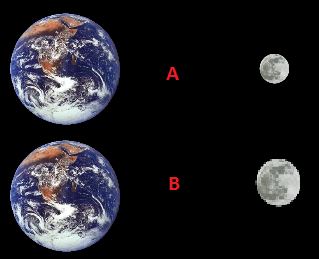
How would you describe the orbits?
Moving.
Nearly circular.(elliptical)
Revolving around each other.


Why does Mercury have the shortest year of all the planets?
It is a small planet.
It is closest to the sun.
It spins faster than any other planet.
It is the planet with the most temperature extremes.
What is a large round object in space that follows a path around the sun called?
Planet
Moon
Galaxy
Universe
What is it called when an object spins on a center point?
revolve
rotate
orbit
What is a large piece of rock or metal flying through space called?
Planet
Asteroid
Sun
Moon
What is a giant ball of light made of hot gas called?
Star
Planet
Asteroid
Galaxy

A planet has twice the mass of Earth and the same radius as Earth. If you were standing on this planet, the force of gravity would be…
twice that on Earth.
half that on Earth.
the same as on Earth.
four times greater than Earth's.
Anything with ____________ also has a gravitational pull.
mass
size
depth
light
Which of these statements are true about the outer planets?
The outer planets have many moons
The outer planets orbit in a different direction
The outer planets have higher densities
The outer planets have smaller diameters

What does this picture represent?
Our universe.
Planet Earth.
Our solar system
Our Milky Way Galaxy

Which of the 8 planets in our Solar System is farthest away from the Sun?
Earth
Jupiter
Neptune
Venus

Pluto is considered what?
A dwarf planet
A gas giant
The red planet
A moon

How can you tell the difference between moons and planets?
Moons are larger than planets
Moons orbit around the planets, and planets orbit around the Sun
Planets orbit around the moon, and moons orbit around the Sun
Moons orbit around the Sun and planets do not
Which is the largest planet in our solar system
Saturn
Uranus
Mars
Jupiter
What is happening to the ORBITS of our planets
They are Contracting (getting smaller)
They are Evaporating
They are Expanding (getting bigger)
They are Spinning
What is the hottest planet
Venus
Mercury
Mars
Saturn
How many planets are in our solar system (not including pluto)
9
8
10
7
Earth revolves around the sun, but it also makes one complete rotation. How long does it take Earth to make one complete rotation on its axis?
365 days
1 month
1 day
1 week
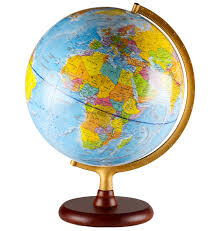
Polaris is also known as the...
Big Dipper
Little Dipper
North Star
South Star
How long does it take earth to revolve around the sun?
a month
a year
a day
3 months
How long does it take earth to rotate?
a month
a year
3 months
a day
The asteroid belt is located:
between the sun and Mercury.
between Jupiter and Saturn
between the sun and Mars.
between Mars and Jupiter
Which of the following are in our solar system?(pick more than one answer)
planets
multiple stars
moons
asteroids
comets
What are the characteristics of the inner planets in the solar system?
Giant balls of gas and ice
Hard and rocky
Very Large
Smaller
Have many moons
What are the characteristics of the outer planets in the solar system?
Giant balls of gas and ice
Hard and rocky
Very Large
Smaller
Have many moons
How can you tell the difference between moons and planets?
moons are smaller than planets
planets have life, moons do not
planets orbit around stars, moons orbit around planets
planets have rings


Astronomers use the light-year to describe the relationship between objects in space. Which of the following units is most similar to the light-year?
gram
second
kilometer
degree Celsius

A scientist finds a star that is located far from Earth. The star appears to have several smaller bodies orbiting it. The scientist draws a simple diagram of her findings. Which of these terms would the scientist use to describe her findings?
a moon
a planet
a galaxy
a solar system

The pie graph shows the elements that make up the sun by percentages of mass. Which element makes up most of the sun’s mass?
hydrogen
helium
oxygen
For a school project, Kate is building a model of the solar system. In her model, Kate uses a tiny bead to represent Earth and a giant beach ball to represent the sun. Why did Kate choose a tiny bead to represent Earth and a giant beach ball to represent the sun in her model?
the sun is brighter than Earth
the sun is denser than Earth
the sun is greater in size and mass than Earth
because the sun is a gas giant planet and Earth is a terrestrial planet
Galaxies are large groups of millions, billions, or even trillions of stars. What would you claim keeps the stars in a galaxy from moving away from each other?
gravity
density
composition
temperature
Our solar system consists of eight planets. Which phrase correctly describes a planet?
a large celestial body that is composed of gas and emits light
any one of the primary bodies that orbits a star
many stars held together by gravity
space and all the matter and energy in it
Celestial bodies can be classified based on their sizes. Which of the following is the smallest?
a planet
the sun
a red supergiant star
a red giant star

The diagram shows a crust, mantle, and core. What is shown in the diagram.
a star
a galaxy
a gas giant
a terrestrial planet

Which planet is similar in size and mass to Earth?
Venus
Mars
Mercury
The Moon, "Luna"

As the distance of the planets increase away from the sun, their measurement in astronomical units does what?
decrease
stay the same
increase
increase exponentially

Which list has the planets in correct order by their distance from the sun?
Saturn, Earth, Jupiter, Venus
Earth, Venus, Mercury, Neptune
Mars, Neptune, Jupiter, Uranus
Venus, Earth, Jupiter, Saturn
What causes day and night on Earth?
rotation
revolution
asteroid belt
the stars
Why does the sun seem so much larger than other stars?
it's the closest star to the earth
it's the biggest star in the universe
it's not a star
The Sun is a planet.
true
false
These are the four planets FARTHEST from the Sun; Jupiter, Saturn, Uranus, and Neptune.
the inner planets
dwarf planets
the outer planets
solar planets
_________ are stationary.
Planets
Stars
How many planets are there in our Solar System?
9
8
12
10
________________orbit around a star.
Planets
Stars
The outer planets are mostly made of ___________________.
rock and metals
gases
Stars are mostly made of
rock and metals
gases
The system consisting of the sun and the planets and other objects that revolve around it.
Universe
Solar System
Light-Year
Astronomical Unit
To examine methodically and in detail the constitution or structure of (something, especially information), typically for purposes of explanation and interpretation.
Analyze
Astronomical Unit
Wavelength
Electromagnetic Radiation
A unit of distance equal to the average distance between Earth and the sun, about 150 million kilometers.
Light-year
Diameter
Astronomical Unit
Big bang
A huge group of single stars, star systems, star clusters, dust, and gas bound together by gravity.
Big bang
Galaxy
Universe
Solar system
A large, gaseous body at the center of the solar system.
Moon
Star
Sun
Planet
a straight line passing from side to side through the center of a body or figure, especially a circle or sphere.
Diameter
Rotation
Revolution
Universe
An object that orbits a star, is large enough to have become rounded by its own gravity, and has cleared the area of its orbit.
Sun
Star
Moon
Planet
The movement of an object around another object.
Rotation
Revolution
Analyze
Diameter
A natural satellite that orbits a planet.
Planet
Sun
Moon
Star
The spinning motion of a planet on its axis.
Rotation
Revolution
Diameter
Wavelength
One of the rocky objects revolving around the sun that is too small and numerous to be considered a planet.
Universe
Asteriod
Meteoroids
Comets
An optical instrument that forms enlarged images of distant objects.
Telescope
Wavelength
Big bang
Solar system
A chunk of rock or dust in space, generally smaller than an asteroid.
Asteroids
Comets
Meteoroids
The distance between two corresponding parts of a wave, such as the distance between two crests.
Electromagnetic radiation
Spectrum
Big bang
Wavelength
A loose collection of ice and dust that orbits the sun, typically in a long, narrow orbit.
Comet
Planet
Asteroid
Meteoroids
The range of wavelengths of electromagnetic waves.
Wavelength
Spectrum
Visible light
Telescope
All of space and everything in it.
Solar system
Meteoroids
Asteroid
Universe
Electromagnetic radiation that can be seen with the unaided eye.
Spectrum
Visible light
Electromagnetic radiation
Wavelength
The distance that light travels in one year; about 9.46 trillion kilometers.
Light-year
Astronomical unit
Wavelength
Visible light
The energy transferred through space by electromagnetic waves.
Spectrum
Visible light
Electromagnetic radiation
Wavelength
The initial explosion that resulted in the formation and expansion of the universe.
Big bang
Universe
Revolution
Rotation
The two factors that combine to keep Earth and the moon
in their orbits are
gravity and orbital speed
orbital speed and mass
mass and inertia
gravity and inertia
The tendency of a moving object to continue moving in
a straight line or a stationary object to remain in place is
orbital speed
mass
inertia
gravity
All objects are attracted to each other by the force of
weight
mass
inertia
gravity
The strength of the force of gravity between two objects
depends on
the masses of the objects and their speeds
the masses of the objects and the distances between them.
the weight of the objects and their speeds
the masses of the objects and their weights
If the distance between two objects increases, the gravitational force between them will
increase
decrease
not change
will double
In the metric system, the force of gravity (and all forces including weight) is measured in
pounds
grams
newtons
meters
The gravitational force of Earth pulls all objects
towards the moon
towards the North Pole
towards the Earths center
towards the South Pole
Mass and weight are different because
weight is the pull of gravity on an object
mass is the pull of gravity on an object
gravity depends on Earth’s rotation
mass depends on Earth’s rotation
The acceleration due to Earth’s gravity is
2.8 m/s2
4.2 m/s2
9.8 m/s2
If an object has a mass of 1500 kg, what will its estimated weight be on Earth
150 N
1,500 N
15,000 N
150,000 N
the measure of the force of a planet acting on an object
gravity
weight
inertia
the pulling force of attraction of every object on every other object
gravity
weight
inertia
the tendency of an object to resist a change in its motion
gravity
weight
inertia
As the mass of an object increases, what happens to the gravitational attraction between it and another object?
gravity increases
gravity decreases
gravity remains unchanged
gravity will increase and decrease at the same time
Why do astronauts weigh more on Earth than on the moon?
they loose weight due to not eating in flight
the moon's gravity is greater
the moon's gravity is less
At 10:18, a rocket is launched from Earth’s surface. At 10:29, the rocket exits Earth’s atmosphere. What is happening to the rocket’s weight during these 11 minutes?
its weight increases
Its weight stays the same
its weight decreases
The estimated weight of a 50-kg object is
50 N
500 N
5000 N
Which image correctly shows why Earth orbits the Sun?
(Note: I = inertia and G = gravity)


Imagine a large meteorite collided and merged with a planet, significantly increasing the planet’s mass. What will happen to its gravitational pull with the sun?
The gravity between them will increase
The gravity between them will decrease
The gravity between them will remain unchanged
The gravity between them will increase and decrease at the
same time

