
 Worksheets
Review Quizizz March
Total questions: 193
Worksheet time: 3hrs 49mins
Name
Class
Date
1.

What type of organism makes its own food internally?
a)
heterotroph
b)
autotroph
c)
carnivore
d)
omnivore
2.

Which kingdom would this organism be considered?
a)
Plantae
b)
Protista
c)
Archaebacteria
d)
Fungi
3.

Which kingdoms are prokaryotic?
a)
Archaebacteria and Animalia
b)
Eubacteria and Archaebacteria
c)
Fungi and Protista
d)
None of them are
4.

What do we call an organism that must eat other organisms in order to obtain energy?
a)
Photosynthesis
b)
Autotroph
c)
Heterotroph
d)
Producer
5.

What process do members of Kingdom Plantae use to get their energy?
a)
Photosynthesis
b)
Multicellular
c)
Asexual
d)
Condensation
6.
The broadest or most general taxonomic classification of living organisms is organized by --
a)
Kingdom
b)
Domain
c)
Species
d)
Organisms
7.
What are the three domains?
a)
Archaea, Bacteria, and Eubacteria
b)
Archaea, Protists, and Eubacteria
c)
Archaea, Bacteria, and Eukarya
d)
Archaea, Fungi, Animalia
8.
How many kingdoms are there?
a)
3
b)
4
c)
6
d)
9
9.
This organelle takes food and turns it into ENERGY for plant and animal cells.
a)
Chloroplast
b)
Mitochondria
c)
Lysosome
d)
Ribosome
10.
The site of photosynthesis
a)
ribosome
b)
mitochondria
c)
chloroplast
d)
nucleus
11.
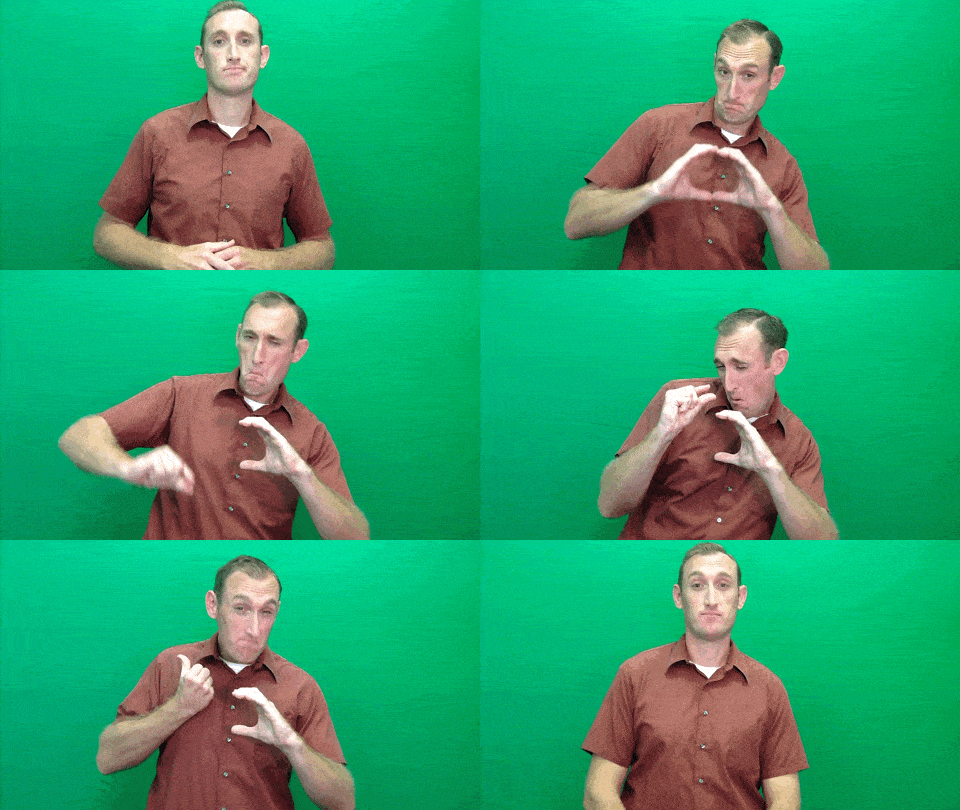
The ___________ is the basic unit of life
a)
organ
b)
cell
c)
atom
d)
tissue
12.

This is a example of........
a)
organ system
b)
cells
c)
organ
d)
tissue
13.
The brain is a part of which organ system?
a)
nervous
b)
skeletal
c)
muscular
d)
digestive
14.
Which organelle is only found in a plant cell?
a)
nucleus
b)
chloroplast
c)
mitochondria
d)
cell membrane
15.

Which part of the cell is often called "the brain of the cell"?
a)
nuclear membrane
b)
endoplasmic reticulum
c)
nucleus
d)
mitochondria
16.
What is found in both plant and animal cells but is much larger in plant cells?
a)
Nucleus
b)
Mitochondria
c)
Chloroplast
d)
Vacuole
17.

I am the outer most layer of an animal cell. What am I?
a)
cell wall
b)
nucleus
c)
cell membrane
d)
cell skin
18.
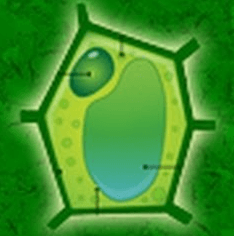
A rigid layer that lies outside the cell's membrane is...
a)
Cytoskeleton
b)
Cilia
c)
Cell Wall
d)
Flagella
19.
What organelle is called the "powerhouse" of a cell?
a)
Endoplasmic Reticulum
b)
Nucleus
c)
Mitochondria
d)
Nucleolus
20.
What is the gel-like substance inside of cells called?
a)
photoplasm
b)
photosynthesis
c)
cytoskeleton
d)
cytoplasm
21.
Main producer of ATP in all eukaryotes
a)
chloroplast
b)
mitochondria
c)
lysosome
d)
smooth er
22.
A group of tissues that work together to perform a similar function is called_____. (Examples include the heart, lungs or stomach)
a)
cells
b)
tissues
c)
organs
d)
organ system
23.
Where is the DNA found in a prokaryotic cell?
a)
floating around in the cytoplasm
b)
in the nucleus
24.
What type of cell has a nucleus?
a)
eukaryotic
b)
prokaryotic
25.

The picture illustrates a
a)
Prokaryotic Plant Cell
b)
Prokaryotic Animal Cell
c)
Eukaryotic Plant Cell
d)
Eukaryotic Animal Cell
26.
Controls what enters/leaves a cell
a)
cell membrane
b)
Nuclear membrane
c)
cell wall
d)
cytoplasm
27.
hold/store water, mainly found in plant cells
a)
nuclolus
b)
ribosomes
c)
golgi bodies
d)
vacuoles
28.

What am I?
a)
cell wall
b)
mitochondria
c)
cytoplasm
d)
chloroplast
29.
This structure supports and protects plant cells.
a)
Nucleus
b)
Cell Wall
c)
Cell membrane
d)
Cytoplasm
30.
This is the "powerhouse" of the cell that converts food to energy.
a)
Mitocondria
b)
Endoplasmic Reticulum
c)
Nucleus
d)
Lysosome
31.
Which statement describes asexual and sexual reproduction?
a)
Asexual is one part of sexual reproduction.
b)
Sexual reproduction happens before asexual reproduction.
c)
Asexual needs one parent, and sexual needs two parents.
d)
Sexual only happens in animals, and asexual happens only in plants.
32.
What is an advantage of sexual reproduction over asexual reproduction?
a)
Sexual reproduction produces identical offspring.
b)
Sexual reproduction happens before asexual reproduction.
c)
Sexual reproduction generates a large number of offspring.
d)
Sexual reproduction causes genetic variation in offspring.
33.

Which organism is the product of asexual reproduction?
a)
W
b)
X
c)
Y
d)
Z
34.

The pictures below show two dogs. The instructions determining the color of their fur are found in their cell...
a)
cytoplasm
b)
membrane
c)
mitochondria
d)
chromosomes
35.
Peppered moths come in light and dark colors. Light moths are more common, since they blend in with the light bark of the trees they live on. If pollution darkens the color of the bark, what does natural selection predict will happen to the moths?
a)
Their color will remain light gray
b)
Their color will turn dark gray
c)
Their wings will get shorter
d)
Their wings will get longer
36.
True or False? The passing of traits from one parent to offspring is heredity.
a)
False
b)
True
37.
What is the scientific term for an animal that is eaten by another animal?
a)
predator
b)
dinner
c)
prey
d)
stupid
38.
When an animal looks like another animal it is called ______________.
a)
camouflage
b)
mimicry
c)
warning coloration
d)
protective resemblance
39.
A resting state through the winter.
Adaptation: Bear sleeping in a cave during the winter months
Adaptation: Bear sleeping in a cave during the winter months
a)
Locomotion
b)
Hibernation
c)
Migration
d)
Defense
40.
A polar bear has thick fur to keep it warm so it can survive the cold. This is called ___________________.
a)
adaptation
b)
camoflage
c)
mimicry
41.

what did Charles Darwin observe in finch populations of the Galapagos Islands off the coast of South America?
a)
different species on different islands
b)
all species on one of the islands
c)
identical species on all the islands
d)
the same species as North America
42.
What is natural selection?
a)
Your natural fate is decided from birth
b)
Nature actively chooses who surivives
c)
Those best suited to demands of environment surivie
d)
The weakest of a species surivie
43.
Air water and soil are this part of an ecosystem
a)
Living things
b)
Non living things
c)
Producers of heat and light
d)
Decomposers
44.

The turtle gets it energy from?
a)
Carp
b)
Sun
c)
Alligator
d)
Bladderwort
45.

What does biodiversity mean?
a)
Only one species in an area.
b)
The different amount of species in an area
c)
All abiotic life
d)
Nitrogen fixation
46.

The habitat of a moth species included trees with both light and dark colored bark.Therefore the moth species included both light and dark colored variants.Then the light-colored trees were wiped out by a disease, and within a few years nearly all the moths in this forest were dark colored. Which of the following choices BEST explains what happened?
a)
The light moths that survived all had dark offspring in order to adapt to the change.
b)
The dark moths were less visible to predators, so mostly light moths were eaten.
c)
The few light moths that survived did not mate, and therefore they had no offspring.
d)
The light moths changed their wing pigments to darker colors to avoid being eaten.
47.
Which statement best explains how natural selection occurs?
a)
when adaptations help an organism reproduce and survive.
b)
when organisms are geographically isolated.
c)
when an organism’s offspring grow vestigial structures.
d)
when characteristics from the parent organism are inherited.
48.
Jack has a rock. The rock has a mass of 14g and a volume of 2cm3. What is the density of the rock?
a)
7 mL
b)
7 g/cm3
c)
28 g/cm3
d)
1/7 g/cm3
49.
Which lab tool might you use to measure the volume of a liquid?
a)
electric scale
b)
bunsen burner
c)
test tube
d)
graduated cylinder
50.

What is the volume of Object X?
a)
10.0 cm3
b)
15.0 cm3
c)
20.0 cm3
d)
25.0 cm3
51.
True or False: The density of a specific type of material never changes.
a)
True
b)
False
52.
What is the formula for density?
a)
density = mass x volume
b)
density = mass / volume
c)
density = mass + volume
d)
density = mass - volume
53.
Frank has an eraser. It has a mass of 4g, and a volume of 2cm3. What is its density?
a)
8 g/cm3
b)
2 g/cm3
c)
1/2 g/cm3
d)
24 g/cm3
54.
The tool used to measure the mass of a substance or object is a ______________.
a)
balance
b)
graduated cylinder
c)
ruler
d)
thermometer
55.

Put the liquids in order from most dense to least dense?
a)
4, 3, 2, 1
b)
1, 2, 3, 4
c)
3, 4, 2, 1,
d)
4, 3, 1, 2
56.
If an object has a density of 3.6 g/mL and you put it into water, will it sink or float?
a)
sink
b)
float
57.

Which liquid is the least dense?
a)
oil
b)
water
c)
syrup
d)
plastic bottle
58.

Which liquid has the highest density?
a)
corn syrup
b)
lamp oil
c)
rubbing alcohol
d)
honey
59.

What is the volume of Object X?
a)
10.0 cm3
b)
15.0 cm3
c)
20.0 cm3
d)
25.0 cm3
60.

What is the volume of the fish?
a)
18.0 cm3
b)
6.0 cm3
c)
38.0 cm3
61.

Which box has a higher density?
a)
Box A
b)
Box B
c)
cannot be determined
d)
they are the same
62.
What is work?
a)
Force x Distance
b)
Force / Distance
c)
Distance / Force
d)
Force + Distance
63.
What are the units for work?
a)
pounds (lb)
b)
centimeters (cm)
c)
grams (g)
d)
Joules (J)
64.
What is the unit of force?
a)
Kilogram
b)
Meter
c)
Pascal
d)
Newton
65.
work is...
a)
energy from the sun
b)
a type of machine
c)
a force that moves an object
d)
a force that pulls you toward the earh
66.

Why is pushing up a barrel up a ramp easier than lifting it up
a)
the reason why is because of fish
b)
the reason is because you are applying less force to push
c)
the reason why because you are using a machine
67.
8 N to the left , and 4 N to the right. Find the net force. Is this balanced
a)
12 N Right No
b)
4 N Left No
c)
12 N Right Yes
d)
4 N Left Yes
68.

Forces that have a net force of zero ( the object is still).
a)
Balanced force
b)
Unbalanced force
69.

Energy of motion is which type of energy?
a)
Potential
b)
Kinetic
c)
Sound
70.
Would it be easier to move a box of the same mass up a ramp that was long and gradual or short and steep?
a)
long and gradual
b)
short and steep
71.
The unit used to measure work is the
a)
Watt
b)
Newton
c)
Joule
d)
meter
72.
Work done = Force x _________
a)
a. distance
b)
b. acceleration
c)
c. velocity
d)
d. speed
73.
Which situation is work not done?
a)
lifting a 20 pound box off the floor
b)
holding a 20 pound box above the floor
c)
sliding a 20 pound box across the floor
d)
sliding a 20 pound box up an inclined plane
74.
Identify the response:
You are walking home from school one day when a large dog jumps out at you from behind a tree. He starts to growl and shows his teeth. You quickly turn around and walk in the opposite direction.
You are walking home from school one day when a large dog jumps out at you from behind a tree. He starts to growl and shows his teeth. You quickly turn around and walk in the opposite direction.
a)
dog growling and showing teeth
b)
you quickly turn and walk away
c)
tree
d)
dog
75.
Identify the stimulus:
You are at the mall walking through the food court. You smell fresh baked pizza and realize that you skipped lunch. You buy a piece of pizza and eat it before going to buy your CD.
You are at the mall walking through the food court. You smell fresh baked pizza and realize that you skipped lunch. You buy a piece of pizza and eat it before going to buy your CD.
a)
the smell of pizza
b)
buying a pizza
c)
food court
d)
buying the CD
76.

Identify the stimulus
a)
hunger
b)
thirst
c)
blinking
d)
eating
77.
Plant grows toward the direction of sunlight.
a)
Stimulus
b)
Response
78.
The response is most like....
a)
the cause
b)
the effect
c)
the hypothesis
d)
the question
79.
The stimulus is most closely related to....
a)
the cause
b)
the effect
c)
the hypothesis
d)
the conclusion
80.
A 12 year old girl always seems to get sick when she
travels by car, plane, boat or train, or rides carnival
rides. The girl always experiences nausea, vomiting,
and dizziness. The stimulus is....
travels by car, plane, boat or train, or rides carnival
rides. The girl always experiences nausea, vomiting,
and dizziness. The stimulus is....
a)
motion
b)
nausea
c)
vomiting
d)
dizziness
81.

As a seedling is sprouting through the soil, the force it exerts to move up must be greater than which of the following forces that are pulling downward?
a)
geotropism
b)
gravity
c)
friction
d)
inertia
82.

What caused this plant's behavior?
a)
response to gravity
b)
negative homeostasis
c)
excessive humidity
d)
lack of turgor pressure
83.
Organisms that are confronted with external stimuli in their environment respond to such stimuli internally. Which of the following correctly identifies an external stimulus that triggers an internal response?
a)
hunger causes eating food
b)
thirst causes drinking water
c)
fever causes sweating
d)
being frightened causes muscles to tense
84.
You quickly move your head when a baseball is thrown toward your face. You are responding to ________________
a)
an external stimulus
b)
hormones
c)
pigments
d)
an internal stimulus
85.
Janice is hungry. She knows this because her stomach has begun to ache, and she is felling a bit weak. This is an example of:
a)
an external stimulus in order to maintain homeostasis
b)
an equilibrium response in order to maintain homeostasis
c)
an internal stimulus in order to maintain homeostasis
d)
a control response in order to maintain equilibrium
86.
When a barking dog rushes at you baring its teeth and growling, you turn and run faster than you've ever run before. This is caused by your endocrine system pumping the hormone adrenalin into your bloodstream. This is called:
a)
fastest runner syndrome
b)
canineaphobia
c)
fight or flight response
d)
emergency exit
87.
Turgor pressure is caused by:
a)
plants growing toward the light
b)
plant roots growing toward the center of the Earth
c)
a water vacuole in plant cells putting pressure on the cell wall
d)
xylem in plants sucking water into the leaves
88.
After you run 100m as fast as you can, you will be breathing hard and your heart will be pumping faster. What causes your breathing to return to normal?
a)
stimuli
b)
homeostasis
c)
impulses
d)
reasoning
89.
What body system includes the kidneys and bladder?
a)
circulatory system
b)
reproductive system
c)
digestive system
d)
urinary system
90.
Food is broken down to supply energy for your body in the ____________
a)
digestive system
b)
endocrine system
c)
excretory system
d)
reproductive system
91.
Your skin and hair are parts of your ___________
a)
endocrine system
b)
excretory system
c)
immune system
d)
integumentary system
92.
What organ filter waste from the blood?
a)
bladder
b)
kidneys
c)
small intestine
d)
urethra
93.
The body system you use for movement is the ____________
a)
muscular system
b)
nervous system
c)
respiratory system
d)
urinary system
94.
The system that removes waste from your body is the ____________
a)
digestive system
b)
endocrine system
c)
excretory stystem
d)
integumentary system
95.
What system controls voluntary and involuntary life functions?
a)
Nervous System
b)
Skeletal System
c)
Digestive System
d)
Respiratory System
96.
Which body system transports oxygen and nutrients through out the body?
a)
Muscular System
b)
Nervous System
c)
Digestive System
d)
Circulatory System
97.
What system breaks food down into energy for the body?
a)
Stomach
b)
Digestive System
c)
Respiratory system
d)
Lungs
98.
Which of the following is in the correct order from smallest to largest?
a)
tissue-organ-system-cell
b)
cell-organ-tissue-system
c)
System-tissue-cell-organ
d)
cell-tissue-organ-system
99.
How does the circulatory system and the skeletal system work together?
a)
the circulatory system makes cells while the skeletal system transports the cells where the need to go
b)
the skeletal system makes cells while the circulatory system transports them where the need to go
c)
The circulatory system produces energy for the body and the skeletal system makes cells for the body
d)
The skeletal system digests food and the circulatory system brings air into the body
100.
How does the digestive system work with all other systems?
a)
The digestvie system transports blood to all the other systems
b)
The digestive system puts oxygen into the body
c)
The digestive system gives the body energy and nutrients
d)
The digestive system allows the body to move
101.
How does the muscular system and the skeletal system work together?
a)
The muscular system allows the body to stand up while the skeletal system allows the body to move
b)
The muscular system allows the body to move and the skeletal system gives the body a structure
c)
The muscular system gives the body nutrients while the skeletal system gives the body blood
d)
The skeletal system makes cells whilte the muscular system eats them.
102.
The ________________ system is responsible for support and protection of the body; it also stores minerals like calcium.
a)
SKELETAL
b)
MUSCULAR
c)
DIGESTIVE
d)
INTEGUMENTARY
103.
The heart, blood vessels and blood are the major organs of which system?
a)
CIRCULATORY
b)
DIGESTIVE
c)
EXCRETORY
d)
NERVOUS
104.
The function of this system is coordination and control; response to the environment and maintenance of homeostasis.
a)
Circulatory
b)
Respiratory
c)
Digestive
d)
Nervous
105.
Which organs' primary job is producing and removing liquid waste from the body?
a)
Heart, blood and blood vessels
b)
Esophagus, Stomach, Small intestines
c)
Brain, spinal cord and nerves
d)
Kidneys, ureters, bladder and urethra
106.
The stomach, liver, small intestine and pancreas are all part of which system?
a)
Muscular
b)
Digestive
c)
Circulatory
d)
Excretory
107.

A MUSHROOM is a
a)
Herbivore
b)
Carnivore
c)
Omnivore
d)
Decomposer
108.

Which is the PRODUCER?
a)
Lettuce
b)
Slug
c)
Bird
d)
Cat
109.

Which is/are CARNIVORES?
a)
Slug and Bird
b)
Slug and Cat
c)
Bird and Cat
d)
Cat only
110.

Where does the PHYTOPLANKTON get its energy?
a)
The sun
b)
The Zooplankton
c)
The small fish
d)
The killer whale
111.

Where does the ZOOPLANKTON get its energy?
a)
The sun
b)
The Zooplankton
c)
The small fish
d)
The phytoplankton
112.

What is PHOTOSYNTHESIS?
a)
How plants get energy
b)
How animals get energy
c)
How pictures are made
113.

According to this food chain, which is the TERTIARY CONSUMER?
a)
Bee
b)
Dog
c)
Frog
d)
Chicken
114.
an organism that makes its own food
a)
producer
b)
consumer
c)
herbivore
d)
scavenger
115.
an animal that eats both plants and animals
a)
carnivore
b)
herbivore
c)
omnivore
d)
consumer
116.
In an energy pyramid, energy_______ as you move up the pyramid.
a)
Increases
b)
Decreases
c)
Stays the same
d)
Changes up and down
117.

A food pyramid represent the relative amount of energy in trophic levels. Which of the following correctly shows a food pyramid?
a)
A
b)
B
c)
C
d)
D
118.

The deer, grasshopper, and bird are all examples of which type of consumers on this food pyramid?
a)
decomposers
b)
omnivores
c)
carnivore
d)
herbivore
119.
All the organisms on earth get their energy directly or indirectly from?
a)
Oxygen
b)
Water
c)
Nitrogen
d)
The Sun
121.
Biotic means
a)
nonliving
b)
living
c)
biology
d)
biotech
121.
Biotic means
a)
nonliving
b)
living
c)
biology
d)
biotech
122.
Which of the following is the correct equation for PHOTOSYNTHESIS?
a)
CO2 + light + H2O --> O2 + Sugar
b)
CO2 + sugar + H2O --> O2 + light
c)
O2 + light + H2O --> CO2 + Sugar
d)
CO2 + O2 + H2O --> Light+ Sugar
123.
Which organisms perform Photosynthesis?
a)
Only Autotrophs
b)
Only Heterotrophs
c)
Autotrophs and Heterotrophs
124.
What are the products of photosynthesis?
a)
water and carbon dioxide
b)
oxygen and glucose
c)
oxygen and carbon dioxide
d)
oxygen and water
125.
Plants need ________ for photosynthesis
a)
oxygen
b)
soil
c)
carbon dioxide
d)
sugar
126.
What is photosynthesis?
a)
The process in which humans eat their food
b)
When a photographer takes a photo.
c)
To get your pictures from the photo lab.
d)
The process in which plants make their food.
127.

What process is the diagram representing?
a)
Photosynthesis
b)
Soil development
c)
Plant reproduction
d)
Nitrogen Cycle
Nitrogen cycle
Nitrogen cycle
128.
Which organelle performs PHOTOSYNTHESIS?
a)
Chloroplast
b)
Mitochondria
129.
My main goal is to produce a lot of ATP energy.
a)
Chloroplast
b)
Mitochondria
130.

What cell structure is letter A?
a)
cell wall
b)
cell membrane
c)
nucleus
nucleus
nucleus
d)
cytoplasm
131.

What cell structure is letter E?
a)
mitochondrion
b)
nucleus
c)
cytoplasm
d)
cell wall
132.
A cell boundary that controls what enters and leaves the cell?
a)
cytoplasm
b)
cell wall
c)
cell membrane
d)
mitochondrion
133.
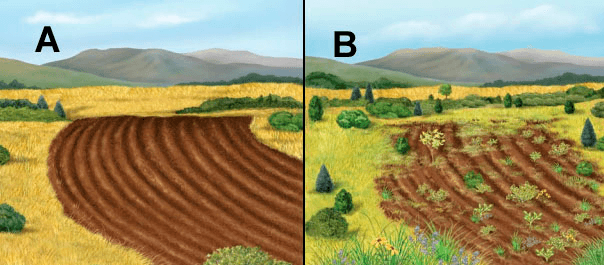
What type of succession is shown going from figure A to figure B?
a)
primary succession
b)
ecological succession
c)
secondary succession
d)
intermediate
134.
Which process occurs after a forest fire?
a)
eutrophication
b)
photosynthesis
c)
primary succession
d)
secondary succession
135.
What is Ecological Succession?
a)
Competition between plants in a society
b)
A natural disaster such as a flood or fire
c)
The cycle of a tomato plant
d)
The change an ecosystem experiences over time
136.
succession that occurs in an area with no soil
a)
ecological succession
b)
primary succession
c)
secondary succession
d)
pioneer speciles
137.
the first organisms that appear in an ecological community
a)
ecological succession
b)
primary succession
c)
secondary succession
d)
pioneer speciles
138.
After a volcanic eruption, lava covers the land. What is the order that plants grow to repopulate the area?
a)
Lichens → Shrubs → Grasses → Trees
b)
Shrubs → Trees → Grasses → Lichens
c)
Grasses → Lichens → Shrubs → Trees
d)
Lichens → Grasses → Shrubs → Trees
139.
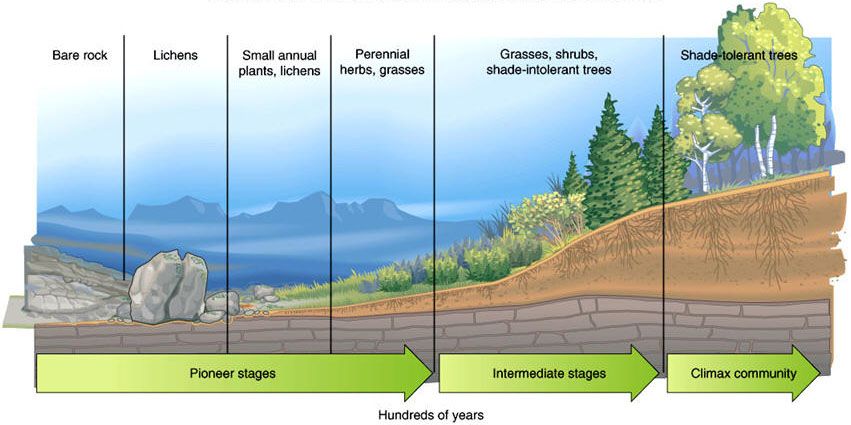
The picture shows what type of succession?
a)
primary
b)
secondary
c)
tertiary
d)
quadanary
140.
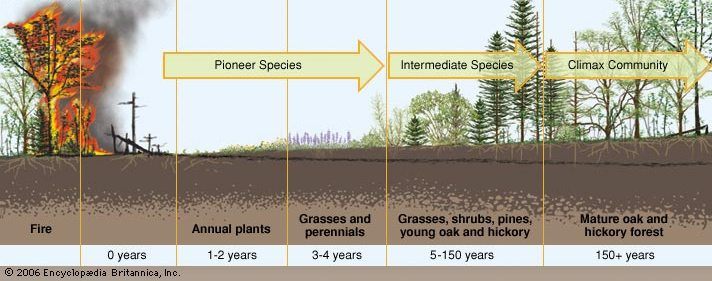
The picture shows what type of succession?
a)
primary
b)
secondary
c)
tertiary
d)
quadanary
141.
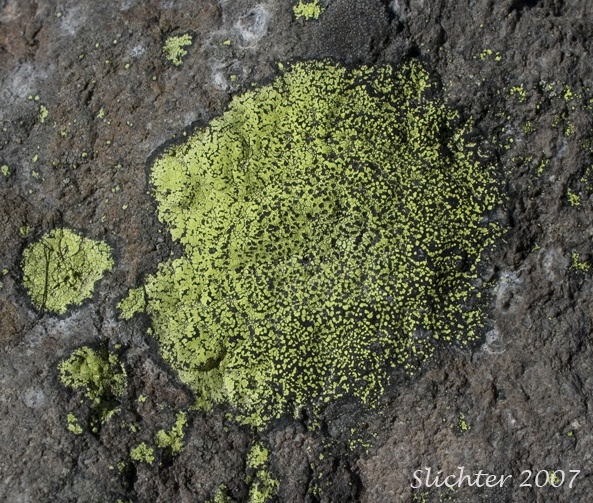
What is the name given to lichen or algae after a primary succession?
a)
pioneer species
b)
volunteer species
c)
founder species
d)
conqueror species
142.
Which is NOT an abiotic factor:
a)
soil
b)
air
c)
bacteria;
d)
water
143.
What percentage of energy is passed on to each tropic level?
a)
10%
b)
50%
c)
90%
d)
100%
144.
Where do decomposers go in your food chain?
a)
at the beginning
b)
they don't belong in a food chain
c)
at the end
d)
at every level
145.
Which represents the largest group in a food web?
a)
carnivores
b)
omnivores
c)
herbivores
d)
producers
146.

diagram that shows the energy available to each trophic level in an ecosystem; 10% is passed on to upper levels, the rest is lost as heat
a)
succession
b)
cellular respiration
c)
energy pyramid
d)
biochemical cycle
147.

symbiotic relationship in which one organism benefits and the other organism is harmed
a)
secondary succession
b)
predation
c)
pioneer species
d)
parasitism
148.

largest number of individuals of a population that the environment can support
a)
carrying capacity
b)
primary succession
c)
denitrification
d)
mutualism
149.

symbiotic relationship in which one organisms benefits and the other organism is not affected
a)
invasive (non-native) species
b)
mutualism
c)
nitrogen fixation
d)
commensalism
150.
A large area that has a specific type of climate and certain types of plant and animal communities
a)
ecosystem
b)
habitat
c)
niche
d)
biome
151.
Poison Ivy growing on a tree by touch.
a)
Gravitropism
b)
Phototropism
c)
Thigmotropism
d)
Hydrotropism
152.
A plant growing in response to the sunlight.
a)
Gravitropism
b)
Phototropism
c)
Thigmotropism
d)
Hydrotropism
153.
When the plant responds to light, it is known as:
a)
Phototropism
b)
Gravitropism
c)
Thigmotropism
d)
Hydrotropism
154.
The root of a plant growing down.
a)
Positive Gravitropism
b)
Negative Gravitropism
c)
Thigmotropism
d)
Hydrotropism
155.

What type of tropism response to gravity?
a)
Hydrotropism
b)
Phototropism
c)
Thigmotropism
d)
Gravitropism
156.
A stimulus is ___________
a)
a change in an organisms surroundings that causes a reaction
b)
process in which organisms grow larger.
c)
a reaction to a change in surroundings
d)
the result of sexual reproduction.
157.

A sunflower turns toward the sun, what type of tropism would this be?
a)
Hypothyroidism
b)
Phototropism
c)
Thigmotropism
d)
Gravitropism
158.
A vine plant brushes against a fence and wraps itself around the fence. To what stimulus is the plant responding?
a)
phototropism
b)
hydrotropism
c)
thigmotropism
d)
gravitropism
159.

Which type of tropism?
a)
hydrotropism
b)
thigmotropism
c)
phototropism
d)
gravitropism
160.
The skin helps regulate body temperature. When your body becomes too warm you...
a)
Sweat
b)
Blink
c)
Shiver
d)
Yawn
161.
You quickly move your head when a baseball is thrown toward your face. You are responding to ________________
a)
an external stimulus
b)
hormones
c)
pigments
d)
an internal stimulus
162.
Homeostasis in the human body is often maintained by a:
a)
neutral feedback loop
b)
solar feedback loop
c)
positive feedback loop
d)
negative feedback loop
163.
The maintenance of an organism’s internal environment is called:
a)
compensating
b)
homeostasis
c)
balancing
d)
routine
164.

brain cell /
nerve cell
nerve cell
a)
Dr. Suess tree
b)
neuron
c)
skin cell
d)
red blood cell
165.
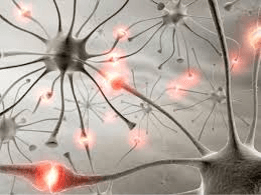
a body system that controls and coordinates all body activities through electric impulses/messages between brain, spinal cord and nerves.
a)
endocrine system
b)
nervous system
c)
nerve
d)
neuron
166.
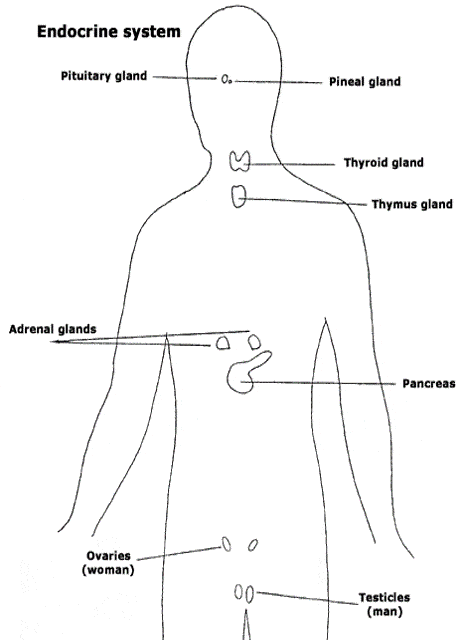
a body system that controls growth and homeostasis by secreting hormones from glands.
a)
skeletal system
b)
nervous system
c)
endocrine sytem
d)
integumentary system
167.
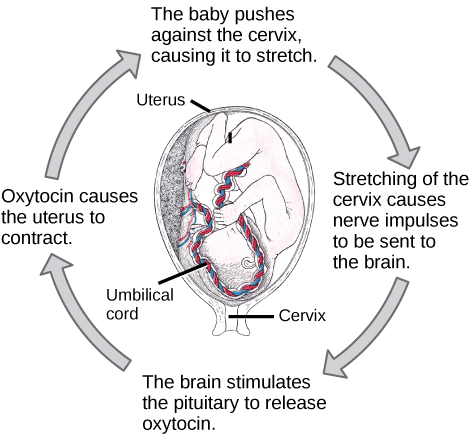
What type of feedback loop is shown?
a)
negative
b)
neutral
c)
positive
168.
Chewing food is an example of _____________.
a)
chemical digestion
b)
physical digestion
169.
The stomach releases hydrochloric acid and enzymes that break down the protein in meats and turn the protein into amino acids. This change is
a)
Physical
b)
Chemical
170.
Acids and enzymes are used in
a)
physical digestion
b)
chemical digestion
171.
Breaking food down with the use of enzymes is known as:
a)
Chemical Digestion
b)
Physical Digestion
172.

The red organ is
a)
stomach
b)
small intestine
c)
large intestine
d)
liver
173.

This is an image of the
a)
stomach
b)
small intestine
c)
esophagus
d)
large intestine
174.
Food being broken down by enzymes found in saliva is an example of
a)
chemical digestion
b)
physical digestion
175.
What is the function of the digestive system?
a)
to break down food, absorb nutrients and get rid of waste
b)
to support and protect our bodies
c)
to produce vitamin D
d)
to help us move
176.
Peristalsis refers to
a)
one of the digestive organs
b)
the action of the stomach
c)
heart rate increasing
d)
smooth muscles moving food through the digestive system
177.
What is the correct order of organization
a)
tissues-cells-organs-organ systems-organism
b)
cell-tissue-organs-organ systems-organism
c)
organism-cells-tissues-organ systems-organism
d)
tissues-cells-organs-organ sytems-organism
178.
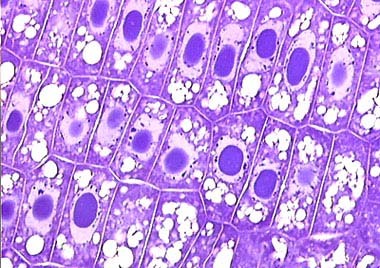
This is a example of ........
a)
cell
b)
tissue
c)
organ
d)
organ system
179.
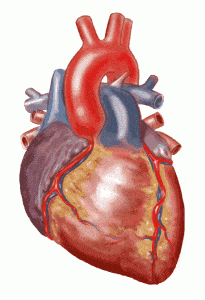
This is a example of ........
a)
cell
b)
organ system
c)
organ
d)
tissue
180.

Which of the following elements is required in an organic compound?
a)
nitrogen
b)
oxygen
c)
carbon
d)
sodium
181.
All of the following elements are common to organic compounds EXCEPT
a)
iodine
b)
hydrogen
c)
phosphorous
d)
oxygen
182.

a)
neon
b)
helium
c)
silver
d)
sulfur
183.
A _____________ is a substance that is made of 2 or more elements that are chemically combined.
a)
atom
b)
cell
c)
element
d)
compound
184.
Bread, fruit, vegetables, and starches are examples of
a)
carbohydrates
b)
lipids
c)
proteins
185.
Organic Compounds are made of these two elements:
a)
helium and carbon
b)
neon and cobalt
c)
hydrogen and carbon
d)
carbon and calcium
186.
Methane is C4H10 is it organic?
a)
YES!
b)
NO
c)
Quite posibly
d)
petri is a handsome bird
187.
What are the building blocks of proteins?
a)
Glucose
b)
Amino Acids
c)
Nucleotides
d)
Fatty Acids
188.

What kind of energy is in a rock at the edge of a cliff?
a)
Potential
b)
Kinetic
189.

At which point is potential energy greatest?
a)
W
b)
X
c)
Y
d)
Z
190.
The unit used to measure work is the
a)
Watt
b)
Newton
c)
Joule
d)
meter
191.
A force exerted over a distance to move an object is ______________________.
a)
power
b)
work
c)
momentum
d)
Watt
192.
A 5000N block is lifted 10 m. How much work was done?
a)
50000 J
b)
5000 J
c)
500 J
d)
50 J
193.
If a group of workers can apply a force of 1,000 Newtons to move a crate 20 meters, what amount of work will they have accomplished?
a)
20,000 J
b)
200 J
c)
2,000 J
d)
20 J
100 %

