
 Worksheets
Ecology Review
Total questions: 57
Worksheet time: 49mins
Name
Class
Date
1.
Wolves kill many elk every year and often attack old, sick, and injured members of a herd. Which of the following best describes the role of the wolves in the wolf-elk relationship?
a)
competitor
b)
host
c)
parasite
d)
predator
2.

The diagram below shows an energy pyramid for a lake ecosystem. Which of the following best describes the role of the perch in this energy pyramid?
a)
producer
b)
decomposer
c)
primary consumer
d)
secondary consumer
3.

A natural process is represented in the box below. Which of the following processes is represented in the box?
a)
decomposition
b)
metamorphosis
c)
photosynthesis
d)
respiration
4.

The diagram below represents a cycle in an ecosystem. Which of the following do the arrows most likely represent?
a)
heat
b)
nutrients
c)
sunlight
d)
water
5.

The diagram below shows a partial food web for some of the organisms in an area. If all the trees in the area were cut down, the energy supply of which population would be most directly affected?
a)
aphid
b)
grasshopper
c)
oriole
d)
rabbit
6.
Some types of bacteria can only live where oxygen is not present. These bacteria were well adapted to life on Earth over 2 billion years ago.Which of the following changes caused many of these bacteria to become extinct?
a)
the slow movement of tectonic plates
b)
the varying temperatures of each season
c)
an increase in volcanic activity under the oceans
d)
an increase in the number of photosynthetic organisms
7.
Most of the bacteria in a forest ecosystem are best classified as which of the following types of organisms?
a)
consumers
b)
decomposers
c)
producers
d)
predators
8.
Which statement best describes an important difference between plants and animals?
a)
Plants get food from the soil while animals get food by eating other organisms.
b)
Animals are alive but plants are not.
c)
Plants use carbon dioxide from the air and water to make their own food while animals get food by eating other organisms.
d)
Animals are made of cells but plants are not.
9.
The role of producers in an ecosystem is to:
a)
convert the sun's energy into energy stored as food
b)
convert other organisms into energy
c)
eat other living organisms for energy
d)
break down dead and waste matter
10.
The word "ecosystem" refers to:
a)
the physical environment
b)
living organisms
c)
living organisms and the physical environment
d)
living organisms in a laboratory
11.
Which of the following statements is TRUE?
a)
you can always predict what will happen when you release a new species into the wild
b)
new species will always add to the biodiversity of an area
c)
both a and b
d)
none of the above
12.
A food web shows the flow of ____________ through an ecosystem.
a)
consumers
b)
energy
c)
populations
d)
none of the above.
13.
Decomposers:
a)
convert the sun's energy into energy stored as food
b)
create energy for consumers
c)
eat other living organisms for energy
d)
break down dead and waste matter
14.
The main reason some introduced species survive and overpopulate an area is that:
a)
there are often no natural predators in the area
b)
there is often not enough food for other organisms
c)
most organisms can survive in new habitats
d)
people feed them
15.
Which of the following is a population?
a)
all of the animals in the same phylum
b)
all of the garden snails that live in a specific garden
c)
all of the species of plants and animals that live in a forest
d)
none of the above
16.

Based on this graph, you can conclude that:
a)
the population of birds in this park has grown
b)
the population of birds in this park has decreased
c)
the population of birds in this park will soon disappear
d)
the population of birds in this park will increase in the future
17.
Ronnie decides to release her pet mouse in the woods behind her house. The possible trade-offs of her decision include:
a)
the mouse may die in its new habitat
b)
she may have introduced a new species into the woods
c)
both a and b
d)
there are no trade-offs associated with her decision
18.
Which of the following structures are NOT found in plant cells?
a)
cell wall
b)
chloroplasts
c)
nucleus
d)
all of these structures are found in plant cells
19.
You watch a worm slowly disappear into the ground. Which statement is an example of an observation?
a)
the worm was looking for food
b)
the worm was moving away from the light
c)
the worm burrowed into the ground
d)
the worm had a lot of energy
20.
How is a skin cell from a mouse similar to an amoeba?
a)
both need energy
b)
both have cell walls
c)
both move with pseudopodia
d)
both consume carbon dioxide
21.
Which of the following materials are direct products of photosynthesis?
a)
fats and starches
b)
oxygen and sugar
c)
proteins and amino acids
d)
carbon dioxide and water
22.
A student prepared the following list of characteristics about a cellular organelle.:
1. present in animal cells
2. present in plant cells
3. helps make energy available to the cell.
Which of the following cellular structures is the student describing?
1. present in animal cells
2. present in plant cells
3. helps make energy available to the cell.
Which of the following cellular structures is the student describing?
a)
cell wall
b)
chloroplast
c)
mitochondrion
d)
nucleus
23.
Which part of a plant cell contains genetic material?
a)
cell membrane
b)
vesicle
c)
cytoplasm
d)
nucleus
24.
Which of the following is found in plant cells, but not animal cells?
a)
microtubules
b)
mitochondria
c)
ribosomes
d)
chloroplasts
25.
What is the original source of almost all energy in most ecosystems?
a)
carbohydrates
b)
sunlight
c)
water
d)
carbon
26.
Energy of motion is which type of energy?
a)
Potential
b)
Kinetic
c)
Sound
d)
Gravitational
27.
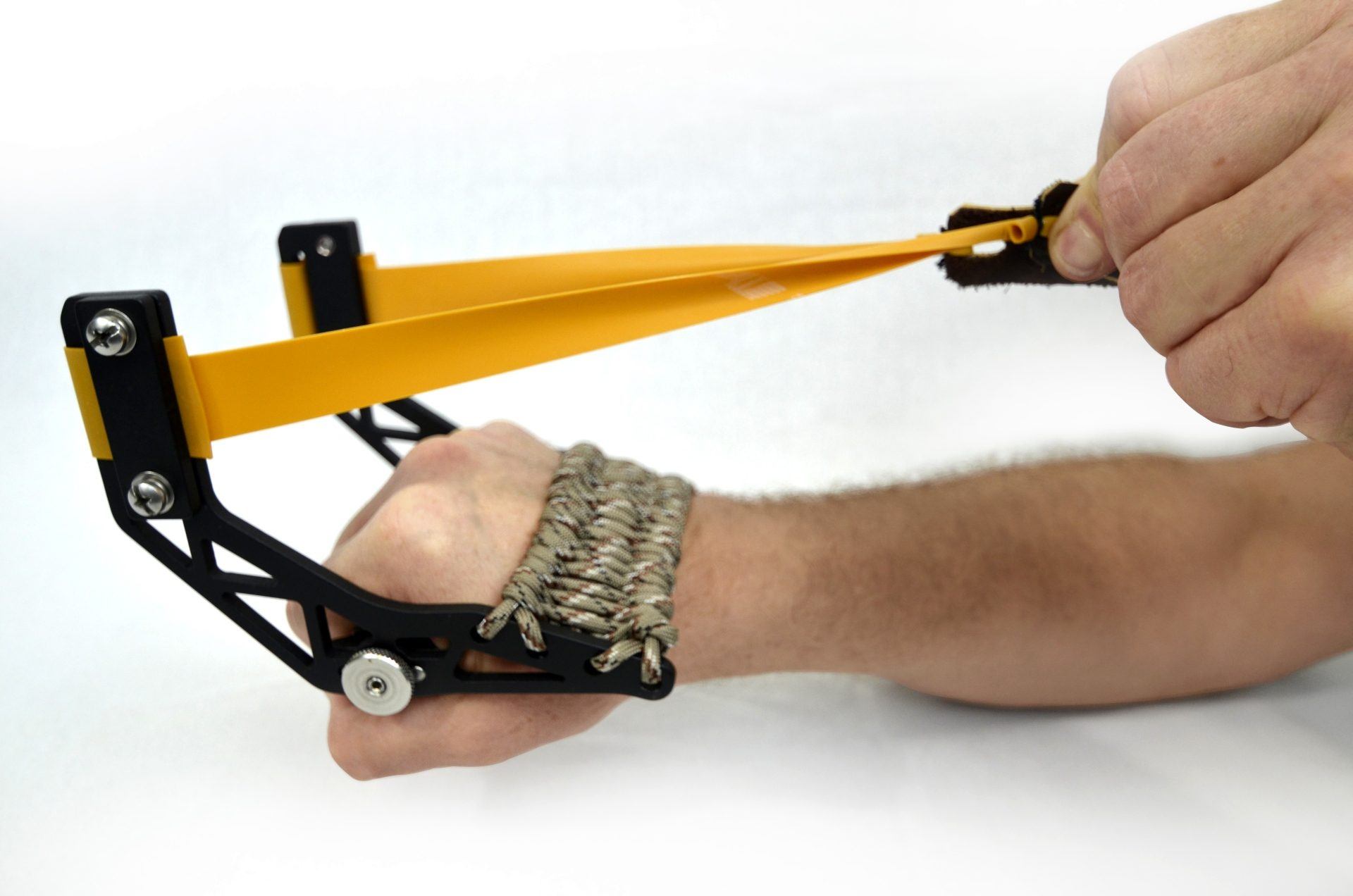
What type of energy is in this picture?
a)
Kinetic
b)
Potential
c)
Chemical
d)
Sound
28.
What characteristic do all renewable resources share?
a)
Produced by waste products
b)
Form underground from dead organisms.
c)
Replaced in a short period of time
d)
Allow energy to pass through them easily
29.

While rubbing your hands together on a cold day, you use friction to transform
a)
thermal energy into nuclear energy
b)
nuclear energy into electrical energy
c)
mechanical energy into thermal energy
d)
mechanical energy into electrical
30.

In the image, all wavelengths of light are ________________ except for red.
a)
absorbed
b)
reflected
c)
refracted
d)
transmitted
31.

In the image, light is...
a)
absorbed
b)
reflected
c)
refracted
d)
trasmitted
32.

Which behavior of light is shown?
a)
absorption
b)
refraction
c)
reflection
d)
trasmission
33.
This is potential energy that is dependent on height.
a)
kinetic energy
b)
gravitational potential energy
c)
elastic potential energy
d)
mechanical energy
34.
Frequency is
a)
the amount of time for one wave cycle.
b)
the number of waves cycles in one second.
c)
the total number of wave cycles.
d)
the distance of one wave cycle.
35.
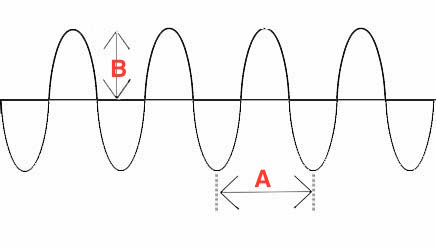
What property of this wave is represented by the letter "A"
a)
amplitude
b)
crest
c)
trough
d)
wavelength
36.
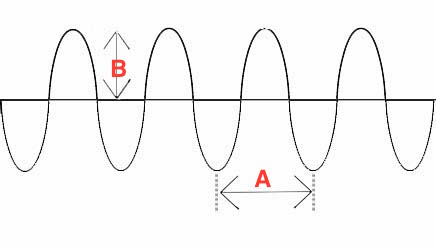
What property of the wave is represented by the letter "B"?
a)
amplitude
b)
crest
c)
trough
d)
wavelength
37.
When the frequency of a wave increases, what happens to the wavelength?
a)
The wavelength is not directly affected by the frequency of a wave.
b)
The wavelength increases.
c)
The wavelength decreases.
d)
More specific information is needed to form a conclusion about the wavelength.
38.
What is the term for each step in the transfer of energy and matter within a biological community?
a)
energy path
b)
food web
c)
trophic level
d)
food pyramid
39.

symbiotic relationship in which both organisms benefit
a)
competition
b)
Mutualism
c)
nitrogen fixation
d)
energy pyramid
40.

A living relationship between two species in which one organism is harmed is called...
a)
mutualism
b)
commensalism
c)
parasitism
d)
niche
41.

What does a food web represent?
a)
All connections of energy flow throughout all organisms in a habitat.
b)
The specific ways that mutualism is carried out.
c)
A single pathway or energy flow between organisms.
d)
How carnivores get their food.
42.
The nonliving aspects of an ecosystem.
a)
Abiotic factors
b)
Biotic factors
43.
The living portions of the ecosystem.
a)
Biotic factors
b)
Abiotic factors
44.
Water temperature would be an example of ...
a)
A biotic factor
b)
An abiotic factor
45.
Organisms that can capture energy from inorganic, nonliving sources.
a)
Producers
b)
Consumers
c)
Detritivores
d)
Carnivores
46.
Organisms that feed on both living producers and other consumers.
a)
Carnivores
b)
Omnivores
c)
Herbivores
d)
Detritivores
47.
The general name for organisms like animals and fungi that get their energy from eating other organisms.
a)
Producers
b)
Consumers
c)
Detritivores
d)
Carnivores
48.
An organism at the second trophic level would be considered a...
a)
Top carnivore
b)
Producer
c)
Herbivore
d)
Carnivore
49.
Consumer that eats plants
a)
heterotroph
b)
herbivore
c)
producer
d)
community
50.
What does every food chain start with? (Even if it's not drawn or written there!)
a)
producers
b)
sun
c)
consumer
d)
decomposers
51.

An organism that needs to eat other organisms to obtain energy is known as a:
a)
Autotroph
b)
Producer
c)
Consumer
d)
Mutualist
52.

The rabbit in this food web would be considered a:
a)
Decomposer
b)
Producer
c)
Secondary Consumer
d)
Primary Consumer
53.
plants that convert energy from the sun
a)
decomposer
b)
primary consumer
c)
secondary consumer
d)
producer
54.

What are the Abiotic factors in this image?
a)
water, sunlight, dirt, air
b)
birds and plants
c)
birds, water, dirt
d)
plants, water
55.

In the energy pyramid here, which organisms have the most energy available?
a)
Producers
b)
Carnivores
c)
Herbivores
d)
Top Predator
56.
What is photosynthesis?
a)
The process in which humans eat their food
b)
When a photographer takes a photo.
c)
To get your pictures from the photo lab.
d)
The process in which plants make their food.
57.

The deer, grasshopper, and bird are all examples of which type of consumers on this food pyramid?
a)
decomposers
b)
omnivores
c)
carnivore
d)
herbivore
100 %

