wayground logo

Free Printable Worksheets

Font size

S
M
L
XL
Worksheets

Plant Structures for Survival and Reproduction

Total questions: 56

Worksheet time: 5hrs 36mins

Name
Class
Date
1.

What two structures are included in stamen

a)

Filament

b)

Pistil

c)

Anther

d)

Pollen

2.

What three structures make up the pistil

a)

Stigma

b)

Sepal

c)

Stamen

d)

Style

e)

Ovary

3.
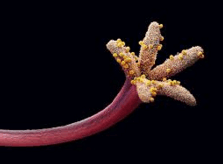
What is the female organ of the flower
a)
Ovary
b)
Pistil
c)
Stigma
d)
Style
4.
What are leaves that surround reproductive parts of the plants to attract pollinators
a)
Petals
b)
Sepal
c)
Style
d)
Ovary
5.
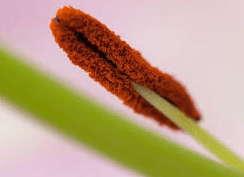
Which structure produces and contains pollen
a)
Style
b)
Filament
c)
Anther
d)
Stigma
6.

What is the tissue that transports sugar throughout the plant

a)

Phloem

b)

Petal

c)

Food tube

d)

Xylem

7.

Which structure transports water throughout the plant

a)

Phloem

b)

Xylem

c)

Water tube

d)

Roots

8.

Which structure is responsible for making food in a plant?

a)

roots

b)

flower

c)

stem

d)

leaves

9.

What is the function of the flower part of a plant?

a)

help the plant reproduce

b)

transport water to the leaves

c)

make food for the plant

d)

provide support for the plant

10.

Which structure of the plant is usually in the ground and draws water and nutrients from the soil?

a)

stem

b)

flower

c)

roots

d)

leaves

11.

Which of the following is NOT a function of a root

a)

They anchor plants in the ground.

b)

They compete with other plants for sunlight.

c)

They are food storage areas.

d)

They absorb water and nutrients from the soil.

12.

What type of tissue are xylem and phloem?

a)

dermal tissue

b)

vascular tissue

c)

ground tissue

d)

kleenex tissue

13.

What does label D point to?

a)

leaves

b)

stem

c)

roots

d)

meristem

14.
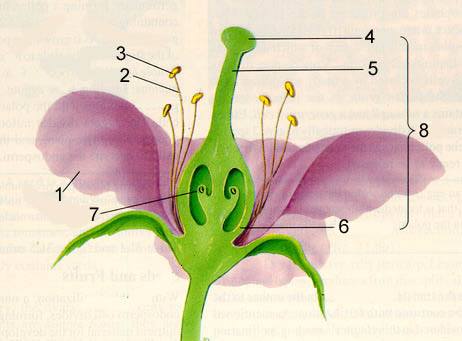
What is #1 pointing to?
a)
ovary
b)
petal
c)
stigma
d)
stamen
15.
What is #4 pointing to?
a)
anther
b)
style
c)
stigma
d)
ovary
16.
Where is pollen made?
a)
ovary
b)
petal
c)
pistil
d)
anther
17.
A _______ plant has true roots, stems and leaves.
a)
Vascular
b)
Nonvascular
18.
________ means flowering plant.
a)
angiosperm
b)
gymnosperm
c)
conifer
19.

The plant tissue that carries food materials upward and downward from the leaves to the rest of the pant is the ______.

a)

Phloem

b)

Stomata

c)

Chlorophyll

d)

Xylem

20.

What are the two types of roots?

a)

Woody

b)

Fibrous

c)

Taproot

d)

Herbaceous

21.
A fibrous root:
a)
is a long thick root 
b)
all plants have a fibrous root 
c)
consist of many similar sized roots that form a dense tangled mass 
d)
hard to pull out of the ground
22.

This is an example of a fibrous root

a)

carrots, dandelions,cacti

b)

rose bushes, carnations

c)

orange trees, strawberries

d)

lawn grass, corn and some trees

23.
A taproot is
a)
one long main root with smaller roots branching off
b)
easy to pull out of the ground 
c)
a weed 
d)
all plants have taproots 
24.

What is the function of root hairs?

a)

There is no such thing as root hairs

b)

They help anchor the plant in the ground.

c)

They protect the root from injury

d)

They grow out of the roots to increase surface area so the roots can absorb more water and nutrients.

25.

Select the functions of the stem

a)

Photosynthesis

b)

Provide support

c)

Food storage sites

d)

Protects the root

e)

Hold leaves up to the light

26.
What kind of root is this?
a)
Taproot
b)
Fibrous root
27.
The two types of stems are 
a)
tall and short
b)
thick and thin
c)
herbaceous and woody
d)
there is only one type of stem 
28.
What part of the seed protects the seed until the plant begins to grow?
a)
embryo
b)
seed coat
c)
cotyledon
29.
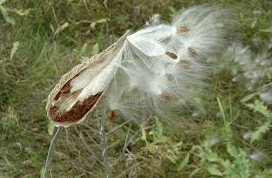
Animals disperse seeds by _________.
a)
eating seeds and dropping waste later on
b)
hiding seeds for late and not coming back for them
c)
catching seeds on their fur and carrying them to different places
d)
all of the above
30.
Which part attracts insects and mammals to the flower
a)
sepal
b)
petal
c)
ovaries
d)
style
31.
If the xylem in a young tree is damaged, which process is first affected?
a)
performing photosynthesis
b)
transporting sugar to the roots
c)
 transporting water to the leaves
d)
absorbing water from the soil
32.
A plant species lives in an area with limited sunlight. Which physiological adaptation would be most useful to the plant? 
a)
colorful flowers
b)
large leaves
c)
deep roots
d)
thin cuticle
33.
In the process of pollination, pollen is transferred from the male part of the flower to what sticky part of the flower?
a)
Stamen
b)
Ovary
c)
Stigma
d)
Style
34.
Some plants have developed structures for defense so they are not eaten by other animals. Which of the following defenses is pictured?
a)
Poisionous Roots
b)
Poisionous Fruits
c)
Poisionous Stomatas
d)
Poisious Thorns
35.
Which plant defense structure is best represented in the picture?
a)
The ability to grow towards light
b)
The ability to grow fruits
c)
The ability to close its stomatas 
d)
The ability to close its leaves
36.
_________ _________ help increase surface area of the roots so they can absorb more nutrients and water from the soil.
a)
Root hairs
b)
Type of roots
c)
The phloem
d)
The xylem
37.
Plants that have true roots, stems and leaves are called ____.
a)
nonvascular plants
b)
vascular plants
c)
seed plants
d)
spore plants
38.
Vascular plants transport nutrients through tube-like structures known as ____________________ and non-vascular plants transport nutrients from _________________.
a)
cell to cell, xylem and phloem
b)
seeds, cell to cell
c)
xylem and phloem, cell to cell
d)
xylem and phloem, seeds
39.
This is a ____ plant.
a)
gymnosperm
b)
angiosperm
c)
vascular
d)
nonvascular
40.
Non-vascular plants reproduce through _____________.
a)
seeds
b)
cones
c)
flowers
d)
spores
41.
If a plant reproduced asexually, which part of the plant would probably NOT be used during the reproduction process?
a)
leaves
b)
roots
c)
stem
d)
flower
42.
NAME THAT ROOT 
a)
Fibrous 
b)
Woody
c)
Tangle 
d)
Tap
43.
When a seed starts to grow, the embryo gets nutrients from the ____.
a)
seed coat
b)
large vacuole
c)
cotyledon
d)
chloroplast
44.
These types of plants are able to grow taller because of the added support and faster nutrient transport of xylem and phloem.
a)
Seedless plants
b)
Vascular plants
c)
Seeded plants
d)
Nonvascular plants
45.
What type of stem is this?
a)
Green
b)
Herbaceous
c)
Simple
d)
Woody
46.
What type of stem is this?
a)
Brown
b)
Herbaceous
c)
Complex
d)
Woody
47.

Which statements can you make about the spider plant pictured

a)

It reproduces asexually.

b)

It gets its traits from two different plants.

c)

It will not be able to produce offspring.

d)

It will be identical to the parent plant.

e)

It reproduces sexually.

48.
Which is true about Asexual reproduction?
a)
Insects are needed to transfer pollen.
b)
New plants grow from seeds. 
c)
Offspring are genetically identical to their parent.
d)
Two types of gametes are involved. 
49.
The stalks in a flower that produce the male reproductive cells
a)
pistil
b)
stamen
c)
filament
d)
stigma
50.
The part of a flower that produces the male reproductive cells.
a)
anther
b)
style
c)
stigma
d)
filament
51.
The transfer of pollen, containing the sperm cells, to the female part of the flower. 
a)
seed disperal
b)
pollination 
c)
germination
d)
fertilization
52.
All of the following are examples of seed disbursement except:
a)
wind
b)
volcanic eruptions
c)
physical movement (rolling)
d)
animals feces
53.
The part of the flower on which the pollen grains land.
a)
pistil
b)
stamen
c)
style
d)
stigma
54.

In which structure does fertilization take place in a flowering plant?

a)

Stigma

b)

Ovary

c)

Stamen

d)

Pistil

e)

Ovule

55.

Which structure of a flowering plant becomes the fruit?

a)

Ovule

b)

Ovary

c)

Pistil

d)

Stamen

56.

Seeds are produced when

a)

pollen lands on the stigma.

b)

pollen makes a tube down the style.

c)

ovule and pollen join.

d)

ovary and pollen join.