
 Worksheets
Weather and Climate
Total questions: 67
Worksheet time: 51mins
Name
Class
Date
1.
The boundary between two air masses is known as:
a)
front
b)
storm
c)
climate
d)
flood
2.
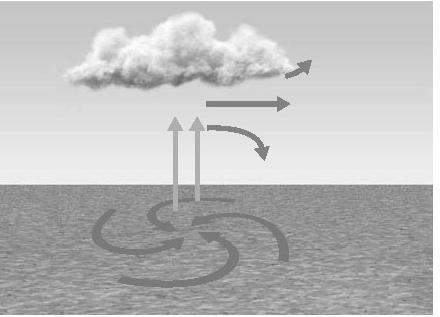
Which type of pressure system is pictured?
a)
high
b)
low
c)
medium
d)
none
3.
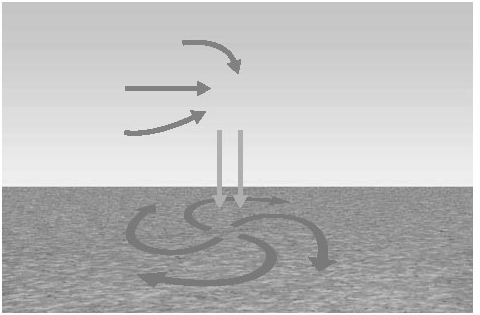
Which type of pressure system is pictured?
a)
high
b)
low
c)
medium
d)
none
4.

What type of weather would you expect from the pressure system pictured?
a)
clear
b)
cloudy
c)
hot
d)
stormy
5.

What type of weather would you expect with the pressure system pictured?
a)
clear
b)
cloudy
c)
severe storms
d)
hot
6.
Cold air traveling south from Canada is:
a)
continental tropical
b)
continental polar
c)
maritime tropical
d)
maritime polar
7.
Warm air moving upwards from the Gulf of Mexico is:
a)
continental tropical
b)
continental polar
c)
maritime tropical
d)
maritime polar
8.
Warm air mass that does not carry water:
a)
continental tropical
b)
continental polar
c)
maritime tropical
d)
maritime polar
9.
Cold air mass that is carrying water is:
a)
continental tropical
b)
continental polar
c)
maritime tropical
d)
maritime polar
10.
This type of front can bring strong and severe storms
a)
cold
b)
warm
c)
stationary
d)
occluded
11.
This type of front results in the same weather for several days
a)
warm
b)
cold
c)
stationary
d)
occluded
12.
Which weather tool measures air pressure?
a)
thermometer
b)
barometer
c)
anemometer
d)
psychrometer
13.

This is the symbol for a...
a)
Cold Front
b)
Warm Front
c)
Stationary Front
d)
Occluded Front
14.

This is the symbol for a...
a)
Occluded Front
b)
Stationary Front
c)
Warm Front
d)
Cold Front
15.

This is the symbol for a...
a)
Stationary Front
b)
Occluded Front
c)
Cold Front
d)
Warm Front
16.

This is the symbol for a...
a)
Stationary Front
b)
Occluded Front
c)
Cold Front
d)
Warm Front
17.

Identify the type of front that is shown in the image.
a)
Occluded Front
b)
Cold Front
c)
Stationary Front
d)
Warm Front
18.

Identify the type of front that is shown in the image.
a)
Occluded Front
b)
Cold Front
c)
Stationary Front
d)
Warm Front
19.

Identify the type of front that is shown in the image.
a)
Occluded Front
b)
Cold Front
c)
Stationary Front
d)
Warm Front
20.
Identify the type of front that is shown in the image.
a)
Occluded Front
b)
Cold Front
c)
Stationary Front
d)
Warm Front
21.

Which number illustrates Condensation?
a)
1
b)
2
c)
3
d)
4
22.
What kind of weather is usually associated with a high pressure system?
a)
Sunny weather
b)
Precipitation (rain, snow, etc.)
23.
Hot air (RISES / FALLS) __________.
a)
RISES
b)
FALLS
24.
Cold air (RISES/ FALLS) _________.
a)
RISES
b)
FALLS
25.

A violently rotating column of air called a _____ when it comes in contact with the ground.
a)
hurrican
b)
tornado
c)
trade wind
d)
local wind
26.

A _____ is a large, swirling, low-pressure system that forms over the Atlantic Ocean.
a)
blizzard
b)
cold front
c)
tornado
d)
hurricane
27.
Rain, snow, sleet, and hail are all forms of _____.
a)
precipitation
b)
condensation
c)
evaporation
d)
climate
28.

The amount of water vapor present in the air is called ________________.
a)
weather
b)
humidity
c)
air mass
d)
dew point
29.
When a warm air mass gently slides on top of a cold air mass, and you have drizzly rain and then warmer weather, what type of front is it?
a)
warm front
b)
cold front
c)
occluded front
d)
stationary front
30.

What part of the illustration shows Evaporation?
a)
1
b)
2
c)
3
d)
4
31.

What would you expect from a Continental Polar air mass?
a)
moist, warm air
b)
dry, cold air
c)
dry, warm air
32.

What would you expect from a Maritime Tropical air mass?
a)
dry, warm air
b)
moist, cold air
c)
moist, warm air
33.
Which weather tool measures wind speed?
a)
anemometer
b)
therometer
c)
wind vane
d)
barometer
34.
The average, year-after-year conditions of temperature, precipitation, winds, and clouds in an area is known as ______________________.
a)
latitude
b)
weather
c)
climate
d)
altitude
35.
Air pressure is lower on the top of the mountain than at the bottom.
a)
True
b)
False
36.
The clouds that are big & fluffy like cotton are
a)
cumulus
b)
stratus
c)
cirrus
37.
Wind moves from areas of _______ to ______ pressure.
a)
high to low
b)
low to high
c)
same direction
38.
Winds are named based on the direction they are
a)
coming from
b)
moving towards
c)
getting away
39.
It is the daily condition of the Earth's atmosphere
a)
climate
b)
weather
c)
humidity
40.
As altitude increases, what happens to temperature?
a)
temperature increases
b)
temperature decreases
41.
Wind and weather is caused by uneven _______ of Earth.
a)
Heating
b)
Wind
c)
Water Vapor
42.

The picture represents a land breeze
a)
True
b)
False
c)
Not enough information
d)
Maybe
43.

This weather tool is used to measure...
a)
Temperature
b)
Rainfall
c)
Wind Speed
d)
Humidity
44.

This weather tool is used to determine...
a)
Temperature
b)
Wind Vain
c)
Wind Direction
d)
Rainfall
45.

What type of cloud is pictured?
a)
Cirrus
b)
Stratus
c)
Cumulous
d)
Nimbus
46.

What type of clouds are pictured?
a)
Cumulous
b)
Stratus
c)
Cirrus
47.

What type of cloud is pictured?
a)
Cirrus
b)
Stratus
c)
Cumulous
d)
Nimbus
48.
Today's atmosphere is mostly made up of which gas?
a)
Oxygen
b)
Carbon Dioxide
c)
Argon
d)
Nitrogen
49.
Where would the air pressure be the highest?
a)
On the ground
b)
In a plane
c)
On the moon
d)
On a mountain
50.
Which atmospheric layer has the highest air pressure?
a)
Stratosphere
b)
Troposphere
c)
Mesosphere
d)
Thermosphere
51.
UV radiation is absorbed in the stratosphere by which feature?
a)
Greenhouse
b)
Oxygen
c)
Ozone
d)
Cyanobacteria
52.
___________ is the condition of the atmosphere and how it behaves over long periods of time.
a)
Weather
b)
Climate
c)
Temperature
d)
Meteorology
53.
_______________ is the atmospheric conditions over a short period of time, reported as a forecast.
a)
Weather
b)
Climate
c)
Temperature
d)
Humidity
54.
______________ takes data averages of 30 or more years, such as average rainfall.
a)
Weather
b)
Climate
c)
Temperature
d)
Humidity
55.
In what layer of the atmosphere do meteors appear in?
a)
Thermosphere
b)
Troposphere
c)
Stratosphere
d)
Mesosphere
56.
What is the only layer of the atmosphere that contains water vapor, therefore being the only layer that experiences weather?
a)
Thermosphere
b)
Troposphere
c)
Stratosphere
d)
Mesosphere
57.
How much Nitrogen is in the atmosphere?
a)
21%
b)
78%
c)
1%
d)
42%
58.
What layer is the Ozone in?
a)
Ozone Layer
b)
Startosphere
c)
Troposphere
d)
It's not in one, it has its own
59.
What is the first layer of the Atmosphere? (lowest)
a)
Troposphere
b)
Thermosphere
c)
Stratosphere
d)
None of these
60.
Temperature in the stratosphere warms as altitude increases.
a)
True
b)
False
61.
What is the outer most main layer of Earth's atmosphere?
a)
Thermosphere
b)
Troposphere
c)
Stratosphere
d)
Mesosphere
62.
What is the second lowest main layer of Earth's atmosphere?
a)
Thermosphere
b)
Troposphere
c)
Stratosphere
d)
Mesosphere
63.

Where is the temperature the highest?
a)
1
b)
2
c)
3
d)
4
64.

Where is the air pressure the greatest?
a)
1
b)
2
c)
3
d)
4
65.

Where is the altitude the greatest?
a)
1
b)
2
c)
3
d)
4
66.
Which of the following is the correct order of the atmosphere layers from Earth to space?
a)
troposphere, stratosphere, mesosphere, thermosphere, exosphere
b)
troposphere, mesosphere, thermosphere, exosphere, stratosphere
c)
thermosphere, stratosphere, mesosphere, troposphere, exosphere
d)
troposphere, stratosphere, mesosphere, exosphere, thermosphere
67.
Which of the following is NOT a reason why the atmosphere is important?
a)
It is made of many layers.
b)
It provides gases living things need.
c)
It provides warm temperatures.
d)
It protects us from UV rays and meteors.
100 %

