
 Worksheets
EOC Review
Total questions: 62
Worksheet time: 1hrs 22mins
Name
Class
Date
1.
A series of steps used by scientists to solve a problem or answer a question.
a)
scientific method
b)
recipe
c)
data collection
d)
metric system
2.
This variable in an experiment is the one being deliberately changed by the scientist.
a)
dependent variable
b)
independent variable
c)
data
d)
control group
3.

Which statement is an inference about this picture?
a)
The van is tan.
b)
The van ran into KFC.
c)
The driver was hungry.
d)
Red and white are part of the KFC building.
4.
A testable explanation to a problem that has not yet been tested.
a)
data
b)
theory
c)
hypothesis
d)
fact
5.
Two types of data scientists collect are...
a)
hypothesis and theory
b)
qualitative and quantitative
c)
myths and fables
d)
metric and standard measurements
6.
When experimenting with the growth of a plant, a scientist uses three (of the same type of) plants, two different fertilizers, equal light, and equal water. What type of variable is the fertilizer?
a)
Dependent
b)
Independent
c)
Control
d)
Compound
7.
An experiment is performed on plants to see how different liquids affect plant growth. Each plant in the experiment is given a different liquid; water, apple juice, or milk. Each plant has the same amount of soil, sunlight, and listens to the same music. In this investigation, what is the dependent variable?
a)
Type of plant
b)
Water, apple juice, milk
c)
Plant growth
d)
Color of the plant's leaves
8.
What step does every scientific experiment begin with?
a)
hypothesis
b)
question/problem
c)
procedures
d)
conclusion
9.
Dependent variable means
a)
the scientist controls what to test
b)
educated guess
c)
ask a question
d)
what is being measured
10.
An experiment is performed on plants to see how different liquids affect plant growth. Each plant in the experiment is given a different liquid; water, apple juice, or milk. Each plant has the same amount of soil, sunlight, and listens to the same music. In this investigation, what are the controlled variables?
a)
Type of plant, amount of music, and sunlight
b)
Water, apple juice, milk
c)
Plant growth
11.
A student is planning an experiment to find out how the height from which he drops a ball affects how high the ball bounces. What is the control variable?
a)
The ball used
b)
The height the ball bounces
c)
Height of the ball being dropped
12.
People outside are using umbrellas; it must be raining.
a)
Quantitative
b)
Qualitative
c)
Inference
d)
Prediction
13.
There is 1 whiteboard in the classroom.
a)
Quantitative Observation
b)
Qualitative Observation
c)
Inference
d)
Prediction
14.
It was hot this week, so it will be hot next week.
a)
Quantitative
b)
Qualitative
c)
Inference
d)
Prediction
15.

The goat butted the boy into the pond.
a)
observation
b)
inference
16.

The tree by the pond has no leaves on it.
a)
observation
b)
inference
17.
These kind of observation use your senses to observe results.
a)
Qualitative
b)
Quantitative
c)
Scientific
18.
These kind of observations are made using instruments such as rulers, balances and thermometers.
a)
Qualitative
b)
Quantitative
c)
Scientific
19.
The leaf is 5mm wide.
a)
Qualitative
b)
Quantitative
20.
The leaves on the plant are turning brown.
a)
Qualitative
b)
Quantitative
c)
Both
d)
Neither
21.
Particles (molecules) in a ______________________ have more energy than the other states of matter.
a)
gas
b)
solid
c)
liquid
22.
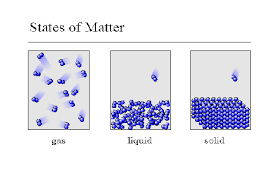
At higher temperatures
a)
particles in an object have less energy
b)
particles in an object move faster
c)
a gas contracts
23.
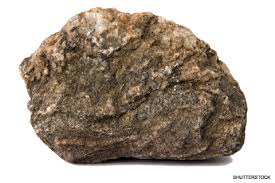
Which state of matter has tightly packed molecules?
a)
solid
b)
liquid
c)
gas
24.
The slower the particles in a substance move,
a)
the colder it is.
b)
the warmer it is.
c)
the more energy it has.
d)
the less energy it has.
25.

Which form of matter take the shape of a container like this juice?
a)
liquid
b)
solid
c)
glass
d)
gas
26.
When the temperature of matter increases the particles...
a)
speed up and move closer
b)
speed up and move farther apart
c)
slow down and move closer together
d)
slow down and move farther apart
27.
The positive particles of an atom are
a)
electrons
b)
positrons
c)
neutrons
d)
protons
28.
the central region of an atom where its neutrons and protons are is its
a)
nucleus
b)
electron cloud
c)
core
d)
center
29.

What does the 1.00794 stand for?
a)
Hydrogen
b)
atomic number
c)
atomic mass
d)
atomic explosion
30.
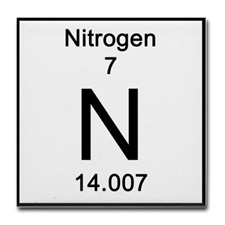
What is the number of protons that the element in this image contain?
a)
14
b)
7
c)
15
d)
18
31.
Which of the following is a negatively charged subatomic particle?
a)
Electron
b)
Proton
c)
Neutron
d)
Quark
32.
All matter is made of what?
a)
energy
b)
atoms
c)
electrons
d)
compounds
33.
Which of the following is a subatomic particle with no charge that is found in the nucleus of an atom?
a)
Electron
b)
Proton
c)
Neutron
d)
Quark
34.

What is the formula to solve for the neutron?
a)
Mass + Atomic Number= Neutrons
b)
Mass x Atomic Number = Neutrons
c)
Mass - Atomic Number = Neutrons
d)
Mass + Number of Protons = Neutron
35.

How many neutrons does oxygen have?
a)
16
b)
15.99
c)
8
d)
Doesn't contain any neutrons
36.
An atom with 19 protons, and 19 electrons and a mass of 39 has how many neutrons?
a)
19
b)
39
c)
20
d)
58
37.
What is made up two or more elements that are chemically combined?
a)
Element
b)
Mixture
c)
Compound
d)
Solids
38.
What cannot be broken down into other substances?
a)
Compound
b)
Mixture
c)
Solids
d)
Element
39.
A combination of substances that are not chemically combined is called a(n)____________.
a)
mixture
b)
compound
c)
physical
40.
Which of the following formulae represents an element?
a)
H2O
b)
H2
c)
NaCl
d)
CaCO3
41.
Which of the following is not a compound?
a)
HCl
b)
Cl
c)
NaCl
d)
CO2
42.
An element is made up of only one kind of _____.
a)
isotope
b)
plastic
c)
atom
d)
metal
43.

What is gold?
a)
element
b)
compound
c)
mixture
44.

What is salad?
a)
element
b)
compound
c)
mixture
45.
Which is a physical property of an element that remains the same no matter how much matter is present?
a)
Melting Point
b)
Reactivity
c)
Flammability
d)
Volume
46.
What kind of properties can only be observed when a substance changes into a different substance?
a)
physical properties
b)
chemical properties
c)
liquid properties
d)
real properties
47.
Is melting butter for popcorn a chemical or physical change?
a)
chemical
b)
physical
48.

Is burning wood a chemical or physical change?
a)
chemical
b)
physical
49.
A change in the size, shape, or state of matter.
a)
chemical change
b)
physical change
c)
chemical reaction
d)
electron change
50.
What is an example of a Chemical change?
a)
Ripped paper
b)
boiled egg
c)
cracked egg
d)
sugar in water
51.
The amount of space an object takes up is its
a)
mass
b)
volume
c)
density
d)
weight
52.
How much mass is in a certain amount of volume is its
a)
mass
b)
volume
c)
density
d)
weight
53.
Mass is measured with what units?
a)
grams (g)
b)
centimeters (cm)
c)
milliliters (mL)
d)
pounds (lbs)
54.
Volume is measured with what units?
a)
grams (g)
b)
centimeters (cm)
c)
milliliters (mL)
d)
pounds (lbs)
55.
Density is measured with what units?
a)
grams (g)
b)
centimeters (cm)
c)
g/mL
d)
pounds (lbs)
56.
How do you calculate the volume of a regular shaped object?
a)
mass x volume
b)
length x width x height
c)
mass ÷ volume
d)
length x width
57.
How can volume be determined through water displacement?
a)
measure the graduated cylinder
b)
drop object in cylinder and measure amount water rises
c)
measure length, width, and height
d)
place on a scale
58.
How do you calculate the density of an object?
a)
length x width x height
b)
mass x volume
c)
volume ÷ mass
d)
mass ÷ volume
59.

What is it called when WATER is FORMED from an LIQUID to a WATER VAPOR or a [GAS]?
a)
EVAPORATION
b)
PRECIPITATION
c)
TRANSPIRATION
d)
CONDENSATION
60.

What is it called when plants give off water vapor as a waste product?
a)
condensation
b)
evaporation
c)
sublimation
d)
transpiration
61.
Snow, sleet, hail, and rain are all examples of ________________.
a)
evaporation
b)
condensation
c)
accumulation
d)
precipitation
62.

What part of the water cycle does this picture show?
a)
condensation
b)
precipitation
c)
evaporation
d)
transpiration
100 %

