
 Worksheets
7th Grade Genetics Unit Review
Total questions: 57
Worksheet time: 55mins
Name
Class
Date
1.
When a starfish grows a new body off a broken arm, what kind of reproduction is this?
a)
Sexual
b)
Differentiation
c)
Asexual
d)
Specialization
2.
Where does an off spring get its traits in asexual reproduction?
a)
From both parents
b)
From only one parent
c)
From neither parent
d)
There are no traits handed down
3.
Sexual reproduction requires _____ parents and asexual reproduction requires ___ parents
a)
1,1
b)
2,2
c)
2,1
d)
1,2
4.
What is an advantage of sexual reproduction?
a)
Allows genetic variation
b)
Only needs one parent
c)
Happens very quickly
d)
Offspring are exact copies of parent
5.
What is one disadvantage of sexual reproduction?
a)
Only one parent needed
b)
Off spring are exact copies of parents
c)
Happens very quickly
d)
Needs two parents
6.
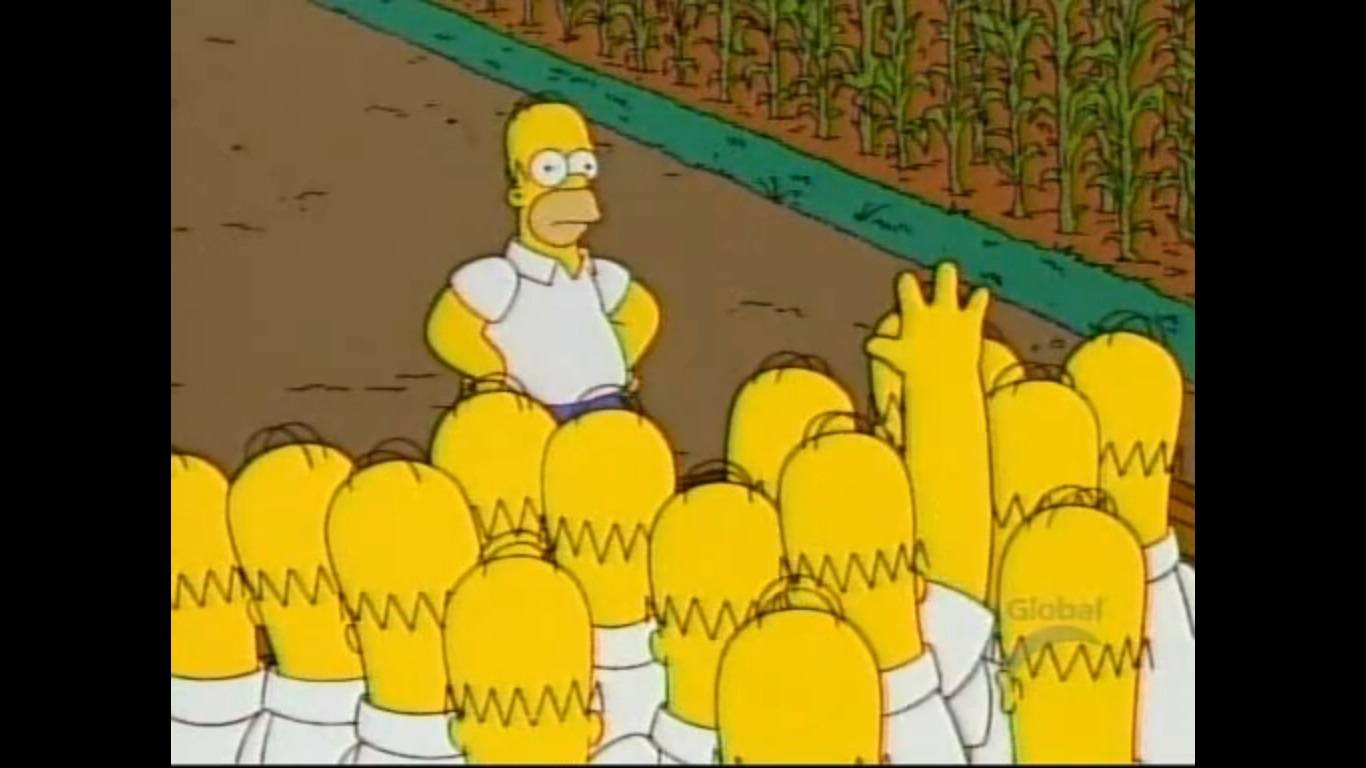
All of the offspring of an organism have the same genetic material, which is identical to the parent organism. From this, we can conclude that this organism -
a)
makes its own food
b)
is unicellular
c)
live in a marine habitat
d)
reproduces asexually
7.
What are some of the facts about sexual reproduction?
a)
Takes two mates to reproduce and takes a longer time to reproduce
b)
Takes one mate to reproduce and takes a shorter amount of time to reproduce
c)
Takes two mates to reproduce and takes a shorter amount of time to reproduce
d)
Takes one mate to reproduce and takes a shorter amount of time to reproduce
8.
What are some of the facts about asexual reproduction?
a)
Takes only one mate to reproduce and takes a longer time to reproduce
b)
Takes a shorter amount of time to reproduce and it takes two mates to reproduce
c)
Reproduces diverse offspring and takes a longer time to reproduce
d)
Takes only one mate to reproduce and takes a shorter time to reproduce
9.
In asexual reproduction, all of the offspring are:
a)
Physically Identical
b)
Genetically Identical
c)
Physically and Genetically Identical
d)
Not Identical
10.
A hydra reproduces when an outgrowth, or bud, forms and continues to develop until if falls off of the parent. This is an example of:
a)
Binary Fission
b)
Sporulation
c)
Budding
d)
Vegetative Propagation
11.

a)
budding
b)
sporulation
c)
vegetative propagation
d)
binary fission
12.
How many parent(s)are needed for asexual?
a)
4
b)
1
c)
9
d)
100
13.
Where is all the genetic material inside a cell?
a)
nucleus
b)
vacuole
c)
cell membrane
d)
ribosome
14.
Are all mutations bad?
a)
Yes
b)
No
15.
Is short a genotype or phenotype?
a)
genotype
b)
phenotype
16.
Is AA a genotype or phenotype?
a)
genotype
b)
phenotype
17.
RR- round
rr-wrinkled
What is the phenotype for RR?
rr-wrinkled
What is the phenotype for RR?
a)
wrinkled
b)
round
18.
RR- round
rr-wrinkled
What is the genotype for wrinkled?
rr-wrinkled
What is the genotype for wrinkled?
a)
RR
b)
rr
c)
Rr
19.
In a punnet square where are the parent alleles written?
a)
Top and inside the boxes
b)
Only on the left and right side of the boxes.
c)
outside of the boxes (top and left side)
d)
All on the top side of the boxes
20.

Each one of the boxes on the Punnett Square represents what probability of an offsprings' genotype?
a)
25%
b)
1%
c)
10%
d)
0%
21.
Aa, DD, bB, yy are all examples of
a)
genotypes
b)
phenotypes
22.
Which of the characteristics is a lion least likely to pass on to its offspring?
a)
fur color
b)
length of tail
c)
scars on leg
d)
body size
23.
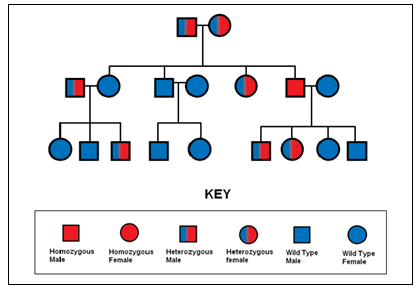
In a pedigree, what shape represents a male?
a)
circle
b)
square
c)
triangle
d)
diamond
24.
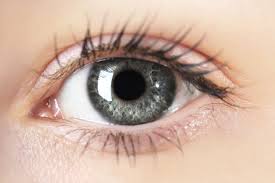
What you see, or the physical appearance.
a)
Genotype
b)
Phenotype
c)
Homozygous
d)
Heterozygous
25.
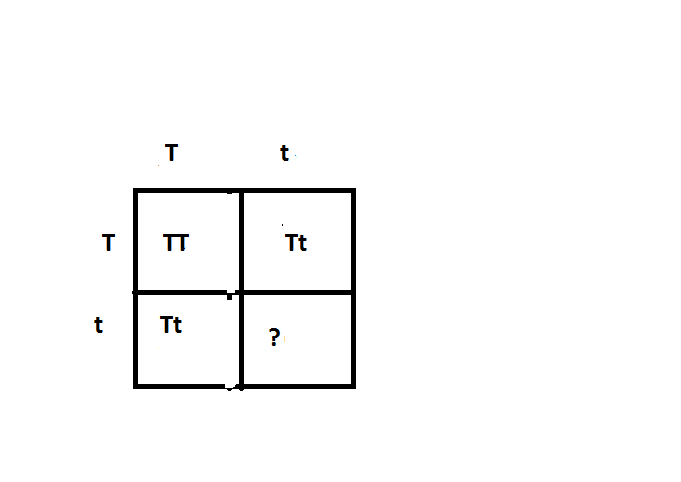
T - tall and t = short
In the punnett square below, what belongs in the missing square
In the punnett square below, what belongs in the missing square
a)
tt
b)
Tt
c)
Bb
d)
TT
26.
If you have a male with large wings (DD) and a female with small wings (dd). What allele stands for large wings?
a)
D
b)
d
c)
Dd
d)
dd
27.
How many alleles (letters) do each person carry for a trait?
a)
1
b)
2
c)
3
d)
4
28.
Dominant alleles are represented by a:
a)
Male gene
b)
lowercase letter
c)
recessive trait
d)
capital letter
29.
What gender has an X and a Y chromosome?
a)
male
b)
female
c)
transgender
d)
all of the above
30.
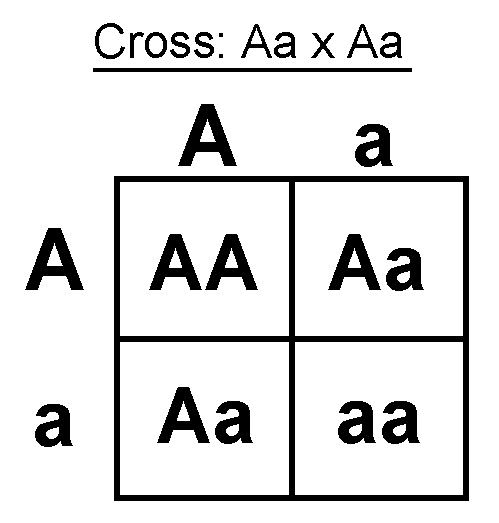
What is the phenotype of the offspring? (A-Brown hair; a-blond hair)
a)
50 % Brown Hair and 50% Blond Hair
b)
25 % Brown Hair and 75% Blond Hair
c)
75 % Brown Hair and 25% Blond Hair
d)
0% Brown Hair and 100% Blond Hair
31.

What allele combination should go in the missing box?
a)
AA
b)
Aa
c)
aa
d)
none of these
32.
What characteristic would a child NOT inherit from parents?
a)
freckles
b)
eye color
c)
short hairstyle
d)
dimples
33.

Which feature of a rose helps it grow without being eaten by large animals?
a)
flowers with bright colors
b)
sharp thorns
c)
small seeds
d)
deep roots
34.

A nice smell is an adaptation that __________________.
a)
helps the plant keep water inside the leaves.
b)
pokes animals that try to eat the plant.
c)
attracts pollinators to the plant.
35.
An example of a plant adaptation is ______________.
a)
its color
b)
its use
c)
its environment
36.
What does it mean to survive?
a)
To stay alive
b)
To grow
c)
To have energy
d)
To be born
37.
What does it mean to reproduce?
a)
to eat things
b)
to make things pretty
c)
to produce energy
d)
to produce new living things
38.
I have parachute like structures. What is likely my dispersal method?
a)
wind
b)
water
c)
animals
d)
explosive action
39.
I have hooks to cling to animal fur. What is likely my dispersal method?
a)
wind
b)
water
c)
animals
d)
explosive action
40.
My fruits have wings to move with wind . What is likely my dispersal method?
a)
wind
b)
water
c)
animals
d)
explosive action
41.
My pod splits open and seeds are thrown out with a force. What is likely my dispersal method?
a)
wind
b)
water
c)
animals
d)
explosive action
42.
I am waterproof and have fibrous husk. What is likely my dispersal method?
a)
wind
b)
water
c)
animals
d)
explosive action
43.
Grasshopper cannot be easily seen on green leaves. How has this adaptation allowed grasshoppers to be successful?
a)
a.They can be easily seen by predators
b)
a.They can find food more easily
c)
a.They are not attacked by predators, and can reproduce
44.

Seed production, sexual or asexual?
a)
sexual
b)
asexual
c)
neither
d)
both
45.
How are seeds dispersed through the environment?
a)
wind
b)
water
c)
animals
d)
all of the above
46.
A potato begins to develop new stems or sprouts from its eyes. Each of these sprouts can become a new potato plant. What is this?
a)
asexual reproduction
b)
sexual reproduction
47.
Bees carry _________ from one plant to another.
a)
water
b)
dirt
c)
pollen
d)
nectar
48.
Other animals besides bees can pollinate flowers. These animals include:
a)
dogs, cats, birds, and bunnies
b)
bats, hummingbirds, butterflies, and flies
c)
horses, cows, pugs, and sheep
d)
elephants, giraffes, lions, and tigers
49.
I am a flower that produces nectar. What is the function of the nectar?
a)
To provide food for the flower
b)
To attract pollinators
c)
To attract animals to disperse the fruits
d)
To produce perfumes for Man
50.
The process of making changes in the DNA code of a living organism is called
a)
Selective Breeding
b)
Inbreeding
c)
Genetic Engineering
d)
Di-hybrid Cross
51.
A chart or family tree that tracks which members of a family have a particular trait or disease.
a)
Carrier
b)
Karyotype
c)
Pedigree
d)
Genome
52.
The transfer of a gene from the DNA of one organism into another organism in order to produce an organism with desired traits.
a)
Genetic Engineering
b)
Karyotype
c)
Pedigree
d)
Genome
53.
The process of selecting a few organisms with desired traits to serve as parents of the next generation.
a)
Gene Therapy
b)
Genome
c)
Selective Breeding
d)
Pedigree
54.
Some genetic disorders are caused by what?
a)
alleles
b)
Mutations in the DNA of genes
c)
Phenotype
d)
Genotype
55.
The purpose of selective breeding is to
a)
Get bigger animals
b)
get smaller animals
c)
create animals with desirable traits
d)
create animals with bad traits
56.
Which of the following have been produced by selective breeding?
a)
horse breeds
b)
cat breeds
c)
dog breeds
d)
all of the above
57.

To study or not to study...that is the question!
a)
Study
b)
Not
100 %

