
 Worksheets
Parts of the Atom
Total questions: 35
Worksheet time: 21mins
Name
Class
Date
1.
The positive particles of an atom are
a)
electrons
b)
positrons
c)
neutrons
d)
protons
2.
the central region of an atom where its neutrons and protons are is its
a)
nucleus
b)
electron cloud
c)
core
d)
center
3.

Which number here is my atomic number?
a)
5
b)
10.811
4.
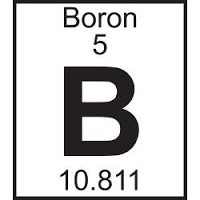
How many protons does this atom have?
a)
2.5
b)
6
c)
5
d)
10.811
5.
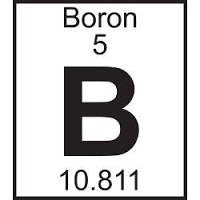
How many Electrons
a)
2.5
b)
5
c)
6
d)
10.81
6.

In order for me to find the number of neutrons, I must round the atomic mass and then do what?
a)
atomic number-atomic mass
b)
atomic number x atomic mass
c)
atomic mass + atomic number
d)
atomic mass - atomic number
7.

What part of the atom is the arrow pointing to?
a)
nucleus
b)
proton
c)
electron shell
d)
electron
8.
Particles in an atom that are neutral and have no charge are
a)
negatrons
b)
electrons
c)
neutrons
d)
protons
9.

A section of the Periodic Table of Elements is provided. What is the chemical symbol for magnesium?
a)
12
b)
Mg
c)
24.31
d)
Magnesium
10.
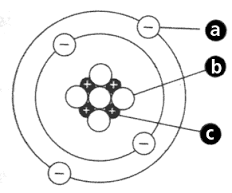
B and C are found in the ______ of an atom.
a)
Energy levels
b)
Space
c)
Nucleus
d)
Outside
11.

Which of these is the electron?
a)
A
b)
B
c)
C
d)
D
12.
all matter is made of what
a)
energy
b)
atoms
c)
electrons
d)
compounds
13.
an atom with atomic number 6 would have how many protons
a)
6
b)
12
c)
3
d)
cannot be determined
14.

How many of these substances are elements?
a)
2
b)
3
c)
4
d)
5
15.
all matter is made of what
a)
energy
b)
atoms
c)
electrons
d)
compounds
16.

Mr Negative here is better known as? His charge is negative.
a)
Protron
b)
Neutron
c)
Electron
d)
Neceus
17.

Mr Green here is neutral and is better known as a_________.
a)
Proton
b)
Neutron
c)
Electron
d)
Pea
18.

Which of these is the proton.
a)
A
b)
B
c)
C
d)
None
19.

The number 3 on the left side is called the _______ and tells how many ______________.
a)
Family/Valence Electrons
b)
Family/Energy Levels
c)
Period/Energy Levels
d)
Period/Valence Electrons
20.

The highlighted area is called a ________ and tells ___________.
a)
Family/Energy Levels
b)
Family/Valence Electrons
c)
Period/Valence Electrons
d)
Period/Energy Levels
21.
Matter is anything that ____________________.
a)
has mass
b)
takes up space
c)
has mass and takes up space
d)
has energy
22.
A ___________ is an arrangement of elements in columns
a)
columns
b)
rows
c)
periodic table
d)
electron shell
23.
In the modern periodic table elements are arranged by:
a)
atomic mass
b)
atomic number
c)
valence electrons
d)
number of isotopes
24.
Each column in the periodic table is called a
a)
period
b)
group
c)
cluster
d)
unit
25.
The atomic number tells you what?
a)
number of electrons
b)
number of protons
c)
number of neutrons
d)
both electrons and protons in an atom.
26.
Which group of the periodic table is composed of inert (not reactive) gases?
a)
alkali metals
b)
alkaline earth metals
c)
halogens
d)
noble gases
27.
Elements which are shiny, conduct electricity and heat are called
a)
metal
b)
nonmetal
c)
metalloid
d)
nonexistent
28.
Which is an alkali metal?
a)
Magnesium
b)
Iron
c)
Sodium
d)
Europium
29.

The atoms along the staircase are called
a)
metals
b)
nonmetals
c)
metalloids
d)
noble gases
30.
A horizontal row of elements in the periodic table.
a)
column
b)
group
c)
period
31.
A vertical column in the periodic table. Elements share similar properties.
a)
row
b)
group
c)
period
32.
Rows on the period table are called _____ while columns are called _____.
a)
groups, families
b)
groups, periods
c)
periods, groups
d)
families, groups
33.
What correctly describes the nucleus of an atom?
a)
protons and electrons
b)
neutrons and electrons
c)
neutrons and protons
d)
protons, electrons, and neutrons
34.
Looking at the periodic table what other element reacts in a similar way to Si?
a)
Al
b)
P
c)
C
d)
H
35.

Which elements would have similar chemical reactivity?
a)
S and Cl
b)
Br and I
c)
K and Sr
d)
O and Li
100 %

