
 Worksheets
Water Cycle Review
Total questions: 25
Worksheet time: 19mins
Name
Class
Date
1.
Which of these is an example of precipitation?
a)
snow
b)
air
c)
clouds
d)
vapor
2.
Which is the opposite of condensation?
a)
runoff
b)
evaporation
c)
precipitation
d)
transpiration
3.
Snow, sleet, hail, and rain are all examples of ________________.
a)
evaporation
b)
condensation
c)
accumulation
d)
precipitation
4.

Does evaporation happen before or after condensation?
a)
before
b)
after
c)
during
d)
simultaneously
5.

What is it called when plants give off water vapor as a waste product?
a)
condensation
b)
evaporation
c)
sublimation
d)
transpiration
6.
When water _________, dew forms.
a)
Melts
b)
Evaporates
c)
Condenses
d)
Precipitates
7.
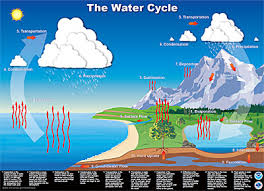
During which stage do clouds form?
a)
condensation
b)
evaporation
c)
precipitation
d)
percolation
8.
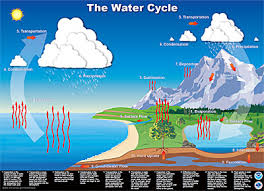
Which stages does liquid water from the ocean turn into water vapor?
a)
condesantion
b)
evaporation
c)
precipitation
d)
run off
9.
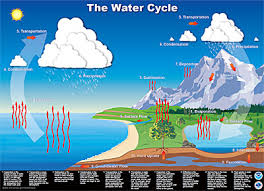
Which stage does ground water try to return to the ocean or soak into the ground?
a)
condensation
b)
evaporation
c)
precipitation
d)
run off
10.
What is water vapor?
a)
Water on the land (geosphere)
b)
Water in the air (atmosphere)
c)
Water in plants
d)
Water in the water (hydrosphere)
11.
What percentage of Earth’s surface is covered by water?
a)
71 - 75%
b)
3 - 7%
c)
1 - 5%
d)
96 - 100%
12.
From where does most water evaporate?
a)
puddles
b)
rivers
c)
lakes
d)
oceans
13.
Where is water vapor found?
a)
in the air around you
b)
in your breath
c)
in steam from a kettle
d)
all of the above
14.
What controls whether water is a gas, liquid or solid ice?
a)
the shape or size of the container
b)
where it has been stored
c)
if it is being used for irrigation
d)
the temperature of the water
15.
On which kind of day would you expect the most evaporation from the surface of a pond?
a)
cold, rainy
b)
cold, sunny
c)
warm, rainy
d)
warm, sunny
16.
Think about it! Which type of rainfall would be most helpful to farmers?
a)
rainfall that evaporates quickly
b)
rainfall that runs off the land quickly
c)
rainfall that soaks into the soil slowly
d)
very little rainfall
17.
This occurs after infiltration but before water storage; it is the filtering of water through aerated soil.
a)
sublimation
b)
percolation
c)
transpiration
d)
condensation
18.
The process by which water moves through the Earth and the atmosphere is ______________.
a)
the water cycle.
b)
the percolation cycle
c)
the transpiration cycle
d)
the infiltration cycle
19.
The four characteristics of water we are studying are color, __________, salinity, and taste.
a)
clarity
b)
lifeblood
c)
percolation
d)
runoff
20.
The major source of ____________ which powers the water cycle comes from the Sun.
a)
aeration
b)
energy
c)
nutrients
d)
chemicals
21.
What are the two classifications of water?
a)
salt, purified
b)
salt, distilled
c)
salt, fresh
d)
salt, enhanced
22.

Letter "D" is pointing to which ocean?
a)
Pacific
b)
Atlantic
c)
Southern
d)
Arctic
23.
Fog over a lake would be an example of which part of the water cycle?
a)
Evaporation
b)
Condensation
c)
Infiltration
d)
Precipitation
24.
Your parent(s) made you wash his/her car. As you rinsed the soap off of the surface of the car, you watched as it streamed off onto the ground like a river. Of what part of the water cycle could this be an example?
a)
Condensation
b)
Percolation
c)
Infiltration
d)
Run-off
25.
Most of the Earth's water is a t the North and South poles in the form of what?
a)
ice
b)
snow
c)
water
d)
fog
100 %

