
 Worksheets
Grade 8 History STAAR Review
Total questions: 163
Worksheet time: 2hrs 9mins
Name
Class
Date
1.
Where did the "Holy Experiment in Quaker Rule" occur?
a)
Rhode Island
b)
New Amsterdam
c)
England
d)
Pennsylvania
2.
Many Quakers were part of what movement
a)
Succession
b)
Salem witch hunt
c)
Pennsylvanians for Peace
d)
Abolition
3.
What is a pacifist?
a)
Someone who thinks pacifiers are wrong
b)
Someone who lives on the pacific ocean
c)
Someone who believes if you die for your country you go straight to heaven
d)
Someone who does not believe in war
4.
What ended the French and Indian War?
a)
Treaty of Paris 1763
b)
Proclamation of 1763
c)
Treaty of Versialle
d)
Proclamation of France defeat 1763
5.
Name one effect of the French and Indian War.
a)
France received tons of land.
b)
The Native Americans gave their land to the government.
c)
Great Britain had a lot of debt.
d)
The French beat the Indians.
6.
Which is an example of Taxation without Representation?
a)
Boston Massacre
b)
Articles of Confederation
c)
Stamp Act
d)
Proclamation of 173
7.

Even though these states had slavery, they did not join the Confederate states.
a)
Western States
b)
State of Confusion
c)
Border States
d)
Southern States
8.
More factories, population, and a better navy
a)
Southern advantages
b)
Northern advantages
c)
Reasons for Southern victory
d)
Cause of the battle of Gettysburg
9.
This caused widespread fear in the South about the future of slavery
a)
Election of Jefferson Davis
b)
Tariffs
c)
Election of Abraham Lincoln
d)
Death of Stonewall Jackson
10.

Which of the following conclusions were drawn by both the North and South after the Battle of Bull Run?
a)
The war would last only a few short months
b)
The soldiers needed training and victory would be difficult
c)
Naval warfare would not help this "land" war
11.
The Great Compromise was a compromise between--
a)
Mass. Plan and New Jersey Plan
b)
Virginia Plan and New Jersey Plan
c)
Virginia Plan and New York Plan
d)
Virginia Plan and Delaware Plan
12.

The Virginia Plan wanted representation based on--
a)
population
b)
equality for every state
c)
state size
d)
money
13.
The New Jersey Plan wanted representation in government based on--
a)
population
b)
equality for every state
c)
state size
d)
money
14.
The 3/5 Compromise settled the argument of--
a)
Representation in the Senate
b)
How slaves should be counted for representation
c)
How states should be represented
d)
Borders of states
15.

Congress is made up of two houses, which one is based on population?
a)
House of Burgesses
b)
Senate
c)
House of Representatives
d)
Continental Congress
16.

To nullify a law means …
a)
to agree to the law
b)
to secede.
c)
to void or cancel the law.
d)
to vote on the law.
17.
Which state said they wouldn‘t pay the new tariff and passed the Nullification act?
a)
North Carolina
b)
South Carolina
c)
Virginia
d)
Georgia
18.

What did Jackson do that ended the nullification crisis?
a)
passed a higher tariff
b)
fired his Vice President
c)
burned down every home in South Carolina
d)
threatened to use Army to enforce the law
19.
Which person is known as the "Father of State's Rights" and supported nullification and secession if necessary to protest the "Tariff of Abomination"?
a)
Henry Clay
b)
James Monroe
c)
John C. Calhoun
20.
The North was dependent on __________ while the South was dependent on __________.
a)
Industry, Slavery
b)
Slavery, Agriculture
c)
Industry, Mills
21.
What constitutional principle gives the power to the people?
a)
Republicanism
b)
Popular Sovereignty
c)
Limited Government
22.
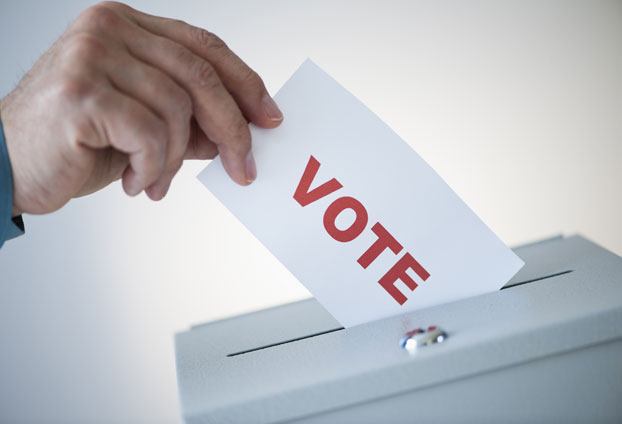
People voting on their elected representatives is an example of what constitutional principle?
a)
Republicanism
b)
Popular Sovereignty
c)
Separation of Powers
23.
Executive branch
Legislative branch
Judicial branch
Legislative branch
Judicial branch
a)
Separation of Powers
b)
Checks and Balances
c)
Individual Rights
24.
The rights listed in the Bill of Rights shows that we have which constitutional principle?
a)
limited government
b)
individual rights
c)
federalism
25.
The power of the government is restricted by law
a)
federalism
b)
checks and balances
c)
limited government
26.
How did the British react to the Natives still being upset?
a)
King Philip's War
b)
Take over French forts (move military into area)
c)
Raise taxes on the colonists
d)
Passed the Proclamation of 1763
27.
What did the Proclamation of 1763 say?
a)
France owned the land
b)
Natives owned the land
c)
Colonists could move west
d)
Colonists could not move west
28.

Mormons moved from New York to the West in the early 1830s in order to
a)
obey the Book of Mormon
b)
prosper in the fur trade
c)
seek out religious freedom
d)
gold
29.

What is the territory identified in the picture?
a)
Florida Purchase
b)
Thirteen Colonies
c)
Mexican Cession
d)
Oregon County
30.

What is the territory identified in the picture?
a)
Florida Purchase
b)
Thirteen Colonies
c)
Mexican Cession
d)
Oregon County
31.
What year did the most miners rush to California?
a)
1848
b)
1849
c)
1852
d)
1853
32.

What nickname was given to the forced removal of Cherokee from Georgia?
a)
The Trail of Tears
b)
The U.S Indian Removal Act
c)
The Oklahoma Caravan
33.
The goal of the Spanish explorations into North America was to:
a)
expand the Spanish Empire to include more inhabitants
b)
seize settlements established by the French
c)
convert Indians to the Protestant faith
d)
find treasures in gold and silver
34.
The Impact of Columbus's voyages in the New World included:
a)
a new oceanic trade amongst all of the continents
b)
an exchange of disease that wiped out 1/3 of Europe
c)
a depression in Spain's economy due to the expense of these voyages
d)
the empowerment of Portugal who sponsored the venture of Columbus
35.
-Idea that its power is limited to only certain powers stated in the constiution
a)
Federalism
b)
Individual Rights
c)
Limited Government
d)
Popular Sovereignty
36.
-rights guaranteed to people by the Bill of Rights (speech, religion, trial by jury)
a)
3 Branches of Government
b)
Limited Government
c)
Individual Rights
d)
Separation of Powers
37.
- This branch carries out the laws
a)
Judicial/ Supreme Court
b)
Legislative/ Congress
c)
Executive/President
d)
Local Judges
38.
-Interprets the laws, makes sure they are constitutional
a)
Executive/ President
b)
Judicial/ Supreme Court
c)
Federalism/ Republic
d)
Legislative/ Congress
39.
The Second Great Awakening inspired many people to
a)
A. oppose the Mexican-American War.
b)
B. support prison reform.
c)
C. oppose model communities.
d)
D. oppose slavery.
40.
Who was the central figure in the transcendentalist movement?
a)
A. Ralph Waldo Emerson
b)
B. George Ripley
c)
C. Charles Finney
d)
D. Sojourner Truth
41.

William Lloyd Garrison printed the weekly newspaper the Liberator. In it he printed articles condemning (disapproving, criticizing):
a)
The institution of slavery
b)
The unfair treatment of women
c)
The abuses faced by prison inmates
d)
child labor
42.

- An escaped slave.
- Delivered “Ain’t I a Woman?” speech.
- Leader in the Women's Rights and Abolitionist movement.
- Delivered “Ain’t I a Woman?” speech.
- Leader in the Women's Rights and Abolitionist movement.
a)
Dorothea Dix
b)
Elizabeth Cady Stanton
c)
Sojourner Truth
d)
Susan B. Anthony
43.

She was the leading figure of the prison reform movement:
a)
Dorothea Dix
b)
Elizabeth Cady Stanton
c)
Sojourner Truth
d)
Susan B. Anthony
44.
What is the name of the series of protests in 1786-87 by American farmers concerning debt and foreclosure?
a)
American rebellion
b)
Dorr Rebellion
c)
Shays Rebellion
d)
Whiskey Rebellion
45.
Which of the following had more power under the Articles of Confederation?
a)
State Government
b)
Federal Government
46.
Americans were afraid that a __?__ would lead to tyranny, or oppressive rule.
a)
strong state government
b)
weak government
c)
strong central government
d)
legslature
47.
What is the name of the first government of the United States?
a)
U.S. Constitution
b)
Articles of Confederation
c)
Northwest Ordinance
d)
Declaration of Independence
48.
A country or area under the full or partial political control of another country.
a)
Colony
b)
Region
c)
Section
d)
Division
49.
A person who journeys, especially a long distance, to some sacred place as an act of religious devotion.
a)
Pilgrim
b)
Puritan
c)
Turkey
d)
Conquistador
50.
A period of time marked by a distinctive character, events, etc…
a)
Era
b)
Century
c)
Decade
d)
Year
51.
A large farm or estate where cash crops are grown.
a)
Plantation
b)
Hotel
c)
Field
d)
Colony
52.
Colony owned by an individual
a)
Proprietary
b)
Royal
c)
Loyal
d)
Free
53.
Taxes on the purchase and sale of goods.
a)
Duties
b)
Money
c)
Fees
d)
Profit
54.
A formal decision, law, or the like by a legislature, ruler, court, or other authority.
a)
Acts
b)
Proposition
c)
Rule
d)
Agreement
55.
Mercantilism was the dominant economic policy during what centuries?
a)
20th and 21st
b)
12th and 13th
c)
17th and 18th
d)
19th and 20th
56.
Under the theory of Mercantilism, how was wealth defined?
a)
The amount of gold a country had
b)
A nation's ability to produce
c)
A country's diversity in materials
d)
How many colonies it controlled and owned
57.
Mercantilist regulation in the 13 colonies began with the passage of which laws?
a)
Stamp Act
b)
Sugar Acts
c)
Townshend Acts
d)
Navigation Acts
58.
What products came out of West Africa in Triangular Trade?
a)
Gold and Slaves
b)
Guns and Sugar
c)
Finished Goods and Services
d)
Salt and Pepper
59.
What products came out of the West Indies to supply the colonies?
a)
Guns and Butter
b)
Sugar and Molasses
c)
Furs and Lumber
d)
Fish and Tobacco
60.
What products came out of England to supply its colonies?
a)
Timber and Furs
b)
Rum and Guns
c)
Manufactured Goods
d)
Slaves and Ships
61.
How did England define a "favorable balance of trade?"
a)
It bought more goods than it sold
b)
It sold more goods than it bought
c)
All trade would be balanced
d)
It forced colonists to mine gold and silver
62.
What was "Salutary Neglect?"
a)
England neglected to enforce their own trade laws
b)
The colonists neglected to follow the trade laws
c)
The colonists neglected to salute the English flag
d)
None of the above
63.
What is mercantilism?
a)
A system where a mother countries gains money and power from natural resources that come from its colonies.
b)
where colonies trade gold and silver with each other.
c)
Wars that start over money.
d)
Plantation colonies trading slaves for money.
64.
John Smith was a member of the ______ colony.
a)
Plymouth
b)
Roanoke
c)
Jamestown
d)
St. Augustine
65.
Which of these were colonial rule breakers because of religion?
a)
William Robertson and Anne Frank
b)
Anthony Hutchinson and Riley Williams
c)
Roger Williams and Anne Hutchinson
d)
Stephen Curry and Mia Hamm
66.
Who was elected governor of Plymouth and served for more than 30 years?
a)
John Smith
b)
William Bradford
c)
John Rolfe
d)
Massasoit
67.

Who did Pocahontas marry?
a)
John Smith
b)
John Rolfe
c)
John White
d)
John Winthrop
68.
John Rolfe was a successful tobacco farmer.
a)
False.
b)
True.
69.
Who is known for accepting people from different religions into their colony?
a)
William Penn
b)
John Smith
c)
William Bradford
d)
Pedro Aviles
70.
__________ was exiled because he did not believe in the Puritan beliefs and didn't agree with kicking Natives off their lands.
a)
John Rolfe
b)
Roger Williams
71.
Anne Hutchinson held religious meetings in her house for women and was put on trial for this.
a)
False
b)
True
72.
The French & Indian Wars were fought between the
a)
The French & Indians
b)
The English & Indians
c)
The French & Indians vs the English & Indians
d)
None of the above
73.
I was the king of England who came up the "Acts"; Coercive, Sugar & Stamp to name a few.
a)
Charles I
b)
James
c)
William
d)
George III
74.
The English Bill of Rights guaranteed
a)
Parliament had to veto all laws and taxes the colonists didn't like
b)
Parliament had to approve all laws and taxes the colonists suggested
c)
Parliament had to veto all laws and taxes the King created
d)
Parliament had to approve any law cancelation or tax the King of England proposed.
75.
The English Bill of Rights included
a)
Free Elections
b)
Complain to King or Queen without fear of imprisonment
c)
Exessive Fines & Cruel Punishment were not allowed
d)
All of these are correct
76.
Freedom of the press, was a right gained by the colonies because
a)
the grapes revolted
b)
Peter Zenger printed the truth and had to go to court to defend himself from printing the truth
c)
Andrew Hamilton thought Peter Zenger was wrong & proved it
d)
The Governor of New York on his own gave that right to the Colonists
77.
This is a celebrated "Midnight Ride" character who said, "The British are coming!" or more accurately, "The Regulars are coming!"
a)
Paul Revere
b)
Alexander Hamilton
c)
Sam Adams
d)
George Washington
78.
I was a famous colonist who got off to a bad military start in the French & Indian War
a)
Paul Revere
b)
Sam Adams
c)
Ben Franklin
d)
George Washington
79.
A duty is
a)
Something you do naturally everyday
b)
A tax placed on imports
c)
A tax place on exports
d)
A taxi
80.
A "Writ of Assistance" is
a)
a search warrant used to enter homes to search for smuggle goods
b)
one more thing that ticked the colonist off
c)
Both of the above
d)
Neither of the above
81.
The intentional "refusal to buy" something for some reason or other
a)
Smuggling
b)
Boycott
c)
Persecution
d)
Duty
82.
Penn strongly believed that Pennsylvania should be a colony that:
a)
all residents must practice Quakerism
b)
all residents should be free to worship freely
83.
As proprietor of Pennsylvania, Penn:
a)
ruled as governor and made all laws for the colony
b)
granted personal and property rights and self-government
84.
Penn and the Quakers:
a)
made a treaty of friendship with Native Americans and paid them for the land King Charles had given to Penn
b)
fought several wars against the Algonkian Indians, thereby taking the land granted by King Charles II
85.
The Quakers believed in:
a)
racial equality
b)
a strong separation between different races of people
86.
This person was chief of many tribes and provided leadership to his people and taught the settlers survival skills.
a)
Pocahantas
b)
Powhatan
c)
John Smith
d)
Governor of Virginia
87.
Who PAID for the settlement of Jamestown?
a)
King of England
b)
Powhatan
c)
Virginia Company of London
d)
John Smith
88.
The first permanent English settlement in North America was
a)
Werowocomoco
b)
Yorktown
c)
Richmond
d)
Jamestown
89.
The site they chose was marshy and lacked safe drinking water, the settlers lacked skills, and many settlers died of disease and starvation. These were:
a)
Problems faced by settlers in the midwest
b)
Hardships faced by the settlers at Jamestown
c)
Hardships placed on the Indians by the settlers
d)
Problems the settlers thought they might have
90.
The most profitable agricultural product in the Virginia colony was
a)
lumber
b)
peanuts
c)
corn
d)
tobacco
91.
Why were Africans brought to Jamestown in 1619?
a)
To work on Sugar Plantations
b)
To seek Religious freedom
c)
To work on tobacco plantations
d)
To fight against American Indians
92.
Jamestown was established in 1607 by the VA Company of London as a
a)
relocation area for English noblemen
b)
business venture
c)
place to hid indentured servants
d)
haven for religious zealots
93.
What was the first established assembly in the New World in the 1640s
a)
Virgina House of Burgesses
b)
Virgina Company of London
c)
Presdient
d)
House of Senate
94.
Plymouth was started before Jamestown.
a)
True
b)
False
95.
What did the people who did not want to belong to the Church of England call themselves?
a)
Unbelievers
b)
Indians
c)
Ministers
d)
Separatists
96.
In what year did the Pilgrims settle in Plymouth?
a)
1621
b)
1616
c)
1602
d)
1620
97.
What ocean did the Pilgrims sail across to get to the New World?
a)
Atlantic
b)
Arctic
c)
Pacific
98.

How were the Jamestown and Plymouth colonies the same?
a)
Both had positive relationships with the Natives
b)
Both were in present day Virginia
c)
Both were settled by English colonists
d)
Both disappeared mysteriously
99.
Europeans who agreed to work without pay in return for a trip to America, food, housing and clothes were called......
a)
Native Americans
b)
Slaves
c)
Indentured Servants
d)
Landowners
100.

Who was the young Major who the British send to tell the French they were tresspassing in their lands?
a)
Sam Houston
b)
Barack Obama
c)
Abraham Lincoln
d)
George Washington
101.

What treaty left the French with out any land in America?
a)
The French and Indian Treaty
b)
The American Treaty
c)
Treaty of Paris
d)
The Treaty of Mexico
102.
This Supreme court case established judicial review.
a)
Marbury v Madison
b)
Mcculloch v Maryland
c)
Gibbons v Ogden
103.
This Act created the Judicial Branch of the United States government.
a)
Judiciary Action of 1780
b)
The Judicial Branch Act
c)
Judiciary Act of 1789
d)
Judicial Supremacy Act of 1783
104.
Which Political party did Andrew Jackson belong to?
a)
Republican
b)
Whig
c)
Democratic
d)
Federalist
105.
Thomas Paine was the author of the booklet, Common Sense, which supported loyalty to the colonists.
a)
True
b)
False
106.
The Second Continental Congress approved the Declaration of Independence on July 4, 1776.
a)
True
b)
False
107.
General Charles Cornwallis led the Continental Army.
a)
True
b)
False
108.
Signing the Declaration of Independence was an act of treason punishable by death.
a)
True
b)
False
109.
Washington crossed the Delaware River on Christmas night 1776, to surprise the Hessians in this battle. What is the name of this battle?
a)
Battle of Saratoga
b)
Battle of Trenton
c)
Battle of Yorktown
d)
Battle of Lexington and Concord
110.

This American victory was the turning point in the war.
a)
Saratoga
b)
Yorktown
c)
Bunker Hill
d)
Lexington and Concord
111.

Who was the major author of the Declaration of Independence?
a)
Benjamin Franklin
b)
John Adams
c)
Thomas Jefferson
d)
Patrick Henry
112.

Surrounded by French and Continental armies, a large British army surrendered here.
a)
Saratoga
b)
Yorktown
c)
Bunker Hill
d)
Lexington and Concord
113.

What event is depicted in this image?
a)
Boston Massacre
b)
Boston Tea Party
c)
Battle of Bunker Hill
d)
Lexington and Concord
114.
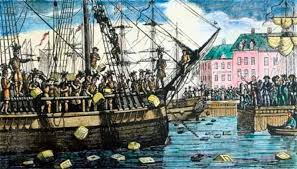
Samuel Adams and Paul Revere led members of the Sons of Liberty in this protest against taxes.
a)
First Continental Congress
b)
Boston Massacre
c)
Boston Tea Party
d)
Stamp Act Congress
115.

This enslaved person wrote poems and plays supporting American independence.
a)
Harriet Tubman
b)
Benjamin Banneker
c)
Paul Revere
d)
Phillis Wheatley
116.

Of the following events, which happened first?
a)
Saratoga
b)
Yorktown
c)
Declaration of Independence
d)
Treaty of Paris of 1783
117.

The U.S. was founded on July 4, 1776, by the approval of this document.
a)
the Treaty of Paris
b)
the Constitution
c)
the Declaration of Independence
d)
the Virginia Charter
118.
A tax on all expensive legal documents, as well as newspapers, calendars, and almanacs
a)
Townshend Revenue Act
b)
Declaratory Act
c)
Tea Act
d)
Stamp Act
119.
Act that declared the colonies were dependent on the king and the laws in the colony had no effect
a)
Declaratory Act
b)
Stamp Act
c)
Townshend Revenue Act
d)
Quartering acts
120.
Acts that granted British soldiers the right to occupy your home and resources
a)
Declaratory act
b)
Stamp Act
c)
quartering act
d)
Townshend Revenue Act
121.
Laws that cracked down on the rebellious activity in Massachusetts (no congregating, curfew, etc.)
a)
Stamp Act
b)
Intolerable Acts
c)
quartering acts
d)
Declaratory act
122.
Document that declared the colonist were no longer under British rule and were independent
a)
US Constitution
b)
Articles of Confederation
c)
Declaration of Independence
123.
The first battle of the American Revolution. Also referred to as the shot heard around the world
a)
Battle of Saratoga
b)
Battle of Lexington and Concord
c)
Battle of Yorktown
d)
Battle of Bunker Hill
124.
Battle that boosted moral and convinced France to join on the side of the colonies
a)
Battle of Lexington
b)
Battle of BUnker Hill
c)
battle of Yorktown
d)
Battle of Saratoga
125.
Battle in which General Cornwallis, leader of the British army surrendered
a)
Battle of Lexington
b)
Battles of Sartoga
c)
Battle of Bunker Hill
d)
Battle of Yorktown
126.
How was the Nullification Crisis settled?
a)
a compromise by Henry Clay
b)
Jackson fired Calhoun
c)
Jackson vetoed the tariff bill
d)
the Supreme Court ruled the tariff bill unconstitutional
127.
What was the ruling in Worcester v. Georgia?
a)
in favor of the Cherokee staying in Georgia
b)
ruled the tariff of 1832 unconstitutional
c)
in favor of Georgia - the Cherokee must go
d)
Indian Removal Act ruled unconstitutional
128.
Who was in the commander of the Continental Army at Valley Forge?
a)
Marquis de Lafayette
b)
Barron Von Stueben
c)
George Washington
d)
Miss Edwards
129.
What disease nearly wiped out the Continental Army?
a)
Cholera
b)
Consumption (TB)
c)
Smallpox
d)
Common Cold
130.
Put in command of training the troops at Valley Forge.
a)
Marquis de Lafayette
b)
Benedict Arnold
c)
James Wolfe
d)
Barron Von Stueben
131.
This document established a government with a that gave the states too much power
a)
Declaration of Independence
b)
Articles of Confederation
c)
U.S constitution
d)
Treaty of Paris
132.
This document details the structure of our government and the basic rights of all citizens; it replaced the Articles of Confederation
a)
U.S constitution
b)
Articles of Confederation
c)
declaration of independence
133.
This amendment guarantees the right to freedom of speech, press, religion, and assembly.
a)
I
b)
II
c)
III
d)
IV
134.
This amendment gives you the right to bear arms
a)
I
b)
II
c)
III
d)
IV
135.
Amendment that restricts the quatering of troops in homes
a)
I
b)
II
c)
III
d)
IV
136.
What did the Supreme Court rule in McCulloch vs. Maryland?
a)
states have more power than the federal government
b)
national bank was constitutional
c)
federal government could force people to pay taxes
d)
national bank's charter must be renewed
137.
Jackson rewarded his closest friends with government jobs. This is known as
a)
the spoils system
b)
mudslinging
c)
nominating conventions
d)
bureaucracy
138.
What 13th century document established the rights listed below?
- Basic rights of citizens
- Rule of law
- Representative assemblies
- Basic rights of citizens
- Rule of law
- Representative assemblies
a)
the Constitution
b)
Napoleonic Code
c)
the Communist Manifesto
d)
the Magna Carta
139.
Which idea describes the Magna Carta of 1215?
a)
to increase the power of the monarchy
b)
to end taxation in England
c)
to force the monarchy to give up power
d)
to weaken the power of nobles
140.
Which king was "forced" to sign the Magna Carta in 1215?`
a)
King James
b)
King John
c)
King Louis
d)
King Henry
141.
What important charter was signed in 1215 in English by King John resulting in England becoming a limited monarchy?
a)
Magna Carta
b)
Code of Hammurabi
c)
Twelve Tables
d)
Declaration of Independence
142.
Why was King John forced to sign the Magna Carta?
a)
to increase the power of the monarchy
b)
to end taxation in England
c)
to force the monarchy to give up power
d)
to weaken the power of nobles
143.

This painting shows King John signing a document in 1215. Which groups of people are forcing the King to sign this document?
a)
knights
b)
nobles
c)
peasants
d)
serfs
144.
Andrew Jackson was responsible for the
a)
Indian Removal Act
b)
Alien & Sedition Acts
c)
Northwest Ordinance
d)
Embargo Act of 1807
145.
Which of the following statements is a correct description of the Mayflower Compact?
a)
The men on board the Mayflower bound themselves into a “civic body politic.”
b)
The Pilgrims practiced an early and pure form of democracy
c)
The Mayflower Compact applied just to the non-Pilgrims on board the Mayflower
d)
None of the above.
146.
Why did the Pilgrims create the Mayflower Compact?
a)
to show that they opposed representative government.
b)
to establish an orderly community
c)
to reinforce the laws of England in the new colony
d)
to guarantee universal religious tolerance in the colony
147.
When did Mayflower come to America?
a)
1500
b)
1620
c)
1492
d)
1410
148.
People of which religion were on Mayflower?
a)
Pastafarians
b)
Muslims
c)
Puritans
d)
Catholic
149.
When was Mayflower Compact written?
a)
1410
b)
1492
c)
1655
d)
1620
150.
The cottage industry system involved manufacturing...
a)
of steam engines.
b)
of luxury goods.
c)
in the home.
d)
in small factories.
151.
What innovation increased the transportation of goods and people?
a)
Flying Shuttle
b)
Spinning Jenny
c)
Steam Engine
d)
Water Frame
152.
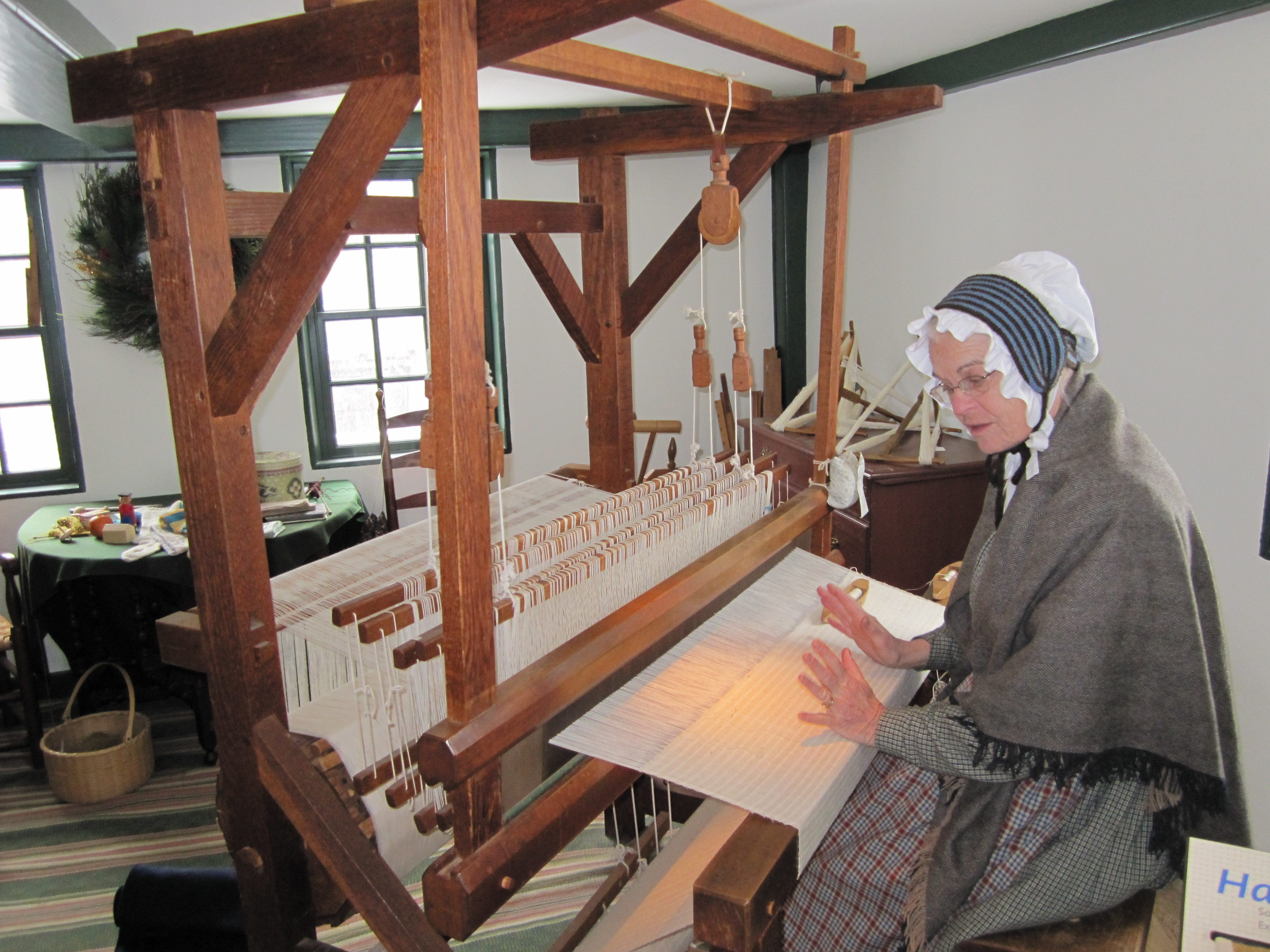
Any fabric that is woven (by machine or hand) is called -
a)
technology
b)
textile
c)
economy
d)
industrialization
153.
This machine separated the seed from cotton fibers.
a)
Spinning Mule
b)
Spinning Jenny
c)
Steam Engine
d)
Cotton Gin
154.
Which of the following was NOT associated with early factory working conditions?
a)
Low wages
b)
Widespread pollution
c)
Dangerous working conditions
d)
Safe working conditions
155.
________ is a system of government in which power is divided between the nation government and state governments.
a)
Federalsim
b)
Republic
c)
Separation of Powers
d)
None of the Above
156.
A reserved power is granted to ____.
a)
the nation government
b)
to state governments
c)
to local governments
d)
none of the above.
157.
The power to tax is a _________.
a)
Concurrent power
b)
Reserved power
c)
Implied power
158.
What colony was establsihed as a safe space for Catholics by Lord Baltimore?
a)
Georgia
b)
Maryland
c)
Massachusetts
d)
Pennsylvania
159.
What colony was established as a debtor colony?
a)
Georgia
b)
Maryland
c)
Massachusetts
d)
Pennsylvania
160.
What colony was establsihed by Quakers?
a)
Georgia
b)
Maryland
c)
Massachusetts
d)
Pennsylvania
161.

Which Amendment allowed African American men to have the right to vote?
a)
14th
b)
16th
c)
13th
d)
15th
162.

Which Amendment officially outlawed slavery in the United States?
a)
14th
b)
16th
c)
13th
d)
15th
163.
What was the first written Constitution in the America's?
a)
Mayflower Compact
b)
Magna Carta
c)
Fundamental Orders of Connecticut
d)
Articles of Constitution
100 %

