
 Worksheets
Electricity
Total questions: 71
Worksheet time: 1hrs 27mins
Name
Class
Date
1.
What 'flows' in a wire?
a)
Protons
b)
Neutrons
c)
Atoms
d)
Electrons
2.

this is the symbol for a _____?
a)
switch
b)
light
c)
battery
d)
wires
3.

What kind of circuit is this?
a)
Series
b)
Consecutive
c)
Parallel
d)
Training
4.

What kind of circuit is this?
a)
Series
b)
Consecutive
c)
Parallel
d)
Training
5.

In a parallel circuit if one of the light bulbs burns out the rest _________.
a)
stop the flow of electricity
b)
can still light up
c)
will go out
d)
of the light bulbs burn out also
6.

Does this diagram represent a series or parallel circuit?
a)
series circuit
b)
parallel circuit
7.

Does this diagram represent a series or parallel circuit?
a)
series circuit
b)
parallel circuit
8.

Which of the two circuits would have the brightest bulbs?
a)
A
b)
B
9.
Which best describes a parallel circuit?
a)
Electricity flows along one pathway.
b)
The flow of electricity comes from one source.
c)
Electricity flows along more than one pathway.
d)
The flow of electricity comes from more than one source.
10.
Which best describes a series circuit?
a)
It has two light bulbs.
b)
The same current flows through both light bulbs.
c)
It uses a single battery.
d)
The current is divided between the light bulbs.
11.
What is one problem with using a series circuit?
a)
It has a lot of series.
b)
If one goes down, they all go down!
c)
It doesn't work properly.
d)
There are no problems.
12.
What is one benefits of using a parallel circuit?
a)
It gets confusing.
b)
There are no problems.
c)
If one goes down, it does not affect the others.
d)
Porque es para llelio.
13.
Which one uses less wire?
a)
Parallel circuit
b)
Series Circuit
14.
How many different types of circuits are there?
a)
1
b)
3
c)
2
d)
4
15.
Does a series circuit allow electrons to follow one path?
a)
True
b)
False
16.
When you flip a light switch on and off you are closing and opening a circuit.
a)
true
b)
false
17.
A conductor does not carry electricity.
a)
true
b)
false
18.
When you flip a light switch on and off you are closing and opening a circuit.
a)
true
b)
false
19.

this circuit is .....?
a)
open
b)
parallel
c)
closed
d)
chris barton
20.

An electric current is a flow of charged particles.
a)
True
b)
False
21.

An electric circuit is a closed loop or pathway that allows electric charges to flow.
a)
True
b)
False
22.
What do you use to open and close a circuit?
a)
switch
b)
insulator
c)
conductor
d)
battery
23.
When all parts of the circuit are connected it is a ______ circuit.
a)
open
b)
closed
24.
A material that doesn't conduct electricity is called an ________ .
a)
conductor
b)
insulator
25.
Plastic, rubber, and wood are examples of this.
a)
insulator
b)
conductor
26.
electricity can flow easily through these.
a)
conductors
b)
insulators
27.
A complete circuit has .......
a)
a motor in it
b)
a switch in it
c)
two bulbs in it
d)
no breaks in it
28.
Three bulbs connected in series .......
a)
are brighter than one bulb
b)
are dimmer than one bulb on its own
c)
do not light up
d)
are the same brightness as one bulb
29.
In a parallel circuit .......
a)
the current can flow through only one route
b)
the current can flow through more than one route
c)
the current does not flow
d)
the current gets smaller
30.

A student began building a circuit to light a bulb. What else does the student need to produce light?
a)
a battery that has energy
b)
a wire that is insulated
c)
a switch that is open
d)
another bulb of the same size
31.

This circuit has a battery, buzzer, and switch.
When the switch is closed the buzzer will sound because -
When the switch is closed the buzzer will sound because -
a)
the switch gives energy to the battery
b)
the buzzer is made of special plastic
c)
the wires are cooled by the surrounding air
d)
electricity can flow in a complete path
32.

This lamp produces light.
When the lamp produces light, it demonstrates that the lamp must have a –
When the lamp produces light, it demonstrates that the lamp must have a –
a)
powerful magnet
b)
rechargeable battery
c)
complete circuit
d)
plastic cord
33.

This is the symbol for a ...
a)
Bulb
b)
Battery
c)
Horn
d)
Fuse
34.

This is the symbol for a ...
a)
Wire
b)
Battery
c)
Buzzer
d)
Fuse
35.
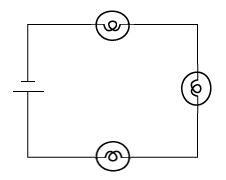
The picture shows an electrical circuit. This circuit is a series circuit because:
a)
It has 3 light bulbs.
b)
The same current flows through all three light bulbs.
c)
It uses a single battery.
d)
The electrical current has more than one path to flow through
36.

Which of these symbols represents a switch? Select the symbol for a switch from the choices provided.
a)
A
b)
B
c)
C
d)
D
37.

Which diagram shows two bulbs in a series?
a)
1
b)
2
c)
3
d)
4
38.

How is the switch used?
a)
Insulates the wires
b)
Makes the lightbulb brighter
c)
Turns the lightbulb on and off
d)
Warms up the lightbulb
39.

In the picture, which is the receiver (receiving the electricity)?
a)
1
b)
2
c)
3
d)
4
40.

When a circuit is closed the electric current does not flow through it.
a)
True
b)
False
41.

Which of these best completes the circuit?
a)
rubber band
b)
metal nail
c)
leather shoelace
d)
wooden toothpick
42.
A material that does NOT allow electricity to flow is called _____.
a)
a conductor
b)
a fuse
c)
an insulator
d)
a transformer
43.

A class prepared some electrical circuits using battery, connecting wires, and three light bulbs. Which of these circuits can make the three bulbs light?
a)
A
b)
B
c)
C
d)
D
44.

A fifth grade class constructed this circuit. Which of these objects most likely made the light glow when connected to points X and Y?
a)
plastic straw
b)
cotton string
c)
aluminum foil
d)
rubber eraser
45.

Which of these best allows electric current to flow in the circuit?
a)
rubber band
b)
metal nail
c)
leather shoelace
d)
wooden toothpick
46.
Which is NOT an insulator.
a)
Wool
b)
Plastic
c)
Copper
d)
Glass
47.
What is the difference between a conductor and an insulator?
a)
An insulator allows electricity to flow through it easily and a conductor does not
b)
A conductor allows electricity to flow through it easily and an insulator does not.
c)
An insulator is magnetic and a conductor is not
d)
A conductor is magnetic and an insulator is not
48.
A great conductor of energy is:
a)
wood
b)
plastic
c)
metal
d)
cloth
49.

What object would best complete this circuit?
a)
A battery
b)
a peice of yarn
c)
an insulator
d)
a conductor
50.

You know that the object connected to the wires is a conductor because:
a)
The light bulb is glowing bright.
b)
It's a complete circuit.
c)
It's a closed circuit.
d)
The object is shiny.
51.

Tatrys knows that the light bulb will turn on because the circuit:
a)
includes an insulator.
b)
is an open circuit.
c)
makes a complete path.
d)
includes a battery.
52.
When all parts of the circuit are connected it is a ______ circuit.
a)
open
b)
closed
53.
Gloves help keep your hands warm in winter because:
a)
They are conductors of heat.
b)
They are fuzzy.
c)
They are conductors of electrical energy.
d)
They are insulators.
54.
Is wood a conductor or insulator?
a)
Conductor
b)
Insulator
55.
The handle of a frying pan is often coated in rubber because rubber provides...
a)
Heat insulation
b)
Heat conduction
c)
A low melting point
d)
A nonstick surface
56.
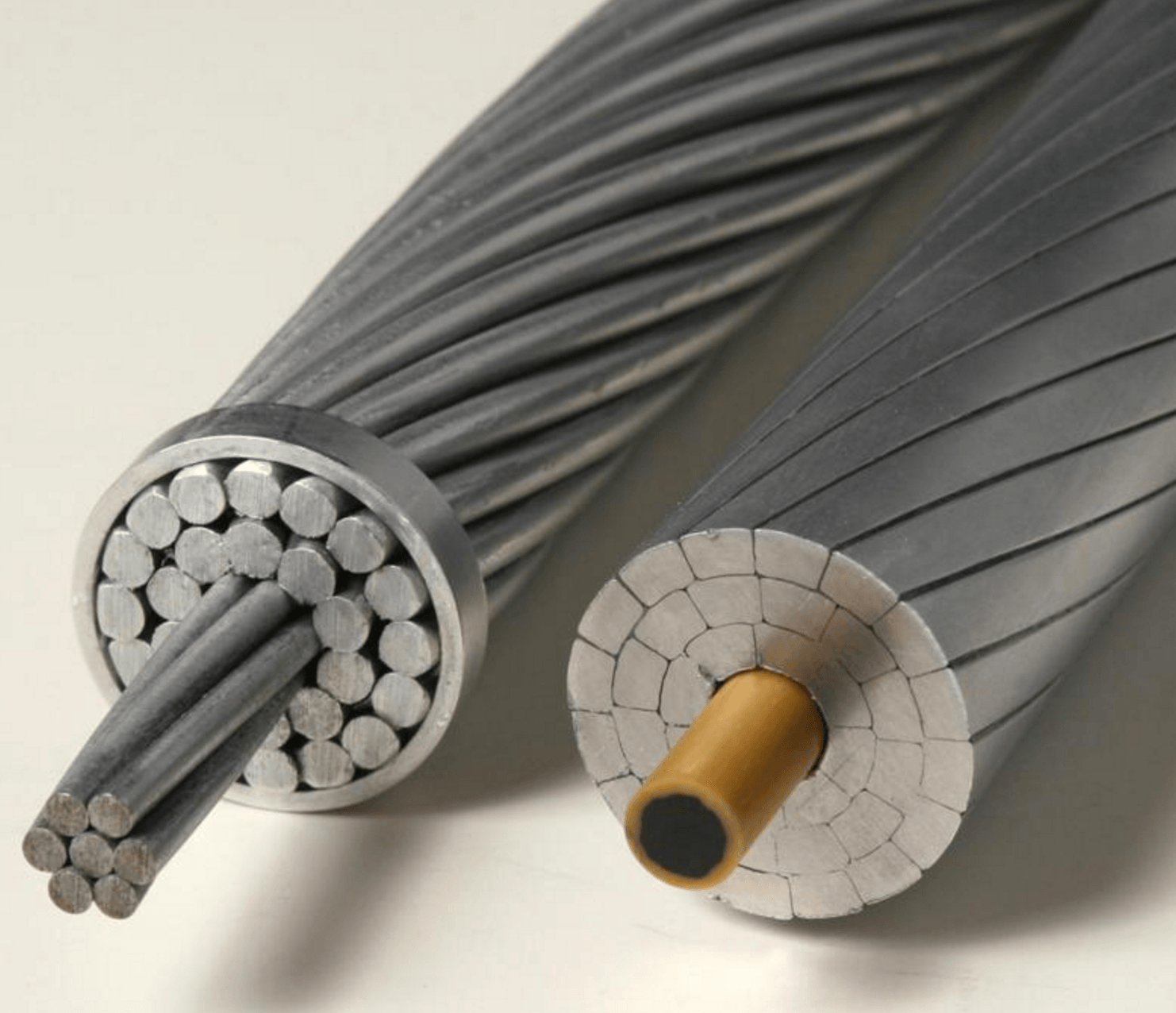
All of the following are conductors except _______.
a)
metal spoon
b)
wire
c)
iron nail
d)
plastic spoon
57.

The metal copper is there to:
a)
Provide a conductor for energy to flow from one place to another.
b)
Provide an insulator for energy to flow from one place to another.
c)
Provide an insulator to slow the flow of energy.
d)
Provide a conductor so slow the flow of energy.
58.
Why is a bulb brighter when it is powered by two batteries rather than one?
a)
Because the flow of electricity in the circuit is less
b)
Because the flow of electricity in the circuit is the same
c)
Because the flow of electricity in the circuit is greater
59.
Ruby has connected two bulbs across two batteries in a series circuit. How can she make the bulbs dimmer?
a)
Replace one of the batteries with a section of wire
b)
Replace one of the batteries with a cork
c)
Replace one of the bulbs with a section of wire
60.
Why is electrical wiring usually covered with a layer of plastic?
a)
To help electricity flow along the wire
b)
To make it look pretty
c)
To make it safe
61.
Wood
a)
Insulator
b)
Conductor
62.
Rubber
a)
Insulator
b)
Conductor
63.
Sand
a)
Insulator
b)
Conductor
64.
Aluminum
a)
Insulator
b)
Conductor
65.
Water
a)
Insulator
b)
Conductor
66.
Gold
a)
Insulator
b)
Conductor
67.
Cloth
a)
Insulator
b)
Conductor
68.
Iron
a)
Insulator
b)
Conductor
69.
A material that WILL NOT let electricity pass through is called an:
a)
Conductor
b)
Insulator
c)
Appliance
d)
Circuit
70.

Prevents electric current from flowing.
a)
open circuit
b)
conductor
c)
electricity
d)
closed circuit
71.
Energy produced by the movement of electrons.
a)
electricity
b)
motion
c)
open circuit
d)
conductor
100 %

