
 Worksheets
Cells Quizizz
Total questions: 35
Worksheet time: 1hrs 10mins
Name
Class
Date
1.
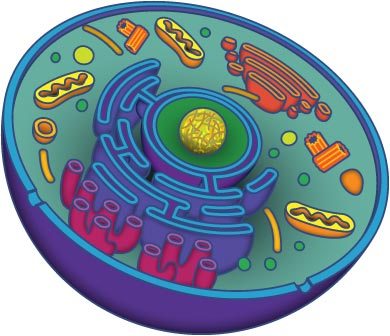
All living things are made up of...
a)
cells
b)
cell tissues
c)
organ
d)
organ systems
2.
Which of the following is NOT a cell theory.
a)
All non-living things are made of cells
b)
All cells come from pre-existing cells
c)
Cells are the basic unit of structure and function of all living things
3.
The first part of the Cell Theory states: "What happens in Cell Theory, stay in Cell Theory."
a)
True
b)
False
c)
I don't know
d)
Ummmm
4.
All cells come from___________ cells.
a)
pregnant
b)
pre-existing
c)
paternal
d)
pin size
5.
Rocks are not living because
a)
they never move
b)
they aren't needed for humans
c)
they are not made of cells
d)
they don't break down
6.
What is the basic structural and functional unit of all living things?
a)
atom
b)
cell
c)
molecule
d)
human
7.
All cells are produced ____________.
a)
from nothing
b)
from other cells
8.
An organism made of one cell is called
a)
unicellular
b)
multicellular
9.
what is the control center in a cell
a)
mitochondria
b)
DNA
c)
nucleus
d)
movement
10.

What is known as the brain of a cell
a)
cell wall
b)
Cell membrane
c)
Nucleus
d)
Nuclues
11.
Prokaryotic
a)
are single celled organisms that do not have a nucleus or membrane bound organelles
b)
a protective layer that covers the the cells surface and acts as a barrier
c)
is the smallest unit that can preform all he processes necessary for life
12.
Which organism listed below is a prokaryote?
a)
dog
b)
human
c)
sunflower
d)
bacterial cell
13.
Animal and plant cells are both this type of cell.
a)
Eukaryote
b)
Prokaryote
14.
This scientist discovered and named the cell.
a)
Robert Hooke
b)
Anton Van Leeuwenhoek
c)
John Dalton
d)
Mathias Schleiden
15.
Bacteria cells are this type of cell.
a)
Eukaryote
b)
Prokaryote
16.
Cells with a nucleus and membrane-bound organelles are called ____________________.
a)
prokaryotes
b)
eukaryotes
c)
bacteria
d)
protists
17.
Which of the following is not part of the cell theory?
a)
cells must contain DNA
b)
all living things are made from cells
c)
cells can only come from other cells
d)
cells are the basic unit of life
18.
Who was the first person to see cells under the microscope and give them their name?
a)
Mattias Schleiden
b)
Robert Hooke
c)
Theordor Schwann
d)
Anton van Leeuwenhoek
19.
The basic unit of structure and function in a living things.
a)
chloroplast
b)
nucleus
c)
cell
d)
cell membrane
20.
Multicellular means?
a)
they contain huge number of cells
b)
one cell only
c)
cytoplasm
d)
cheese
21.
Which of the following statements is true about cells?
a)
All living things are made up of one or more cells.
b)
The cell is the basic unit of a living organism.
c)
Cells come from other cells.
d)
All the above.
22.
________ directs the activities of the cell and stores DNA.
a)
Nucleus
b)
Cytoplasm
c)
Plant Cell
d)
Cell Membrane
23.
Which type of cell contains a nucleus?
a)
Prokaryotic
b)
Eukaryotic
24.
Which type of cell is bigger?
a)
Prokaryotic
b)
Eukaryotic
25.

Which type of cell?
a)
Prokaryote
b)
Eukaryote
26.

Which type of cell?
a)
Prokaryote
b)
Eukaryote
27.

Which type of cell?
a)
Prokaryote
b)
Eukaryote
28.

Which type of cell?
a)
Prokaryote
b)
Eukaryote
29.

Which type of cell?
a)
Prokaryote
b)
Eukaryote
30.

Which type of cell?
a)
Prokaryote
b)
Eukaryote
31.

Which type of cell?
a)
Prokaryote
b)
Eukaryote
32.

Which cell is a Eukaryote?
a)
Cell on the left
b)
Cell on the right
33.
Has nucleus
a)
Prokaryote
b)
Eukaryote
c)
both
34.
more complex
a)
Prokaryote
b)
Eukaryote
c)
neither
d)
both
35.
A single-celled organism that lacks a membrane-bound nucleus, mitochondria, or any other membrane -bound organelle .
a)
Prokaryote
b)
Eukaryote
c)
Nucleus
d)
Single-celled organism
100 %

