
 Worksheets
Cells
Total questions: 40
Worksheet time: 25mins
Which are componets of Cell Theory?
All organisms are composed of one or more cells
The cell is the basic unit of life
All cells come from preexisting cells
Alll of the above
Mitochondria is ______.
Responsible for making energy (ATP) needed for the cell
the site of cell respiration
Found in animal and plant cells
All of the above
Chloroplasts are the site of photosynthesis and are found only in _____.
the ocean
in green plants
animals
rocks
A cell wall is an inflexible for support and structure and can only be found in ____.
plants
animals
birds
humans
A Vacuole can temporarily store materials it is found in _____ and ____.
plants and animals
reptiles and anphibians
dogs and cats
fruits and vegetables
Plasma (Cell) Membrane is found in Prokaryotes and Eukaryotes and ______.
makes food for the cell
gives sturcture to the cell
controls what enters and exits the cell
helps store material
Golgi Apparatus (Golgi Bodies) are found in Eukaryotes only. They _____.
Sorts, packages, and modifies proteins to be sent in or out of the cell
Excretes stuff in and out using transport membranes called vesicles
a and b
a only
Lysosomes are found in Eukaryotes only. They ____.
Carries out chemical reactions and transports materials
Excretes stuff in and out using transport membranes called vesicles
Sorts, packages, and modifies proteins to be sent in or out of the cell
Contain enzymes which digest waste materials
Centrioles are found only in animal cells. They ____.
Help with cell division
make the ribosomes
carry out chemical reactions and transports materials
are used for locamotion
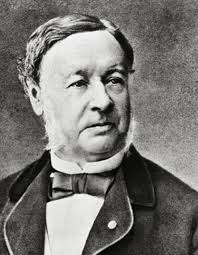
Which scientist coined the term "cell"?
Schleiden
Schwann
Hooke
Van Leuwenhoek
A cell without a true nucleus
Prokaryotic
Eukaryotic
A cell that has a true nucleus
Prokaryotic
Eukaryotic
A cell in which the genetic material is enclosed within a nucleus is a
eukaryotic cell
prokaryotic cell
human cell
animal cell

Nucleolus is found inside the nucleus, of Eukaryotes only, and makes _____.
ribosomes
cilia
flagella
prokaryotes


What is the name of this part?
stageclips
leg
body tube
coarse adjustment knob

What is the name of this part?
objective lens
base
diaphragm
coarse adjustment knob

What is the name of this part?
objective lens
eyepiece/ocular lens
diaphragm
slide

What is the name of this part?
arm
eyepiece/ocular lens
nosepiece
objective lens


DNA

An organelle that transports and packages large molecules like complex carbohydrates, lipids and proteins.
Sometimes called golgi body or golgi complex.
Ribosome
Golgi Reticulum
Endoplasmic Apparatus
Golgi Apparatus
Cytoskeleton are found only in Eukaryotes. They
provide internal support structure
are made of protein fibers
a and b
b only
Whip-like structure on outside of the cell (used for movement)
Mitochondria
Cilia
Flagella
Microvilli
This organelle directs all the activities of the cell. Its like the brain of the cell.
Mitochondria
Nucleus
Cytoplasm
Chloroplast
Proteins are produced at this organelle.
golgi body
ribosome
cytoskeleton
cilia
Cell membranes are described as selectively permeable.
Four students were asked to explain what this means. Which one is correct?
Student 1: Cell membranes prevent all materials from entering the cell.
Student 2: Cell membranes only provide structural support for the cell.
Student 3: Cell membranes regulate which substances can enter and exit the cell.
Student 4: Cell membranes allow water and water-soluble substances to enter the cell.
How can you distinguish a prokaryote vs eukaryote?
Lack of nucleus
Presence of ribosomes
Has a cell membrane
Has genetic material
Which of these is not found in ALL cells?
Mitochondria
Ribosomes
Genetic material
Cell membrane
Cytoplasm
The _____________ holds the DNA, and controls the functions of eukaryotic cells.
Nucleus
Nuclear Membrane
Mitochondria
Chloroplast
When looking at a specimen under the microscope, you should start on lower magnification because
there is more surface area seen
less surface area is viewable
it will be blurry otherwise
extra steps are fun
Endoplasmic Reticulum (ER) can be found in prokaryotic cells, but NOT in eukaryotic cells.
TRUE
FALSE
Salmonella (Bacteria) cells contain membrane-bound organelles like Mitochondria and Golgi.
TRUE
FALSE
Lysosomes would be found in large quantities in a ____ cell.
muscle
plant
white blood cell
red blood cell

