
NEW
Font size
S
M
L
XL
 Worksheets
Throwback Thursday 1
Total questions: 40
Worksheet time: 1hrs 8mins
Name
Class
Date
1.
What is the name of the pollutant where the source is unknown?
a)
Point Source
b)
Non-Point Source
2.
Which of the following would be considered a non-point source pollution:
a)
A pipe leak
b)
Fertilizer runoff
c)
A gas leak from an underground tank
3.
This organelle takes food and turns it into ENERGY for plant and animal cells.
a)
Chloroplast
b)
Mitochondria
c)
Lysosome
d)
Ribosome
4.
The site of photosynthesis
a)
ribosome
b)
mitochondria
c)
chloroplast
d)
nucleus
5.
Which of the following is not part of the cell theory?
a)
cells must contain DNA
b)
all living things are made from cells
c)
cells can only come from other cells
d)
cells are the basic unit of life
6.
Cells with a nucleus and membrane-bound organelles are called ____________________.
a)
prokaryotes
b)
eukaryotes
c)
bacteria
d)
protists
7.
Which of the following is the smallest unit of life that can carry out all life functions?
a)
the mitochondria
b)
the vacuoles
c)
the nucleus
d)
the cell
8.
The site of respiration
a)
cell wall
b)
mitochondria
c)
nucleus
d)
chloroplast
9.
Bacteria
a)
are multicellular and have a nucleus
b)
are multicellular and don't have a nucleus
c)
are unicellular and have a nucleus
d)
are unicellular and don't have a nucleus
10.
In the modern periodic table elements are arranged by:
a)
atomic mass
b)
atomic number
c)
valence electrons
d)
number of isotopes
11.
Which group of the periodic table is composed of inert (not reactive) gases?
a)
alkali metals
b)
alkaline earth metals
c)
halogens
d)
noble gases
12.

The atoms along the staircase are called
a)
metals
b)
nonmetals
c)
metalloids
d)
noble gases
13.
Which is an alkali metal?
a)
Magnesium
b)
Iron
c)
Sodium
d)
Europium
14.
If a material can easily be drawn into the shape of a wire, it is
a)
Ductile
b)
Magnetic
c)
Malleable
d)
Reactive
15.
Two elements chemically bonded form
a)
element
b)
compound
c)
mixture
d)
solutions
16.

The atomic number of this pictured element is
a)
28
b)
58.6934
c)
Ni
d)
Nickel
17.
A negatively charged particle that moves around the nucleus is a(n)
a)
proton
b)
neutron
c)
electron
d)
quark
18.
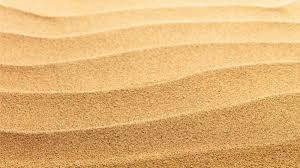
Which of the following is a biotic factor in a desert ecosystem
a)
sun
b)
cacti
c)
water
d)
sand
19.

Which of the following is a product of cellular respiration?
a)
Glucose
b)
carbon dioxide
c)
oxygen
d)
sunlight
20.
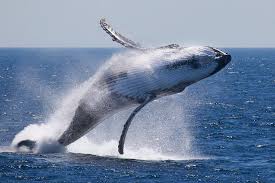
Which of the following is an abiotic factor in a marine ecosystem?
a)
grass
b)
whale
c)
water
d)
plankton
21.
What is the role of a tree in a food chain?
a)
It breaks down wastes and dead organisms
b)
It uses the sun's energy to make food.
c)
It eats other organisms.
d)
It cannot make its own food.
22.
Which is the best description of an ecosystem?
a)
all of the living and nonliving things in an area
b)
all of the individuals of one species in an are
c)
all of the populations of living things in an area
d)
all of the abiotic factors in an area
23.
Which best explains the role of bacteria in an ecosystem?
a)
They break down organic matter into necessary nutrient components.
b)
They release energy from the decomposition of atmospheric gases.
c)
They convert carbon dioxide and water into simple carbohydrates.
d)
They absorb energy from the synthesis of inorganic compounds.
24.
Which best describes the role plants serve in the oxygen cycle?
a)
They absorb oxygen during photosynthesis.
b)
They absorb oxygen during decomposition reactions.
c)
They release oxygen as a waste product of photosynthesis.
d)
They release oxygen as a waste product in cellular respiration.
25.

This diagram shows the connection between aquatic and terrestrial food webs.
Which best describes what happens when an owl attacks and kills a fish for food?
Which best describes what happens when an owl attacks and kills a fish for food?
a)
an interconnection between aquatic and terrestrial food webs.
b)
an interconnection between terrestrial organisms and predators
c)
an interconnection between aquatic food webs and decomposers
26.
An organism that lives on or in a host and causes it harm is called
a)
a host
b)
a parasite
c)
a cell
d)
a virus
27.
Pathogens known as ____ must get inside cells to reproduce.
a)
viruses
b)
bacteria
c)
fungi
d)
protist
28.
What action (or behavior) is the best way to prevent infectious disease?
a)
don't leave the house
b)
always wear gloves
c)
wash your hands
d)
cover your cough
29.
What pathogen do antibiotics attack?
a)
Virus
b)
Bacteria
c)
Fungi
d)
Protista
30.
Kendra is infected with yellow fever, as a result of a mosquito bite. In this example, what would the mosquito be considered?
a)
pathogen
b)
mutualistic
c)
mitotic
d)
biological vector
31.
A relationship between two organisms in which one organism benefits and the other is unharmed...
a)
Mutualism
b)
Competition
c)
Parasitsm
d)
Commensalism
32.
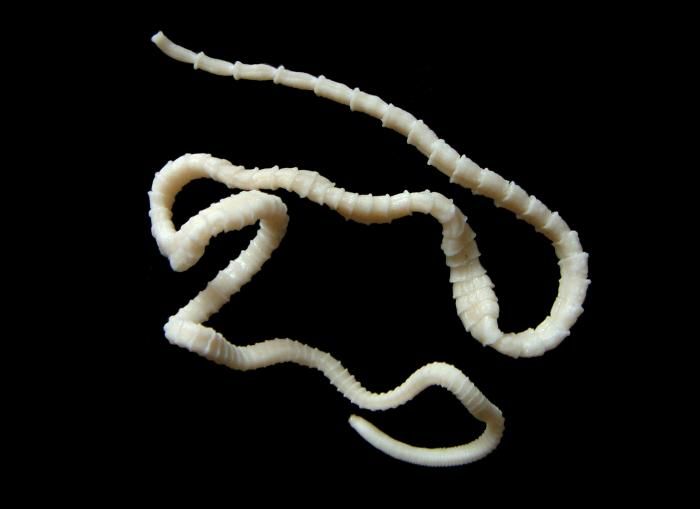
A tapeworm and a cat have this type of relationship.
a)
mutualism
b)
parasitism
c)
commensalism
d)
competition
33.
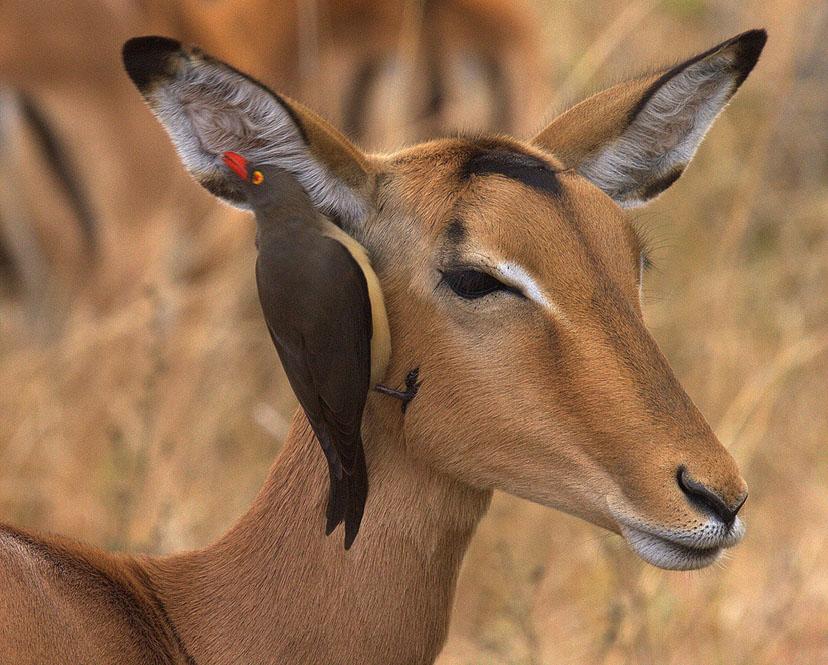
Red-billed oxpeckers are birds that often feed on parasites that infest impala. This is an example of _______.
a)
commensalism
b)
mutualism
c)
neutralism
d)
competition
34.

In the cell cycle, after mitosis and cytokinesis occur, the two resulting cells are
a)
different from the starting cell and identical to each other.
b)
different from the starting cell and different from each other.
c)
identical to the starting cell and different from each other.
d)
identical to the starting cell and identical to each other.
35.
What is the name of the process in which DNA (genetic information) is exchanged during meiosis?
a)
crossing under
b)
crossing over
c)
melding
d)
blending
36.
After meiosis is complete how many cells will there be?
a)
1
b)
2
c)
3
d)
4
37.
mixture of fresh and salt water
a)
Upwelling
b)
Brackish Water
c)
Downwelling
d)
Current
38.
The movement of deep, cold, and nutrient-rich water to the surface
a)
Upwelling
b)
Downwelling
c)
Current
d)
Tide
39.
What is a type of technology that is used to explore and gather samples in deep ocean areas?
a)
Sonar
b)
ROV
c)
Telescope
d)
Satellite
40.
How do nitrate levels affect the health of a water system?
a)
As nitrates decrease, there is an increase in plant growth
b)
nitrates cause bacteria to consume large protein molecules
c)
nitrates cause aquatic organisms to die due to oxygen depletion
d)
as nitrates increase, there is an increase in dissolved oxygen
Reset

