
 Worksheets
Ga Milestones Science Review
Total questions: 60
Worksheet time: 38mins
Name
Class
Date
1.
The ___________ is the basic unit of life
a)
organ
b)
cell
c)
atom
d)
tissue
2.
Which organelle is only found in a plant cell?
a)
nucleus
b)
chloroplast
c)
mitochondria
d)
cell membrane
3.
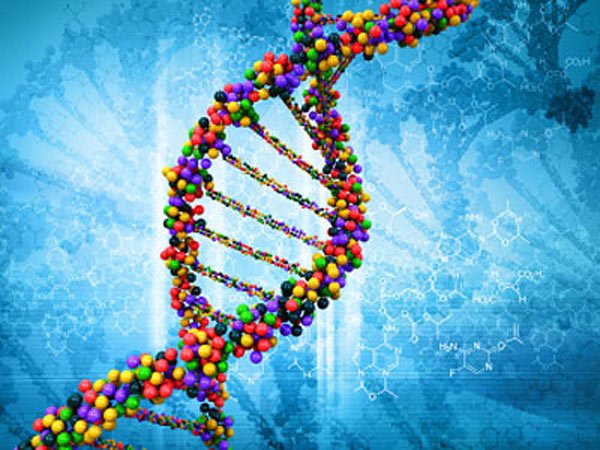
What is the name of the genetic material that is inside the nucleus?
a)
ER
b)
ATP
c)
YOLO
d)
DNA
4.
A rigid layer that lies outside the cell's membrane is...
a)
Cytoskeleton
b)
Cilia
c)
Cell Wall
d)
Flagella
5.

What is the gel-like substance inside of cells called?
a)
photoplasm
b)
photosynthesis
c)
cytoskeleton
d)
cytoplasm
6.

Directs all the cell's activities. The CONTROL CENTER!
a)
mitochondria
b)
chloroplasts
c)
vacuole
d)
nucleus
7.
The part in a plant cell that trap's the Sun's energy to make food
a)
chloroplasts
b)
nucleus
c)
mitochondria
d)
cell wall
8.
The STORAGE TANK is the ______________
a)
organ
b)
vacuole
c)
cytoplasm
d)
mitochondria
9.
Which of the following statements is true about cells?
a)
All living things are made up of one or more cells.
b)
The cell is the basic unit of a living organism.
c)
Cells come from other cells.
d)
All the above.
10.
This thin layer protects the cell and regulates what substances enter and leave the cell.
a)
cell membrane
b)
cell
c)
cell wall
d)
golgi body
11.
Compared to a blood cell, viruses are...
a)
smaller
b)
larger
c)
faster
d)
slower
12.
Which is a true statement?
a)
All microorganisms are harmful.
b)
All microorganisms are beneficial.
c)
Some microorganisms are harmful while others are beneficial.
d)
Microorganisms are beneficial only to humans.
13.
Animal-like protists are also referred to as...
a)
dinoflagellates
b)
protozoa
c)
diatoms
d)
algae
14.
Yeast is used to make...
a)
rolls
b)
cakes
c)
pizza crust
d)
all of the above
15.
In the 1670s, Leeuwenhoek discovered microorganisms in the human mouth which caused tooth decay.
Which is another way that microorganisms can be harmful?
Which is another way that microorganisms can be harmful?
a)
Microorganisms act on milk to make yogurt.
b)
Microorganisms break down dead organisms.
c)
Microorganisms break down tissues in fruits and vegetables.
d)
Microorganisms can be used to make medicines.
16.
What is the cause of the common cold?
a)
bacteria
b)
cold temperatures
c)
sneezing and coughing
d)
viruses
17.
What is a way that you can protect yourself from microorganisms that can live on food?
a)
Store uncooked meats in a refrigerator or freezer.
b)
Wash hands with soap and water before and after handling food.
c)
Cook chicken and other raw meats thoroughly.
d)
All of the above
18.
Which best describes where you would find microorganisms?
a)
in ponds, lakes, and oceans.
b)
in animals, plants, and humans.
c)
on food that has rotted.
d)
everywhere around us.
19.
Most microorganisms cannot be seen without a...
a)
microscope
b)
magnifying lens
c)
telescope
d)
x-ray machine
20.

_________________ bacteria are in your _________________ to help digest food.
a)
Helpful; throat
b)
Helpful; stomach
c)
Harmful; esophagus
d)
Harmful; lungs
21.
Which of the following is true about vertebrates?
a)
Vertebrates bodies are more complex than invertebrates.
b)
There are more vertebrate animals than invertebrate animals.
c)
Vertebrates have an exoskeleton.
d)
Vertebrates do not have a backbone.
22.
Biologist use various traits to classify living things. Which of the following would be the least useful in a classification scheme for mammals?
a)
Color of hair
b)
Shape of teeth
c)
Skeleton bones
d)
Digestive system
23.
Several scientists observed an animal with hair and wings. This animal is a
a)
bird.
b)
butterfly.
c)
bat.
d)
flying squirrel.
24.
Which class of vertebrates have the following characteristics: Reproduce in water, lays eggs, has teeth, and is cold-blooded?
a)
Fish
b)
Bird
c)
Repitle
d)
Mammal
25.
All vertebrate animals have
a)
scales.
b)
backbones.
c)
warm-blood.
d)
hair.
26.
Which animals are cold-blooded, live part of their lives in water and part on land, and go through metamorphosis?
a)
Reptiles
b)
Amphibians
c)
Birds
d)
Mammals
27.
Which is a characteristic of reptiles?
a)
They have slimy skin.
b)
They use lungs to breathe.
c)
They are invertebrates.
d)
They maintain a constant body temperature.
28.
Vertebrate animals that are distinguished by live births and production of maternal milk are
a)
mammals.
b)
birds.
c)
amphibians.
d)
reptiles.
29.
How are the animals in the group grouped? Select all possible answers.
Group 1: Whale and shark
Group 2: Hawk and eagle
Group 1: Whale and shark
Group 2: Hawk and eagle
a)
Where they live.
b)
How they breathe.
c)
If they have tails or not.
d)
If they are carnivores or not.
30.
1. Organisms with a body covering of feathers are classified as
a)
birds.
b)
fish.
c)
insect.
d)
mammals.
31.
wood is a _____?
a)
conductor
b)
insulator
32.
water is a______?
a)
conductor
b)
insulator
33.
A material in which electrons are not able to move easily
a)
Circuit
b)
Insulator
c)
Resistance
d)
Conductor
34.
This circuit has more than one loop. When one light goes out, the others stay on.
a)
closed circuit
b)
series circuit
c)
parallel circuit
d)
open circuit
35.
When there is only one path for electrons to move through it is called a _____. When one light goes out, they all go out.
a)
closed circuit
b)
parallel circuit
c)
series circuit
d)
open circuit
36.

What kind of circuit is this?
a)
series
b)
parallel
37.

What type of circuit is show in the image?
a)
Series Circuit
b)
Parallel Circuit
38.
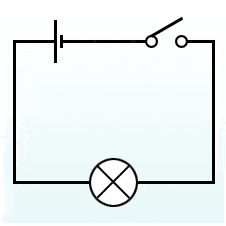
this circuit is .....?
a)
open
b)
parallel
c)
closed
d)
The cutest little circuit evah!
39.
When there is only one path for electrons to move through it is called a _____. When one light goes out, they all go out.
a)
closed circuit
b)
parallel circuit
c)
series circuit
d)
open circuit
40.
When all parts of the circuit are connected it is a ______ circuit.
a)
open
b)
closed
41.
Ice cream melts on your cone.
a)
physical
b)
chemical
42.
Vinegar and baking soda foams up for your model volcano.
a)
physical
b)
chemical
43.
You put bread into the toaster and then enjoy toast for breakfast.
a)
physical
b)
chemical
44.
You crack an egg accidentally on the sidewalk while bringing in groceries.
a)
physical
b)
chemical
45.
You use your play doh to make a turtle.
a)
physical
b)
chemical
46.
A compactor crushes aluminum cans.
a)
physical
b)
chemical
47.
The campers burn some wood to make a fire.
a)
physical
b)
chemical
48.
You mix up some cookie batter combining eggs, flour, and sugar in a bowl.
a)
physical
b)
chemical
49.
You bake a cake.
a)
physical
b)
chemical
50.
Milk souring..
a)
physical
b)
chemical
51.

The section of the Earth's crust and mantle that fits together with other sections like puzzle pieces is called ____________.
a)
Pangea
b)
plate
c)
epicenter
d)
fault
52.
The point of Earth's surface directly above the focus of an earthquake is called the ____________.
a)
fault
b)
earthquake
c)
epicenter
d)
seismologist
53.
A crack in the Earth's crust is called a ____________.
a)
fault
b)
magma
c)
lava
d)
volcano
54.
A mountain that forms as molten rock flows through a crack onto Earth's surface is called a _________________.
a)
rock
b)
volcano
c)
plateau
d)
valley
55.
The shaking of the Earth's surface, caused by movement of rock.
a)
Mountain
b)
sinkhole
c)
valley
d)
earthquake
56.
The breaking down or disintegration of substances such as rocks and minerals by physical, chemical, or biological processes is called ______________.
a)
Deposition
b)
Weathering
c)
Erosion
d)
The rock cycle
57.
When particles carried by water, ice, or wind are deposited (dropped) in another location
a)
Weathering
b)
Erosion
c)
Deposition
d)
Flooding
58.
When the wind carries sand from one area to another and creates a hill
a)
sand storm
b)
sand dune
c)
sand movement
d)
jetty
59.
The movement of sediment or soil from one location to another by means of water, ice, or wind is called ______________.
a)
Weathering
b)
Deposition
c)
Erosion
d)
Soil Movement
60.
When acid rain dissolves underground limestone caves are being formed. This is an example of ____________.
a)
erosion
b)
weathering
c)
deposition
d)
earthquakes
100 %

