
 Worksheets
8th grade chemistry review
Total questions: 42
Worksheet time: 35mins
Name
Class
Date
1.
What is the formula for density?
a)
density = mass x volume
b)
density = mass / volume
c)
density = mass + volume
d)
density = mass - volume
2.
The tool used to measure the mass of a substance or object is a ______________.
a)
balance
b)
graduated cylinder
c)
ruler
d)
thermometer
3.
Jack has a rock. The rock has a mass of 14g and a volume of 2cm3. What is the density of the rock?
a)
7 mL
b)
7 g/cm3
c)
28 g/cm3
d)
1/7 g/cm3
4.

What is the volume of Object X?
a)
10.0 cm3
b)
15.0 cm3
c)
20.0 cm3
d)
25.0 cm3
5.

Put the liquids in order from most dense to least dense?
a)
4, 3, 2, 1
b)
1, 2, 3, 4
c)
3, 4, 2, 1,
d)
4, 3, 1, 2
6.
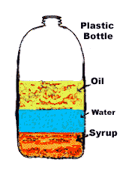
Which liquid is the least dense?
a)
oil
b)
water
c)
syrup
d)
plastic bottle
7.

Which box has a higher density?
a)
Box A
b)
Box B
c)
cannot be determined
d)
they are the same
8.
In general what is the most dense form of matter?
a)
solid
b)
liquid
c)
gas
d)
plasmas
9.

What is the volume of the fish?
a)
18.0 cm3
b)
6.0 cm3
c)
38.0 cm3
10.
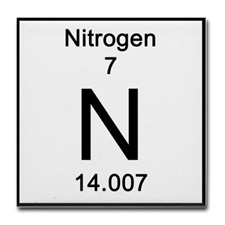
What is the number of protons that the element in this image contain?
a)
14
b)
7
c)
15
d)
18
11.

What is the atomic mass of "F"
a)
9
b)
18
c)
17
d)
19
12.
all matter is made of what
a)
energy
b)
atoms
c)
electrons
d)
compounds
13.
The positive particles of an atom are
a)
electrons
b)
positrons
c)
neutrons
d)
protons
14.
the central region of an atom where its neutrons and protons are is its
a)
nucleus
b)
electron cloud
c)
core
d)
center
15.
an atom with atomic number 6 would have how many protons
a)
6
b)
12
c)
3
d)
cannot be determined
16.
Which of the following is a positively charged subatomic particle found in the nucleus of an atom?
a)
Electron
b)
Proton
c)
Neutron
d)
Quark
17.
Which of the following is a subatomic particle with no charge that is found in the nucleus of an atom?
a)
Electron
b)
Proton
c)
Neutron
d)
Quark
18.
Where are electrons of an atom found?
a)
Nucleus
b)
Electron Cloud
c)
Some are in the nucleus and some in the electron cloud.
d)
They are moving everywhere.
19.
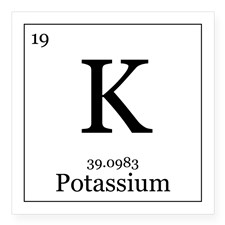
How many neutron are in the atom "K"?
a)
7
b)
2
c)
39
d)
12
20.

What is the number of protons that the element in this image contain?
a)
14
b)
7
c)
15
d)
18
21.

In which region would the nonmentals be found?
a)
1
b)
4
c)
3
d)
5
22.

In which region would the most reactive elements be found?
a)
1
b)
4
c)
5
d)
3
23.

In which region would the least reactive elements be found?
a)
1
b)
4
c)
3
d)
5
24.
The three main regions on the periodic table are ____________.
a)
solid, liquid, gas
b)
metals, nonmetals, meatlloids
c)
radioactive, man-made, poisonous
25.
Atoms can be seen with the naked eye.
a)
True
b)
False
26.
Something that is made up of only one kind of atom is known as _________________.
a)
a molecule
b)
a compound
c)
an element
d)
a proton
27.
What determines where an element is located on the periodic table?
a)
its atomic mass
b)
its atomic number
c)
its number of electrons
d)
they're arranged alphabeticaly
28.
A "group" is a ____________ on the periodic table.
a)
column
b)
row
29.
A "period" is a ____________ on the periodic table.
a)
column
b)
row
30.
Elements on the periodic table that are usually shiny, easily hammered into thin sheets or pulled into wires, and are good conductors of electricity are called _____________.
a)
metals
b)
nonmetals
c)
metalloids
d)
transition elements
31.
Elements on the periodic table that are often gases at room temperature, are poor conductors of electricity, and are good insulators are called _____________.
a)
metals
b)
nonmetals
c)
metalloids
d)
transition elements
32.
Elements on the periodic table that have physical and chemical properties of both metals and nonmetals are called _____________.
a)
metals
b)
nonmetals
c)
metalloids
d)
transition elements
33.
Helium, neon, argon, krypton, xenon, and radon are known as _____________.
a)
halogens
b)
noble gases
c)
metalloids
d)
transition elements
34.
The sum of the protons and neutrons in the nucleus of an atom
a)
Atomic Number
b)
Compound
c)
Electrons
d)
Mass Number (also called Atomic Mass)
35.
These elements are found along the zig-zag line on the periodic table.
a)
Metal
b)
Group
c)
Metalloid
d)
Nonmetal
36.

This picture represents which of the following?
a)
element
b)
compound
c)
mixture of elements
d)
mixture of compounds
37.

This picture represents which of the following?
a)
element
b)
compound
c)
mixture
38.

This picture represents which of the following?
a)
element
b)
compound
c)
mixture
39.
How many elements are represented in the compound?
Na2CO3
Na2CO3
a)
1
b)
2
c)
3
d)
4
40.
Which one can be found on the periodic table?
a)
Compound
b)
Element
41.
Is salt (NaCI) a compound or a element
a)
Compound
b)
element
42.
compounds are chemically bonded together
a)
False
b)
true
c)
I don't know?
100 %

