
NEW
Font size
S
M
L
XL
 Worksheets
MST Review
Total questions: 70
Worksheet time: 54mins
Name
Class
Date
1.
A foreign insect is introduced into the Texas. It eats a lot of leaves, and trees start to become leafless. Many different animals feed on the new insect, but even they cannot control its numbers. Eventually, trees begin to die. Why would a rapid increase of the new insect population cause certain species of herbivores to vanish or be fewer in number?
a)
They would not have enough to eat.
b)
They would not have enough space to live.
c)
They would not have tree bark to eat.
2.
A manatee is a water-dwelling herbivore on the list of endangered species. If manatees were to become extinct, what would be the most likely result in areas where they had lived?
a)
Certain producer organisms would become more
abundant in the area.
b)
Other
manatees would move into the area and restore balance.
c)
Predators in the area would have more
food to eat.
d)
The
area would not be affected.
3.
Raccoons eat aquatic animals. If chemicals entered the lake with rain water and destroyed the plants, how would this impact the raccoon population?
a)
Raccoons
would have more aquatic animals to eat.
b)
Raccoons
would begin eating land plants.
c)
Raccoons
would have less aquatic animals to eat.
d)
Raccoons would only drink water.
4.
A park is home to a large number of robins, squirrels and rabbits. The robins and squirrels live in the park’s trees. The robins feed on earthworms and insects that live on the ground. The squirrels eat the acorns produced by the park’s oak trees. The rabbits hide in the bushes and feed on the grass. Which factor would negatively impact the number of rabbits living in the park?
a)
Collecting acorns off the ground.
b)
Planting more trees.
c)
Removing park bushes.
d)
Removing the squirrels.
5.
Requires two parents
a)
sexual
b)
asexual
6.
Requires only one parent
a)
sexual
b)
asexual
7.

The offspring from asexually reproduced organisms are?
a)
Different than their parents
b)
Identical to parents
c)
Like a combination from both parents
d)
A different species
8.

If two organisms reproduce sexually, then their offspring will exhibit a genetic makeup that is -
a)
identical to only one parent
b)
identical to all of its siblings
c)
a unique combination of traits
d)
the recessive traits of each parent
9.

This is when a new organism grows by cell division on the body of its parent. The bud, or offspring is identical to the parent. The bud, when large enough, can break off of the parent and live on its own. Examples of this include yeast, hydra and potatoes.
a)
Regeneration
b)
Vegetative propagation
c)
Fission
d)
Budding
10.
Which type of asexual reproduction is taking place?
A planarian is a non-parasitic flatworm. If a planarian was injured by a predator, it could re-grow its body parts. If the body parts were not eaten by the predator, the part could re-grow into a whole new planarian as well.
A planarian is a non-parasitic flatworm. If a planarian was injured by a predator, it could re-grow its body parts. If the body parts were not eaten by the predator, the part could re-grow into a whole new planarian as well.
a)
Budding
b)
Fission
c)
Vegetative propagation
d)
Regeneration
11.
This is when uniform offspring grow from a part of a parent plant. Parent plants sends out runners. Where the runner touches the ground, roots can grow. A new plant is produced even if the runner is broken apart Each new plant is uniform and identical to the parent.
a)
Vegetative propagation
b)
Regeneration
c)
Budding
d)
Fission
12.
Sharks consume smaller fish they catch in the ocean. This is an example of what type of relationship?
a)
predator/prey
b)
parasite/host
c)
producer/consumer
13.
When an organism's energy source comes from both animals and plants, that organism is considered to be a what?
a)
predator
b)
omnivore
c)
herbivore
d)
carnivore
14.
Which of the following would be considered to be prey?
a)
an animal that has to hunt for its food
b)
an animal that is eaten by another animal
c)
an organism that makes it own food
d)
an organism that feeds on the blood of another animal
15.
How do producers obtain energy?
a)
They conduct photosynthesis.
b)
They consume plants.
c)
They consume primary consumers.
d)
They consume secondary consumers.
16.
All food chains_____________________
a)
have more consumers than producers
b)
produce and use same amount of energy
c)
begin with a producer
d)
are unhealthy
17.
The nonliving parts of an ecosystem include
a)
water, sun, plants
b)
rocks, water, animals
c)
rocks, sun, water
d)
animals, plants, spiders
18.
Animals that eat only animals are
a)
herbivores
b)
omnivores
c)
carnivores
19.

What body system removes the waste from your body?
a)
Circulatory
b)
Excretory
c)
Digestive
d)
Respiratory
20.

What body system consists of the heart?
a)
Excretory
b)
Digestive
c)
Circulatory
d)
Respiratory
21.

Many diseases caused by pathogens can be passed from one organism to another.
a)
Microorganisms
b)
Pain
c)
Bacteria
d)
Infectious Diseases
22.

The process of heat processing a liquid or a food to kill pathogenic bacteria to make the food safe to eat.
a)
Pasteurization
b)
Parking
c)
Antibiotics
d)
Bacteria
23.

Chemicals used to treat bacterial infections.
a)
Pasteurization
b)
Vaccine
c)
Antibiotics
d)
Toxins
24.

Made from dead or weakened pathogens.
a)
Toxins
b)
Pasteurization
c)
Antibiotics
d)
Vaccine
25.

Which of the following shows the correct diagram
a)
Cell-Tissue-Organ-Organ System
b)
Cell-Organ-Tissue-Organ System
c)
Organ System-Organ-Tissue-Cell
d)
Tissue-Organ System-Organ-Cell
26.
In what layer of the atmosphere do meteors burn up?
a)
Mesosphere
b)
Exosphere
c)
Stratosphere
d)
Troposphere
27.
What is the hottest layer of the atmosphere?
a)
Mesosphere
b)
Stratosphere
c)
Exosphere
d)
Thermosphere
28.
What is the coldest layer of the atmosphere?
a)
Mesosphere
b)
Stratosphere
c)
Exosphere
d)
Thermosphere
29.
What is the uppermost layer of the atmosphere?
a)
Troposphere
b)
Mesosphere
c)
Exosphere
d)
Stratosphere
30.
The five layers of the atmosphere in order from the ground up
a)
stratosphere, troposphere, exosphere, mesosphere and thermosphere
b)
troposphere, mesosphere, thermosphere, exosphere and stratosphere
c)
thermosphere, exosphere, mesosphere, stratosphere and troposphere
d)
troposphere, stratosphere, mesosphere, thermosphere and exosphere
31.
Which gas is 78% of the atmosphere?
a)
nitrogen
b)
oxygen
c)
helium
d)
carbon dioxide
32.
How have scientists been able to study Earth's mantle?
a)
In some places, Earth's crust thins enough to see mantle.
b)
Earth's surface heat warms the crust turning it into mantle.
c)
Cooling crust material becomes mantle over time.
d)
In some places, mantle rock pushes to Earth's surface.
33.
What is the top layer of the Earth's surface called?
a)
Mantle
b)
Innercore
c)
Outercore
d)
Crust
34.
Temperature _____________________ as you go deeper into the earth.
a)
increases
b)
decreases
c)
goes up and down depending on the layer
d)
stays the same
35.
Pressure ______________________ as you go deeper into the Earth
a)
increases
b)
decreases
c)
goes up or down depending on the layer
d)
stays the same
36.
Which layer of Earth is characterized by rock that is plastic, or soft enough to flow?
a)
asthenosphere
b)
crust
c)
lithosphere
d)
inner core
37.
the smallest particle of matter
a)
atom
b)
element
c)
molecule
d)
compound
38.
Which of the following is not a compound?
a)
HCl
b)
Cl
c)
NaCl
d)
CO2
39.
made up of two or more DIFFERENT atoms/elements chemically combined
a)
atom
b)
element
c)
molecule
d)
compound
40.
What is formed when two or more elements join together?
a)
Proton
b)
Compound
c)
Neutron
d)
Mixture
41.
H2O also known as water is an example of
a)
Molecule
b)
Compound
c)
Atom
d)
Element
42.
Element is a
a)
pure substance
b)
compound
c)
mixture
d)
molecule
43.
Is salt (NaCI) a compound or a element
a)
Compound
b)
element
44.

Which box has a higher density?
a)
Box A
b)
Box B
c)
cannot be determined
d)
they are the same
45.
In general what is the most dense form of matter?
a)
solid
b)
liquid
c)
gas
d)
plasmas
46.

Which liquid has the highest density?
a)
corn syrup
b)
lamp oil
c)
rubbing alcohol
d)
honey
47.

What is the volume of the fish?
a)
18.0 cm3
b)
6.0 cm3
c)
38.0 cm3
48.
What is a PUSH or PULL of an object?
a)
Motion
b)
Force
c)
Friction
d)
Gravity
49.
What happens when one force PULLS an object toward another?
a)
Friction
b)
Motion
c)
Gravity
d)
Magnetism
50.
What is a force that works AGAINST MOTION?
a)
Force
b)
Motion
c)
Gravity
d)
Friction
51.

In the image, which of the person and their bikes will get down a hill faster?
a)
The boy because he is younger
b)
The woman because she is stronger
c)
The boy because he has a greater mass which applies a greater force
d)
The woman because she has more mass and applies a greater force
52.
How is gravity affected by mass?
a)
the larger the mass of the object, the greater the gravity
b)
small objects have no gravity
c)
gravity is not affected by mass of objects, whether large or small
53.
The amount of matter in an object
a)
weight
b)
force
c)
gravity
d)
mass
54.
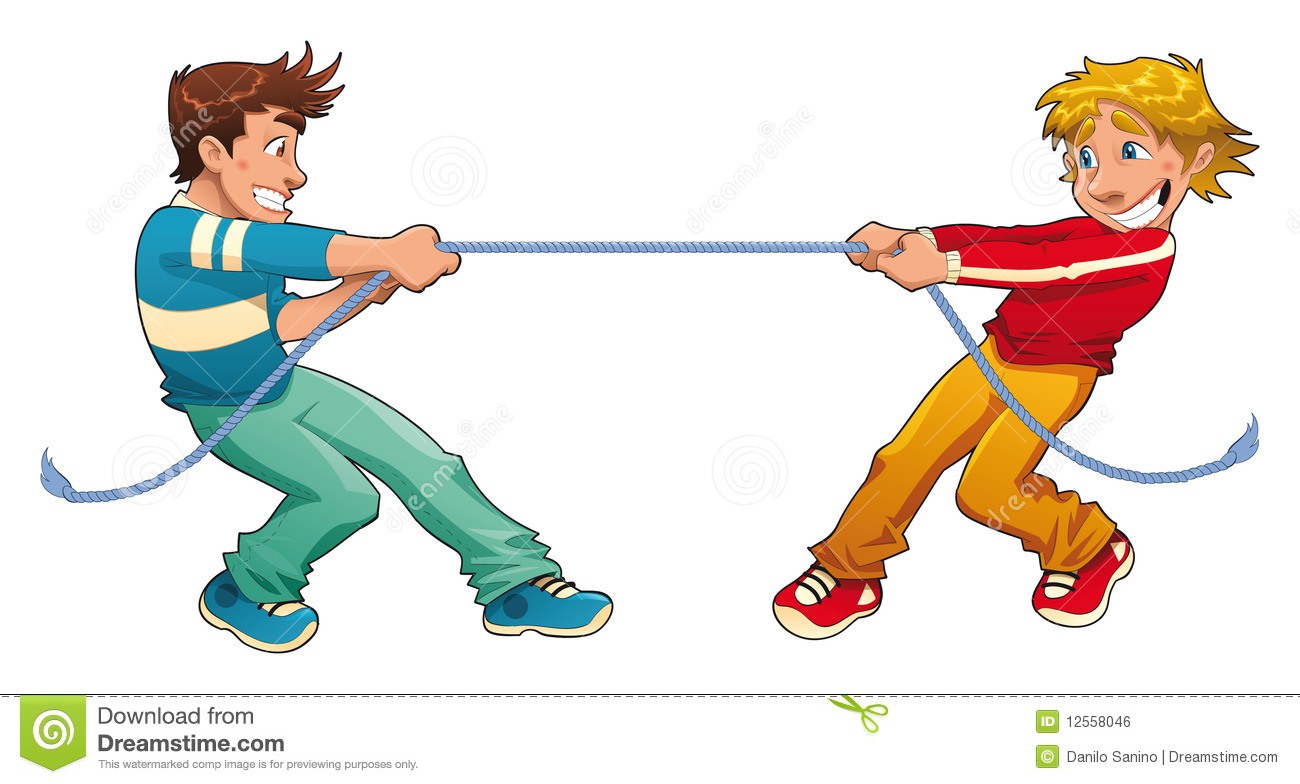
If these boys are pulling with the same amount of force. What will happen?
a)
The boy in blue will win.
b)
They will not move at all.
c)
The boy in red will win.
d)
Both will fall down.
55.
__________ is stored energy.
a)
Potential
b)
Kinetic
c)
None of the above
d)
All of the above
56.
Gravitational potential energy depends on the ________ and ________ of the object.
a)
Height and mass
b)
Friction and movement
c)
Mass and Movement
d)
Height and Friction
57.

What kind of energy is in a rock at the edge of a cliff?
a)
Potential
b)
Kinetic
58.

What kind of energy is in a moving skateboard?
a)
Potential
b)
Kinetic
59.
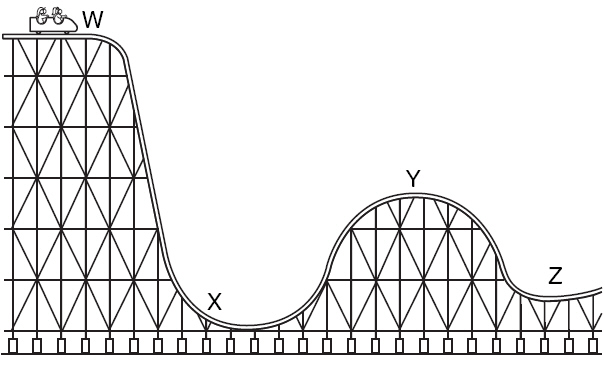
At which point is potential energy greatest?
a)
W
b)
X
c)
Y
d)
Z
60.
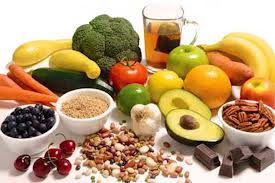
What kind of energy is represented in the picture?
a)
Thermal
b)
Chemical
c)
Sound
d)
Nuclear
61.

The energy associated with objects that can be compressed or stretched is called...
a)
Elastic Potential Energy
b)
Gravitational Potential Energy
c)
Potential Energy
62.

True or False
When a rubber band is stretched the most, it has the greatest elastic potential energy.
When a rubber band is stretched the most, it has the greatest elastic potential energy.
a)
False
b)
True
63.
A black shirt _____________ the sun's rays.
a)
transmits
b)
reflects
c)
absorbs
64.
A white shirt will _________ the sun's rays.
a)
transmit
b)
reflect
c)
absorb
65.
A clear window is an example of a ___________ material.
a)
transparent
b)
translucent
c)
opaque
66.
A fogged-up glass window is an example of a _________ material.
a)
transparent
b)
translucent
c)
opaque
67.
Light bending when goes through different mediums is called ________.
a)
reflection
b)
absorbtion
c)
refraction
d)
mirage
68.

Curve in
a)
Converse
b)
Convex
c)
Convection
d)
Concave
69.

Allows little to no light through.
a)
Transparent
b)
Translucent
c)
Opal
d)
Opaque
70.

Curve Out
a)
Converse
b)
Concave
c)
Convex
d)
Convection
Reset

