
 Worksheets
Interdepence of Organisms
Total questions: 71
Worksheet time: 1hrs 2mins
Name
Class
Date
1.
Which of these terrestrial biomes receives less than 25 cm of precipitation annually?
a)
Savannah
b)
Temperate Forest
c)
Desert
d)
Estuary
2.

Cattle egrets are birds that forage in fields among cattle. The egrets get easy access to food and the cattle don't care if they are there or not.
a)
mutualism
b)
commensalism
c)
competition
d)
parasitism
3.

Which organisms compete for the same food?
a)
Rabbits and mice
b)
Rabbits and foxes
c)
Mice and grasshoppers
d)
Grasshoppers and owls
4.

A wrasse fish feeds on the parasites found on the black sea bass's body. Both species benefit.
a)
Mutualism
b)
Parasitism
c)
Commensalism
5.
Which of the following is NOT a level of organization in ecosystems?
a)
community
b)
species
c)
population
d)
organism
6.
An ecosystem is made up of all the ________________ and _________________ factors in an area.
a)
species and organisms
b)
abiotic and species
c)
biotic and species
d)
abiotic and biotic
7.
A living or once-living organisms in an ecosystem is a
a)
population
b)
biotic factor
c)
abiotic factor
d)
community
8.
A nonliving element in an ecosystem is an
a)
animal
b)
abiotic factor
c)
biotic factor
d)
organism
9.
The prefix bio means
a)
life
b)
science
c)
story
d)
not
10.
The prefix a means
a)
life
b)
science
c)
not or without
d)
one
11.
Which of the following is not an abiotic factor?
a)
sun
b)
temperature
c)
soil
d)
grass
12.
Which of the following is not a biotic factor?
a)
mushroom
b)
air
c)
elephant
d)
coyote
13.
The largest number of individuals of the same species that an area can support is its
a)
limiting factor
b)
organisms
c)
carrying capacity
d)
community
14.
What limits the number of individuals that can live in an ecosystem?
a)
limiting factor
b)
population
c)
carrying capacity
d)
community
15.
Which of the following is not a biotic factor that limits other organisms in its environment?
a)
Competition
b)
Predator-prey relationships
c)
Temperature
d)
Disease
16.
Which of the following is not an abiotic factor that limits the organisms in an ecosystem?
a)
drought
b)
soil-nutrients
c)
water
d)
human activity
17.
What happens to abiotic factors when biotic populations increase?
a)
increase
b)
decrease
18.
Which two biotic factors would compete for other biotic factors in a tundra?
a)
deer and lizards
b)
penguins and fish
c)
palm trees and spiders
d)
grass and rattlesnakes
19.
Lizards and cacti are biotic factors in a desert ecosystem that would rely on which abiotic factors?
a)
insects and sun
b)
water and insects
c)
snakes and temperature
d)
water and soil
20.

Which examples are considered major biomes?
a)
Desert, Forest, Grassland, Tundra
b)
Desert, Mountain, Forest, Tundra
c)
River, Mountain, Wetland, Grassland
d)
Mountain, Desert, Tundra, Forest
21.

Which of the abiotic factors in the marine biome would be different for organisms living at location A and location B?
a)
Temperature, sunlight, wind, pressure
b)
Temperature, mollusks, pressure, wind
c)
Temperature, algae, sunlight, wind
d)
Temperature, algae, mollusk, wind
22.

Which letter shows the location of the deciduous forest biome?
a)
Letter A
b)
Letter B
c)
Letter C
d)
Letter D
23.

Which list correctly completes the chart?
a)
1. land, 2. marine, 3. freshwater
b)
1. marine, 2. land, 3. freshwater
c)
1. land, 2. freshwater, 3. marine
d)
1. freshwater, 2. marine, 3. land
24.
A large region characterized by a specific type of climate and certain types of plant and animal communities is referred to as—
a)
a biome
b)
an ecosystem
c)
a habitat
d)
a niche
25.
Nina visited an area that receives a large amount of precipitation during all twelve months and is typically warm year round. The area also has a large variety of organism diversity. What biome did Nina most likely visit?
a)
Rainforest
b)
Desert
c)
Tundra
d)
Grassland
26.
Theodore visited an area that experiences temperatures below 0°C for about eight months of the year. The area also receives a very low amount of precipitation and has a permanently frozen layer of ground below the surface. What biome did Theodore most likely visit
a)
Tundra
b)
Grassland
c)
Desert
d)
Forest
27.
Which two biomes receive the least amount of precipitation each year?
a)
Tundra and desert
b)
Desert and grasslands
c)
Tundra and deciduous forest
d)
Coniferous forest and rainforest
28.
All living and nonliving things that interact in an area make up
a)
an ecosystem
b)
a biome
c)
a community
d)
a population
29.
The two most important factors that help determine a biome are
a)
precipitation and temperature
b)
snowfall and melting ice
c)
animals and bacteria
d)
land slope and logitude
30.
In which biome would you most likely find largemouth bass, rainbow trout, and salmon?
a)
Freshwater
b)
Marine
c)
Deciduous forest
d)
Tundra
31.
In which biome would you most likely find seaweed, sharks and stingrays?
a)
Marine
b)
Freshwater
c)
Deciduous forest
d)
Tundra
32.
In which biome would you most likely find cactus, rattlesnakes, lizards, and jack rabbits?
a)
Desert
b)
Deciduous forest
c)
Grassland
d)
Coniferous forest
33.
Jillian traveled to an area where she observed mostly small vegetation, a few trees and several zebra, lions, and elephants. Which biome did Jillian most likely visit?
a)
Grassland
b)
Desert
c)
Tropical rainforest
d)
Coniferous forest
34.

The graph shows monthly rainfall amounts. Which biome does this graph represent?
a)
Tropical rainforest
b)
Deciduous forest
c)
Desert
d)
Tundra
35.

An adaptation a snake must have to live in the biome represented by number 1 is a tolerance of _
a)
limited access to water
b)
decreased amounts of minerals in the soil
c)
mild temperatures
d)
no access to insect prey
36.
Why do animals in the desert burrow underground during the day and become active at night?
a)
To avoid the excessive heat and sunlight in the day.
b)
To obtain needed water underground.
c)
To ensure they protect their den during the day.
d)
To find food that is only available at night.
37.
What adaptation is used to help an animal blend with its surroundings?
a)
Camouflage
b)
Mimicry
c)
Hibernation
d)
Instinct
38.

Which mammal needs the thickest fur to adapt to its winter environment?
a)
Moose
b)
Racoon
c)
Squirrel
d)
Monkey
39.
Coniferous trees are adapted to conserve water in the winter because
a)
they have needle-like leaves with a waxy coating
b)
they have large, colorful leaves
c)
they produce large fruits
d)
their leaves smell bad so animals will not eat them
40.
What is an adaptation that would help an organism live in the desert?
a)
Cactus storing water in its stem
b)
Birds migrating south in the winter
c)
Kangaroo mice having extremely dark fur
d)
Bright coloring of frogs and other amphibians
41.
In Southern Virginia there are trees such as oak, maple, and beech that lose their leaves each year. What type of biome would these trees be found in?
a)
Deciduous forest
b)
Boreal forest
c)
Temperate rainforest
d)
Grassland
42.

What was the average temperature for this biome during December?
a)
25oC
b)
19oC
c)
23oC
d)
28oC
43.

An organism’s niche can change depending on the situation. Identify the niche of the Black Rat Snake is each of the following scenarios.
a)
Predator
b)
Prey
44.

An organism’s niche can change depending on the situation. Identify the niche of the Black Rat Snake is each of the following scenarios.
a)
Predator
b)
Prey
45.
Owls have extraordinary night vision, which allows them to _
a)
hunt prey at night
b)
sleep through the night
c)
blink their eyes every 5 minutes
d)
turn its head 270 degrees to the left or right
46.

Identify the niche of #2 in the picture.
a)
prey
b)
host
c)
predator
d)
prey
47.

Identify the symbiosis relationship in this picture.
a)
mutualism
b)
commensalism
c)
parasitism
d)
predation
48.

Identify the niche of #1 in the picture.
a)
host
b)
predator
c)
parasite
d)
prey
49.

Which description best matches the relationship in the picture?
a)
This is an example of commensalism. The cow walks around stirring up insects that the bird catches, the cow is unaffected by the bird
b)
This is an example of mutualism. The cow is shown the best places to eat and the bird eats the insects stirred up by the cow.
c)
This an example of parasitism. The cow is hurt by the bird pecking its back for insects.
d)
This is an example of competition. The cow and the bird are fighting over the same food source.
50.
Cheetahs and lions both feed on similar prey. What does this create?
a)
Competition between the two species for food.
b)
Cooperation between the two species for food.
c)
Niches between the two species for food.
d)
Producers between the two species for food.
51.

The lynx is
a)
prey
b)
a predator
c)
a decomposer
d)
a scavenger
52.

Identify the correct organisms in the food web.
a)
Producer - Plankton
Consumer - Small fish
Decomposer - Bacteria
Consumer - Small fish
Decomposer - Bacteria
b)
Producer - Heron
Consumer - Small fish
Decomposer - Bacteria
Consumer - Small fish
Decomposer - Bacteria
c)
Producer - Bacteria
Consumer - Mussels
Decomposer - Crab
Consumer - Mussels
Decomposer - Crab
d)
Producer - Bacteria
Consumer - Crab
Decomposer - Heron
Consumer - Crab
Decomposer - Heron
53.

A food web for a habitat involves grasses, which are eaten by mice, and snakes and hawks that eat the mice. What would happen in the food web if the grasses died of disease?
a)
The number of snakes would decrease.
b)
The number of mice will stay the same.
c)
The number of mice would increase.
d)
The number of snakes would stay the same.
54.
An organism that produces its own food supply from inorganic compounds is called a(an)
a)
heterotroph
b)
consumer
c)
detritivore
d)
autotroph
55.
What is an ecological model of the relationships that form a network of complex interactions among organisms in a community from producers to decomposers?
a)
food web
b)
an ecosystem
c)
food chain
d)
a population
56.
What is the term for each step in the transfer of energy and matter within a biological community?
a)
energy path
b)
food web
c)
trophic level
d)
food pyramid
57.
Autotrophs make up the _______ level in all ecosystems.
a)
First
b)
Second
c)
Third
d)
Fourth
58.

which symbiosis is this
a)
parasitism
b)
mutualism
c)
commensalism
d)
nonalism
59.

This is an image of a _________.
a)
consumer
b)
scavenger
c)
decomposer
d)
producer
60.

symbiotic relationship in which both organisms benefit
a)
competition
b)
Mutualism
c)
nitrogen fixation
d)
energy pyramid
61.

A living relationship between two species in which one organism is harmed is called...
a)
mutualism
b)
commensalism
c)
parasitism
d)
niche
62.

The image provided is an example of a(n):
a)
Carnivore
b)
Herbivore
c)
Producer
d)
Autotroph
63.

The image provided is an example of a(n):
a)
Producer
b)
Autotroph
c)
Consumer
d)
Insect
64.
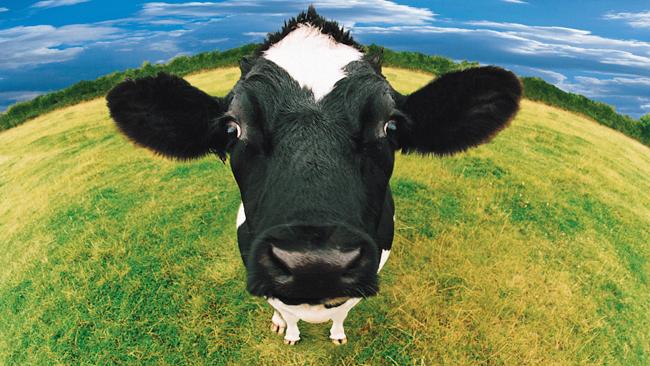
What role in the ecosystem does Bessie the milk producing cow play?
a)
producer
b)
primary consumer
c)
secondary consumer
d)
decomposer
65.
_______ factors are all living things located within an ecosystem.
a)
biotic
b)
abitotic
c)
biome
d)
niche
66.
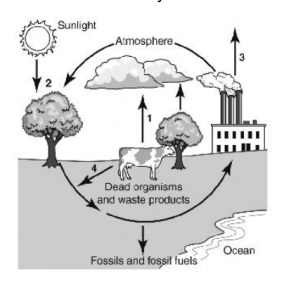
What is happening at 1?
a)
respiration: releasing CO2
b)
decomposing CO2 in the soil
c)
photosynthesis: absorbing CO2
d)
turning CO2 from the atmosphere into organic molecules
67.
Where is a lot of the CO2 located on earth?
a)
space
b)
absorbed in the ground
c)
in the atmosphere acting as a greenhouse gas
d)
in plants
68.

What does the grey arrow pointing to the atmosphere indicate?
a)
Photosynthesis
b)
Primary Production
c)
Respiration
d)
Assimilation
69.

In the energy pyramid here, which organisms have the most energy available?
a)
Producers
b)
Carnivores
c)
Herbivores
d)
Top Predator
70.

In the energy pyramid here, how much of the energy in the producers gets passed to the herbivores?
a)
10%
b)
20%
c)
80%
d)
90%
71.
How do living organisms return carbon to the atmosphere in the carbon cycle?
a)
respiration and photosynthesis
b)
decomposition and respiration
100 %

