
 Worksheets
6th Grade SC PASS Review
Total questions: 45
Worksheet time: 40mins
Name
Class
Date
1.
The boundary between two air masses is known as:
a)
front
b)
storm
c)
climate
d)
flood
2.
Cold air traveling south from Canada is:
a)
continental tropical
b)
continental polar
c)
maritime tropical
d)
maritime polar
3.
Warm air moving upwards from the Gulf of Mexico is:
a)
continental tropical
b)
continental polar
c)
maritime tropical
d)
maritime polar
4.
Cold air mass that is carrying water is:
a)
continental tropical
b)
continental polar
c)
maritime tropical
d)
maritime polar
5.
Which of the following is an example of a crustacean?
a)
squid
b)
crab
c)
earth worm
d)
bumble bee
6.
Sponges use pores to
a)
move from place to place.
b)
filter food from the water.
c)
defend themselves.
7.

When a seed sprouts and begins the early growth of a young plant.
a)
germination
b)
pollination
c)
seed dispersal
d)
fertilization
8.

A type of root that has one main trunk, going deep into soil. Example: carrot plant
a)
taproot
b)
fiberous root
c)
herbaceous stems
d)
woody stems
9.
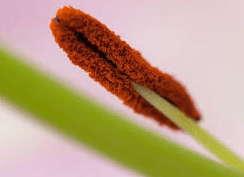
The part of a flower that produces the male reproductive cells.
a)
anther
b)
style
c)
stigma
d)
filament
10.
I think orange juice will stunt the growth of a plant.
What is the dependent variable in the experiment?
What is the dependent variable in the experiment?
a)
The Growth of a Plant
b)
Orange Juice
c)
The Plant Without Orange Juice
d)
The Location of the Plant
11.
I think orange juice will stunt the growth of a plant.
What is the independent variable in the experiment?
What is the independent variable in the experiment?
a)
The Growth of the Plant
b)
Orange Juice
c)
The Plant Without Orange Juice
d)
The Location of the Plant
12.
What is it called when a newborn animal recognizes and foollows the first moving object it sees?
a)
shivering
b)
inherited behaviors
c)
instincts
d)
imprinting
13.
Air pressure is greatest:
a)
closer to Earth
b)
farther from Earth
14.

What is water that flows in rivers and streams into the oceans and lakes?
a)
evaporating
b)
condensing
c)
precipitating
d)
runoff
15.

This is the symbol for a...
a)
Stationary Front
b)
Occluded Front
c)
Cold Front
d)
Warm Front
16.

Identify the type of front that is shown in the image.
a)
Occluded Front
b)
Cold Front
c)
Stationary Front
d)
Warm Front
17.

Identify the type of front that is shown in the image.
a)
Occluded Front
b)
Cold Front
c)
Stationary Front
d)
Warm Front
18.

Identify the type of front that is shown in the image.
a)
Occluded Front
b)
Cold Front
c)
Stationary Front
d)
Warm Front
19.

Identify the type of front that is shown in the image.
a)
Occluded Front
b)
Cold Front
c)
Stationary Front
d)
Warm Front
20.

Electrical Energy is transferred to _____ Energy.
a)
Thermal
b)
Solar
c)
Electrical
d)
None
21.

Look at the diagram. Which point does the ball have the maximum potential energy?
a)
A
b)
B
c)
C
d)
D
22.

Look at the diagram. At which point does the ball have the maximum kinetic energy?
a)
B
b)
C
c)
D
d)
E
23.

This animal is using
a)
hibernation
b)
camouflage
c)
mimicry
24.

When a living thing copies the appearance of another living thing as a means of protection
a)
mimicry
b)
a behavioral adaptation
c)
mockery
d)
natural selection
25.
Earth would be too cold to support life without _____________________.
a)
global warming
b)
the greenhouse effect
c)
tropics
d)
seasons
26.

A cactus can live in the desert because of this adaptation
a)
has wide flat leaves to catch water
b)
has shallow roots
c)
thick, waxy leaves help it store water
27.

Which number illustrates Condensation?
a)
1
b)
2
c)
3
d)
4
28.
What kind of weather is usually associated with a high pressure system?
a)
Sunny weather
b)
Precipitation (rain, snow, etc.)
29.
Hot air (RISES / FALLS) __________.
a)
RISES
b)
FALLS
30.

The amount of water vapor present in the air is called ________________.
a)
weather
b)
humidity
c)
air mass
d)
dew point
31.
According to the Law of Conservation of Energy, energy cannot be _________ or ____________.
a)
destroyed, destroyed
b)
created, saved
c)
created, destroyed
d)
lost, found
32.

Warm air rises and the cool air sinks demonstrates this type of heat transfer.
a)
conduction
b)
convection
c)
radiation
d)
Insolation
33.
The light from the sun gets to the Earth through...
a)
Radiation
b)
Convection
c)
Conduction
34.
When your feet touch the hot pavement, heat is transferred to your feet through...
a)
Radiation
b)
Convection
c)
Conduction
35.
Which of the following animals goes through metamorphosis?
a)
alligator
b)
frog
c)
lizard
d)
turtle
36.

Which group of vertebrates lay jelly like eggs?
a)
amphibian
b)
reptile
c)
bird
d)
mammal
37.
Which of the following is a learned behavior
a)
a snake slithering on the ground
b)
bees pollinating flowers
c)
a duck swimming in a pond
d)
a dog fetching a newspaper
38.
Raccoons living in cities have learned to open lids of garbage cans. This is an example of an animal-
a)
adapting to its environment
b)
inheriting the ability to change its diet
c)
being tamed by humans
d)
becoming a plant eater
39.
A large truck and a small car are moving at the same speed. The truck has greater kinetic energy because its ____________________ is greater.
a)
mass
b)
height
c)
engine
d)
color
40.
A baseball flying through the air has ____________________ energy because of its motion.
a)
No
b)
potential
c)
Elastic
d)
Kinetic
41.
What would be the best defense against leaf eating animals?
a)
Thorns
b)
Large flowers
c)
Short stems
d)
Sweet nectar
42.
Why will covering up a plant with a black cloth make it die?
a)
It won't have room to grow
b)
It won't get sunlight
c)
It won't get oxygen
d)
It responds to the touch of the cloth
43.
Which process removes carbon dioxide from the atmosphere?
a)
Respiration
b)
Transpiration
c)
Germination
d)
Photosynthesis
44.
What happens during transpiration?
a)
Food is made.
b)
Seeds germinate.
c)
Water is lost.
d)
Food is broken down.
45.
What part of the flower will produce a fruit?
a)
Sepal
b)
Petal
c)
Ovary
d)
Anther
100 %

