
 Worksheets
Earth/Space Science Final Review Spring 2017
Total questions: 68
Worksheet time: 2hrs 34mins
Name
Class
Date
1.
The Richter scale measures:
a)
the amount of radon gas released
b)
the movement of plates
c)
the strength of an earthquake
d)
the weight of tectonic plates
2.
The most destructive type of wave is a
a)
P-wave
b)
S-wave
c)
Surface wave
d)
transverse wave
3.
Liquefaction is when...
a)
the soil behaves like liquid
b)
the ground becomes liquid
c)
magma rises to the surface
d)
buildings are damaged, crumbling like liquid
4.
How much bigger is a magnitude 8 earthquake compared to magnitude 7 one on the Richter Scale?
a)
1 time bigger
b)
10 times bigger
c)
100 times bigger
d)
1000 times bigger
5.
What is the beginning point of an earthquake, where the first motion of an earthquake occurs?
a)
Epicenter
b)
Focus
c)
P Waves
d)
Deformation
6.
Which wave can travel through solids, liquids, and gases?
a)
P
b)
S
c)
Surface
d)
Seismic
7.
Also known as shear or secondary wave; a seismic wave that causes particles of rock to move in a side-to- side direction.
a)
P-wave
b)
Seismic wave
c)
Focus
d)
S-wave
8.
The epicenter of an earthquake is
a)
The point below the surface where rock begins to break and the first motion occurs
b)
The seismic station closest to the earthquake
c)
The place where the greatest damage occurs
d)
The point on the surface directly above the focus
9.
Which travels fastest, always being the first detected by seismic stations?
a)
P waves
b)
S waves
10.

Where is the focus located?
a)
A
b)
B
c)
C
d)
There is no focus
11.

Where is the epicenter located?
a)
A
b)
B
c)
C
d)
There is no epicenter
12.
What is the minimum number of seismograph stations needed to locate an earthquake epicenter?
a)
1
b)
2
c)
3
d)
1 billion
13.
Earthquakes are caused by the release of stored energy along a fault.
a)
True
b)
False
14.

What type of wave are the BLUE waves? (orange circle is the LIQUID core)
a)
P-waves
b)
S-waves
c)
Love waves
d)
Raleigh waves
15.
An instrument that detects and measures earthquakes is a
a)
seismogram
b)
focus seismic map
c)
focus
d)
seismometer
16.
What is a tracing of an earthquake's motion that is created by a seismograph?
a)
Seismograph
b)
Seismogram
c)
Seismologist
d)
Elastic Rebound
17.
The wave that moves in a push/pull line is the...
a)
p wave
b)
s wave
c)
l wave
18.
What is the name for the HEIGHT of a wave?
a)
amplitude
b)
wavelength
c)
frequency
d)
height
19.

What is the name for the space between B and F?
a)
Amplitude
b)
Frequency
c)
Wavelength
20.
The theory of continental drift states that....
a)
the earth is made up of many individual plates that move
b)
that earth is made up of many individual plates that don't move
c)
the continents were once joined to form a supercontinent
d)
the continents have always been in their current position
21.
Other scientists rejected Wegener's Continental Drift Theory because...
a)
He did not have evidence
b)
He couldn't explain how the continents moved
c)
He wasn't a scientist
d)
He was a bad communicator
22.
Which type of crust is more dense and thinner?
a)
Continental
b)
Asthenosphere
c)
Oceanic
d)
Byers
23.
Which of the following supports the theory of seafloor spreading?
a)
Correlation of rock layers
b)
Crustal Age
c)
Magnetic Stripes
d)
Continuous Mountain Chains
24.
Wegener's Hypothesis was rejected because...
a)
he lacked evidence
b)
he did not have a mechanism for plate movement
c)
the other scientists didn't like him
d)
he had too much evidence
25.
The mechanism that causes plate movement is....
a)
plate tectonics
b)
continental drift
c)
conduction
d)
convection
26.
What is subduction?
a)
when two plates come together and the denser one sinks below
b)
when two plates spread apart
c)
when two plates come together and the less dense one sinks
d)
when two plates rub laterally against each other
27.
Which animal part would MOST LIKELY form a fossil?
a)
fur
b)
lung
c)
bone
d)
muscle
28.

These are dinosaur footprints. What is this a example of?
a)
All of the below!!!!!
b)
index fossil
c)
mineralized remains
d)
trace fossil
29.
What are petrified fossils?
a)
fossils that have spaces inside that are filled in with minerals from groundwater.
b)
Mineral Fossils
c)
thin film of carbon remains of a once living organism that was preserved as a fossil.
d)
I don't know
30.

A fossil is ____.
a)
a dead rotten animal
b)
the remains of things that lived a long, long time ago
c)
a plant that dried up
d)
a bone
31.

Which of the following is NOT an example of a fossil?
a)
a petrified dinosaur bone
b)
a footprint captured in mud and turned to rock
c)
a seashell found on the beach
d)
a shell whose shape is left behind in the rock
32.

What would probably happen if dinosaur remains are not buried quickly?
a)
It could decay, or rot away.
b)
It would become a fossil.
c)
It would not be able to decay.
d)
dinosaur will come back to life
33.

What type of fossil fills a mold, and is a model of the actual organism?
a)
cast
b)
trace
c)
carbon imprint
d)
petrified
34.
What is hardened tree sap?
a)
coprolites
b)
index fossils
c)
gastroliths
d)
amber
35.
Which is NOT a type of fossil?
a)
carbon film
b)
mold or cast
c)
sediment
d)
petrified wood
36.
Why don't all living things become fossils?
a)
because some living things are too small
b)
because some living things are too big
c)
because some are subject to catastrophism and others are not
d)
because environmental conditions have to be just right to prevent decay
37.

What type of fossil is this?
a)
preservation of actual remains
b)
replacement of mineral matter
c)
molds,casts,imprints
38.

What type of fossil is this?
a)
Mold
b)
Carbon flim
c)
Cast
d)
Original Remains
39.
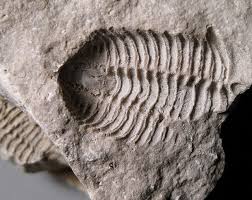
Which fossil is an impression left by the original organism?
a)
cast
b)
mold
c)
trace
d)
preserved remains
40.

What type of fossil is this?
a)
preservation of actual remains
b)
replacement of mineral matter
c)
molds,casts,imprints
41.
How old do Paleontologists believe the Earth is?
a)
2017 years old
b)
3.6 billion years old
c)
4.6 billion years old
d)
4.6 million years old
42.
Paleozoic, Mesozoic & Cenozoic are all
a)
Epochs
b)
Eras
c)
Periods
d)
Eons
43.
Which is the most recent era of time- the one that we are currently in?
a)
Mesozoic
b)
Paleozoic
c)
Cenozoic
d)
Precambrian
44.
Which division on the geologic time scale is the shortest?
a)
epoch
b)
era
c)
eon
d)
period
45.
True or False: Geologists subdivide periods into eras.
a)
False
b)
True
46.
What does 4.6 billion years look like when written out?
a)
4.6 billion
b)
4,600,000,000
c)
4,600,000
d)
460,000,000,000
47.

This type of fossil would include nests, eggs, feces, and footprints.
a)
cast
b)
mold
c)
preserved remains
d)
trace
48.
a(n) ________ is the imprint of a thin film left by compression of a dead organism
a)
petrified remains
b)
mold
c)
cast
d)
carbon impression
49.
Which is the correct order of geologic time, from biggest to smallest?
a)
Era >Eon >Period >Epoch
b)
Eon >Era >Period >Epoch
c)
Eon>Period >Era >Epoch
d)
Era >Eon > Epoch >Period
50.
Primitive humans (cavemen) were around during the time of the dinosaurs
a)
TRUE
b)
FALSE
51.
A lava lamp with wax which heats, flows to the top, cools, then flows to the bottom is an example of:
a)
conduction
b)
convection
c)
radiation
52.
What is Radiation?
a)
Transfer of thermal energy by collisions between particles of matter
b)
Being bounced off
c)
Something getting soaked up
d)
The transfer of energy by electromagnetic waves
53.
What is the function of the ozone layer?
a)
to allow UV rays to get to Earth
b)
to block UV rays from getting to Earth
c)
To keep oxygen in
d)
to allow meteors to get to Earth
54.
The surface of water being warmed by the Sun is an example of:
a)
conduction
b)
convection
c)
radiation
55.
Earth's current atmosphere is
a)
78% nitrogen, 21% oxygen, 0.9% argon and 0.04% carbon dioxide
b)
78% oxygen, 21%nitrogen, 0.9% argon, 0.04% carbon dioxide
c)
78% nitrogen, 21% argon, 1% oxygen
d)
78% oxygen, 21% nitrogen, 1% carbon dioxide
56.
Match the term with this definition:
measurement of amount of energy
measurement of amount of energy
a)
Radiation
b)
Temperature
c)
Heat
d)
Energy
57.
Match the term with this definition:
Average weather conditions in a region or a long period of time
Average weather conditions in a region or a long period of time
a)
Climate
b)
Weather
c)
Temperature
d)
Precipitation
58.
The biggest factor in determining climate is?
a)
elevation
b)
an ocean
c)
latitude
d)
mountain
59.
Major greenhouse gas (GHG), carbon dioxide makes up what percentage of the atmosphere?
a)
78%
b)
21%
c)
1%
d)
.04%
60.
What are the reasons for the seasons?
a)
Earth's distance to the sun.
b)
Earth's revolution
c)
Earth's tilt
d)
Earth's rotation
61.
What is the transfer of thermal energy?
a)
Heat
b)
Temperature
c)
Amount of energy in a given location
d)
Cold
62.
Which of the following is the transfer of heat through direct contact?
a)
Conduction
b)
Convection
c)
Radiation
d)
Coevolution
63.
What is the transfer of heat caused by movement of a fluid (in a current!)
a)
Conduction
b)
Convection
c)
Radiation
d)
Electromagnetic Waves
64.
Which of the following can travel through the vacuum of space (ie doesn't need material to move through)
a)
convection
b)
conduction
c)
radiation
d)
Ms. Schwager
65.
What is the greenhouse effect?
a)
heating of Earth's surface/atmosphere through absorption of radiation (thanks, CO2)
b)
heating of the Earth's core through absorption of radiation (thanks, CO2)
c)
heating of the greenhouse for SHHS's Agriculture classes
d)
Painting your house green (like, super lime green. Gotta decrease those property values!)
66.
What is NOT true about the reflection of light?
a)
It bounces off an object
b)
It loses energy
c)
How much is reflected depends on the albedo
67.
Why is the sky blue?
a)
Light scattering
b)
Light reflects off the ocean
c)
Light reflects off space
d)
Light reflects off the moon
68.
Which of the following has the highest albedo (reflects the most radiation)
a)
Snow
b)
Water
c)
Soil
d)
Asphalt
100 %

