
 Worksheets
Body Systems Review
Total questions: 31
Worksheet time: 15mins
Name
Class
Date
1.
A network of branches coming from individual cells. They carry information and electrical signals in the brain and nervous system
a)
axon
b)
axon terminal
c)
dendrite
d)
neuron
2.
A nerve cell that is the basic working unit of the brain and nervous system which processes and transmits information
a)
axon
b)
neuron
c)
dendrite
d)
neurotransmitter
3.
this insulating material forms a layer, around the axon of a neuron. It enables electrical signals to travel down the axon at higher speeds.
a)
neuron
b)
myelin
c)
dendrite
d)
neurotransmitter
4.
The tiny gap between neurons where nerve impulses are sent from one neuron to another. It is where communication occurs between an axon and dendrite
a)
synapse
b)
axon terminal
c)
impulse
d)
myelin
5.

Label the Neuron-What does the letter "C" represent?
a)
Cell Body
b)
Dendrite
c)
Axon Terminal
d)
Myelin Sheath
6.
What is the chemical used by a neuron to transmit an impulse across a synapse to another nerve cell?
a)
Neurotransmitters
b)
Synapse
c)
Threshold
d)
Impulse
7.
When a neuron is resting, the inside of the axon has a ____________ charge.
a)
positive
b)
negative
8.
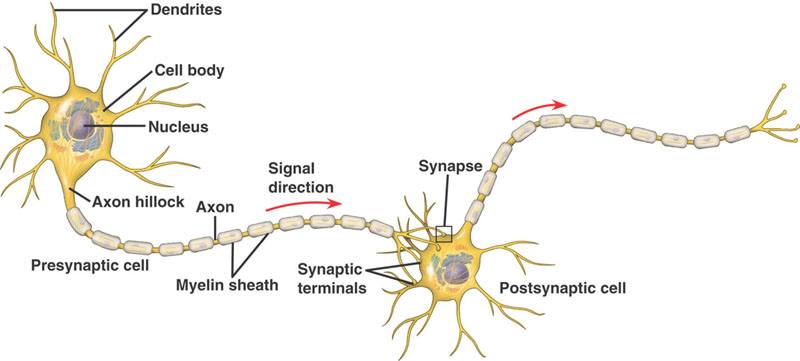
Which ions are involved in the electrical nerve impulse?
a)
Iodine and Sodium
b)
Potassium and Sodium
c)
Iron and Sodium
d)
Calcium and Iodine
9.
What are the 3 types of muscle tissue?
a)
Thigh, Calf, & Shoulder
b)
Traps, Forearm, & Abs
c)
Hamstring, Biceps, & Triceps
d)
Smooth Muscle, Cardiac Muscle, & Skeletal Muscle
10.
Which muscle type is found in your stomach, bladder, and intestines?
a)
Skeletal
b)
Smooth
c)
Cardiac
d)
Straight
11.
Which type of muscle is found in your heart?
a)
Skeletal
b)
Smooth
c)
Cardiac
d)
Straight
12.
Which muscles are involuntary?
a)
skeletal
b)
cardiac
c)
smooth and skeletal
d)
smooth and cardiac
13.
When a muscle contracts, it _______
a)
gets longer
b)
gets shorter
c)
gets thinner
d)
grows hair
14.
What is the name of the thin contractile filament found in a sarcomere?
a)
actin
b)
myosin
c)
titan
d)
troponin
15.
What is the name of the thick contractile filament found in a sarcomere
a)
actin
b)
myosin
c)
pepsin
d)
titin
16.
How does the sarcomere shorten (contract)
a)
The myosin filaments contract
b)
The actin filaments contract
c)
The actin is pulled by the myosin.
d)
The myosin is pulled by the actin.
17.
What is necessary for the myosin to attach to the actin during a muscle contraction?
a)
ATP
b)
ADP
c)
Calcium
d)
Sodium
18.
Organ system that takes nutrients from your food and absorbs it into your body.
a)
Circulatory
b)
Digestive
c)
Respiratory
d)
Endocrine
19.
Organ system that provides support and protection for your body.
a)
Muscular
b)
Skeletal
c)
Circulatory
d)
Endocrine
20.
What is a group of similar cells?
a)
Tissue
b)
Organ
c)
Cell group
d)
Organ system
21.
How many chambers are in the heart?
a)
1
b)
2
c)
3
d)
4
22.
Pulmonary Artery
a)
carries oxygenated blood to atrium
b)
carries deoxygenated blood to lungs
c)
carries oxygenated blood to lungs
d)
none of the above
23.
Pulmonary vein
a)
carries oxygenated blood to left atrium
b)
carries deoxygenated blood to left ventricle
c)
carries oxygenated blood to left ventricle
d)
carries deoxygenated blood to left atrium
24.
Liquid part of blood
a)
plasma
b)
erythrocytes
c)
hemoglobin
d)
white blood cells
25.
____________carry blood away from the heart
a)
bronchioles
b)
arteries
c)
veins
d)
capillaries
26.
________carry blood back to the heart
a)
arteries
b)
capillaries
c)
veins
d)
arterioles
27.
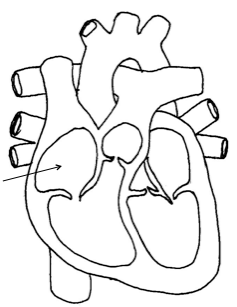
Name this part.
a)
Right ventricle
b)
Aorta
c)
Right atrium
d)
Atrium
28.
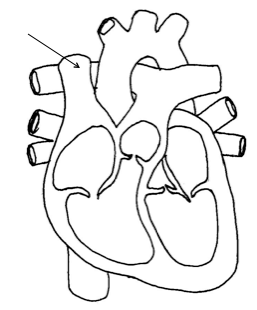
Name this part.
a)
Superior vena cava
b)
Right ventricle
c)
Right atrium
d)
Inferior vena cava
29.

Which end of the earthworm is furthest from the clitellum?
a)
posterior
b)
anterior
30.
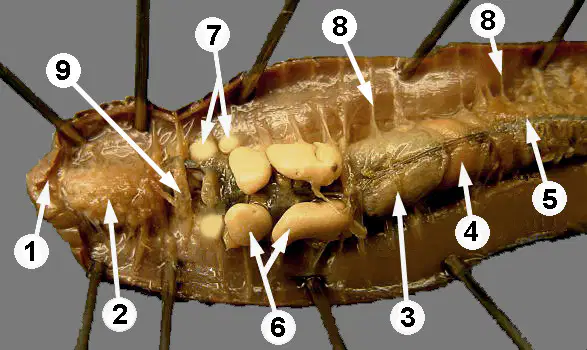
What is the name of structure #8 in the earthworm?
a)
septum
b)
crop
c)
gizzard
d)
intestine
31.
The main job of red blood cells is to
a)
carry oxygen
b)
attack and destroy pathogens
c)
clot the blood
d)
digest food
100 %

