
 Worksheets
Eco II Review
Total questions: 36
Worksheet time: 47mins
Name
Class
Date
1.
What will happen to the population when the birth rate is larger than the death rate?
a)
grow
b)
shrink
c)
stay the same
2.

What type of growth is represented behind?
a)
exponential
b)
logistics
c)
a good kind
d)
representative
3.
When a population has reached carrying capacity
a)
Growth & Immigration are equal to Death & emigration
b)
Growth & Immigration are less than Death & emigration
c)
Growth & Immigration are greater than Death & emigration
d)
Growth is exponential
4.
What does a limiting factor do?
a)
makes a population grow large
b)
stops a population from growing large
c)
helps organisms adapt to abiotic factors
d)
provides geographical boundaries for migration
5.

The average number of people per square mile
a)
population distribution
b)
population density
c)
population dispersion
d)
population rate
6.
Which limiting factor would increase due to the number of individuals in a population?
a)
Unusual weather
b)
Natural disaster
c)
Births
d)
Disease
7.
What do you call a period of rapid growth?
a)
exponential growth
b)
logistic growth
c)
emigration
d)
predator-prey cycle
8.

The largest number of individuals in a species that an environment can support long term
a)
carrying capacity
b)
emigration
c)
immigration
d)
population density
9.

What is the carrying capacity of the graph?
a)
around 500
b)
more than 500
c)
less than 500
d)
around 600
10.

When a population grows past the ecosystem's carrying capacity, what happens to the population?
a)
Continues to grow
b)
The population starts to die off to return to carrying capcity
c)
The population will go extinct due to lack of resources
d)
The population grows then finds a new carrying capacity
11.
What factor describes when populations decrease because animals are moving out of a population?
a)
Emigration
b)
Limiting Factors
c)
Immigration
d)
Exponential Growth
12.
A population is...
a)
A group of one species in one area
b)
Multiple species that live in one area
c)
All of the living and nonliving things in an area
d)
None of these
13.
What will happen to the population when the death rate is larger than the birth rate?
a)
grow
b)
shrink
c)
stay the same
d)
None of these
14.
What will happen to the population when the birth rate is larger than the death rate?
a)
grow
b)
shrink
c)
stay the same
15.
What kind of factor: predation?
a)
density-independent
b)
density-dependent
16.
What kind of factor: flood?
a)
density-independent
b)
density-dependent
17.
Which limiting factor would increase due to the number of individuals in a population?
a)
Unusual weather
b)
Natural disaster
c)
Births
d)
Disease
18.
An environmental factor such as predation, disease, and competition that depends on the number of members in a population per unit
a)
dispersion
b)
density- independent factor
c)
density- dependent factor
d)
population growth rate
19.
An environmental factor such as storms and extreme heat or cold that affects population regardless of their density
a)
density- dependent factor
b)
population density
c)
dispersion
d)
density- independent factor
20.
What kind of factor: temperature?
a)
density-independent
b)
density-dependent
21.
A resource that it is used up faster than it can replace itself is
a)
Renewable
b)
Non-renewable
c)
ecological footprint
d)
in need
22.
Which of the following is a nonrenewable resource?
a)
Trees
b)
Coal
c)
Wind
d)
Sunlight
23.

Name that population pyramid...
a)
Rapid Growth
b)
Industrialized Country
c)
Declining Growth
d)
Stable Growth
24.
Globally, the leading cause of biodiversity loss is
a)
invasive species
b)
poaching and overharvesting
c)
pollution
d)
habitat change and loss
25.
Biodiversity refers to
a)
extinct species
b)
the variety of species on Earth
c)
nonrenewable resources
d)
the rate of species decline
26.
Why is genetic diversity important?
a)
A population with less species diversity is more likely to survive an outbreak of disease since less species means less chance of disease spread.
b)
A population with less species diversity is more likely to survive the competition among species.
c)
A population with more genetic diversity is more likely to survive environmental changes, a disease outbreak, or the disappearance of a food source.
d)
A population with less genetic diversity is more likely to survive changes food supply and demand.
27.
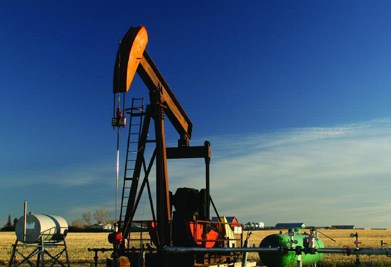
__________ is an energy resource that WILL run out in the next several hundred years.
a)
Renewable Energy Resource
b)
Nonrenewable Energy Resource
28.
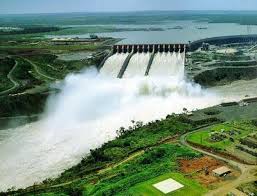
Hyrdo Power is a __________ energy resource.
a)
Renewable
b)
Nonrenewable
29.
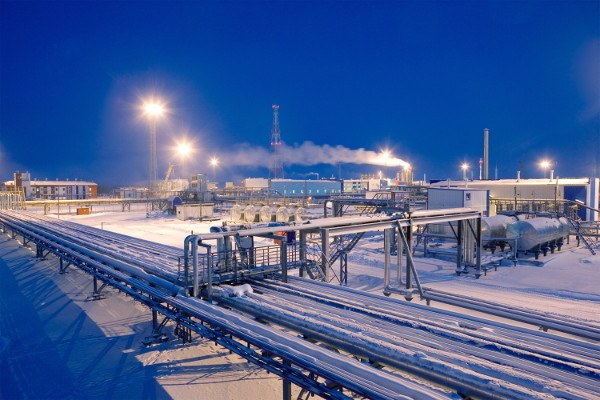
Natural Gas is a __________ energy resource.
a)
Renewable
b)
Nonrenewable
30.

Oil is a __________ energy resource.
a)
Renewable
b)
Nonrenewable
31.
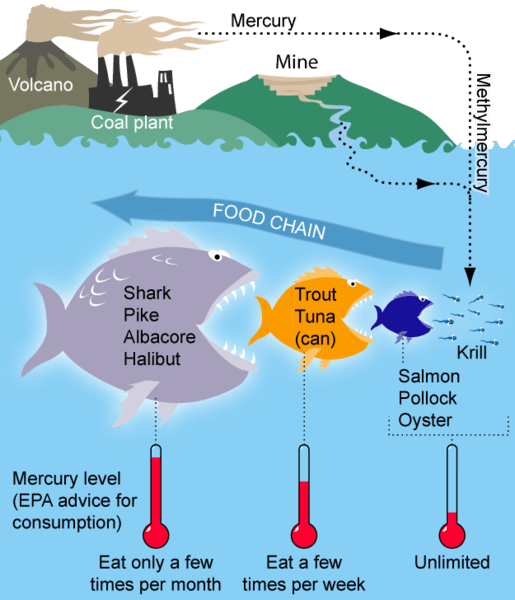
______________________ is the buildup of pollutants at higher levels of the food chain.
a)
porosity
b)
water pollution
c)
wastewater
d)
biomagnification
32.
the ability of an animal, based on its genetic makeup, to respond to an environmental stimulus
a)
instinct
b)
thology
c)
imprinting
d)
intelligence
33.
a kind of behavior common to some newly hatched birds or newly born animals that causes them to adopt the first person, animal, or object they see as their parent
a)
imprinting
b)
colony
c)
scout bees
d)
stallion
34.
process of learning by associating a certain response with a certain stimulus
a)
conditioning
b)
cloning
c)
colony
d)
cecum
35.
A bird building its nest perfectly the first time is an example of
a)
learned behavior
b)
innate behavior
36.
In the park, you noticed a girl throwing a stick for her dog to fetch. The dog ran and got the stick every time. This is an example of
a)
innate behavior
b)
learned behavior
100 %

