wayground logo

Free Printable Worksheets

Font size

S
M
L
XL
Worksheets

Classification

Total questions: 32

Worksheet time: 17mins

Name
Class
Date
1.

The science of describing, classifying, and naming living things is called:

a)

Geology

b)

Biology

c)

Taxonomy

d)

Chemistry

2.

The scientific name for an organism is made from the:

a)

class and family name

b)

genus and species name

c)

domain and kingdom name

d)

kingdom and phylum name

3.

Which 2 organisms would be able to reproduce and produce fertile offspring?

a)

2 organisms in the same class

b)

2 organisms in the same family

c)

2 organisms in the same genus

d)

2 organisms in the same species

4.

What kingdom do unicellular, prokaryotic organisms that live in extreme environments?

a)

Animal

b)

Archaebacteria

c)

Eubacteria

d)

Plant

5.

This organism is multicellular, heterotroph, that has a cell wall made of chitin. What kingdom does it belong in?

a)

fungi

b)

plantae

c)

animalia

d)

eubacteria

6.

Who first proposed binomial nomenclature as a way of classifying organisms?

a)

Carolus Linnaeus

b)

Aristotle

c)

Charles Darwin

d)

Louis Pasteur

7.

Which of the following scientific names is written correctly? Assume all are in italics!

a)

Homo Sapien

b)

Homo sapien

c)

homo sapien

d)

Homosapien

8.

What is the correct order of taxonomy?

a)

Kingdom, pylum, class, species, genus, family, class

b)

Species, genus, family, order, class, phylum, kingdom

c)

Kingdom, phylum, class, order, family, genus, species

d)

species, phylum, order, class, kingdom, family, genus
9.
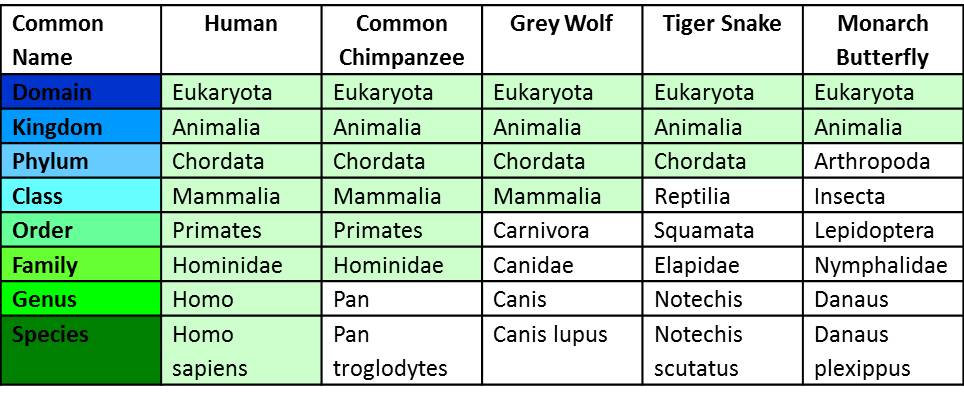
Which of the following organisms are LEAST closely related?
a)
organisms that share a domain
b)
organisms that share a family 
c)
organisms that share a genus 
d)
organisms that share a species 
10.
The 8 levels of classification, most broad to most specific.
a)
Domain, Genus, Family, Order, Class, Phylum, Kingdom, Species
b)
Domain, Species, Kingdom, Genus, Phylum, Family, Class, Order
c)
Domain, Kingdom, Phylum, Class, Order, Family, Genus, Species
d)
Order, Kingdom, Species, Domain, Phylum, Family, Class, Genus
11.
Cells that do not have a true nucleus are called....
a)
eukaryote
b)
prokaryote
c)
unicellular
d)
multicellular
12.
Cells that have a true nucleus are called....
a)
eukaryotes
b)
prokaryotes
c)
unicellular
d)
multicellular
13.
Which organism in the table is least closely related to the chimpanzee?
a)
human
b)
grey wolf
c)
tiger snake
d)
monarch butterfly
14.

Which of the following is NOT a unicellular kingdom?

a)

Prokaryotes

b)

Protists

c)

Archaea

d)

Fungi

15.

Which one is NOT a difference between plants and fungi?

a)

Plants use cellulose but fungi use chitin

b)

Plants are autotrophs but fungi are heterotrophs

c)

Plants have cell walls but fungi don't

d)

Plants make their own food and fungi decompose their food

16.

Which is NOT a eukaryote?

a)

Plants

b)

Animals

c)

Archaeabacteria

d)

Protists

17.
The most general in the order of classification is?
a)
Kingdom 
b)
Phylum 
c)
Class 
d)
Order
18.
The most specific of the classifications is?
a)
class 
b)
order 
c)
genus 
d)
species
19.
 An autotroph feeds on other organisms?
a)
True 
b)
False
20.
Binomial Nomenclature means?   
a)
classification
b)
characteristics
c)
2 name system
21.
A heterotroph means?
a)
feeds itself
b)
feeds on other organisms
c)
2 word name
d)
8 legged
22.
Which term means "True Nucleus" or cell(s) with a nucleus?
a)
Eukaryotes
b)
Prokaryotes
c)
Multi-cellular
23.

The 2 kingdoms that make up Prokaryotes are?

a)

Animals and Plants

b)

Protists and Fungi

c)

Archeabacteria and Eubacteria

24.

What kingdom's organisms often live in super harsh environments?

a)

archeabacteria

b)

animalia

c)

plantae

d)

protista

25.
A tool used by a taxonomist to identify an unknown organism is known as a __________.
a)
dichotomous key
b)
binomial nomenclature
c)
scientific name
d)
binomial key
26.
The 8 levels of classification, from most broad to most specific are ...
a)
Domain, Genus, Family, Order, Class, Phylum, Kingdom, Species
b)
Domain, Species, Kingdom, Genus, Phylum, Family, Class, Order
c)
Domain, Kingdom, Phylum, Class, Order, Family, Genus, Species
d)
Order, Kingdom, Species, Domain, Phylum, Family, Class, Genus
27.
The taxon with the largest amount of organisms grouped together...
a)
Species
b)
Phylum
c)
Kingdom
d)
Domain
28.
A student discovers an arachnid with a segmented abdomen, long legs, and a tail with no stinger. The student uses the dichotomous key below to identify it. Which arachnid has the student found?
a)
Whip Scorpion
b)
Wind Scorpion
c)
Daddy long legs
d)
Scorpion
29.
Which organism in the table shown is most closely related to the common dolphin?
a)
human
b)
killer whale
c)
giant kelp
d)
bat star
30.

A student want to use the Venn diagram to show the characteristics of two kingdoms of organisms. The characteristics that the two kingdoms share will be listed in the shaded area where the circles intersect. Which of these is a characteristic that the student should list in the shaded part of the diagram?

a)

heterotrophic

b)

mobile

c)

prokaryotic

d)

multicellular

31.

Which list of characteristics describes organisms classified as animals?

a)

autotrophic, multicellular, prokaryotic

b)

multicellular eukaryotic, heterotrophic

c)

unicellular, eukaryotic, heterotrophic

d)

multicellular, eukaryotic, autotrophic

32.

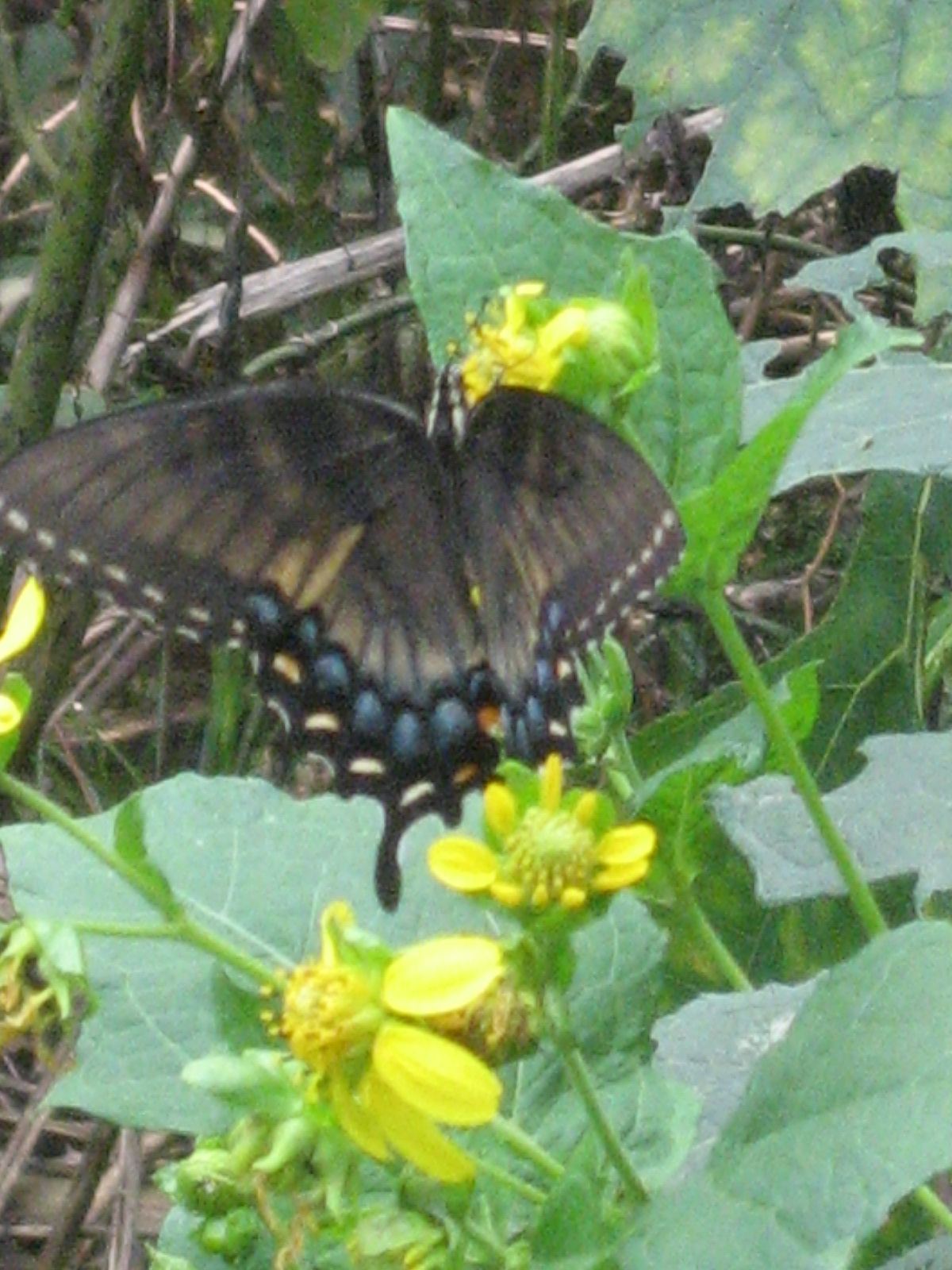
In which kingdom does the organism below belong?

a)

Animalia

b)

Fungi

c)

Plantae

d)

Eubacteria