
NEW
Font size
S
M
L
XL
 Worksheets
3rd Grade Science Review
Total questions: 49
Worksheet time: 46mins
Name
Class
Date
1.
A living thing, such as a plant, that can make its own food
a)
Producer
b)
Consumer
c)
Herbivore
d)
Carnivore
2.
A living thing that can't make its own food and must eat other living things
a)
Carnivore
b)
Consumer
c)
Herbivore
d)
Producer
3.
An animal that eats only plants or producers
a)
Carnivore
b)
Omnivore
c)
Herbivore
d)
Consumer
4.
An animal that eats only other animals
a)
Carnivore
b)
Omnivore
c)
Consumer
d)
Producer
5.
A living thing that feeds on the wastes and remains of plants and animals
a)
Decomposers
b)
Fungus
c)
Scavenger
d)
Microorganism
6.
Which of the following is the MAJOR source of heat energy for Earth?
a)
the moon
b)
the wind
c)
the sun
d)
water
7.
Which of the following is NOT a characteristic of the Sun?
a)
It gives off heat and light.
b)
It is a ball of hot, glowing gases.
c)
It has rings and craters.
d)
It is a bright star.
8.
The energy that causes evaporation in the water cycle comes from
a)
lakes
b)
the Sun
c)
the wind
d)
thunderstorms
9.
The inner planets, the planets closest to the Sun, include
a)
Mercury, Venus, Earth, Mars
b)
Jupiter, Saturn, Uranus, and Neptune
c)
Venus, Mars, Neptune, and Uranus
d)
Mercury, Saturn, Jupiter, and Earth
10.
What is the third planet from the Sun?
a)
Jupiter
b)
Earth
c)
Venus
d)
Uranus
11.
Which of the following describes the sun?
a)
a star
b)
a comet
a comet
a comet
c)
a planet
d)
a moon
12.
Which is a way people can conserve nonrenewable resources?
a)
by recycling
b)
by mining metals
c)
by reducing pollution
d)
by cutting down forests
13.
When you make a new product by breaking down an old product you are ___________.
a)
recycling
b)
reducing
c)
reusing
14.
What do you call energy that comes from the sun?
a)
solar energy
b)
ray energy
c)
polar energy
15.
How do you create friction?
a)
mixing chemicals together
b)
jumping up and down
c)
rubbing 2 sticks together
16.
What do you call the movement of weathered rock and soil?
a)
weathering
b)
erosion
c)
motion
17.
A habitat provides a place in which a plant or animal has all they need to ____________.
a)
eat
b)
survive
c)
balance
18.
Which of these will a magnet attract?
a)
glass bottle
b)
iron nail
c)
pencil
d)
basketball
19.
Which is an example of camouflage?
a)
Whales go to Alaska.
b)
A bear sleeps through winter.
c)
A bug that lives on leaves is green.
d)
A snake has bright colors.
20.

Name this simple machine.
a)
Wheel and Axle
b)
Lever
c)
Pulley
d)
Wedge
21.

What is the name of this landform?
a)
lake
b)
island
c)
ocean
d)
pond
22.
21 An animal that hunts other animals to get its food.
a)
predator
b)
omnivore
c)
herbivore
d)
prey
23.
Work is __________.
a)
energy
b)
the ability to do work
c)
the moving of some object using force
d)
what my dad does
24.
A structure or behavior that helps an organism survive in an environment is an _____.
a)
adaptation
b)
camouflage
c)
climate
d)
nocturnal
25.

What is the main idea of the picture?
a)
Many animals hibernate.
b)
Many animals need a safe place to sleep.
c)
Many places have cold winters.
26.
To change from liquid water into bubbles of water vapor
a)
freeze
b)
property
c)
hardness
d)
boil
27.
Forms that matter can take
a)
states of matter
b)
condensation
c)
evaporation
d)
volume
28.
To change from a liquid to a solid
a)
matter
b)
freeze
c)
mass
d)
volume
29.
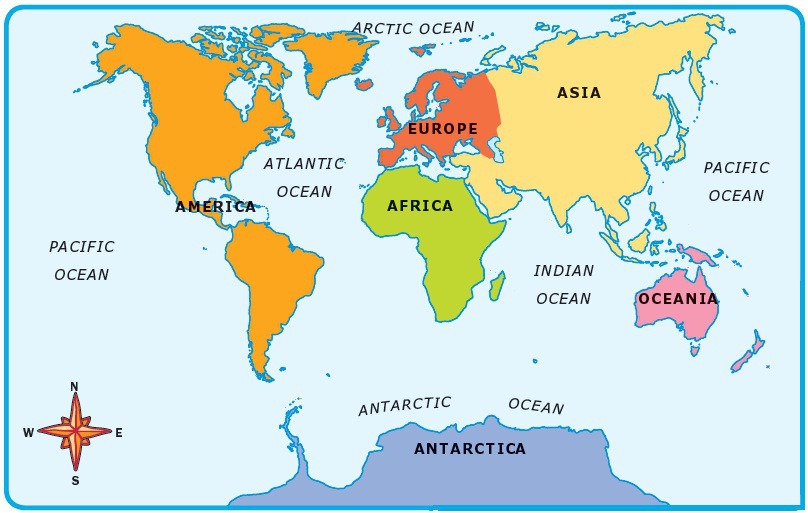
The ocean is divided into sections by large pieces of land called...
a)
islands
b)
continents
c)
states
d)
rivers
30.
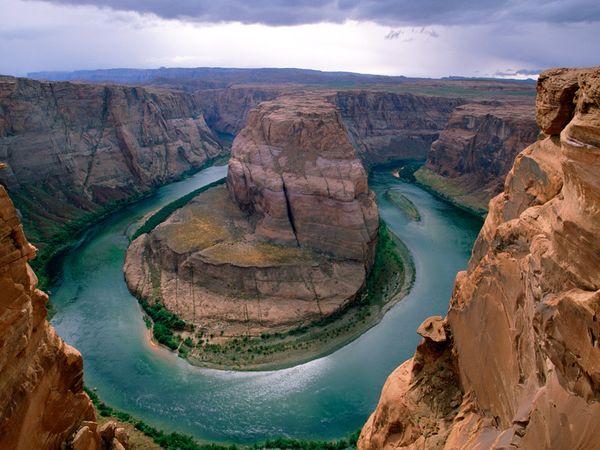
Are natural streams of flowing water that empty into oceans, lakes, or other bodies of water
a)
rivers
b)
lakes
c)
streams
d)
oceans
31.
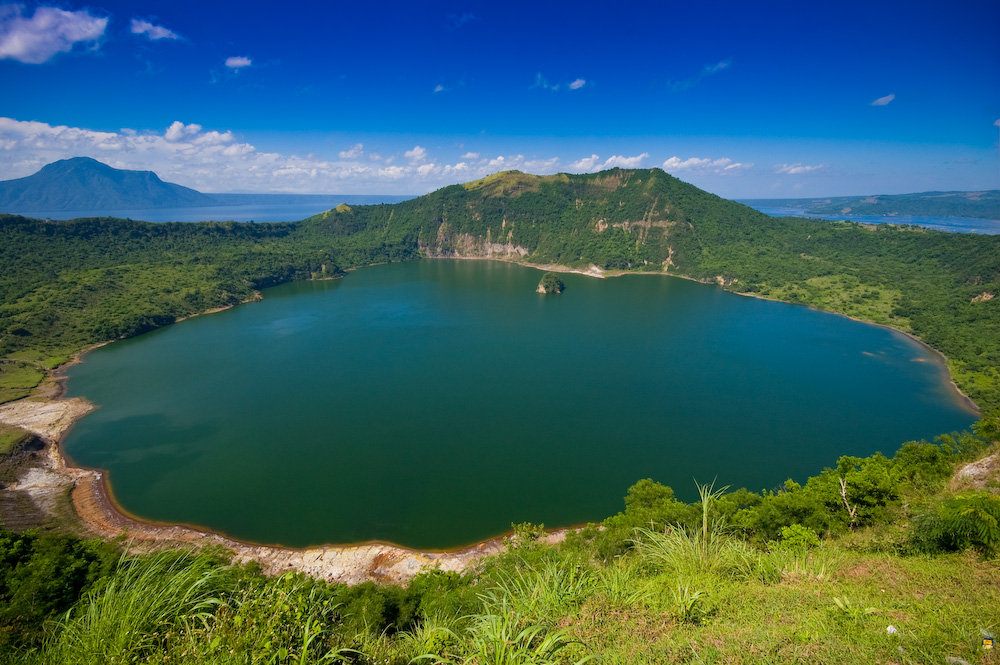
Large bodies of mostly still water that are surrounded by land, can have salt or fresh water.
a)
oceans
b)
rivers
c)
lakes
d)
streams
32.
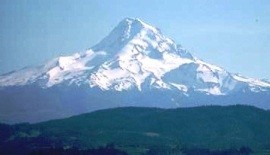
Landforms that are much higher than their surroundings, rounded or tall and rocky on top
a)
mountains
b)
hills
c)
plateaus
d)
canyons
33.
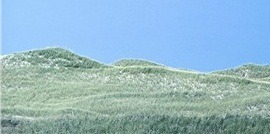
Landforms that are somewhat higher than their surroundings, but not as tall as mountains
a)
mountains
b)
hills
c)
plateaus
d)
canyons
34.
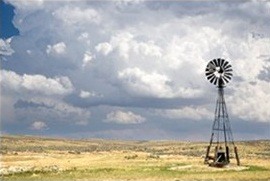
Flat areas - all the ground is about the same height and there are no high mountains or hills.
a)
mountains
b)
plains
c)
plateaus
d)
canyons
35.
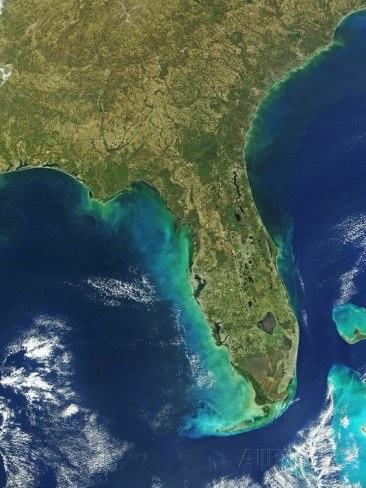
Large bodies of land that stick out into the water, but are still connected to the mainland
a)
islands
b)
peninsulas
c)
seas
d)
rivers
36.
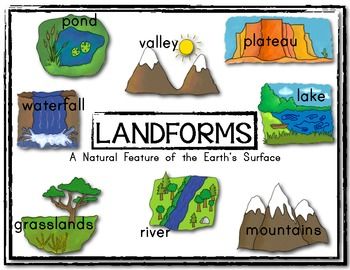
Earth's surface has many different land features, called _________.
a)
deserts
b)
buildings
c)
cities
d)
landforms
37.

Which planet is the largest?
a)
Jupiter
b)
Saturn
c)
Uranus
d)
Neptune
38.
Which is the second closest planet to the sun?
a)
Earth
b)
Saturn
c)
Venus
d)
Mercury
39.
Throwing a ball and moving a chair are an example of
a)
pushes
b)
pulls
c)
gravity
d)
weight
40.
When a force pushes an object, the object moves
a)
in the opposite direction of the force.
b)
in the same direction as the force.
c)
It would not move at all.
41.
Work does NOT require movement.
a)
True.
b)
False.
42.
An example of a push would be
a)
hammering a nail into a piece of wood.
b)
spinning a hammer on the floor.
c)
yanking a nail out of the wood.
d)
cutting a nail with sharp scissors.
43.
Gravity pulls objects...
a)
to the right
b)
down
c)
toward the center of the earth.
d)
to the left
44.
All of the following are examples of a push except:
a)
pressing a button on a phone
b)
stapling papers together
c)
knocking over a glass of milk
d)
picking a flower in a garden
45.
The two poles on a magnet are north and south.
a)
true
b)
false
46.
An objects motion can be changed by
a)
a push or a pull
b)
weight
c)
temperature
d)
size
47.
What keeps Earth and all the other planets in orbit around the Sun?
a)
a push
b)
Gravity
48.
An animal that east only plants.
a)
Lettuce
b)
Herbivore
c)
Omnivore
d)
Carnivore
49.
Which would most likely be a producer?
a)
Eagle
b)
Grass
c)
Grasshopper
d)
Frog
Reset

