
 Worksheets
Asexual/Sexual Reproduction & DNA Quest Review
Total questions: 46
Worksheet time: 31mins
Name
Class
Date
1.
The sexual interaction of two organisms that produces offspring that share characteristics of both parents is known as what?
a)
Mtosis
b)
Meiosis
c)
Asexual reproduction
d)
Sexual reproduction
2.
During sexual reproduction
there are two sex cells that are needed to produce offspring.Which is the female sex cell?
there are two sex cells that are needed to produce offspring.Which is the female sex cell?
a)
Egg
b)
Sperm
c)
Flagellum
d)
Nucleus
3.
Reproduction which involves just one organism and results in offspring that is identical to the parent is known as what?
a)
Asexual reproduction
b)
Sexual reproduction
c)
Symbiosis
4.
The passing on of genes from parent to offspring is known as:
a)
Dominance
b)
Genetics
c)
Homeostasis
d)
Heredity
5.

What type of asexual reproduction is illustrated in this picture?
a)
budding
b)
fragmentation
c)
binary fission
d)
vegetative propagation
6.
Which type(s) of reproduction involves only ONE parent?
a)
asexual
b)
sexual
c)
both
7.
The different versions of a gene are known as:
a)
Phenotype
b)
Genes
c)
Variants
d)
Alleles
8.
Which word best describes the instructions for an inherited trait?
a)
Alleles
b)
Genes
c)
Variants
d)
Traits
9.
Which word can be used to describe the visual, observable characteristics of an organism?
a)
Alleles
b)
Genes
c)
Genotype
d)
Phenotype
10.
What is the name of the table that can be used to predict the possible genotypes of offspring?
a)
Punnett Square
b)
Mendel's Table
c)
Frasier's Table
d)
Gene's Square
11.
What is the term used to describe a trait that is only expressed when both of its alleles are present?
a)
Dominant trait
b)
Recessive trait
c)
Mendel's trait
12.
What was the name of the scientist that studied genetic variation in pea plants?
a)
John Mendel
b)
Gregor Mendel
c)
James Mendel
d)
Albert Einstein
13.
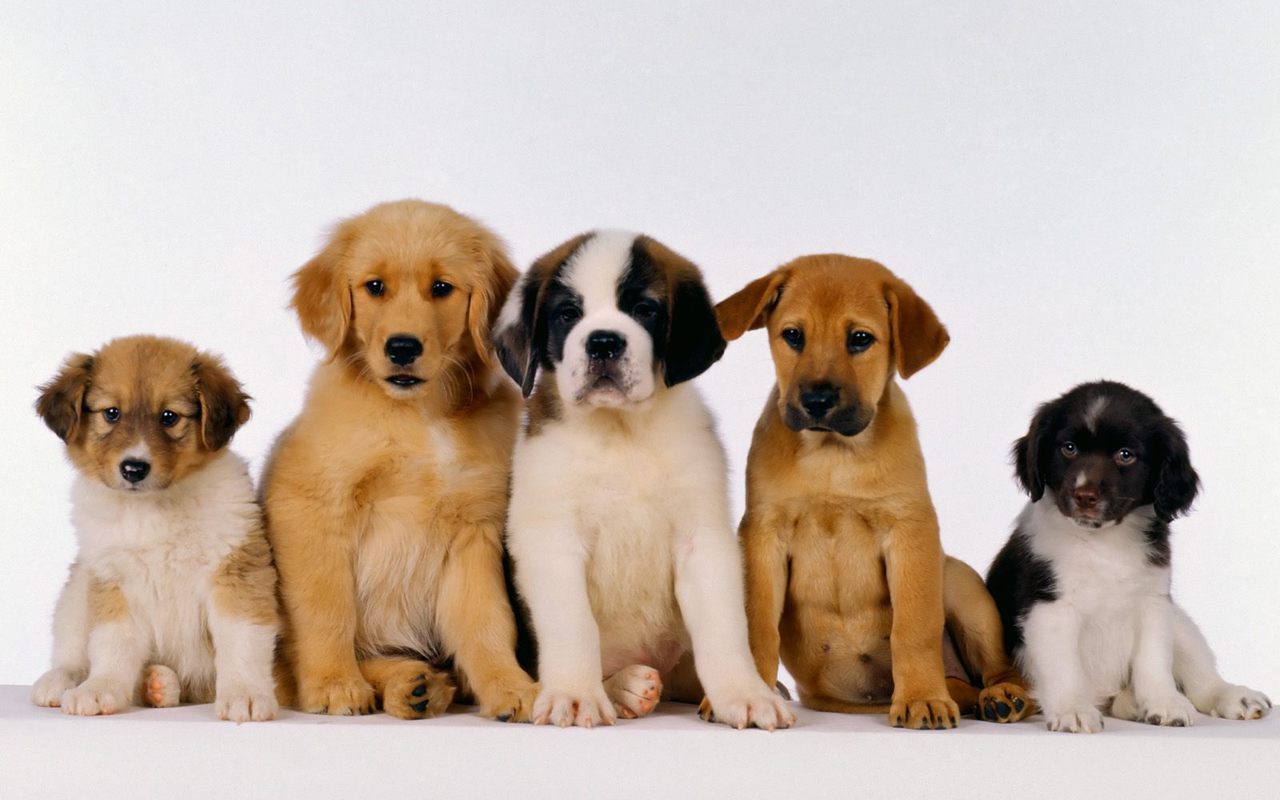
If two organisms reproduce sexually, then their offspring will exhibit a genetic makeup that is -
a)
identical to only one parent
b)
identical to all of its siblings
c)
a unique combination of traits
d)
the recessive traits of each parent
14.

Which of the following best describes a DNA molecule?
a)
double helix
b)
contains ribose
c)
made of amino acids
d)
contains Uracil
15.
What part of our cells holds our DNA?
a)
cytoplasm
b)
cell membrane
c)
nucleus
d)
ribosomes
16.

Why is DNA important?
a)
it is very small and very complicated
b)
it's in everything
c)
it serves as the blueprint for traits of all living things
d)
because we eat it every day for energy
17.
What are the 4 nitrogen bases?
a)
adenine, thymine, cytoplasm, and guanine
b)
adenine, thymine cytosine, and guanine
c)
adenine, thymine, cytosine, and gylcerol
d)
adenine, thymine, cytosine, and glucose
18.
A segment of DNA that codes for a protein is called a...
a)
Enzyme
b)
Mutation
c)
Gene
d)
Complimentary
19.
Which shows the correct complementary base pairing for DNA?
a)
C-A, T-G
b)
A-G, C-T
c)
C-G, U-A
d)
T-A, G-C
20.
Which is the greatest benefit of sexual reproduction?
a)
capable of reproducing by meiosis
b)
ability to reproduce without a mate
c)
ability to produce genetically different offspring
d)
capable of producing offspring genetically identical to parent
21.
The muscle cells of an elephant contain 62 chromosomes. How many chromosomes are in an elephant egg cell?
a)
31
b)
62
c)
122
d)
244
22.
A plant that has traits identical to the parent plant provides evidence that the plant
a)
resulted from sexual reproduction.
b)
resulted from asexual reproduction.
c)
will develop many seeds.
d)
will have large leaves.
23.
In sexual reproduction the male produces ___ cells.
a)
Malex
b)
Quack
c)
Egg
d)
Sperm
24.
Where is DNA located?
a)
Nucleus
b)
Chloroplast
c)
Cell Wall
d)
Vacuole
25.
DNA is made of 2 different base pairs.What is the term that describes these 4 bases?
a)
Nucleotide bases
b)
Sugar phosphate bases
c)
Adenines
26.
DNA has a sequence of bases. What base pairs with Adenine?
a)
Adenine
b)
Guanine
c)
Cytosine
d)
Thymine
27.
DNA has a sequence of bases, which base pairs with Cytosine?
a)
Adenine
b)
Guanine
c)
Cytosine
d)
Thymine
28.
Complete the base pairing for the DNA sequence A-T-T- A–G-C–C-G
a)
T-T-A-G-C-G-C-C
b)
A-T-T-A-G-C-C-G
c)
T-A-A-T-C-G-G-C
d)
C-A-A-C-G-A-G-G
29.
How can the structure of DNA be described?
a)
It has 4 nucleotide bases with a twisted double helix ladder
b)
It has 4 nucleotide bases with a twisted triple helix ladder
c)
It has 4 nucleotide bases with a stright X-shaped ladder
30.
What does DNA stand for?
a)
Doxyrinobnucleic Acid
b)
Deoxyribonucleic Acid
c)
Deoxyribosenuclear Acid
31.
What was the name of the scientists that built a 3-D model of DNA?
a)
Keenan and Kel
b)
Watson and Crick
c)
Stewie and Brian
d)
Franklin and Sam
32.
Physical expression of the trait/The way an organism looks or behave.
a)
Heredity
b)
Genotype
c)
Genetics
d)
Phenotype
33.
Organism has two of the same alleles for one trait.
a)
Genotype
b)
Heterozygous
c)
Phenotype
d)
Homozygous
34.
Organism has two different alleles for one trait.
a)
Genotype
b)
Heterozygous
c)
Phenotype
d)
Homozygous
35.
Capital letter; Trait always shows
a)
Recessive
b)
Heterozygous
c)
Dominant
d)
Homozygous
36.
Which answer represents a homozygous recessive genotype?
a)
GG
b)
GGG
c)
gg
d)
Gg
37.
Which answer represents a heterozygous genotype?
a)
BB
b)
bbb
c)
bb
d)
Bb
38.
Which answer represents a homozygous dominant genotype?
a)
RR
b)
Rr
c)
rr
d)
rrr
39.
Two different alleles for the same trait; an organism that is heterozygous for a trait.
a)
Purebred
b)
Recessive
c)
Hybrid
d)
Genotype
40.
Having the same alleles.
a)
Phenotype
b)
Heterozygous
c)
Hybrid
d)
Purebred
41.
Helps to predict what an offspring will look like; shows all possible alleles results.
a)
Genetics
b)
Heredity
c)
Punnett Square
d)
Trait
42.
You cross a homozygous pink flower (BB) with a white (bb) flower. How many will be pink?
a)
25%
b)
50%
c)
75%
d)
100%
43.
You cross a heterozygous round pea (Rr) with a wrinkled pea (rr). How many will be wrinkled?
a)
25%
b)
50%
c)
75%
d)
100%
44.
Genes that are altered or copied incorrectly.
a)
Recessive
b)
Mutation
c)
Cloning
d)
Dominant
45.
An alternate form of a gene (trait).
a)
heterozygous
b)
allele
c)
dominant
d)
phenotype
46.
Lower case letter; Hidden when a dominant allele is present
a)
Recessive
b)
Heterozygous
c)
Dominant
d)
Homozygous
100 %

