
 Worksheets
Factors Affecting Growth of Organisms
Total questions: 48
Worksheet time: 42mins
Name
Class
Date
1.
What does a limiting factor do?
a)
makes a population grow large
b)
stops a population from growing too large
c)
helps organisms adapt to abiotic factors
d)
provides geographical boundaries for migration
2.
Temperature, light, air, water, soil and climate are all ______ parts of the environment.
a)
biotic
b)
abiotic
c)
living
d)
boreal
3.

When a population grows past the ecosystem's carrying capacity, what happens to the population?
a)
Continues to grow
b)
The population starts to die off to return to carrying capcity
c)
The population will go extinct due to lack of resources
d)
The population grows then finds a new carrying capacity
4.

If a disease destroying barley plants in a field swept through an ecosystem, what would happen to the barley eating bird population in the the field ?
a)
The bird population would stay the same
b)
The bird population would infinitely increase
c)
The bird population would decrease
5.

If the amount of food or resources available increases, the carrying capacity for an animal:
a)
Stays the same
b)
Increases
c)
Decreases
d)
Fluctuates
6.

In a forest ecosystem, which of the following is the best example of a limiting factor for a rabbit population?
a)
Squirrel Population
b)
Sunlight
c)
Grass available
7.

If the carrying capacity of a predator decreases, what will happen to the carrying capacity of the prey?
a)
Will Increase
b)
Will Decrease
c)
Will stay the same
d)
Will fluctuate
8.

What is the carrying capacity of the graph?
a)
around 500
b)
more than 500
c)
less than 500
d)
around 600
9.

Biotic or abiotic things that control the size of a population
a)
Limiting factor
b)
density- dependent factor
c)
density- independent factot
d)
tolerance
10.

The largest number of individuals in a species that an environment can support long term
a)
carrying capacity
b)
emigration
c)
immigration
d)
population density
11.

Any thing or organism that regulates the size of a population is known as __________.
a)
a limiting measure
b)
a limiting factor
c)
carrying capacity
d)
biodiversity
12.

Which of the following could lead to a decrease in carrying capacity?
a)
Ample rainfall
b)
Destruction of habitat
c)
More seeds of nearby trees being planted
d)
An increase in healthcare options
13.
Mutations will help species survive over time by increasing genetic variation within that species because, ___________________________.
a)
the species is more able to adapt to environmental changes
b)
the species will then develop into the perfect clone race
c)
it will male them faster and faster and faster
d)
they will be immune from radiation sickness
14.
Natural selection is when ____________ decides who survives and who doesn't
a)
nature
b)
humans
c)
animals
d)
years
15.
Why are beneficial traits more likely to be passed onto offspring?
a)
Because they are more likely to survive and reproduce.
b)
Because they come from dominant alleles.
c)
Because they come from recessive alleles.
d)
Because the trait is an acquired phenotype.
16.
The theory of evolution by natural selection means that what is changing over time?
a)
The inherited traits of a population.
b)
The acquired traits of a population.
c)
Hair color and eye color
d)
Attractive features.
17.
A slight difference between species of similar populations
a)
Adaptation
b)
Trait
c)
Reproduction
d)
Variation
18.
Where the better adapted organisms survive to pass traits along to offspring.
a)
Evolution
b)
Natural Selection
c)
Extinction
d)
Artifical Selection
19.

What did Charles Darwin observe in finch populations of the Galapagos Islands off the coast of South America?
a)
different species on different islands
b)
all species on one of the islands
c)
identical species on all the islands
d)
the same species as North America
20.
A mutation occurs in a particular animal and quickly begins to increase in frequency throughout the population. Which of the following are you most likely to conclude?
a)
The mutation makes the animal grow larger
b)
The mutation does not confer any benefit or harm to the animal
c)
The mutation makes the animal more susceptible to predators
d)
The mutation increase the probability that the animal will reproduce.
21.
Certain octopuses have the ability to change their color to match their surroundings to avoid being seen by their predators. This is an example of _________.
a)
mimicry
b)
camouflage
c)
variation
d)
behavior isolation
22.
The ability to survive and reproduce.
a)
Adaptation
b)
Trait
c)
Fitness
d)
Variation
23.

Which of the following is a term for a group of similar organisms that can reproduce fertile offspring?
a)
individual
b)
population
c)
species
d)
fossil
24.
The changes an organism make to its behavior or body structure to be better suited for survival in an environment.
a)
Adaptation
b)
Behavior
c)
Fossil
d)
Nutrient
25.
The two species, Paramecium aurelia and Paramecium caudatum, which do not prey upon each other, fighting to grow in the same test tube is an example of which of the following?
a)
Competition
b)
Predation
c)
Emigration
d)
Immigration
26.
Living factors or organisms that affect an ecosystem
a)
abiotic factors
b)
species
c)
trophic level
d)
biotic factors
27.
Which of the following are types of plant defense?
a)
structural and chemical
b)
structural and seed dispersal
c)
wind and water dispersal
d)
fire and explosion
28.
Which of the following is NOT a type of seed dispersal?
a)
water
b)
wind
c)
chemical
d)
animal
29.
Which behavior most likely increases the chances of successful reproduction.
a)
Lions hunting in packs.
b)
Elephants keeping their young in the middle of the herd.
c)
Birds migrating in the winter to warmer weather.
d)
Skunks releasing a bad smell when they are approached by predators.
30.
How are plants adapted to allow animals to disperse their seeds?
a)
The seeds are able to float.
b)
The seeds have hooks that attach to fur.
c)
The seeds are light and have feathery attachments.
d)
The seeds dry out and burst open.
31.
I have parachute like structures. What is likely my dispersal method?
a)
wind
b)
water
c)
animals
d)
explosive action
32.
My pod splits open and seeds are thrown out with a force. What is likely my dispersal method?
a)
wind
b)
water
c)
animals
d)
explosive action
33.

Which feature of a rose helps it grow without being eaten by large animals?
a)
flowers with bright colors
b)
sharp thorns
c)
small seeds
d)
deep roots
34.
Poison is an adaptation that _____________.
a)
makes animals sick or itchy.
b)
pollinates the plant.
c)
attracts pollinators to the plant
35.
Fill in the blank: Bright flowers are _____________________ that attract insects and birds to help in pollination.
a)
behaviors
b)
genetic material
c)
offspring
d)
specialized structures
36.
Animals do not help disperse the seeds of plants.
a)
True
b)
False
37.
Some male birds perform elaborate dances in order to attract females. This is an example of _______.
a)
camouflage
b)
insight
c)
courtship
d)
mimicry
38.

Cattle egrets forage (feed) in fields among cattle. The egret gets easy access to flying insects stirred up by the cattle, and the cattle don't care if they are there or not.
a)
mutualism
b)
commensalism
c)
competition
d)
parasitism
39.
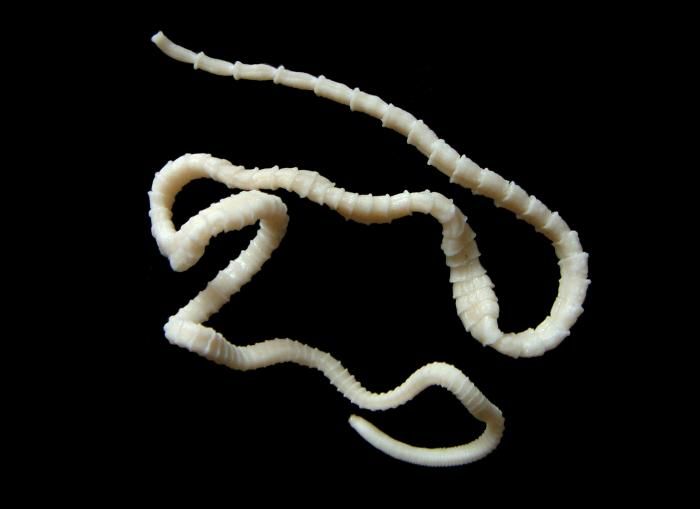
A tapeworm and a cat have this type of relationship.
a)
mutualism
b)
parasitism
c)
commensalism
d)
competition
40.
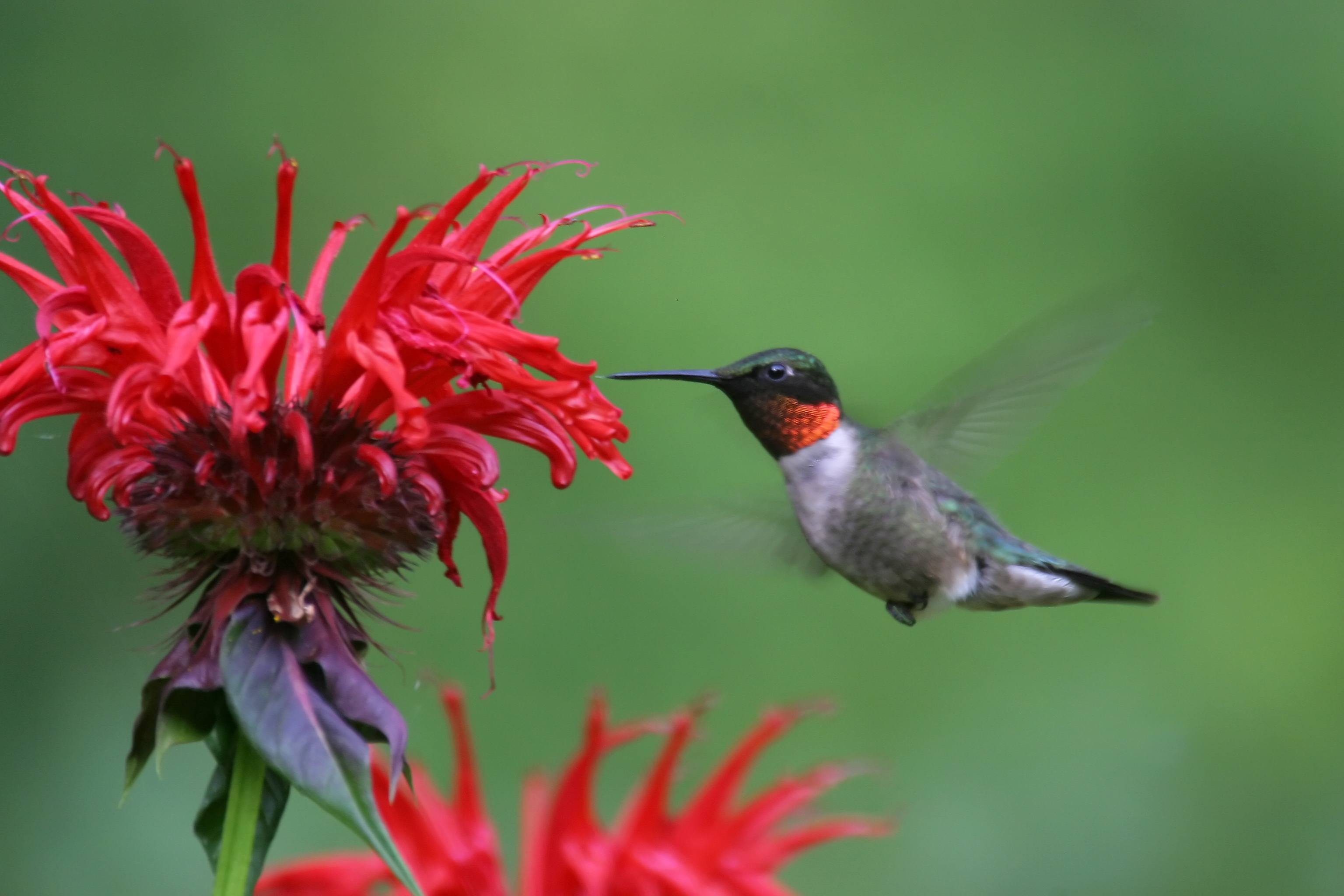
What type of symbiosis? Hummingbirds feed on nectar from flowers. The flowers are pollinated by hummingbirds as they move from flower to flower.
a)
commensalism
b)
mutualism
c)
parasitism
d)
predation
41.
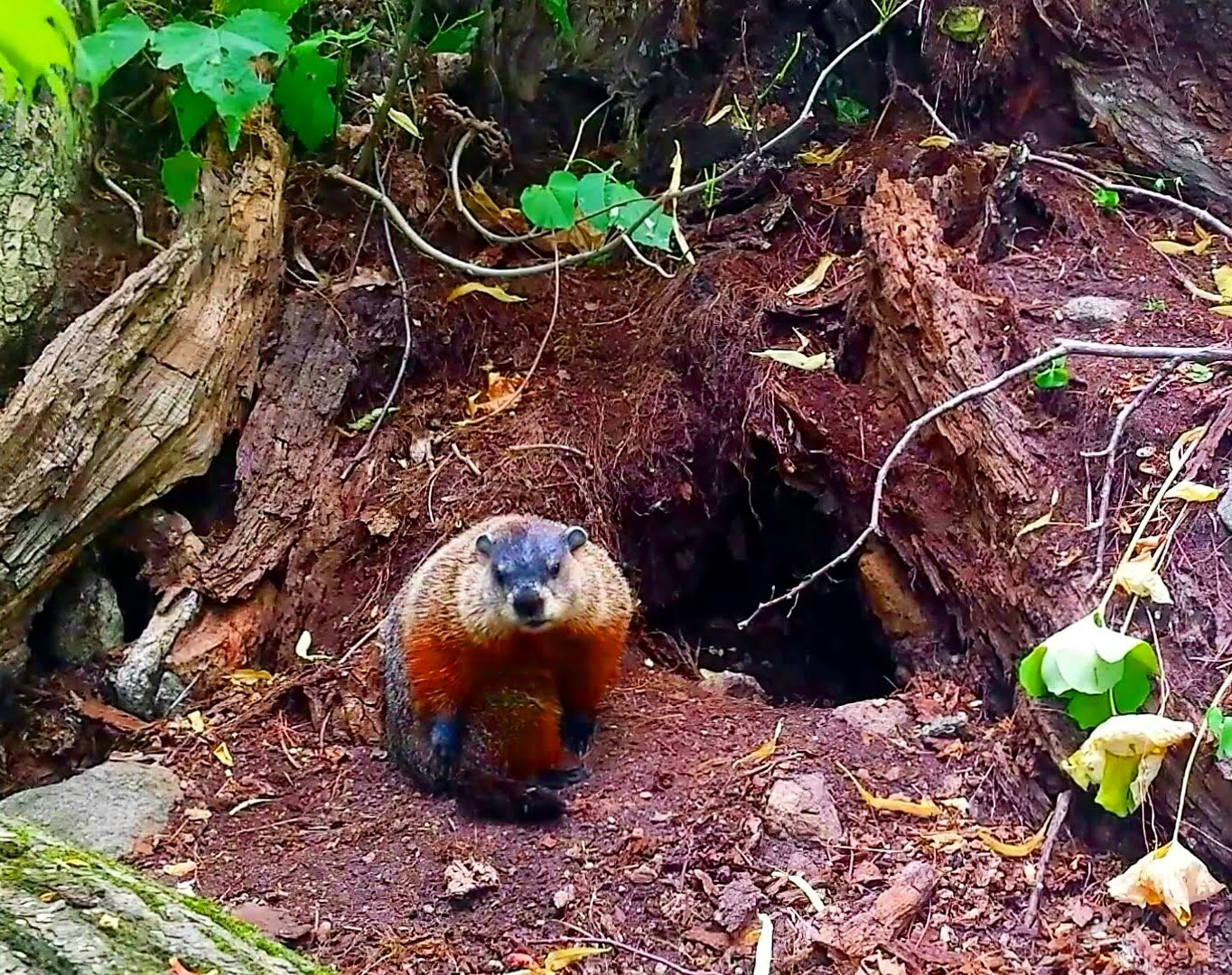
What type of symbiosis? Skunks often live in burrows that have been dug and abandoned by woodchucks.
a)
commensalism
b)
mutualism
c)
parasitism
d)
predation
42.

Aphids are tiny insects that live on and eat the leaves of plants, removing vital nutrients from the plants.
a)
Predation
b)
Parasitism
c)
Commensalism
d)
Mutualism
43.
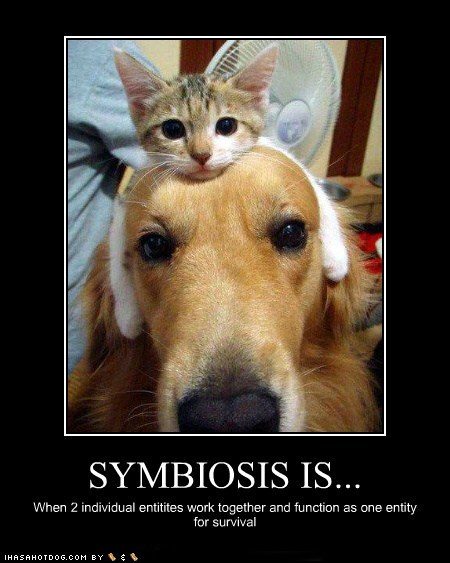
A relationship in which two species live closely together.
a)
resource
b)
mutualism
c)
succession
d)
symbiosis
44.
What type of symbiosis is this?
*Hermit crabs find shells left by snails that have died and move in.
* Snails die and leave behind their shells.
*Hermit crabs find shells left by snails that have died and move in.
* Snails die and leave behind their shells.
a)
commensalism
b)
mutualism
c)
parasitism
d)
predation
45.
Barnacles create home sites by attaching themselves to whales. This neither harms nor benefits the whales. What kind of relationship is this?
a)
Mutualism
b)
Parasitism
c)
Commensalism
46.
A relationship between two organisms in which both organisms benefit.
a)
Mutualism
b)
Competition
c)
Parasitsm
d)
Commensalism
47.
A tick and a dog have this type of relationship.
a)
mutualism
b)
commensalism
c)
neutralism
d)
parasitism
48.
A frog eats a fly. The frog and fly are demonstrating ________.
a)
mutualism
b)
competition
c)
predator/prey
d)
parasitism
100 %

