
 Worksheets
Bio Final Review Part 2
Total questions: 50
Worksheet time: 42mins

Highly specialized species tend to evolve on islands. Based on island biogeography, which would experience the greatest decline of specialist species if an invasive species emigrated from the mainland?
A small island a far distance from the mainland
A small island in close proximity to the mainland
A large island a far distance from the mainland
A large island in close proximity to the mainland
A virus killed most of the seals in the North Sea. To preserve the species, scientists caught 20 of the remaining seals and started a new population in the northwest Pacific Ocean. How could the new population be described?
Less genetic diversity than the original population
More genetic diversity than the original population
Equal genetic diversity compared to the original population
None of the answers
Happens only in small populations, and is the change in the frequency of a gene variant (allele) in a population.
Extinction
Genetic Drift
Bottleneck Effect
Gene Flow
I eat dead animals, unicellular organism, and have no nucleus, what am I?
Protist
Plant
Fungi
Bacteria
I eat by digesting dead organism. I grow on land and have a nucleus. What am I?
Animals
Fungi
Plants
Bacteria

A student discovers an arachnid with a segmented abdomen, a tail, has a stinger. The student uses the dichotomous key below to identify it. Which arachnid has the student found?
Scorpion
Wind Scorpion
Daddy long legs
Tick
Which of the following correctly gives the levels of organization from smallest to largest?
Population, community, ecosystem, biosphere, biome
Organelle, cell, tissue, organ, organ system, organism
Population, community, ecosystem, organism, organ system
Cell, tissue, organ, organelle, organ system, organism, population

What is the function of antibodies within the immune system?
Antibodies kill off any antigen that enters the body.
Antibodies are only made when you are given a vaccination for specific antigens.
Antibodies bind to specific antigens to flag for destruction.by the white blood cells
Antibodies are part of an external defense mechanism.


When you eat food, a hormone is secreted by the pancreas to control the amount of sugar or glucose levels in your blood, called insulin. What systems work together to produce and transport this hormone?
Digestive and Nervous
Circulatory and Endocrine
Immune and Endocrine
Muscular and Nervous

You are sitting around a camp fire roasting marshmallows. You get too close to the fire and your jacket catches fire. What body systems work together to produce a response to your jacket catching fire?
Muscular and Reproductive
Circulatory and Respiratory
Immune and Endocrine
Nervous, Muscular, and Skeletal

What systems would be involved in kicking a soccer ball?
Muscular, Endocrine, Respiratory
Digestive, Circulatory, Integumentary
Immune, Circulatory, Endocrine
Muscular, Skeletal, and Nervous
Which two body systems interact in the lungs?
Excretory and Reproductive systems
Endocrine and Lymphatic systems
Nervous and Muscular systems
Circulatory and Respiratory systems
Why is the maintenance of homeostasis important to multicellular organisms?
To keep the internal conditions best for a healthy body.
To have the internal environment match the external environment
Their cells need to be able to respond rapidly to drastic changes in their external enviornment
Their internal environment must provide their cells with a wide range of conditions
What is transpiration and why does a plant lose so much water?
Excess water being released from the roots by due to the phloem
When excess sugar is being transported down the plant from the leaves, water helps it flow down
A part of photosynthesis that uses a ton of water
Water vapor is sucked out of the leaves by evaporation which cause water pressure to pull the water up the plant against gravity
Which of the following indicates the pathway of water through a plant?
roots --> xylem --> mesophyll --> stomata
stomata --> roots --> phloem --> mesophyll
roots --> phloem --> mesophyll --> stomata
stomata --> mesophyll ---> xylem ---> roots
What is the primary function of a plant's roots?
To protect the plant from insects that live in the ground
To absorb nutrients and water for the plant to do photosynthesis
To help the plant get food
To help the plant eat soil
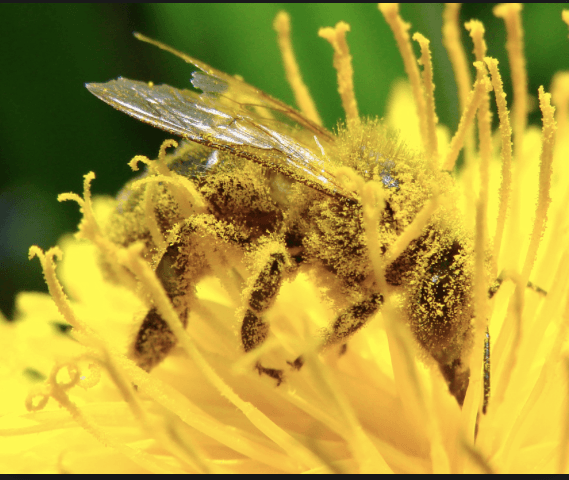
Pollination is the process by which pollen
causes people to sneeze
is formed inside a plant
moves from stamen to pistil
becomes awesome

The main function of stomata is to
capture sunlight
protect leaves from insects
allow gases to move rapidly in/out of leaves
release sugars into the atmosphere
Why is it that leaves in a rainforest are usually much much bigger than leaves that are in warm drier sunny climates?
Big leaves catch more rain to help the roots
Small leaves are on plants that get plenty of water through the roots
Big leaves are necessary to catch as much sunlight in crowded forests as possible, small leaves for dry areas so they do not lose too much water
Small leaves are necessary to catch as much sunlight in crowded forests as possible, big leaves for dry areas so they do not lose too much water

Roots of a tree growing towards the water line of a house.
Geotropism
Phototropism
Thigmotropism
Hydrotropism

Plants curling around a pole or mailbox is an example of:
Phototropism
Chemotropism
Geotropism
Thigmotropism
Organisms that make their own food using abiotic factors (you may select more than one answer)
autotrophs
heterotrophs
producers
consumers

Life is organized in a hierarchical fashion. which of the following sequences illustrates that hierarchy as it goes upward?
ecosystem, population, community, organism, biosphere, biome
population, organism, ecosystem, community, biome, biosphere
organism, biosphere, population, community, biome, ecosystem
organism, population, community, ecosystem, biome, biosphere
Jacob is going out to his grandparents farm. On the farm is a stream that he likes to fish at. When he is fishing he sees many different species of fish as well as maple and oak trees and dragonflies. What Jacob is seeing is an example of what level of organization?
organism
population
community
ecosystem

How do pioneer species compare in primary and secondary succession?
primary starts with grass and weeds, secondary starts with mosses
primary starts with forest fire, secondary starts with volcano
primary starts with a volcano, secondary starts with a forest fire
Lichens and moss in primary, and grasses/ ferns in secondary

Energy is passed on from one trophic level to the next. most of the energy is lost as heat due to cellular respiration or waste. What term describes this?
Tertiary Consumer
Biotic Factor
Abiotic Factor
10% Rule

In the illustration, which organism is on multiple trophic levels?
Grass
Owl
Frog
Squirrel


Which is considered an omnivore in the illustration?
The Robin
The Owl
The Fox
The Tree

What is the original source of all energy in an ecosystem?
Decomposers
Consumers
The Sun
The force

Native sponges and introduced muscles are both filter feeders in many of the Great Lakes. What is the ecological relationship?
Mutualism
Parasitism
Commensalism
Competition

Ants protect soft bodied aphids and in return the aphids feed the ants a sugary drink. What is the ecological relationship?
Predation
Parasitism
Commensalism
Mutualism


What would happen to this ecosystem if a disease killed the prairie grass?
The snake population would increase
There would be more squirrels
The deer would die or migrate elsewhere
There would be more sunlight

The greenhouse effect is caused when the sun's rays bounce off the earth's surface (mainly water) and back up to escape the atmosphere. However most are now being trapped in the atmosphere by?
Nitrogen from bacteria
Carbon from burning fossil fuels
Oxygen from humans
Methane from eating too much beans

Kudzu (native to east Asia) has overgrown many parts of southern Missouri and native ground plants have disappeared from the area. This is an example of:
Parasitism between kudzu and the native plants
A predator prey relationship between ground plants and kudzu
Competition occurring between the native and invasive species
Commesalism occurring between the kudzo and native plants

The diagram shows changes in white rhino population over two decades. What could have caused the massive decrease in population?
increasing food supply
decreasing population of predators
high rates of pregnancy
habitat destruction

What role does bacteria play in soil ecosystems?
They add air to the soil
They break down rock
They return nutrients to the soil
They tunnel through the soil
The Texas Kangaroo Rat, native to north-central Texas, makes its home in mesquite bushes. If the mesquite bushes are cleared for human homes, what might happen to the species?
The rat population will increase
The rat population will decrease
The rat population will stay the same
The rat population will double
Coral make hard outer skeletons to protect their bodies. Over time, these outer skeletons can build up to make large coral reefs. How does the formation of a coral reef change the ocean ecosystem?
It make the ocean water saltier.
It removes sand from the ocean floor.
it creates a habitat for some ocean animals.
It takes away space for other animals' habitats.

