
 Worksheets
Plants!!
Total questions: 54
Worksheet time: 35mins
Name
Class
Date
1.
Which of the following statements best describes phloem's function in the plant?
a)
transpports water and minerals up from the roots to the rest of the plant
b)
transports food down from the leaves to the rest of the plant
c)
transports water and minerals down from the roots to the rest of the plant
d)
transports food up from the leaves to the rest of the plant
2.
What is the part of the flower that is brightly colored to attract pollinators?
a)
Petals
b)
Stamen
c)
Pistil
d)
Sepals
3.
What organelle in the leaves of plants capture light energy from the sun to complete photosynthesis?
a)
Chloroplasts
b)
Mitochondria
c)
Nucleus
d)
Ribosomes
4.
In which type of growth response does the plant grow toward a light source?
a)
Phototropism
b)
Heliotropism
c)
Geotropism
d)
Hydrotropism
5.
In which type of growth response does the plant grow in response to touch?
a)
Hydrotropism
b)
Heliotropism
c)
Geotropism
d)
Thigmotropism
6.
In which type of growth response does the plant grow in response to gravity?
a)
Hydrotropism
b)
Phototropism
c)
Geotropism
d)
Thigmotropism
7.
In which type of growth response does the plant's roots grow toward a water source?
a)
Hydrotropism
b)
Phototropism
c)
Heliotropism
d)
Thigmotropism
8.
What anchor plants to the ground and absorb water and nutrients?
a)
Roots
b)
Stem
c)
Xylem
d)
Leaves
9.
first stage of plant life cycle (plant is just starting to grow)
a)
seed production
b)
germination
c)
plant development
d)
fertilization
10.
Thigmotropism
a)
response to light
b)
response to tough
c)
response to gravity
d)
response to water
11.
phototropism
a)
response to light
b)
response to tough
c)
response to gravity
d)
response to water
12.
gravitropism
a)
response to light
b)
response to tough
c)
response to gravity
d)
response to water
13.
Which of the following is NOT a characteristic that all plants share?
a)
Multicellular
b)
Autotrophic
c)
Immobile
d)
Prokaryotic
14.
Which organism is classified as a "producer"?
a)
A dog
b)
An ameoba
c)
A mushroom
d)
Grass
15.
Which part of the plant is responsible for getting nutrients and water from the soil and bringing it to the rest of the plant?
a)
Leaves
b)
Stem
c)
Root
d)
Veins in leaves
16.
Plants produce their own nutrients, which means they are...
a)
Heterotrophic.
b)
Macrophagic.
c)
Autotrophic.
d)
Carnivor
17.
What is the purpose of fruit?
a)
To feed insects
b)
To protect the seeds and provide nutrients to the plant.
c)
To protect the seeds and help disperse them.
d)
To feed humans
18.
Plants use carbon dioxide and water to make food and oxygen
a)
True
b)
False
19.
The result of photosynthesis is..
a)
food for the plant, duh
b)
food for the plant, and oxygen
c)
food for the plant, carbon dioxide
d)
Uhhh... what's photosynthesis?
20.
what is the chlorophyll?
a)
Green pigment found in the chloroplast that absorbs sunlight
b)
Something in a plant
c)
The process of photosynthesis occurs there
d)
NONE
21.
The main function of the leaves are
a)
make the food
b)
anchor the plant
c)
transport water and minerals
22.
The main function of the stem is
a)
make the food
b)
anchor the plant
c)
transport water and minerals
23.
How are seeds dispersed through the environment?
a)
wind
b)
water
c)
animals
d)
all of the above
24.

A flower is...
a)
the reproductive structure of an angiosperm.
b)
the ripened ovary of a flowering plant that contains a seed.
c)
the reproductive structure of a gymnosperm.
25.

A small multicellular structure that holds a sperm cell is the...
a)
seed
b)
pollen
c)
fruit
d)
pistil
26.

True or False: Germination is the beginning of growth of a new plant from a spore or a seed.
a)
True
b)
False
27.

Flowers are brightly colored to...
a)
scare of species which might eat them.
b)
attract insects to help them carry pollen.
c)
to look pretty.
d)
none of the above
28.

When a seed sprouts and begins the early growth of a young plant.
a)
germination
b)
pollination
c)
seed dispersal
d)
fertilization
29.

What plant part is shown here?
a)
roots
b)
flower
c)
stem
d)
leaf
30.
______ transports water and some nutrients up from the roots to the rest of the plant.
a)
xylem
b)
phloem
c)
stoma
d)
spongy mesophyll
31.
The vascular tissue that carries sugar and other foods throughout the plant is
a)
phloem
b)
xylem
c)
stem tissue
d)
monocot
32.
The vascular tissue that carries water throughout the plant is
a)
phloem
b)
xylem
c)
stem tissue
d)
cotyledon
33.

Which of the following elements is required in an organic compound?
a)
nitrogen
b)
oxygen
c)
carbon
d)
sodium
34.
The compound CHO is...
a)
inorganic
b)
organic
35.
The compound PO4 is...
a)
inorganic
b)
organic
36.
Is burning wood a chemical or physical change?
a)
chemical
b)
physical
37.
Is glass breaking a chemical or phyiscal change?
a)
chemical
b)
physical
38.
Is a a rusting bicycle a chemical or physical change?
a)
chemcial
b)
physical
39.
Which of the following is the correct equation for PHOTOSYNTHESIS?
a)
CO2 + light + H2O --> O2 + Sugar
b)
CO2 + sugar + H2O --> O2 + light
c)
O2 + light + H2O --> CO2 + Sugar
d)
CO2 + O2 + H2O --> Light+ Sugar
40.
Which of the following is the correct equation for PHOTOSYNTHESIS?
a)
CO2 + light + H2O --> O2 + Sugar
b)
CO2 + sugar + H2O --> O2 + light
c)
O2 + light + H2O --> CO2 + Sugar
d)
CO2 + O2 + H2O --> Light+ Sugar
41.
What process occurs when light energy is captured in autotrophs and converted into sugar?
a)
Photosynthesis
b)
Cellular Respiration
42.
What is the ultimate ORIGINAL source of energy for living things
a)
Sugar
b)
Sun
c)
Moon
d)
Carbon Dioxide
43.
Which organisms perform Photosynthesis?
a)
Only Autotrophs
b)
Only Heterotrophs
c)
Autotrophs and Heterotrophs
44.
Which of the following is an example of an AUTOTROPH?
a)
Appletree
b)
Dog
c)
Mushroom
d)
Human
45.
Which of the following is an example of a HETEROTROPH?
a)
Grass
b)
Algae
c)
Lemon Tree
d)
Bear
46.
What is the pigment in chloroplasts that performs photosynthesis?
a)
Chlorosynthesis
b)
Chlorophyll
c)
ADP
d)
Electron Transport
47.
Which gas is removed from the atmosphere during photosynthesis?
a)
hydrogen
b)
oxygen
c)
nitrogen
d)
carbon dioxide
48.
What are the products of photosynthesis?
a)
water and carbon dioxide
b)
oxygen and glucose
c)
oxygen and carbon dioxide
d)
oxygen and water
49.
Plants need ________ for photosynthesis
a)
oxygen
b)
soil
c)
carbon dioxide
d)
sugar
50.
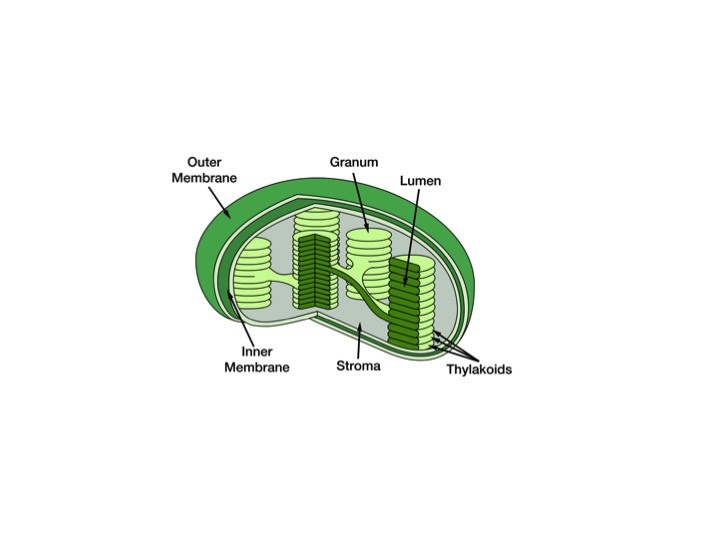
Chloroplasts are...
a)
Structures of animal cells to produce ATP
b)
Organelles where lipids are elaborated
c)
Specialized structures of plants where food is made
d)
Waste organelle of plants
51.
Leaves look green because.....
a)
they eat their vegetables
b)
to blend into their environment
c)
they contain a molecule named chlorophyll
d)
they are sick
52.

Which organelle from the plant cell is primarily responsible for converting sunlight to energy?
a)
Mitochonria
b)
Nucleus
c)
Vacuole
d)
Chloroplast
53.

What process is the diagram representing?
a)
Photosynthesis
b)
Soil development
c)
Plant reproduction
d)
Nitrogen Cycle
Nitrogen cycle
Nitrogen cycle
54.

If all four plants were watered daily but placed in a closet, receiving no sunlight, what process would NOT occur?
a)
Ingestion of carbon dioxide
b)
Filtration of water through the soil
c)
Photosynthesis
d)
Water absorbtion
100 %

