
 Worksheets
Pages 1-6 : 7th Grade Science
Total questions: 63
Worksheet time: 59mins
Name
Class
Date
1.
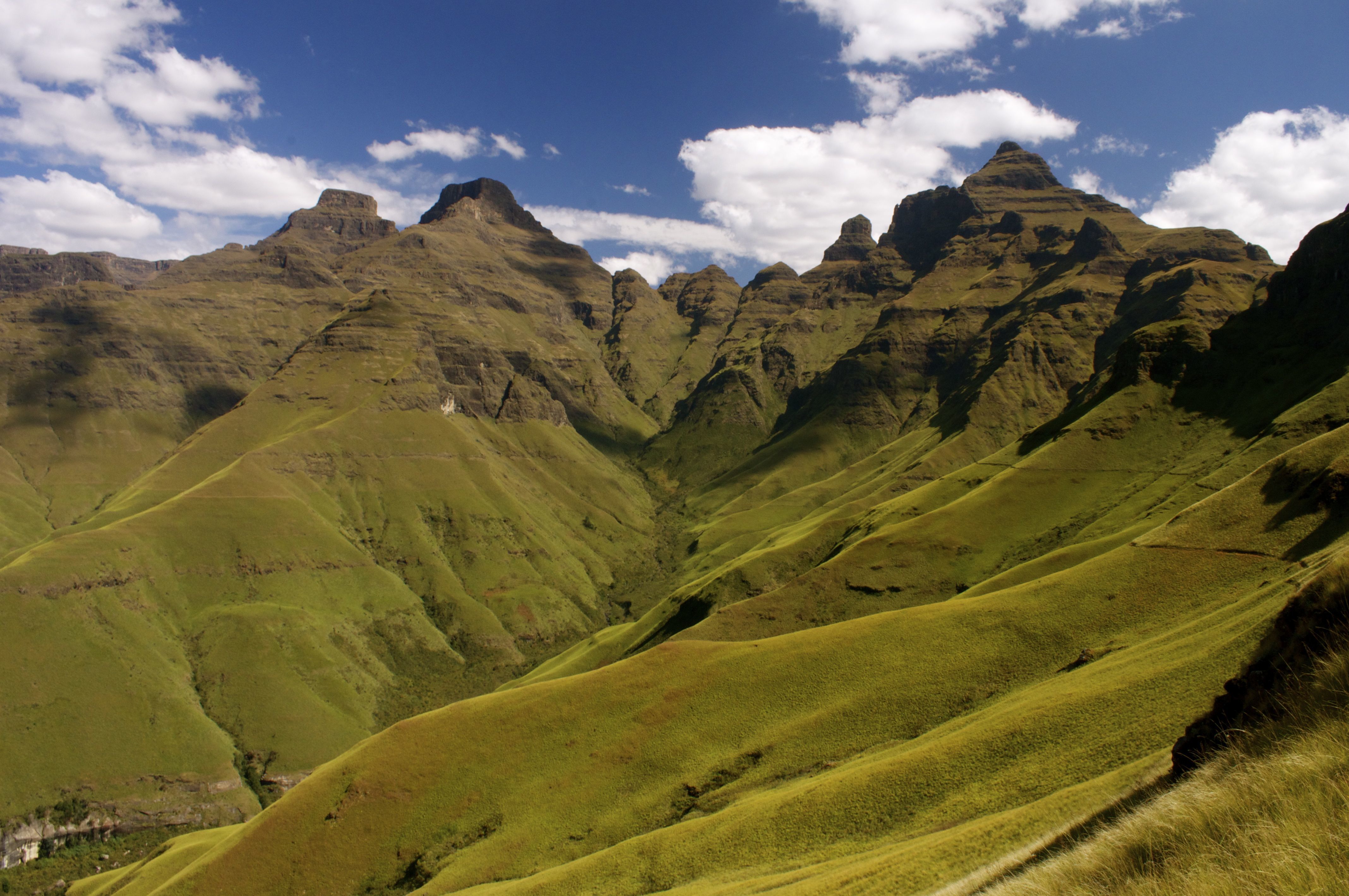
This sphere includes the continents, the ocean floor, all the rocks on the surface, and all of the sand in the deserts.
a)
Hydrosphere
b)
Biosphere
c)
Atmosphere
d)
Geosphere
2.

Composed of all the water on or near the earth
a)
Hydrosphere
b)
Biosphere
c)
Atmosphere
d)
Geosphere
3.
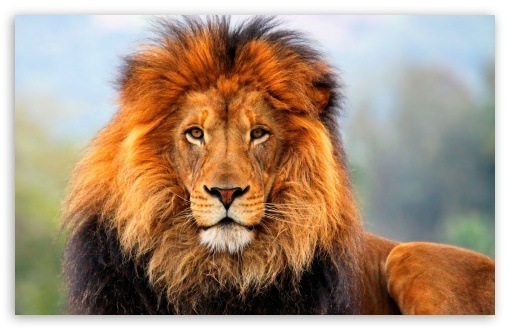
This sphere is composed of all the living things
a)
Hydrosphere
b)
Biosphere
c)
Atmosphere
d)
Geosphere
4.

Body of air surrounding our planet.
a)
Hydrosphere
b)
Biosphere
c)
Atmosphere
d)
Geosphere
5.
Water evaporating from the surface of a lake moves from the...
a)
Atmosphere to the geosphere
b)
Geosphere to the hydrosphere
c)
Hydrosphere to the atmosphere
d)
Atmosphere to the hydrosphere
6.
When living things breathe, they interact with which of Earth's spheres?
a)
Geosphere
b)
Hydrosphere
c)
Atmosphere
d)
Biosphere
7.
What might happen if the earth didn't have an atmosphere?
a)
Everything would go flying off into space
b)
The seasons would be longer
c)
The earth's rotation would stop
d)
We wouldn't be able to breathe
8.

When a plants takes carbon dioxide from the air which two spheres are interacting?
a)
Biosphere and atmosphere
b)
Geosphere and atmosphere
c)
Hydrosphere and atmosphere
d)
Atmosphere and atmosphere
9.

What is the transfer of heat through matter or space as waves?
a)
Conduction
b)
Convection
c)
Radiation
d)
Energy
10.
The mechanism for warming the surface and lower atmosphere of a planet is known as the:
a)
Heat wave
b)
Greenhouse effect
c)
Escalating atmosphere
d)
Solar vortex
11.
Hot matter is _________ dense and ___________
a)
less, sinks
b)
less, rises
c)
more, sinks
d)
more, rises
12.
What is the primary source of energy for the Earth?
a)
Coal
b)
Wind power
c)
Natural gas
d)
The sun
13.
Which of the following occurs because of convection currents?
a)
Tectonic plates on the crust move.
b)
The mantle increases in size.
c)
Pressure in the crust increases.
d)
Pressure in the crust decreases.
14.
What is the definition of CONVECTION
a)
When heat transfers through waves.
b)
When heat transfers from objects that are touching.
c)
a hot liquid or air that expands, becomes less dense, and rises or becomes more dense, and sinks.
d)
Heat traveling from the sun
15.
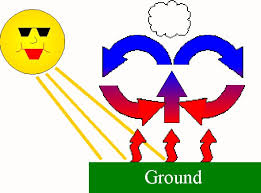
Warm air rises and the cool air sinks demonstrates this type of heat transfer.
a)
conduction
b)
convection
c)
radiation
d)
Insolation
16.

The baby chickens are kept warm from the heat lamps demonstrates this type of heat transfer.
a)
conduction
b)
convection
c)
radiation
17.
How does freezing water cause the weathering of rocks? The freezing water—
a)
keeps the rocks in place
b)
makes the rocks last longer
c)
expands cracks and breaks rocks
d)
causes rocks to fall in landslides
18.
The process that breaks down rocks and other materials on Earth's surface is called
a)
weathering
b)
erosion
c)
soil conservation
d)
decomposition
19.

What is mechanical weathering?
a)
Process through which rocks are physically broken into smaller pieces.
b)
Rocks are broken down through chemical changes.
c)
Rocks are worn away from acid in plant roots.
d)
Rocks broken down by machinery.
20.

During chemical weathering, what can happen to the type of rock that has undergone chemical weathering?
a)
a new rock is produced that is larger than the original rock
b)
a new rock is produced that is the same as the original rock
c)
a new rock is produced that is different from the original rock
d)
no new rock is created - it is just smaller in size
21.

The diagrams shows a natural process that weathers rock.
Which statement best explains why this process results in weathering?
Which statement best explains why this process results in weathering?
a)
frozen water acts as a solute
b)
water expands when it freezes
c)
the mass of water increases when it freezes
d)
frozen water dissolves most types of rock
22.
A marble statue is left exposed to the weather. Within a few years, the details on the statue have begun to weather away. This weathering probably is caused by...
a)
oxygen in the air
b)
carbonic acid in rainwater
c)
lichens
d)
abrasion
23.

What are the two factors that affect the rate at which weathering occurs?
a)
climate and mass of rock
b)
climate and size of rock
c)
type of rock and size of rock
d)
type of rock and climate
24.
Which type of climate will have faster chemical weathering?
a)
Hot and Wet
b)
Cold and Dry
c)
Hot and Cold
d)
Cold and Wet
25.

How do plants weather rocks?
a)
during photosynthesis
b)
when roots grow into cracks of rocks and expand the rock
c)
when the plant moves water from the roots to the leaves
26.

Deltas are built up by -
a)
deposition
b)
leaching
c)
abrasion
d)
erosion
27.
What is the movement of soil from one place to another?
a)
weathering
b)
deposition
c)
discharge
d)
erosion
28.
What causes a valley to form first?
a)
earthquake
b)
running water
c)
landslide
d)
erosion by wind
29.
What was the name given to all the continents when they were joined as one super continent?
a)
Supreme Continent
b)
Eurasia
c)
Plate tectonics
d)
Pangea
30.
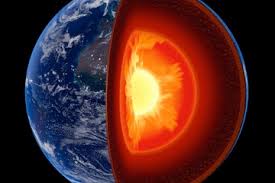
As you travel from the inner core to the crust, how would temperature, pressure and density of the material change?
a)
The would all increase
b)
The would all decrease.
c)
They would stay the same.
d)
Temperature would decrease, but pressure and density would increase.
31.

Name the boundary
a)
convergent boundary
b)
divergent boundary
c)
transform boundary
d)
sergent boundary
32.
What does the theory of continental drift state?
a)
The continents were once joined in a super-continent and have moved over time
b)
Continents are stationary and do not move
c)
The Earth is broken into lithospheric plates that move due to convection currents
d)
none of the above
33.

What kind of plate boundary is shown here?
a)
divergent
b)
convergent
c)
transform
d)
submergent
34.

Name the boundary
a)
convergent boundary
b)
divergent boundary
c)
transform boundary
d)
sergent boundary
35.
During sea floor spreading, molten material rises up from the mantle...
a)
along the continents
b)
at the mid ocean ridges
c)
deep ocean trenches
d)
at north and south poles
36.
Associated with transform boundaries.
a)
Volcanoes
b)
mountains
c)
trenches
d)
earthquakes
37.
Which of the following is where one plate slides under another plate?
a)
submarine zone
b)
divergence zone
c)
subduction zone
d)
lower zone
38.
This land formation occurs at a divergent continental/ continental boundary.
a)
mid ocean ridge
b)
deep ocean trench
c)
pacific hot spot
d)
rift valley
39.
Mountains form from ...
a)
plates sliding past one another
b)
convergent of plates
c)
plates moving away from each other
40.

Which box has a higher density?
a)
Box A
b)
Box B
c)
cannot be determined
d)
they are the same
41.
A divergent boundary occurs when plates ....
a)
Pull apart
b)
Come together
c)
Slide past each other
d)
subducting
42.

What type of boundary creates a mountain chain?
a)
Oceanic - Oceanic Convergent
b)
Oceanic - Continental Convergent
c)
Continental - Continental Convergent
d)
Divergent
43.
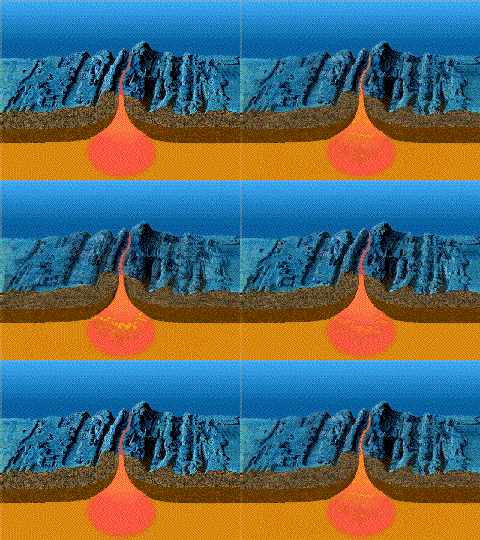
What type of boundary creates new seafloor?
a)
Oceanic - Oceanic Convergent
b)
Oceanic - Continental convergent
c)
Continental - Continental Divergent
d)
Oceanic - Oceanic Divergent
44.

The huge pieces of the earth's crust are called ____________________________.
a)
crust
b)
plates
c)
directions
d)
seismos
45.
An instrument that detects and measures earthquakes is a
a)
seismogram
b)
focus seismic map
c)
focus
d)
seismograph
46.
This is sometimes triggered by earthquakes beneath ocean floors
a)
aftershocks
b)
deformation
c)
tsunamis
d)
liquefaction
47.
What type of stress stretches the rock?
a)
shearing
b)
tension
c)
compression
d)
stretch action
48.
The volcanoes on the Hawaiian Islands form due to which of the following?
a)
Divergent Boundary
b)
Hot Spot
c)
Subduction Boundary
d)
Transform Boundary
49.
Where are most volcanoes found?
a)
Southern Hemisphere
b)
Ring of Fire
c)
Mid-Atlantic Ridge
d)
Hot Spots
50.
Which statement best explains why fruit salad is classified as a mixture?
a)
The components can be easily separated.
b)
When heated, a new substance is formed.
c)
The ingredients will combine to make new matter.
d)
The physical properties of the components change.
51.
Sam had a piece of chalk that had a mass of 3 grams. He smashed it with a hammer
into smaller pieces. He gathered all the pieces up and used a balance to measure the mass of the chalk.
The mass of the chalk ___________.
into smaller pieces. He gathered all the pieces up and used a balance to measure the mass of the chalk.
The mass of the chalk ___________.
a)
increased
b)
decreased
c)
stayed the same
52.
On a warm, sunny afternoon, ocean water splashed onto a rock. A short time later, the
rock was dry. Which statement best explains what happened to the water on the rock?
rock was dry. Which statement best explains what happened to the water on the rock?
a)
Salt caused the water to become a gas.
b)
Heat caused the water to become a gas.
c)
Salt melted the water and it disappeared.
d)
Heat melted the water and it disappeared.
53.
When Jake breathes out on a cold day, a cloud is formed. Which change occurs that
lets Jake see his breath as a cloud?
lets Jake see his breath as a cloud?
a)
liquid changes to solid
b)
solid changes to a gas
c)
liquid changes to a gas
d)
gas changes to a liquid
54.
Curt filled his cup with ice and left it on the table. When he returned a while later, the
ice melted. What type of change happened to the ice?
ice melted. What type of change happened to the ice?
a)
physical change
b)
chemical change
55.
Water is an element
a)
true
b)
false
56.
All matter is made of what?
a)
energy
b)
atoms
c)
electrons
d)
compounds
57.

Which of these is an element?
a)
Water
b)
Carblon
c)
Carbon dioxide
d)
Hydrogen
58.

Sodium (Na) is an element, but sodium chloride (NaCl) is a compound. Why is NaCl a compound?
a)
It's not a compound. It's a molecule.
b)
It is made of 2 different elements (Na and Cl).
c)
It's made up of atoms.
59.

Where are the electrons in an atom?
a)
Orbiting the nucleus
b)
In the nucleus
c)
What's an electron?
60.
Which of the following could indicate a chemical change?
a)
All of the answers could indicate Chemical Change
b)
a color change has occurred
c)
bubbles appear
d)
identifying one or more new chemical products
61.

A copper penny turning greenish after a few years is an example of...
a)
Chemical Change
b)
Physical Change
62.
Which of the following is a PHYSICAL change?
a)
Getting a haircut
b)
Rusty metal
c)
sour milk
d)
A compound
63.

What do you call the substances on the left side of a chemical equation?
a)
yield
b)
products
c)
reactants
d)
compounds
100 %

