
 Worksheets
ACP Review Semester 2
Total questions: 50
Worksheet time: 47mins
Name
Class
Date
1.

What kind of circuit is this?
a)
series
b)
parallel
2.
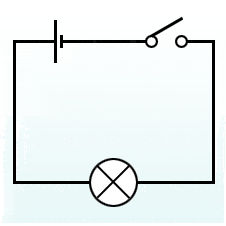
this circuit is .....?
a)
open
b)
parallel
c)
closed
d)
The cutest little circuit evah!
3.
When there is only one path for electrons to move through it is called a _____. When one light goes out, they all go out.
a)
closed circuit
b)
parallel circuit
c)
series circuit
d)
open circuit
4.
What is a Parallel circuit?
a)
Has only one path
b)
Has more than one path
c)
Allows energy to travel through easily
d)
Has only one light bulb
5.
A material in which electrons are able to move easily
a)
Circuit
b)
Insulator
c)
Resistance
d)
Conductor
6.
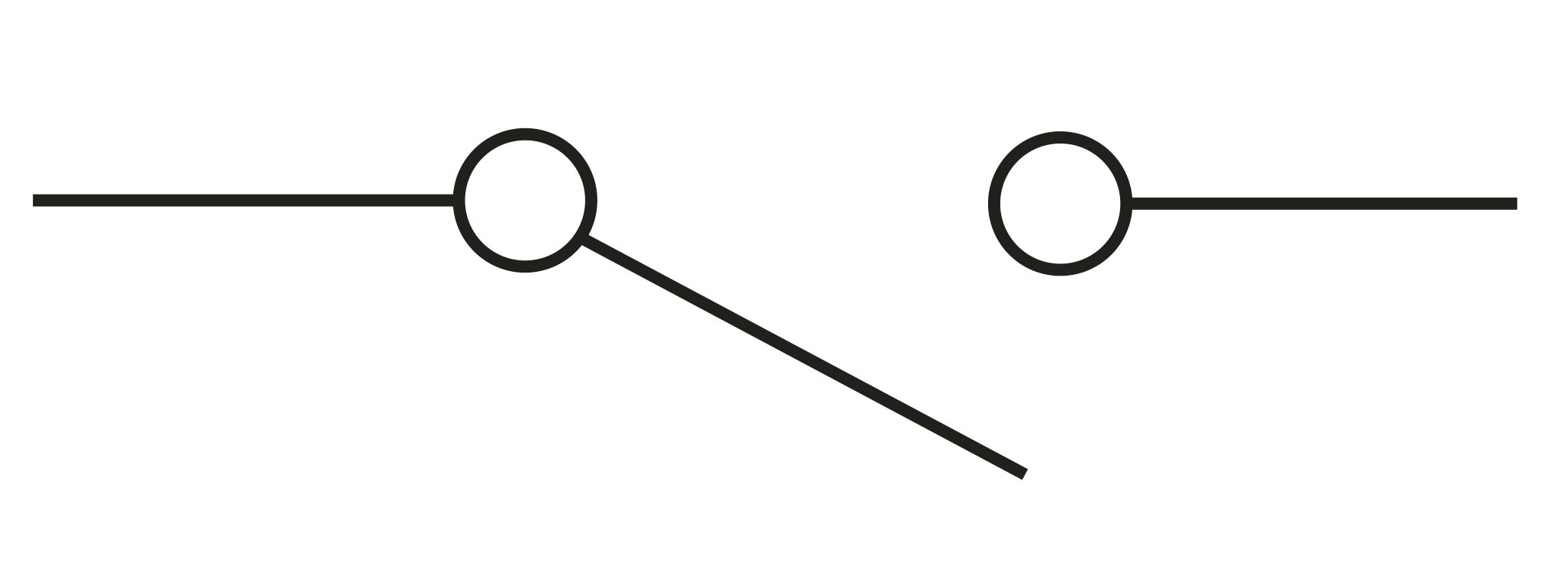
this is the symbol for a _____?
a)
switch
b)
resistor
c)
battery
d)
wires
7.

What is this symbol for?
a)
light bulb
b)
cell
c)
battery
d)
resistor
8.

The equivalent resistance in this circuit is
a)
100 ohms
b)
450 ohms
c)
400 ohms
d)
30 ohms
9.
Total resistance in a series circuit
a)
Rt = R1 + R2 + R3 ...
b)
1/Rt = 1/R1 + 1/R2 ...
c)
Rt = R1 X R2 / R1 + R2 ...
d)
Rt = RN / RV
10.
If you decrease the voltage of a circuit, what happens?
a)
Current decreases
b)
Current increases
c)
Electrons disappear
d)
Bulbs get brighter
11.
If you increase the resistance of a circuit, what happens?
a)
Current decreases
b)
Current increases
c)
Electrons disappear
d)
Voltage decreases.
12.

What is the equivalent or total resistance (Re) across this circuit?
a)
3 kΩ
b)
10 kΩ
c)
13 kΩ
d)
18 kΩ
13.
The nucleus of an atom is made up of what?
a)
Electrons and protons
b)
Protons and neutrons
c)
Neutrons and electrons
d)
Nuclei and ions
14.
How much CURRENT does a 1200 W bread maker draw from a 110 V outlet?
P = IV
P = I2R
P = V2/R
P = IV
P = I2R
P = V2/R
a)
132000 amps
b)
0.09 amps
c)
1200 amps
d)
10.9 amps
15.
Electric Charges at rest or in motion create...
a)
Magnetic Fields
b)
Electrons
c)
Football Fields
d)
Electric Fields
16.
A changing magnetic field produces an..
a)
magnetic field
b)
electric field
17.
Motors start with _________ energy and end with ___________ energy
a)
kinetic, electric
b)
electric, kinetic
c)
potential, magnetic
d)
electric, magnetic
18.
Generators start with _________ energy and end with ___________ energy
a)
kinetic, electric
b)
electric, kinetic
c)
potential, magnetic
d)
electric, magnetic
19.
Are ALL metals magnetic?
a)
Yes
b)
No
20.
Which of these combinations of magnet sides would be attracted to each other?
a)
North and North
b)
South and South
c)
North and South
21.
Magnetic Field lines....
a)
Go out of the North side and into the South side
b)
Go out of the South side and into the North side
c)
Go out of the North side AND out of the South side
d)
Go into the North side AND go into the South side
22.
Magnetic field strength is
a)
strongest close to a magnet
b)
constant everywhere
c)
strongest far from a magnet
23.
Opposite poles _____ .
a)
attract
b)
push away
c)
are balanced
d)
transfer electrons
24.
As wavelength decreases in the electromagnetic spectrum the frequency _____.
a)
decreases
b)
stays the same
c)
increases
d)
doubles
25.
What happens when light hits a mirror?
a)
it makes a color
b)
it reflects
c)
it makes a rainbow
d)
it passes through
26.
All waves carry
a)
energy
b)
light
c)
matter
d)
particles
27.
The combination of two or more waves that result in a single wave
a)
A. diffraction
b)
B. resonance
c)
C. reflection
d)
D. interference
28.
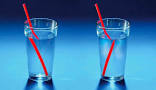
What is this called?
a)
refraction
b)
reflection
c)
reconstroction
d)
retraction
29.
The velocity of light in vacuum is _______ m/s
a)
3x10⁸
b)
3x10¹²
c)
3x10⁶
d)
3x10¹⁰
30.
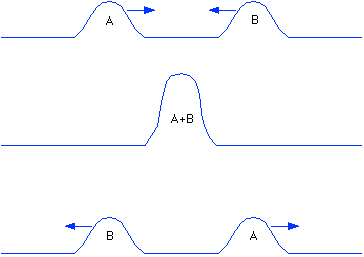
When two waves come together to form one larger wave, they are undergoing what type of interference?
a)
Constructive Interference
b)
Destructive Interference
c)
Noise Interference
31.
Waves combine to produce a smaller or zero-amplitude wave in a process called
a)
reflection
b)
refraction
c)
destructive interference
d)
constructive interference
32.
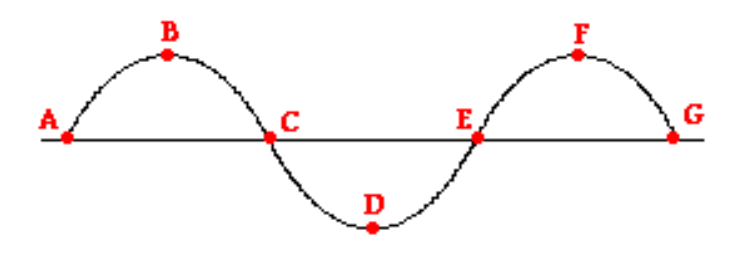
Which letter(s) represent the crest of the wave?
a)
A
b)
B & D
c)
B & F
d)
F
33.
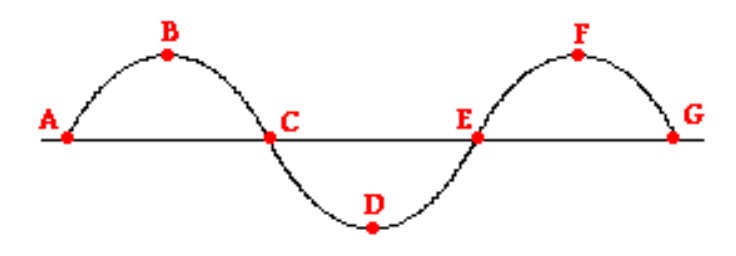
Which letter(s) represent the trough of the wave?
a)
A
b)
B & D
c)
D
d)
C & G
34.
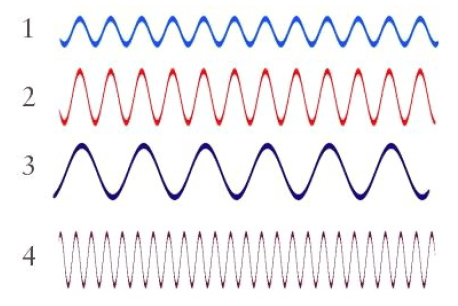
Which wave in the diagram has the greatest frequency?
a)
1
b)
2
c)
3
d)
4
35.
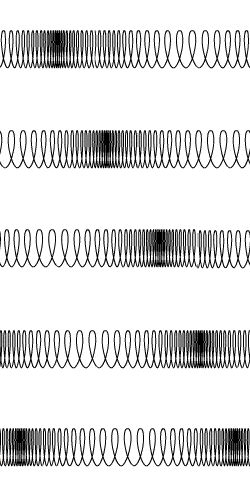
What kind of wave is this?
a)
Transverse
b)
Longitudinal
36.
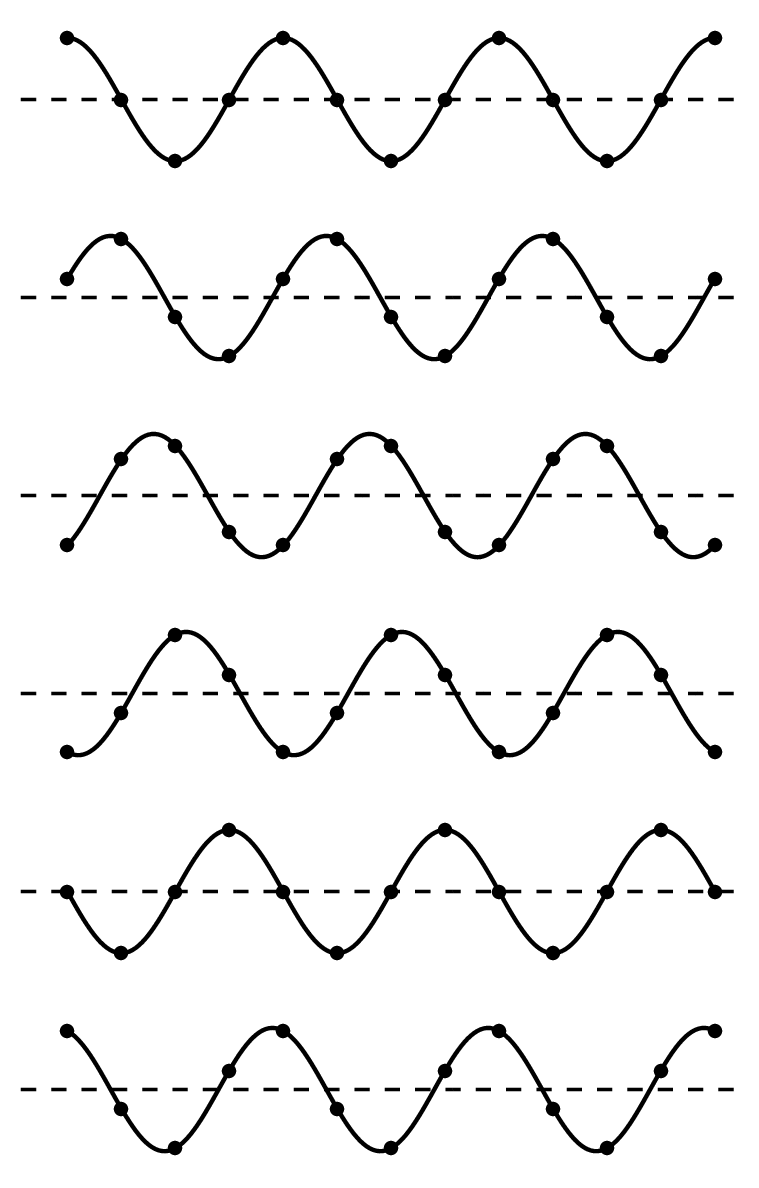
What kind of wave is this?
a)
Transverse Wave
b)
Longitudinal Wave
37.
Which type of radiation can penetrate through thick lead?
a)
Alpha
b)
Beta
c)
Gamma
38.
What happens to the atomic number of an atom during alpha decay?
a)
Reduces by 4
b)
Reduces by 2
c)
Increases by 2
39.
Isotopes of the same element have different ____________.
a)
numbers of protons
b)
numbers of electrons
c)
symbols
d)
numbers of neutrons
40.
Takes two small nuclei and combines them into a larger nucleus
a)
fission
b)
fusion
41.
The splitting of a nucleus into smaller nuclei is
a)
fusion
b)
fission
c)
half-life
d)
gamma radiation
42.
One disadvantage of nuclear energy is ___.
a)
it is a fossil fuel
b)
it leaves behind radioactive waste
c)
it emits large amounts of pollution into the atmosphere
d)
there are no disadvantages
43.
What is emitted during Beta Radiation?
a)
A high-energy Electron.
b)
Protons.
c)
Neutrons.
d)
Nuclei
44.
What is emitted during Gamma Radiation?
a)
Particles.
b)
Protons
c)
Beta Rays.
d)
Gamma Rays.
45.

The heat from a hot burner to a pot is transferred by ______.
a)
convection
b)
insulation
c)
radiation
d)
conduction
46.

Warm air rises and the cool air sinks demonstrates this type of heat transfer.
a)
conduction
b)
convection
c)
radiation
d)
Insolation
47.
Heat travels from the sun to the earth by the process of...
a)
conduction
b)
convection
c)
radiation
d)
insulation
48.
Temperature is a measure of the...
a)
total energy in a substance
b)
total kinetic energy in a substance
c)
average potential energy in a substance
d)
average kinetic energy of molecules in a substance
49.

A substance with a high specific heat:
a)
Is always extremely hot.
b)
Requires a lot of energy to become hot.
c)
Is not heavy.
d)
Does not requires a lot of energy to become hot.
50.

High temperature is connected to:
a)
Low kinetic energy.
b)
High kinetic energy.
c)
Zero net energy.
d)
Equal kinetic energies.
100 %

