wayground logo

Free Printable Worksheets

Font size

S
M
L
XL
Worksheets

Ecology Unit Review

Total questions: 68

Worksheet time: 56mins

Name
Class
Date
1.

What is the first source of energy in most ecosystems?

a)

scavengers

b)

detritivores

c)

producers

d)

herbivores

2.

Which symbiosis is this, where the tick is getting food, but harming the human?

a)

parasitism

b)

mutualism

c)

commensalism

d)

predation

3.

Symbiotic relationship in which both organisms benefit.

a)

competition

b)

Mutualism

c)

commensalism

d)

energy pyramid

4.
The image provided is an example of a(n):
a)
Producer
b)
Autotroph
c)
Consumer
d)
Insect
5.
The amount of energy that usually transfers from one trophic level to the next...
a)
10%
b)
20%
c)
80%
d)
50%
6.

Which of the following would be the definition of a detritivore?

a)

Animal that eats insects.

b)

Organism that breaks down any dead organism.

c)

Organism that eat only dead animals.

d)

Organism that feeds on dead plant debris.

7.
An illustration that uses arrows to show the many possible directions in which matter and energy can pass through the organisms in an ecosystem.
a)
Food chain
b)
Food web
c)
Energy Pyramid
d)
Succession Map
8.
Water temperature would be an example of ...
a)
A biotic factor
b)
An abiotic factor
9.
A collection of organisms that make up a community, as well as all of the nonliving aspects of the environment.
a)
Population
b)
Community
c)
Habitat
d)
Ecosystem
10.
Organisms that feed on both producers and other consumers.
a)
Carnivores
b)
Omnivores
c)
Herbivores
d)
Detritivores
11.
The general name for organisms like animals and fungi that get their energy from eating other organisms.
a)
Producers
b)
Consumers
c)
Detritivores
d)
Carnivores
12.
An organism that eats producers is...
a)
Top carnivore
b)
Omnivore
c)
Herbivore
d)
Carnivore
13.
Different populations living and interacting with each other in the same area.
a)
Biome
b)
Ecosystem
c)
Community
d)
Niche
14.

The study of how living things interact with one another and with their environment.

a)

Biology

b)

Geology

c)

Ecology

d)

Etiology

15.
An area where an organism finds food, shelter and water.
a)
niche
b)
biosphere
c)
biome
d)
habitat
16.

What makes Fungi so unique when it comes to trophic levels?

a)

They are producers so they make food for other organisms

b)

They are consumers of only plants

c)

They are decomposers that break down dead organisms and return nutrients to the soil.

d)

They are consumers of only the primary trophic level

17.

In this food web, what is the grasshopper?

a)

producer

b)

tertiary consumer

c)

secondary consumer

d)

primary consumer

18.
In the energy pyramid here, which organisms have the most energy available?
a)
Producers
b)
Carnivores
c)
Herbivores
d)
Top Predator
19.
What are the abiotic factors in this image? 
a)
water, sunlight, air
b)
birds, plants, air
c)
birds, water, soil
d)
plants, water, birds
20.

What happens to available energy as you move upward, from level to level, in an energy pyramid?

a)

increases

b)

decreases

c)

stays the same

d)

increases exponentially

21.

What do you call an animal that eats dead animals?

a)

detritivore

b)

omnivore

c)

herbivore

d)

scavenger

22.

In this Food Web Pyramid which type of consumer gets 10% of the energy stored in plants?

a)

Herbivore

b)

Carnivore

c)

Tertiary consumer

d)

Secondary Consumer

23.
What type of organism does every food chain start with?  
a)
producers
b)
omnivore
c)
carnivore
d)
decomposers
24.
Photosynthesis benefits heterotrophs by ______.
a)
Adding carbon dioxide to the air.
b)
Creating clean water.
c)
Eliminating harmful sugar.
d)
Creating oxygen they can use to make energy.
25.
Which of the following lists the levels of an ecosystem in order from smallest to largest?
a)
population-species-community-ecosystem
b)
ecosystem-community-population-species
c)
organism-population-community-ecosystem
d)
community-population-species-ecosystem
26.
The largest population that an area can support is the _______.
a)
niche
b)
carrying capacity
c)
community
d)
competition
27.
Which is an example of a population?
a)
the snakes and mice in a field
b)
the rocks in a rock collection
c)
a cat and her kittens in my garage
d)
the grass and trees in a park
28.
A herd of giraffes leaving an area in search of better grasslands is an example of ______. 
a)
Emigration
b)
Immigration
c)
Predation
d)
Mutualism
29.
The owl in the diagram is considered to be a(n)
a)
carnivore
b)
herbivore
c)
omnivore
d)
scavenger
30.
Which of the following is not an abiotic factor?
a)
980
b)
a stream
c)
sunlight
d)
rotting fish
31.
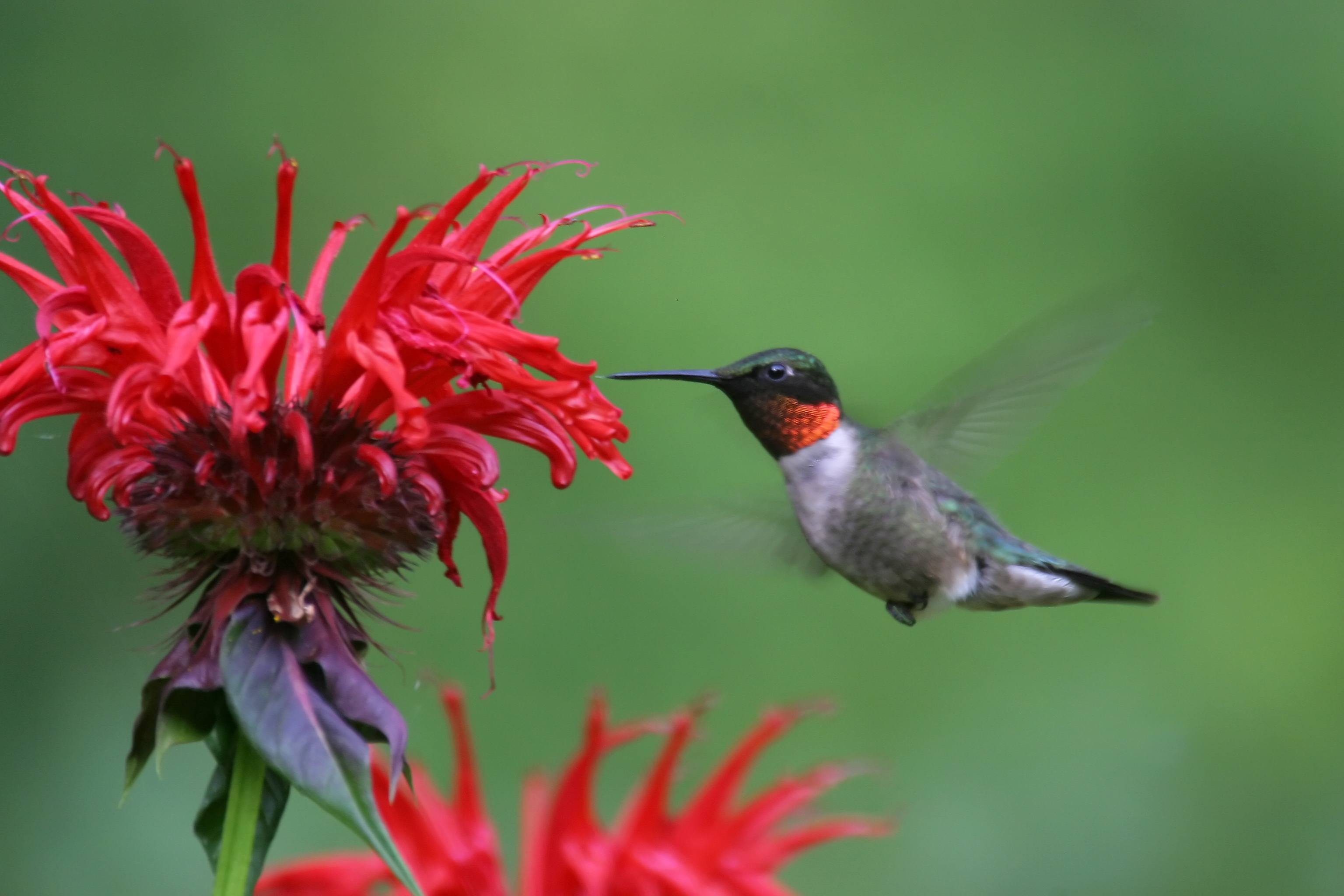
The following is which type of symbiosis? Hummingbirds feed on nectar from flowers.  The flowers are pollinated by hummingbirds as they move from flower to flower.
a)
commensalism
b)
mutualism
c)
parasitism
d)
predation
32.
A frog eats a fly. The frog and fly are demonstrating ________.
a)
mutualism
b)
competition
c)
predation
d)
parasitism
33.
What is it called when water is changed from a LIQUID to w VAPOR or [GAS]?
a)
precipitation
b)
condensation
c)
evaporation
d)
sublimation
34.
What stage occurs in the water cycle when water vapor cools?
a)
evaporation
b)
condensation
c)
sublimation
d)
transpiration
35.

What step of the water cycle is when plants gives off water vapor from photosynthesis?

a)

evaporation

b)

transpiration

c)

precipitation

d)

condensation

36.
What process causes clouds to form?
a)
precipitation
b)
evaporation
c)
condensation
d)
transpiration
37.
What source of energy evaporates the most water from Earth’s surface?
a)
volcanoes
b)
the sun
c)
lightning
d)
wind
38.
When water _________________, dew forms on the grass.
a)
evaporates
b)
deposes
c)
condenses
d)
transpires
39.
What process produces Oxygen?
a)
Cellular respiration
b)
Transpiration
c)
Photosynthesis
d)
Decomposition
40.
Why do all organisms require nitrogen?
a)
They use it to make energy
b)
It is used to make carbohydrates
c)
It is used to make proteins and DNA
d)
It is used to help with photosynthesis
41.
Why do organisms need nitrogen?
a)
to allow us to use oxygen
b)
to build muscle tissue
c)
to protect the blood supply
d)
all of the above
42.
In what process do plants use carbon dioxide?
a)
Cellular Respiration
b)
Photosynthesis
c)
Transcription
d)
Sublimation
43.
What is the process of water droplets or ice crystals falling from the sky?
a)
evaporation
b)
condensation
c)
precipitation
d)
runoff
44.

Which process converts carbon in the form of sugar into energy and carbon dioxide gas?

a)

Perspiration

b)

Photosynthesis

c)

Cellular Respiration

d)

Transpiration

45.
In the food web, which organisms release the carbon from dead things back into the environment?
a)
Producers
b)
Consumers
c)
Scavengers
d)
Decomposers
46.
Which of the following is not a decomposer
a)
Vulture
b)
Fungus
c)
Mushroom
d)
Bacteria
47.
When bacteria in the soil change free nitrogen into nitrogen containing compounds, it is called
a)
Denitrification
b)
Nitrogen fixation
c)
ammonia
d)
decaying
48.
When organisms decay, the nitrogen in their bodies gets ________
a)
returned to the soil
b)
returned to the ocean
c)
fixed
d)
carbonated
49.
What are the two ways nitrogen gas is turned into a form plants and animals can use?
a)
lightning & bacteria
b)
bacteria & worms
c)
lightning  & worms
d)
bacteria & fungi
50.
How do animals get the nitrogen they need?
a)
They breathe.
b)
They drink water. 
c)
They eat plants and animals.
d)
They go out into the sun.
51.
What causes an increase in atmospheric Carbon dioxide? 
a)
Factories burning fossil fuels.
b)
Reforming of the ozone layer.
c)
Decreasing cellular respiration.
d)
Leaves growing in the spring.
52.

The continuous process by which water moves from Earth's surface to the atmosphere and back.

a)

Nitrogen Cycle

b)

Carbon Oxygen Cycle

c)

WaterCycle

d)

Nitrogen Fixation

53.
Which of the following best explains why nitrogen fixation must take place?
a)
Atmospheric nitrogen is unusable to plants and animals.
b)
Nitrogen must be returned to the atmosphere.
c)
Animals must breathe in nitrogen.
d)
Nitrogen gets "stuck" in the soil and must be untrapped.
54.
Ultimately, what drives the water cycle process?
a)
Solar (sun) energy and the cool atmosphere
b)
Chemical energy
c)
Heat from the Earth's core
d)
The burning of fossil fuels
55.
What is the process by which a gas changes to a liquid?
a)
Percolation
b)
Evaporation
c)
Condensation
d)
Precipitation
56.
What is another name for evaporation of water through the leaves of plants?
a)
Transpiration
b)
Condensation
c)
Precipitation
d)
Percolation
57.
Succession that occurs in an area with no soil.
a)
ecological succession 
b)
primary succession 
c)
secondary succession
d)
pioneer species
58.
Succession that occurs in an area where soil is already present.
a)
ecological succession 
b)
primary succession 
c)
secondary succession
d)
pioneer species
59.
The first organisms that appear in an ecological community.
a)
ecological succession 
b)
primary succession 
c)
secondary succession
d)
pioneer species
60.
This starts with bare rock followed by lichen and mosses.
a)
primary succession 
b)
secondary succession
c)
both types of succession
61.
This type of succession occurs after a forest fire.
a)
primary succession
b)
secondary succession
c)
both
62.
Which population study would be best suited for a migrating species such as birds?
a)
Direct Observation
b)
Indirect Observation
c)
Sampling
d)
Mark and Recapture
63.
Which population study tries to find evidence, such as a nest or tracks, that a population exists?
a)
Direct Observation
b)
Indirect Observation
c)
Sampling
d)
Mark and Recapture
64.
Which study would be best suited for counting a small population [such as the number of ducks in a pond]?
a)
Direct Observation
b)
Indirect Observation
c)
Sampling
d)
Mark and Reccapture
65.
Which population study counts a smaller population to predict a much larger population?
a)
Direct Observation
b)
Indirect Observation
c)
Sampling
d)
Mark and Recapture
66.
What are two ways to decrease  population?
a)
birth, emigration
b)
death, emigration
c)
birth, immigration
d)
death, immigration
67.
Which is not a limiting factor?
a)
Hunters
b)
Lack of Food
c)
Lack of Space
d)
Lack of Water
68.
Which of the following is an example of a primary consumer's adaptation?
a)
A plant's sharp needles.
b)
A tiger's teeth and claws.
c)
A mouse's brown color.
d)
A giraffe's long neck.