
 Worksheets
science:)
Total questions: 43
Worksheet time: 32mins
Name
Class
Date
1.

The basic units of structure and function for both plants and animals are
a)
cells
b)
organs
c)
organ systems
d)
tissues
2.

The diagrams identify major parts of two different human systems. Which statement best describes how the two systems are similar?
a)
Both systems provide structure to the body
b)
Both systems contain specialized cells and tissues
c)
Both systems assume the functions of other failing body parts
d)
Both systems establish homeostasis and communication
3.
What is the function of the bladder?
a)
Push out excess waste
b)
Create and absorb excess waste to be regulated
c)
Collect urine from the kidneys before disposal by urination
4.

In the food web shown, the smaller bird would be considered....
a)
primary consumer
b)
secondary consumer
c)
tertiary consumer
d)
producer
5.

A gas
a)
has a definite shape but no definite volume
b)
has a definite volume but no definite shape
c)
has fast-moving particles
6.

At higher temperatures
a)
particles in an object have less energy
b)
particles in an object move faster
c)
a gas contracts
7.

The opposite phase of vaporization is
a)
sublimation
b)
freezing
c)
melting
d)
condesation
8.
When two or more elements combine, they are called mixtures.
a)
True
b)
False
9.

Joe's little brother finds a balloon in his backyard. The helium in the balloon is a-
a)
Compound
b)
Atom
c)
Element
d)
Mixture
10.

Is the image shown a mixture or a compound?
a)
Compound
b)
Mixture
11.
Which is the correct definition of a mixture?
a)
a substance made by mixing other substances together.
b)
When two or more elements combine to form a new substance
12.
Which is the correct definition for an atom?
a)
a substance made by mixing other substances together
b)
When two or more elements combine to form a new substance
c)
the basic unit of a chemical element.
13.
Which is the correct definition for molecules?
a)
a thing that is composed of two or more separate elements
b)
the basic unit of a chemical element.
c)
a group of atoms bonded together
d)
a type of element
14.

Is air a compound or a mixture?
a)
Mixture
b)
Compound
c)
Neither
d)
It is a compound and a mixture
15.
What is the formula for density?
a)
density = mass x volume
b)
density = mass / volume
c)
density = mass + volume
d)
density = mass - volume
16.
The tool used to measure the mass of a substance or object is a ______________.
a)
balance
b)
graduated cylinder
c)
ruler
d)
thermometer
17.
Jack has a rock. The rock has a mass of 14g and a volume of 2cm3. What is the density of the rock?
a)
7 mL
b)
7 g/cm3
c)
28 g/cm3
d)
1/7 g/cm3
18.

What is the volume of Object X?
a)
10.0 cm3
b)
15.0 cm3
c)
20.0 cm3
d)
25.0 cm3
19.
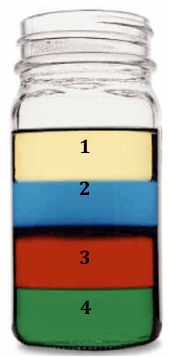
Put the liquids in order from most dense to least dense?
a)
4, 3, 2, 1
b)
1, 2, 3, 4
c)
3, 4, 2, 1,
d)
4, 3, 1, 2
20.
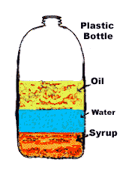
Which liquid is the least dense?
a)
oil
b)
water
c)
syrup
d)
plastic bottle
21.

Which box has a higher density?
a)
Box A
b)
Box B
c)
cannot be determined
d)
they are the same
22.
In general what is the most dense form of matter?
a)
solid
b)
liquid
c)
gas
d)
plasmas
23.

What is the volume of the fish?
a)
18.0 cm3
b)
6.0 cm3
c)
38.0 cm3
24.
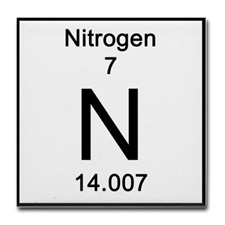
What is the number of protons that the element in this image contain?
a)
14
b)
7
c)
15
d)
18
25.

What is the atomic mass of "F"
a)
9
b)
18
c)
17
d)
19
26.
all matter is made of what
a)
energy
b)
atoms
c)
electrons
d)
compounds
27.
The positive particles of an atom are
a)
electrons
b)
positrons
c)
neutrons
d)
protons
28.
the central region of an atom where its neutrons and protons are is its
a)
nucleus
b)
electron cloud
c)
core
d)
center
29.
an atom with atomic number 6 would have how many protons
a)
6
b)
12
c)
3
d)
cannot be determined
30.
Which of the following is a positively charged subatomic particle found in the nucleus of an atom?
a)
Electron
b)
Proton
c)
Neutron
d)
Quark
31.
Which of the following is a subatomic particle with no charge that is found in the nucleus of an atom?
a)
Electron
b)
Proton
c)
Neutron
d)
Quark
32.
Where are electrons of an atom found?
a)
Nucleus
b)
Electron Cloud
c)
Some are in the nucleus and some in the electron cloud.
d)
They are moving everywhere.
33.
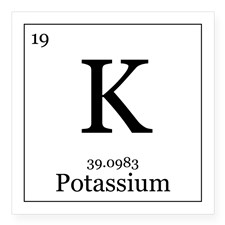
How many neutron are in the atom "K"?
a)
7
b)
2
c)
39
d)
12
34.

What is the number of protons that the element in this image contain?
a)
14
b)
7
c)
15
d)
18
35.

In which region would the nonmentals be found?
a)
1
b)
4
c)
3
d)
5
36.

In which region would the most reactive elements be found?
a)
1
b)
4
c)
5
d)
3
37.

In which region would the least reactive elements be found?
a)
1
b)
4
c)
3
d)
5
38.
The three main regions on the periodic table are ____________.
a)
solid, liquid, gas
b)
metals, nonmetals, meatlloids
c)
radioactive, man-made, poisonous
39.
Atoms can be seen with the naked eye.
a)
True
b)
False
40.
Something that is made up of only one kind of atom is known as _________________.
a)
a molecule
b)
a compound
c)
an element
d)
a proton
41.
What determines where an element is located on the periodic table?
a)
its atomic mass
b)
its atomic number
c)
its number of electrons
d)
they're arranged alphabeticaly
42.
A "group" is a ____________ on the periodic table.
a)
column
b)
row
43.
A "period" is a ____________ on the periodic table.
a)
column
b)
row
100 %

