wayground logo

Free Printable Worksheets

Font size

S
M
L
XL
Worksheets

Practice Final Biology

Total questions: 216

Worksheet time: 4hrs 56mins

Name
Class
Date
1.
Which process produces the most variation within a species?  
a)
asexual reproduction 
b)
sexual reproduction 
c)
mitosis
d)
cloning
2.
Which will most likely cause variations to occur within a species?    
a)
competition
b)
mutation
c)
mutualism
d)
predation
3.

What is a phenotype?

a)

The expression of a trait; physical appearance.

b)

refers to the genes of an individual

c)

An organism that has the same genes for a trait (ex. TT or tt)

d)

the passing of traits from parent to offspring

4.
What does heterozygous mean?
a)
An organism that has the same genes for a trait (TT or tt)
b)
An organism that has different genes for a trait (Tt)
c)
When neither gene is fully dominant; offspring is a mixture of both
d)
the different forms of a trait (hair color--> brown, blonde, red
5.
the passing of genetic traits from parent to offspring.
a)
heredity
b)
trait
c)
gene
d)
allele
6.
An allele whose trait only shows up when no dominant allele is present.
a)
hidden allele
b)
dominant allele
c)
recessive allele
d)
present allele
7.
An allele whose trait always shows up in the organism when the allele is present.
a)
recessive allele
b)
dominant allele
c)
hidden allele
d)
present allele
8.
having two of the same genes for the trait (sometimes called purebred).
a)
homozygous
b)
hetrozygous
c)
protein
d)
chromosome
9.
A single piece of coiled DNA found in the cells; contains genes that encode traits.
a)
gene
b)
chromosome
c)
trait
d)
DNA
10.
Complex molecule that carries genetic information that defines an organism's traits. It is stored in the nucleus.
a)
DNA
b)
protein
c)
RNA
d)
glucose nucleic acid (GNA)
11.
Two heterozygous (Tt)tall pea plants are crossed. Which describes their offspring?
a)
50% tall and 50% short
b)
75%tall and 25% short
c)
100%short
12.
R=round seed
r=wrinkled seed.
Cross a homozygous round with a wrinkled. Which statement predicts the results?
a)
offspring will be Rr
b)
offspring will be RR
c)
round seeds will be recessive to wrinkled
d)
Wrinkled will be observed in half of offspring
13.
A human usually has _____ total chromosomes.
a)
6
b)
22
c)
4
d)
46
14.
This type of inheritance pattern is a MIXTURE of both traits.
a)
incomplete dominance
b)
co-dominance
c)
complete dominance
d)
recessive pattern
15.
The nitrogen base adenine is always paired with the nitrogen base ____________.
a)
cytosine
b)
guanine
c)
thymine
d)
nitrogen
16.
The nitrogen base guanine is always paired up with the nitrogen base ________________.
a)
thymine
b)
guanine
c)
cytosine
d)
adenine
17.
Colorblindness is a recessive, X chromosome sex-link disorder. Cross the parents to figure out which percentage of their offspring will be colorblind.
a)
25%
b)
0%
c)
75%
d)
50%
18.
This type of inheritance pattern shows BOTH traits in possible offspring
a)
complete dominance
b)
incomplete dominance
c)
co-dominance
d)
dominant pattern
19.
What type of inheritance do two alleles have if their traits blend together? 
a)
Incomplete Dominance
b)
Co-Dominance
c)
Mendelian Inheritance
d)
Homozygous Inheritance
20.
Which is the correct phenotype for this organism?
a)
BB
b)
blue
c)
green
d)
bb
21.
Looking at this pedigree, how many family members have the disease?
a)
4
b)
7
c)
All
d)
None
22.
Which gender can be carriers of colorblindness and not have it?
a)
Just males
b)
Just females
c)
Both genders
23.
An autotroph is...
a)
An organism that makes its own food
b)
An organism that gets its food from other living organisms
24.
The scientific name for an organism is made from the:
a)
class and family name
b)
genus and species name
c)
domain and kingdom name
d)
kingdom and phylum name
25.
Term given to describe the 2 name naming system is:
a)
dichotmous key
b)
binomial nomenclature
c)
2 scientific names
d)
binomial key
26.
Cells that do not have a true nucleus are called....
a)
eukaryote
b)
prokaryote
c)
unicellular
d)
multicellular
27.
Cells that have a true nucleus are called....
a)
eukaryotes
b)
prokaryotes
c)
unicellular
d)
multicellular
28.
The 8 levels of classification, most broad to most specific.
a)
Domain, Genus, Family, Order, Class, Phylum, Kingdom, Species
b)
Domain, Species, Kingdom, Genus, Phylum, Family, Class, Order
c)
Domain, Kingdom, Phylum, Class, Order, Family, Genus, Species
d)
Order, Kingdom, Species, Domain, Phylum, Family, Class, Genus
29.
What do protists, plants, fungi, and animals ALWAYS have in common? They are all...
a)
Multicellular
b)
Eukaryotic
c)
Prokaryotic
d)
Consumers
30.
An illustration and a dichotomous key are given. What is the correct classification for this organism?
a)
Class Insecta
b)
Order Amblygygi
c)
Order Araneae
d)
Order Scorpiones
31.
A dichotomous key for trees is provided. Hikers found a tree that has large brown cones and single sharp needles. What species of tree have the hikers found?
a)
Juniper
b)
Pine
c)
Spruce
d)
Fir
32.
What are the three domains?
a)
Archaea, Bacteria, and Eubacteria
b)
Archaea, Protists, and Eubacteria
c)
Archaea, Bacteria, and Eukarya
d)
Archaea, Fungi, Animalia
33.
What trait separates sharks from ray-finned fish?
a)
Vertebrae
b)
Bony skeleton
c)
Four limbs
d)
None
34.
What traits do crocodiles and amphibians have in common?
a)
Vertebrae and hair
b)
Four limbs and amniotic eggs
c)
Bony skeleton and vertebrae
d)
Amniotic eggs and hair
35.
According to the data, the unknown bacterial species is most closely related to
a)
Species I
b)
Species II
c)
Species III
d)
Species IV
36.
When using a dichotomous key to identify organisms, what do we look at?
a)
physical features
b)
weather patterns
c)
environment
d)
diet
37.
Viruses are 
a)
eukaryotes
b)
prokaryotes
c)
both
d)
neither
38.
A virus needs a host cell in order to
a)
obtain nutrients
b)
make oxygen
c)
replicate
d)
grow
39.
What is the name of bird Z?
a)
Certhidea
b)
Geospiza
c)
Camarhynchus
d)
Platyspiza
40.
Natural selection
a)
process by which individuals that are better suited to their environment survive and reproduce most successfully; also called survival of the fittest
b)
Humans select which animals live and die
c)
both 
d)
IDK
41.
Which represents the levels of organization in order from smallest to largest?
a)
tissue, cell, organ, organ system
b)
organ, cell, tissue, organ system
c)
cell, tissue, organ, organ system
d)
organ system, cell, organ, tissue
42.
What is the classification level directly below domain?
a)
Phylum
b)
Genus
c)
Species
d)
Kingdom
43.
An organism made up of one cell
a)
Multicelluar
b)
Eukaryotic
c)
Unicellular
d)
Prokaryotic
44.
 You would find mushrooms in which kingdom?
a)
Plantae
b)
Protists
c)
Fungi
d)
Animalia
45.
This kingdom is unicellular and prokaryotic.
a)
Bacteria
b)
Protista
c)
Fungi
d)
Animalia
46.
Eubacteria...
a)
are eukaryotic
b)
live in normal conditions
c)
are non-living
d)
are multicellular
47.
All of the following have a nucleus except...
a)
Bacteria
b)
Animalia
c)
Plantae
d)
Protista
48.
According to the image, the dog is MOST CLOSELY related to which organism?
a)
Wolf
b)
Plant
c)
Cat
d)
Insect
49.
According to the diagram, the dog shares the LEAST number of characteristics with what organism?
a)
Plant
b)
Wolf
c)
Cat
d)
Insect
50.
In Binomial Nomenclature, the genus and species can either be in italics or underlined and only the genus is capitalized. 
a)
False
b)
True
51.
Prokaryotes are unlike all other organisms in that their cells 
a)
lack nucleus
b)
have organelles
c)
have cell walls
d)
lack nucleic acids
52.
Name this bacteria shape
a)
coccus
b)
spirillum
c)
bacillus
53.
Name this bacteria shape
a)
bacillus
b)
coccus
c)
spirillum
54.
Name this bacteria shape
a)
coccus
b)
bacillus
c)
spirillum
55.
 Bacteria that help break down dead material in the environment are called 
a)
vaccines
b)
decomposers
c)
oats
56.
All bacteria are
a)
unicellular
b)
multicellular
c)
eukaryotic
57.
A disease causing organism
a)
pathogen
b)
poison
c)
vaccine
58.
Live bacteria are found in milk, cheese and yogurt
a)
True
b)
False
59.
A(n) _____ is a virus that enters a bacterial cell.
a)
endospore
b)
decomposer
c)
plasmid
d)
bacteriophage
60.
cell in which a virus reproduces
a)
endospore
b)
host cell
c)
bacteriophage
d)
plasmid
61.
nonliving particle that can reproduce within a living cell
a)
endospore
b)
virus
c)
vacuole
d)
nucleus
62.
How does a virus cause a person to develop the common cold?
a)
invades the host cell to reproduce
b)
removes energy from the host cell
c)
produces toxins in the host cell
d)
protects the host cell from bacteria
63.
Archeabacteria...
a)
are eukaryotic
b)
live in extreme environments
c)
are non-living
d)
live in the soil
64.
Bacteria reproduce by
a)
mitosis
b)
meiosis
c)
binary fission
d)
photosynthesis
65.
Bacteria cells are classified as
a)
Eukaryotes
b)
Prokaryotes
c)
Viruses
d)
A Host
66.
What are the 2 types of bacteria? Eubacteria and ________________
a)
Eubacteria
b)
Peanut Butter
c)
Archaebacteria
d)
Binary Fission
67.
Where is Eubacteria found?
a)
In hot places
b)
In salty places
c)
In the U.S.A only
d)
Everywhere
68.
What number is pointing to the flagella?
a)
1
b)
5
c)
6
d)
7
69.
Which of the following can be helpful in treating bacterial diseases but NOT viral diseases?
a)
vaccines
b)
antibiotics
c)
antiviral drugs
d)
aspirin
70.
A preparation of weakened or killed pathogens or inactivated toxins that are injected into the body to prevent certain diseases is called a/an
a)
antibiotic.
b)
antiviral drug.
c)
vaccine.
d)
pathogen.
71.
HIV is caused by a 
a)
bacterium.
b)
virus.
72.
Prokaryotes reproduce asexually by
a)
binary fission.
b)
endospores.
c)
conjugation.
d)
mutation.
73.
This bacteria is 
a)
Baccilus
b)
Cocci
c)
Staphylococcus 
d)
Spirilla
74.
Which process is illustrated in the diagram?
a)
bacterial conjugation
b)
facilitated diffusion
c)
gamete formation
d)
viral reproduction
75.
The name streptococcus tells you bacteria are arranged as _____________.
a)
sickle-shaped cells
b)
groups of spiral cells
c)
chains of spherical cells
d)
rods
76.
An organism that must take in organic molecules for both energy and carbon 
a)
chemoheterotroph
b)
chemoautotroph
c)
photoheterotroph
d)
photoautotroph
77.
An organism that is photosynthetic but needs organic compounds as a carbon source
a)
chemoheterotroph
b)
chemoautotroph
c)
photoautotroph
d)
photoheterotroph
78.
An organism that requires a constant supply of oxygen in order to live
a)
obligate aerobe
b)
falcultative anaerobe
c)
obligate anaerobe
d)
anaerobe
79.
An organism that does not require oxygen in order to live
a)
obligate anaerobe
b)
facultative anaerobe
c)
endospore
d)
obligate aerobe
80.
An organism that can survive with or without oxygen
a)
anaerobe
b)
aerobe
c)
obligate anaerobe
d)
facultative anaerobe
81.
A pathogen becoming stronger over time until it can no longer be treated by usual methods is known as
a)
Immunization
b)
Antibiotic resistance
c)
Lysogenic cycle
d)
Memory cell misfunction
82.
What is the flagella used for?
a)
eating
b)
reproduction
c)
movement
d)
communicating
83.
Herpes 1 and 2
a)
Bacterial
b)
Lytic Virus
c)
Lysogenic Virus
84.
What is A?
a)
Body tube
b)
Capsid
c)
DNA
d)
Cartage
85.
This is the life cycle of....
a)
bacteria
b)
Lytic virus
c)
Lysogenic virus
86.
Why are viruses considered "non living"?
a)
they do not have their own DNA
b)
they cannot reproduce on their own
c)
they do not have the ability to interact with living things
d)
they are too complex
87.
Which of these organisms is NOT a protist?
a)
algae
b)
amoeba
c)
bacteria
d)
paramecium
88.
Bacteria that do not tolerate oxygen are called:
a)
aerobes
b)
facultative aerobes
c)
facultative anaerobes
d)
anaerobes
89.
paramecium
a)
moves with cilia
b)
moves with a flagellum
c)
moves with pseudopods
90.
Which of these is related to a fungus?
a)
bread
b)
athlete's foot
c)
penicillin
d)
all of these
91.
Plant-like protists are like plants because they ________.
a)
move
b)
use photosynthesis
c)
eat other things
92.
euglena
a)
moves with cilia
b)
moves with flagellum
c)
moves with pseudopods
93.
amoeba
a)
moves with cilia
b)
moves with flagellum
c)
moves with pseudopods
94.
Many fungi are decomposers (they break down dead organisms).
a)
True
b)
False
95.
Which protist has an eyespot?
a)
Amoeba
b)
Volvox
c)
Euglena 
d)
Paramecium 
96.
What protist causes malaria?
a)
Phytophthora
b)
Trypanosoma
c)
Amoeba
d)
plasmodium
97.
Most protist live in
a)
other organisms
b)
water
c)
land
d)
bread mold
98.
Label the following
a)
A. Stalk, B. Spores, C. Gills
b)
A. Gills, B. Spores, C. Stalk
c)
A. Spores  B. Stalk  C. Gills
d)
A. Gills   B. Stalk   C. Spores
99.
Paramecium is a___________- like protist
a)
Animal
b)
Plant
c)
Fungus
100.
Amoeba is a___________- like protist
a)
Animal
b)
Plant
c)
Fungus
101.
Euglena is __________- like protist.
a)
Animal
b)
Plant
c)
Fungus
102.
Algae is a __________-like protist.
a)

Animal

b)
Plant
c)
Fungus
103.
Slime mold is a __________-like protist.
a)
animal
b)
plant
c)
fungus
104.
Many protists have a _____ that removes extra water from the cell.
a)
nucleus
b)
oral groove
c)
chloroplasst
d)
contractile vacuole
105.
The ___ is a protist that is covered in cilia which it uses to move and get food.
a)
amoeba
b)
euglena
c)
diatom
d)
paramecium
106.
Amoebas move by stretching their bodies to form ____.
a)
pseudopods
b)
food vacuoles
c)
legs
d)
flagella
107.
The ____ is a producer that uses light to make food.  It also uses it _____ to move toward light.
a)
amoeba, pseudopods
b)
paramecium, flagellum
c)
euglena, cilia
d)
euglena, flagellum
108.
Partership between some fungi and roots of plants is called.....
a)
lichen
b)
hyphae
c)
mycorrhiza
d)
spores
109.
A ____ is a partnership between a fungus and a green alga or cyanobacterium.
a)
mycorrhiza
b)
lichen
c)
hyphae
d)
spore
110.
Natural selection is the process by which
a)
change occurs in the genetic characteristics of individuals that live together in an environment from one generation to another
b)
organisms with traits well-suited to their environment reproduce at a greater rate than less well-adapted organisms in the same environment
c)
use and disuse of a characteristic leads to evolutionary change
d)
baseball players pass on the trait for strong arm muscles to children
111.
Term given to describe the 2 name naming system is:
a)
dichotmous key
b)
binomial nomenclature
c)
2 scientific names
d)
binomial key
112.
What characteristic did Darwin observe about the finches on the Galapagos Islands?
a)
Their feathers 
b)
Genotypes 
c)
Their beaks
d)
Their body sizes
113.
Change over time is
a)
evolution
b)
generation
c)
growth
d)
biogenesis
114.
which of the folllowing is an exammple of a vestigial structure?
a)
the wings of a red-tailed hawk
b)
the hind limbs of a house cat
c)
the fins of sharks
d)
the wings of an ostrich
115.
The diagram shows fossils in different rock layers. Which of these statements about the age of these fossils is most likely correct?
a)
Fossil A and C are the same age
b)
Fossil B is older than fossil C
c)
Fossils A is older than fossil B
d)
Fossil D is older than fossil C
116.
Where the better adapted organisms survive to pass traits along to offspring.
a)
Evolution
b)
Natural Selection
c)
Extinction
d)
Artifical Selection
117.
What are the evidences for Evolution?
a)
Fossil Records
b)
Embryology
c)
Similar body structure
d)
All the above
118.
Which of the following is evidence for evolution?
a)
vestigial structures
b)
Embryology
c)
homologous structures
d)
all of these
119.
Homologous structures are structures that are
a)
similar in structure but different in function
b)
Different in structure but similar in function
c)
similar in function and structure
d)
Different in structure and function
120.
The Physical remains of a plant or animal preserved in rock or Earth's crust. 
a)
Adapt
b)
Fossil
121.
Charles Darwin came up with this theory 
a)
Natural Selection
b)
Mutation
122.
To adjust to a changing environment
a)
Mutation
b)
Adapt
123.
Evolution happens because of ____________ and natural selection.
a)
Mutation
b)
Adaptation
124.
Most of the species found in fossil form are _______________. 
a)
Alive
b)
Extinct
125.
What do phylogenic trees do?
a)
Help you visualize how species are related.
b)
Provide windbreaks in your yard.
c)
Provide DNA details.
d)
Show the distribution of organisms
126.

What is the genotype for a pea plant homozygous for round seeds (R), and heterozygous for yellow seeds (Y)?

a)

RrYy

b)

RRyy

c)

RRYy

d)

rryy

127.
What gamete possibilities could come from this parent's genotype?
a)
AB, AB, aB, aB
b)
Ab, AB, Ab, ab
c)
Ab, Ab, Ab, Ab
d)
AB, aB, ab, aB
128.

A parent with genotype YyRR could produce which gametes?

a)

YR, YR, yR, yR

b)

Yy, Rr, yy, rr

c)

Yr, Yr, yr, yR

d)

YR, YR, yr, yr

129.

A parent with genotype SsYy could produce what gametes?

a)

SY, Sy, sY, sy

b)

SY, SY, sy, sy

c)

Sy, Sy, Sy, Sy

d)

Sy, Sy, sY, sY

130.

What genotype would go in box 1?

a)

AABb

b)

AABB

c)

aabb

d)

AaBb

131.
Which sequence of DNA bases would pair with this partial strand
ATG TGA CAG
a)
ATG TGA CAG
b)
TAC ACT GTC
c)
GTA AGT GAC
d)
CAT TCA CTG
132.
Which of the following best describes a DNA molecule?
a)
double helix
b)
contains ribose
c)
made of amino acids
d)
contains Uracil
133.
Which of the following units are repeatedly joined together to form a strand of DNA?
a)
amino acids
b)
nucleotides
c)
fatty acids
d)
polysaccharides
134.
In a molecule of double-stranded DNA, the amount of Adenine present is always equal to the amount of
a)
cytosine
b)
guanine
c)
thymine
d)
uracil
135.
Adenine bonds with ______________.
a)
Guanine
b)
Thymine
c)
Cytosine
d)
Adenine
136.
What determines the code, or information, of a DNA molecule?
a)
the shape (structure) of the nitrogen bases
b)
the order (sequence) of the nitrogen bases
c)
the color of the nitrogen bases
d)
the frequency (number) of nitrogen bases
137.
Which 2 molecules form the sides (backbone) of the DNA ladder?
a)
deoxyribose sugar and adenine
b)
deoxyribose sugar and a hydrogen bond
c)
deoxyribose sugar and the nucleus
d)
deoxyribose sugar and phosphate
138.
Which organelle is DNA usually found in?
a)
cell membrane
b)
vacuole
c)
chloroplast
d)
nucleus
139.
Nitrogenous bases are joined by which type of bond?
a)
polar bonds
b)
ionic bonds
c)
covalent bonds
d)
hydrogen bonds
140.
Replicate the following strand of DNA: 
AATCATGGA
a)
AATCATGGA
b)
TTAGTACCT
c)
UUAGUACCU
d)
GGATAUCUA
141.
The enzyme that unzips the DNA to prepare for replication
a)
helicase
b)
replicase
c)
polymerase
d)
synthase
142.
DNA replication results in two DNA molecules,
a)
each one with two original strands
b)
each one with two new strands
c)
each one with one new strand and one original strand
d)
one with two new strands and the other with two original strands
143.
order of replication
a)
3, 2, 1, 4
b)
2, 1, 4, 3
c)
2, 3, 1, 4
d)
3, 4, 1, 2
144.
In what phase of the cell cycle does DNA replication take place?
a)
G1
b)
S
c)
G2
d)
M
145.
What are the three components of a nucleotide?
a)
sugar, hydrogen, nitrogen base
b)
sugar, oxygen, nitrogen base
c)
sugar, phosphate, nitrogen base
d)
sugar, phosphate, protein
146.
Why is DNA important?
a)
it is very small and very complicated
b)
it's in everything
c)
it serves as the blueprint for traits of all living things
d)
because we eat it every day for energy
147.
What are the three components of a nucleotide?
a)
sugar, hydrogen, nitrogen base
b)
sugar, oxygen, nitrogen base
c)
sugar, phosphate, nitrogen base
d)
sugar, phosphate, protein
148.
What does DNA stand for?
a)
Deoxyribonucleic acid
b)
Denitrogenous acid
c)
Deribonucleic acid
d)
Diribonucleic acid
149.
Which series is arranged in order from largest to smallest in size?
a)
chromosome, nucleus, cell, DNA, nucleotide
b)
cell, nucleus, chromosome, DNA, nucleotide
c)
nucleotide, chromosome, cell, DNA, nucleus
d)
cell, nucleotide, nucleus, DNA, chromosome
150.
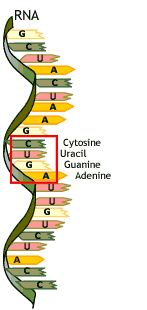
What are the following rules called?
1 - The amount of A, T, G, and C varies from species to species.
2 - In each species, the amount of A = T and G = C.
a)
Rosalind's Rules
b)
Watson's Rules
c)
Crick's Rules
d)
Chargaff's Rules
151.
In RNA, Uracil pairs with ______. 
a)
cytosine
b)
adenine
c)
guanine
d)
thymine
152.
This type of substitution codes for a stop codon
a)
Missense
b)
Nonsense
c)
Silent
d)
Deletion
153.
If you are missing or have an extra base  at the end of your mutated DNA . What type of mutation occurred?
a)
Substitution
b)
Frameshift
c)
Duplication 
d)
Insertion
154.
A type of substitution in which no  amino acids change is called 
a)
Missense
b)
Nonsense
c)
Silent
d)
Deletion
155.
Which of the following would result in a frameshift mutation?
a)
Insertions only
b)
Substitution only
c)
Deletion only
d)
Insertions and Deletions
156.
DNA molecule segment is : TTACGCAAG
The mutated DNA segment is TTCGCAAG. This is an example of ___ mutation.
a)
Substitution
b)
Deletion
c)
Insertion
d)
Inversion
157.
mRNA is read in chunks of three, called...
a)
quadralets
b)
anticodons
c)
codons
d)
capsids
158.
What is a Gene?
a)
A segment of RNA that encodes for a protein
b)
A chromosome
c)
A segment of DNA that encodes for a protein
d)
Your genome
159.
Normal-
GAG-CTC-GAC-AGA
Mutant
GAG CTC-CAC-AGA
a)
no mutation
b)
substitution
c)
insertion
d)
deletion
160.
What mutation has occurred here? 
T-G-A-C-C-A
T-G-A-G-C-A
a)
Substitution
b)
Deletion
c)
Insertion
d)
Frameshift 
161.
Original: ATC CAT
Mutation: ATC GCAT
What mutation occurred?
a)
deletion
b)
insertion
c)
silent
d)
transverse
162.
Are all mutations bad?
a)
Yes
b)
No
163.

Which type of mutation is MOST LIKELY to cause the greatest disruption?

a)

Frameshift

b)

Silent

c)

Point

164.
Which of the following is not a base found in DNA?
a)
adenine
b)
thymine
c)
cytosine
d)
uracil
165.
Which enzyme copies DNA?
a)
DNA polymerase
b)
DNA helicase
c)
RNA polymerase
d)
RNA helicase
166.
What is the process that copies information from DNA into RNA?
a)
protein synthesis
b)
transcription
c)
translation
d)
DNA Polymerase
167.

Where is DNA found?

a)

the cytoplasm

b)

the nucleus

c)

the ribosomes

d)

the membrane

168.

Which process occurs first?

a)

Translation

b)

Transfusion

c)

Transcription

d)

Transition

169.

Which is the start codon?

a)

CGU/Arg

b)

GGA/Gly

c)

AUG/Met

d)
170.

What protein does the codon GTC make?

a)

Met

b)

Gly

c)

Val

d)

Trp

171.

What's the difference between DNA and RNA

a)

RNA performs photosythesis

b)

RNA contains W instead of G

c)

RNA has three helixes

d)

RNA has U instead of T

e)

RNA has one helix

172.
Using the codon identify the amino acid sequence:
AUG-CCA-GUA-GGG-UAA
a)
MET-HIS-ALA-GLY-STOP
b)
MET-PRO-GLY-VAL-STOP
c)
MET-PRO-VAL-GLY-STOP
d)
MET-THR-SER-ASP-STOP
173.
What causes genetic variation in meiosis?
a)
chromosomes lining up
b)
crossing over of chromosomes
c)
separation of chromosomes
d)
chromosomes pulling apart
174.
What kind of cells are made in MEIOSIS?
a)
Haploid cells
b)
Diploid Cells
c)
Skin Cells
d)
Liver Cells
175.
Diploid Cells are represented by
a)
2n
b)
n
c)
4n
d)
1/2 n
176.
If the Diploid number of Carrots is 18, the haploid number is
a)
18
b)
9
c)
27
d)
36
177.
The process of crossing over occurs in what phase of meiosis?
a)
anaphase 1
b)
prophase 1
c)
prophase 2
d)
telophase 1
178.
The chromosomes that pair up during meiosis, are called __________ chromosomes.  
a)
homozygous 
b)
asexual
c)
homologous
d)
genes
179.
When homologous chromosomes match up, they form a structure call a ___________.
a)
tetrad (pair of chromosomes, one from mom and one from dad)
b)
triad
c)
diploid
d)
quad (group of 4 replicated chromosomes, 2 from mom and 2 from dad)
180.
Which cellular process is shown?
a)
meiosis
b)
endocytosis
c)
mitosis
d)
phagocytosis
181.
Which of the following best describes meiosis?
a)
It is carried out in all tissues theat require cell replacement
b)
It occurs only in cells in the reproductive structures of an organism
c)
It happens in all of the tissues except the brain and spinal cord
d)
It is the first stage of mitosis
182.
What phase is represented?
a)
metaphase 1
b)
metaphase 2
c)
anaphase 1
d)
anaphase 2
183.
What phase is  shown in the picture?
a)
metaphase 2
b)
anaphase 2
c)
metaphase 1
d)
telophase 1
184.
A human zygote should have _____ chromosomes inside.
a)
46
b)
23
c)
92
d)
64
185.
Meiosis makes sperm and egg cells. In humans, sperm and egg cells each have _____ chromosomes. Therefore a fertilized human egg cell (sperm and egg cell combined) would create a cell with _____ chromosomes.
a)
23, 46
b)
46, 23
c)
2, 4
d)
50, 100
186.
How many daughter cells does Meiosis create?
a)
2
b)
4
c)
8
d)
1
187.

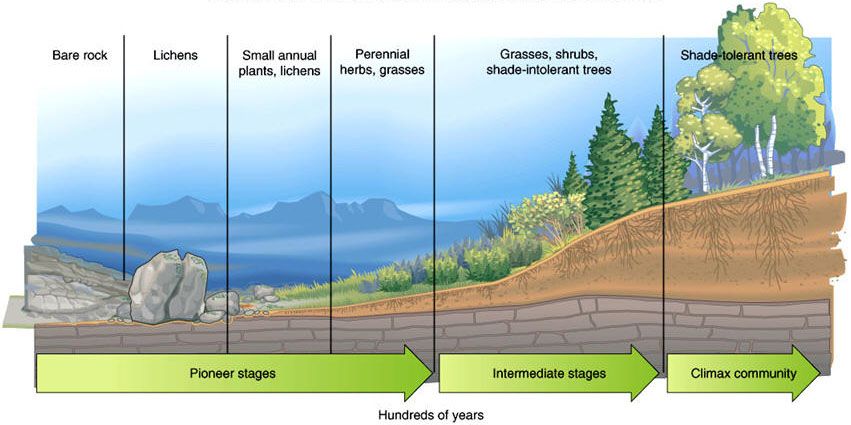
The picture shows what type of succession?

a)

primary

b)

secondary

c)

tertiary

d)

quadanary

188.

Succession type?

a)

primary succession

b)

secondary succession

c)

tertiary succession

d)

variable succession

189.

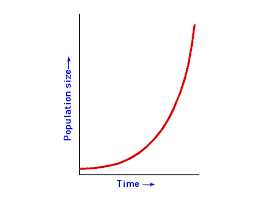
What type of growth does invasive species show and why?

a)

Logistic growth because there is large competition with native species

b)

Exponential growth because there is no natural predators and competition in the new environment

c)

Predator/ Prey because the invasive species begins to prey on native species

d)

Exponential growth because the native species outcompete with the invasive ones and cause a limit on their population growth

190.
An energy pyramid represents what?
a)
How much sunlight is available for the ecosystem to use. 
b)
How much energy a particular organism needs. 
c)
How much energy is needed to build a pyramid. 
d)
The amount of energy available to the next 'feeder' in a food web.
191.
The rabbit in this food web would be considered a:
a)
Decomposer
b)
Producer
c)
Secondary Consumer
d)
Primary Consumer
192.
The fox in this food web would be considered a:
a)
Tertiary Consumer
b)
Producer
c)
Secondary Consumer
d)
Primary Consumer
193.
What type of growth is shown in the diagram?
a)
exponential growth
b)
logistic growth 
c)
predator-prey cycle
d)
boom-bust curve
194.
Largest number of individuals of a population that the environment can support...  
a)
carrying capacity
b)
population crash
c)
lag phase
d)
mutualism
195.
What type of growth curve is pictured?
a)
exponential 
b)
logistic
c)
predator-prey
d)
invasive
196.
What is the approximate carrying capacity of Paramecium aurelia cultured alone?
a)
150
b)
400
c)
450
d)
500
197.

Which of the following limiting factors is NOT a Density-dependent factor?

a)

Food

b)

A Forest Fire

c)

Water

d)

Space to live

198.

Which of the labeled processes in the picture of the Nitrogen Cycle is the process of turning Nitrogen from the atmosphere into usable nitrogen for plants to use to grow?

a)

Ammonification

b)

Nitrogen Fixation

c)

Denitrification

d)

Assimilation

199.
Which is NOT a process of the water cycle?
a)
precipitation
b)
freezing
c)
transpiration
d)
evaporation
200.
What is the most abundant gas in the atmosphere?
a)
hydrogen
b)
oxygen
c)
helium
d)
nitrogen
201.
What happens during the process of nitrogen-fixation?
a)
Nitrogen compounds turn into free nitrogen
b)
Free nitrogen turns into nitrogen compounds
202.
What happens during the process of denitrification?
a)
Nitrogen compounds turn into free nitrogen
b)
Free nitrogen turns into nitrogen compounds
203.
What is this a picture of?
a)
Nitrogen cycle
b)
carbon cycle
c)
water cycle
d)
plant cycle
204.
These gases, such as carbon dioxide, trap heat in the Earth's atmosphere causing global warming
a)
Global warming gases
b)
Hot House gases
c)
Green House gases
d)
Thermal pollution
205.

What cycle does not has a gas phase?

a)

carbon

b)

nitrogen

c)

phosphorus

d)

water

206.

Which statement best describes what is most likely to occur if an animal population grows larger than the carrying capacity of its environment?

a)

The birth rate will increase.

b)

Both the birth rate and death rate will decrease.

c)

The death rate will increase.

d)

Neither the birth rate nor the death rate will decrease

207.

Which level of the pyramid below is correctly paired with the type of organism that would most likely be found at that level in an ecosystem?

a)

Level A - Producers

b)

Level B - Carnivores

c)

Level C - Herbivores

d)

Level D - Decomposers

208.

Which graph best shows the changes in global human population and natural resource use over the past 500 years?

a)

1

b)

2

c)

3

d)

4

209.
Chickens will eat both insects and seeds. Which term best describes this feeding pattern?
a)
Omnivore
b)
Carnivore
c)
Herbivore
d)
Producer
210.

If it weren't for _______________ in our ecosystem,plants would not get essential nutrients, and dead matter and waste would pile up.

a)

producers

b)

consumers

c)

predators

d)

decomposers

211.

What does decomposed material turn into?

a)

soil

b)

sand

c)

energy

d)

rocks

212.
Temperature, light, air, water, and soil are all  _____  parts of the environment
a)
alive
b)
biotic 
c)
abiotic
d)
living
213.
A living or once-living organisms in an ecosystem is a
a)
population
b)
biotic factor
c)
abiotic factor
d)
community
214.
Sugar Maple Tree
a)
Heterotroph
b)
Autotroph
215.
Which of the following correctly lists the levels of organization from least complex to most complex?
a)
Community, Biome, Organism, Population, Ecosystem
b)
Biome, Population, Community, Ecosystem, Organism
c)
Organism, Population, Community, Ecosystem, Biome
d)
Ecosystem, Population, Organism, Biome, Community
216.

Approximately what percentage of the energy in one trophic level is incorporated into the next trophic level?

a)

1%

b)

10%

c)

30%

d)

60%