
 Worksheets
Science Final
Total questions: 84
Worksheet time: 1hrs 1mins
Name
Class
Date
1.
What is Pangaea?
a)
The name of a German Scientist
b)
the name of the supercontinent that existed millions of years ago
c)
another name for continental drift
d)
the name of an ancient fossil
2.
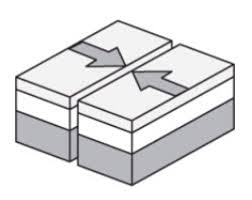
Name the boundary
a)
convergent boundary
b)
divergent boundary
c)
transform boundary
d)
sergent boundary
3.

Name the boundary
a)
convergent boundary
b)
divergent boundary
c)
transform boundary
d)
sergent boundary
4.
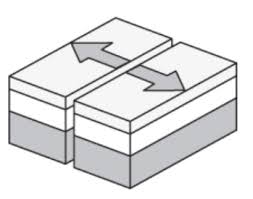
Name the boundary
a)
convergent boundary
b)
divergent boundary
c)
transform boundary
d)
sergent boundary
5.
What are mid-ocean ridges?
a)
A chain of underwater waterfalls
b)
A chain of underwater volcanos
c)
A chain of underwater mountains
d)
A chain of underwater rocks
6.
Plate movement is caused by ______________.
a)
the rotation of the Earth
b)
ocean tides
c)
convection currents in the mantle
d)
the moon's gravity
7.

Who is the person credited with developing the theory of continental drift?
a)
Harry Hess
b)
Galileo
c)
Alfred Wegener
d)
Newton
8.
What does the theory of continental drift state?
a)
The continents were once joined in a super-continent and have moved over time
b)
Continents are stationary and do not move
c)
The Earth is broken into lithospheric plates that move due to convection currents
d)
none of the above
9.
A consumer that hunts is called:
a)
a producer.
b)
an omnivore.
c)
a predator.
d)
a herbivore.
10.
A frog eats a fly. The frog and fly are demonstrating ________.
a)
mutualism
b)
competition
c)
predator/prey
d)
parasitism
11.

An organism that gets energy from eating other organisms is a ______________.
a)
producer
b)
consumer
c)
decomposer
d)
prey
12.

An animal that gets energy from eating both plants and animals is a(an) _____________.
a)
herbivore
b)
carnivore
c)
omnivore
d)
autotroph
13.
6. A squirrel makes a change to its environment when it —
a)
climbs a tree
b)
digs a hole to bury an acorn
c)
collects acorns
d)
jumps from tree to tree
14.
Which of the following activities has a positive effect on the environment?
a)
recycling
b)
deforestation
c)
pollution
15.
Which of the following would have a negative impact on an ecosystem
a)
constructing highways
b)
planting trees
c)
recycling paper
16.

Non-Living or Living?
a)
Partially Non-Living
b)
Partially living
c)
Living
d)
Non-Living
17.
Is water a living or non-living thing?
a)
Niether
b)
Living
c)
Non-living
d)
Tbh I really don't even know anymore...
18.
Which symbols best describe parasitism?
a)
+,+
b)
+,-
c)
+,0
d)
-,0
19.
Which symbols best describe commensalism?
a)
+,+
b)
+,-
c)
+,0
d)
0,0
20.
Cattle egrets are birds that forage in fields among cattle. The egrets get easy access to food and the cattle don't care if they are there or not.
a)
mutualism
b)
commensalism
c)
competition
d)
parasitism
21.
A relationship between two organisms in which one organism benefits and the other is unharmed
a)
Mutualism
b)
Competition
c)
Parasitsm
d)
Commensalism
22.
Red-billed oxpeckers are birds that feed on parasites found on an impala. The impala gets rid of parasites and the red-billed oxpeckers get a yummy dinner. This is an example of _______.
a)
commensalism
b)
mutualism
c)
neutralism
d)
competition
23.
Barnacles create home sites by attaching themselves to whales. This neither harms nor benefits the whales.
a)
Mutualsim
b)
Parasitism
c)
Commensalism
24.
Mistletoe extracts water and nutrients from the spruce tree to the tree's detriment (harm).
a)
Mutualsim
b)
Parasitism
c)
Commensalism
25.
Consumer
a)
An individual who makes their own food
b)
An individual who has to eat other organisms
c)
An individual who only eats meat
d)
An individual who only eats plants
26.
Producer
a)
An individual who can make their own food
b)
An individual who has to consume other organisms
c)
An individual who only eats meat
d)
An individual who only eats plants
27.
Decomposer
a)
An individual who can make their own food
b)
An individual who eats living organisms
c)
An individual who eats dead or decaying organisms
d)
An individual who eats micro-organisms
28.
An individual who eats only plants is called a(n)
a)
herbivore
b)
omnivore
c)
carnivore
d)
decomposer
29.
An individual who eats plants and animals is called a(n)
a)
herbivore
b)
omnivore
c)
carnivore
d)
decomposer
30.
Biotic factors
a)
living things
b)
nonliving things
31.
Abiotic factors
a)
living things
b)
nonliving things
32.
A species that is NOT native to a particular region and is harmful to the ecosystem is called
a)
natural
b)
introduced
c)
non native
d)
extraordinary
33.
If a mineral is scratched by talc, what must its hardness rating be?
a)
1
b)
3
c)
6
d)
10
34.
If a mineral is scratched by Topaz(8) but not by Quartz(7), and it can scratch Quartz, what is its hardness rating?
a)
1.5
b)
4
c)
7.5
d)
10
35.
Which of the following fibers was used to write the first bible on?
a)
cotton
b)
hemp
c)
flax
d)
denim
36.
Brightly colored parts of flowers that attract insects.
a)
petals
b)
pistils
c)
stamen
d)
filaments
37.

The stalk connecting the ovaries and stigmas.
a)
filament
b)
pistil
c)
style
d)
anther
38.
They enclose the egg cells inside the ovaries.
a)
ovules
b)
anther
c)
seeds
d)
angiosperms
39.
The transfer of pollen, containing the sperm cells, to the female part of the flower.
a)
seed disperal
b)
pollination
c)
germination
d)
fertilization
40.

When a seed sprouts and begins the early growth of a young plant.
a)
germination
b)
pollination
c)
seed dispersal
d)
fertilization
41.
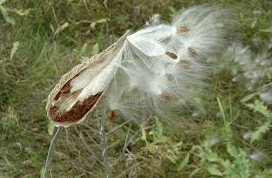
All of the following are examples of seed disbursement except:
a)
wind
b)
volcanic eruptions
c)
physical movement (rolling)
d)
animals feces
42.
This occurs after a tube grows down from the pollen grain through the style to the ovary.
a)
pollination
b)
germination
c)
fertilization
d)
seed dispersal
43.
Small grains that contain a plant's male reproductive cells.
a)
stamen
b)
pollen
c)
anther
d)
stigma
44.
The stalks in a flower that produce the male reproductive cells
a)
pistil
b)
stamen
c)
filament
d)
stigma
45.

Small leaf-like structures forming an outer circle at the base of a flower.
a)
petals
b)
sepal
c)
anthers
d)
dicots
46.
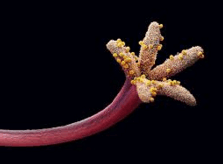
The part of the flower on which the pollen grains land.
a)
pistil
b)
stamen
c)
style
d)
stigma
47.
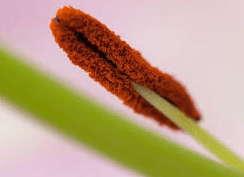
The part of a flower that produces the male reproductive cells.
a)
anther
b)
style
c)
stigma
d)
filament
48.
Which of the following does NOT go into photosynthesis?
a)
sugar
b)
carbon dioxide
c)
water
d)
sunlight
49.

Thermal energy always moves:
a)
From a high energy source to a low energy source.
b)
From a lower energy source to a high energy source.
c)
From an object with lower kinetic energy to an object with higher kinetic energy.
d)
From an object of higher mass to an object of lower mass.
50.

High temperature is connected to:
a)
Low kinetic energy.
b)
High kinetic energy.
c)
Zero net energy.
d)
Equal kinetic energies.
51.

When thermal energy is added to a substance, the substance's particles move:
a)
More rapidly at an increased distance from each other.
b)
More rapidly with less distance between each other.
c)
More slowly with a greater distance between each other.
d)
More slowly with a reduced distance between each other.
52.
The transfer of thermal energy through a substance by direct contact
a)
thermal conduction
b)
thermal insulation
c)
convection
d)
radiation
53.
Railroad tracks have gaps between rails so they don't buckle in hot weather because
a)
thermal conductivity
b)
specific heat
c)
thermal expansion
d)
thermal insulation
54.
Heat is being transferred through electromagnetic waves. This is known as ...
a)
Conduction
b)
Convection
c)
Radiation
d)
Internal energy
55.
The measure of average kinetic energy of all the particles within an object is called ____________.
a)
temperature
b)
conduction
c)
radiation
d)
heat
56.
Absolute zero is...
a)
-273º C
b)
0º C
c)
-373º C
d)
273º C
57.
what kind of heat is happening when the sun heats your body
a)
conduction
b)
convection
c)
density
d)
radiation
58.

This is a lava lamp. When the light bulb heats the wax, the wax rises. When the wax cools, it falls. This cycle of rising/falling is an example of:
a)
Conduction.
b)
Convection.
c)
Radiation.
59.

The baby chickens are kept warm from the heat lamps demonstrates this type of heat transfer.
a)
conduction
b)
convection
c)
radiation
60.

Warm air rises and the cool air sinks demonstrates this type of heat transfer.
a)
conduction
b)
convection
c)
radiation
d)
Insolation
61.
Is Iron a Conductor or Insulator?
a)
Conductor
b)
Insulator
62.
Which is NOT an insulator.
a)
Wool
b)
Plastic
c)
Copper
d)
Glass
63.
A metal spoon that gets warm when used to stir hot soup is an example of:
a)
Conduction
b)
Convection
c)
Radiation
64.
Mittens help keep your hands warm in winter because:
a)
They are conductors of heat.
b)
They are fuzzy.
c)
They are conductors of electrical energy.
d)
They are insulators.
65.
Mountains form from ...
a)
plates sliding past one another
b)
collision of plates
c)
plates moving away from each other
66.
Which layer of the Earth is the thickest?
a)
mantle
b)
outer core
c)
inner core
d)
crust
67.
The source for convection currents in the mantle comes from these layers...
a)
inner core and crust
b)
outer core and crust
c)
mantle and crust
d)
outer core and mantle
68.
Massive pieces of land that are part of the Earth's crust and upper mantle
a)
Tectonic plates
b)
Trenches
c)
Divergent boundary
d)
Continental shelves
69.
___________ help explain why Earth is not getting any larger even though the tectonic plates are always moving.
a)
earthquakes
b)
subduction zones
c)
fossils
d)
volcanoes
70.
The OLDEST seafloor is located?
a)
Closest to the mid-ocean ridge
b)
Farthest from the mid-ocean ridge
71.
True or False : Sea-floor Spreading adds new material to the ocean floor?
a)
True
b)
False
72.
Which of the following is NOT a cause of an earthquake?
a)
Collapse of Cavern
b)
Eruption of Volcano
c)
Lightning Strikes
d)
Moving Tectonic Plates
73.
What is a break in the lithosphere along which movement in an earthquake has first occurred?
a)
Earthquake
b)
Epicenter
c)
Fault
d)
Focus
74.
Where is the point at which the first movement occurs during an earthquake?
a)
Epicenter
b)
Focus
c)
Fault
d)
Plate
75.
Which type of wave is the first to arrive after an earthquake occurs?
a)
P Wave
b)
Rayleigh Wave
c)
S Wave
d)
Shear Wave
76.
Which body wave squeezes and stretches rock materials as they pass through the Earth?
a)
Body Waves
b)
P Waves
c)
S Waves
d)
Surface Waves
77.
P Waves can move through which of the following?
a)
Gas
b)
Liquid
c)
Solid
d)
All of these
78.
S Waves can move through which of the following?
a)
Gas
b)
Liquid
c)
Solid
d)
All of these
79.
What is an instrument that detects and records waves produced by earthquakes? (This piece of equipment can measure the magnitude of an earthquake.)
a)
Epicenter
b)
Fault
c)
Seismogram
d)
Seismograph
80.
What is the measure of the amount of energy released in an earthquake?
a)
Earthquake
b)
Epicenter
c)
Magnitude
d)
Seismogram
81.
Which scale rates earthquakes based on the amount of damage done?
a)
Mercalli Scale
b)
Richter Scale
c)
Seismogram Scale
d)
Bernoulli Scale
82.
Which scale measures the intensity of the ground movement?
a)
Mercalli Scale
b)
Richter Scale
c)
Seismogram Scale
d)
Bernoulli Scale
83.
How much bigger is a magnitude 8 earthquake compared to magnitude 7 one on the Richter Scale?
a)
1 time bigger
b)
10 times bigger
c)
100 times bigger
d)
1000 times bigger
84.
An instrument that detects and measures earthquakes is a
a)
seismogram
b)
focus seismic map
c)
focus
d)
seismograph
100 %

