wayground logo

Free Printable Worksheets

Font size

S
M
L
XL
Worksheets

KS3 - Biology Review

Total questions: 85

Worksheet time: 1hrs 14mins

Name
Class
Date
1.
Which of the following is the smallest unit of life that can carry out all life functions?
a)
the mitochondria
b)
the vacuoles
c)
the nucleus
d)
the cell
2.
Which structures are found in every living cell?
a)
cell membrane and cytoplasm
b)
chloroplasts and mitochondria
c)
a cell wall and nucleus
d)
chloroplasts and cell wall
3.
Which cell structure is found in plant and animals cells and controls what can come into or leave a cell?
a)
cell membrane
b)
cytoplasm
c)
nucleus
d)
vacuole
4.
What is the function of the cell nucleus found in both plant and animal cells?
a)
to produce energy
b)
to control cell activity
c)
to remove waste products
d)
to allow molecules to enter the cell
5.
What is one basic function of the vacuoles?
a)
circulating oxygen
b)
producing food
c)
controlling cell processes
d)
storing water
6.
Chloroplasts in plant cells allow the plant to perform a function that animal cells cannot do.  What is the main function of the chloroplasts found in plant cells?
a)
to absorb light energy and manufacture food
b)
to remove waste materials by active transport
c)
to manufacture chemical energy from food
d)
to control the shape of the cell
7.
All cells need energy to function.  Which cell organelle is responsible for producing energy in the cell?
a)
chloroplasts
b)
mitochondria
c)
nucleus
d)
vacuoles
8.
 Starch and water molecules in potato cells are stored in what organelle?
a)
mitochondria
b)
nucleus
c)
cell wall
d)
vacuole
9.
Which of the following are NOT found in animal cells
a)
chloroplasts and cytoplasm
b)
chloroplasts and cell wall
c)
cell wall and cell membrane
d)
mitochondria and nucleus
10.
Which piece of equipment is the best to use to observe the structure of a cell?
a)
magnifying glass
b)
binoculars
c)
telescope
d)
microscope
11.
What is the total magnification of a microscope with two lenses when one lens has a magnification of 10x, and the other lens has a magnification of 30x?
a)
15x
b)
30x
c)
40x
d)
300x
12.
When you focus on a new specimen, always begin with
a)
low power and coarse adjustment.
b)
low power and fine adjustment
c)
high power and coarse adjustment
d)
high power and fine adjustment
13.
What is part 1?
a)
eye piece
b)
body tube
c)
arm
d)
coarse adjust
14.
What part is 3?
a)
eye piece
b)
base
c)
arm 
d)
coarse adjust
15.
What is the biggest bone in your body?
a)
fibula
b)
humerus
c)
pelvis
d)
femur
16.
Where is the smallest bone in your body?
a)
hand
b)
spine
c)
ear
d)
pinky toe
17.
How many bones does an adult human have?
a)
300
b)
306
c)
206
d)
602
18.
What bones protect your heart and lungs?
a)
pelvis and spine
b)
brain and spine
c)
ribs and sternum
d)
ribs and pelvis
19.
What are the three jobs of your bones?
a)
movement, structure, joints
b)
movement, structure, protection
c)
structure, digestion and breathing
d)
movement, digestion and breathing
20.
What does your bone marrow make?
a)
muscles
b)
cartilage
c)
blood cells
d)
germs
21.
What are joints
a)
A place where one bone meets 
b)
A place where  two  bones meet 
c)
Bones don't meet 
d)
A place where three bones meet 
22.
The hinge joint moves...
a)
in two directions
b)
up and down; forward and back
c)
forward and back; all around
d)
in one direction
23.
The shoulder joint is
a)
Hinge
b)
Gliding
c)
Ball and socket
d)
Pivot
24.

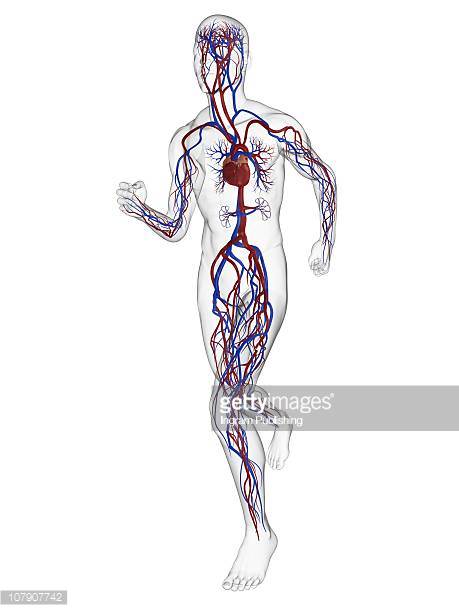
What is the main organ of the circulatory system?

a)

small intestine

b)

bone

c)

lungs

d)

heart

25.

The job of the heart is to . . .

a)

pump blood around the body.

b)

send food to the small intestines.

c)

break down food.

d)

give energy to the body.

26.
______________ are the smallest blood vessels.
a)
Arteries
b)
Veins
c)
Capillaries
27.
Tube that carries swallowed food to the stomach
a)
esophagus
b)
liver
c)
pancreas
d)
rectum
28.
The organ in orange represents the:
a)
Liver
b)
Lung
c)
Stomach
d)
Pancreas
29.
The highlighted organ is the
a)
liver
b)
large intestine
c)
small intestine
d)
stomach
30.
The organ that stores bile.
a)
gall bladder
b)
stomach
c)
liver
d)
appendix
31.
Bile is made by which digestive organ?
a)
Gallbladder
b)
Stomach
c)
Rectum
d)
Liver
32.
After surgical removal of an infected gallbladder, a person must be especially careful to restrict dietary intake of . . .
a)
starch
b)
protein
c)
sugar
d)
fat
33.

Which of the following tests for starch?

a)

Iodine

b)

Benedict's

c)

Biuret

d)

Emulsion

34.

Which of the following tests for protein?

a)

Iodine

b)

Benedicts

c)

Biuret

d)

Emulsion

35.

Which of the following tests for glucose?

a)

Iodine

b)

Benedicts

c)

Biuret

d)

Emulsion

36.

When starch is present iodine turns...

a)

purple

b)

blue-black

c)

orange

d)

brick red

37.

When protein is present Biuret turns...

a)

purple

b)

blue-black

c)

orange

d)

brick red

38.
When large amounts of glucose is present Benedicts turns...
a)
purple
b)
blue-black
c)
brick-red
d)
green
39.

How do you test for lipids?

a)

By using Ethanol and water

b)

By using Benedicts solution

c)

By using Iodine

d)

By using Biuret test

40.
A mode of reproduction in which an organism arises from two organisms and inherits half of its DNA from each parent
a)
Sexual Reproduction
b)
Asexual Reproduction
c)
Cloning
d)
Fragmentation
41.
In sexual reproduction the male produces ___ cells.
a)
Malex
b)
Quack
c)
Egg
d)
Sperm
42.
In sexual reproduction the female produces ___ cells.
a)
Femalex
b)
Quack
c)
Egg
d)
Sperm
43.
The diagram shows the female reproductive system. The part labelled B is called  
a)
sperm 
b)
the egg  
c)
the womb  
d)
the ovary 
44.
In the diagram representing the menstrual cycle shown, when does ovulation take place?
a)
between day 6 and 11
b)
between day 17 and 20
c)
between day 1 and 5
d)
between day 12 and 16
45.
After fertilisation the zygote increases in size and travels down the Fallopian tube to become embedded in the walls of the womb. This process is known as
a)
implantation
b)
ovulation
c)
menstruation
d)
conception
46.
That fusion of the male and female gamete to form a zygote is known as ? 
a)
fertilisation
b)
menstruation
c)
pollination
d)
 ejaculation
47.
A sperm's tail is known as:
a)
scrotum
b)
flagellum
c)
acrosome
48.
System composed of the brain, spinal cord, and nerves that control the body
a)
nervous system
b)
endocrine system
c)
skeletal system
d)
spinal cord
49.
System in the body that removes all waste
a)
excretion
b)
digestive system
c)
excretory system
d)
endocrine system
50.
A group of similar cells that perform the same function
a)
cells
b)
tissue
c)
organ
d)
organism
51.

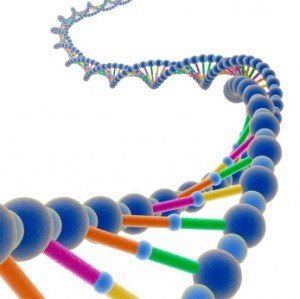
Where in the cell is DNA found?

a)

Nucleus

b)

Cytoplasm

c)

Chloroplast

d)

Cell Membrane

52.

Which of the following best describes the shape of a DNA molecule?

a)

double helix

b)

contains ribose

c)

made of amino acids

d)

contains Uracil

53.

A gene determines a __________ such as eye or hair color.

a)

nucleus

b)

DNA

c)

chromosome

d)

Trait

54.

What is the correct sequence of structures from smallest to largest?

a)

Chromosomes, Gene, DNA, Nucleus, Cell

b)

Cell, Nucleus, Chromosomes, DNA, Genes

c)

DNA, Gene, Nucleus, Chromosome, Cell

d)

Gene, DNA, Chromosomes, Nucleus, Cell

e)

Gene Nucleus, DNA, Chromosome, Cell

55.
having two of the same genes for the trait (sometimes called purebred).
a)
homozygous
b)
hetrozygous
c)
protein
d)
chromosome
56.
Plants take in ________from the air as one key ingredient for photosynthesis
a)
oxygen
b)
soil
c)
carbon dioxide
d)
sugar
57.
__________ energy from the sun is changed intto __________ energy during photosynthesis
a)
Chemical energy to light energy
b)
Light energy to chemical energy
c)
Thermal energy to light energy
d)
Electrical energy to chemical enerfy
58.
Which of the following statement is true regarding photosynthesis
a)
creates oxygen for animals to breath
b)
creates energy for consumers to use
c)
creates food for plants to use
d)
all of these are correct
59.
What is the name of the sugars a plant produces after photosynthesis
a)
Glucose
b)
Sugar
c)
ATP
d)
Oxygen
60.
Which word describes the relationships (or interactions) between living and nonliving things?
a)
ecosystem
b)
population
c)
communtiy
d)
habitat
61.
What type of relationship needs to be balanced in order for the ecosystem to work at its best.
a)
predator and prey
b)
carnivores and decomposers
c)
producers and carnivores
d)
prey and herbivores
62.
How would the concentration of CO2 in water affect photosynthesis?
a)
The higher the CO2, the greater the rate
b)
The higher the CO2, the lower the rate
c)
CO2 concentration doesn't affect photosynthesis
d)
a greater rate of photosynthesis causes higher CO2 concentrations 
63.

What do we call something that will affect the rate of photosynthesis?

a)

Light intensity

b)

Limiting factor

c)

Carbon dioxide concentration

d)

Control factor

64.

Many chemicals in cigarettes are considered carcinogenic because they cause what?

a)

Emphysema

b)

Cancer

c)

Heart disease

d)

Liver Failure

65.

What is tar?

a)

A plant used to make cigarettes

b)

A toxic metal found in rechargeable batteries

c)

A chemical released by the body in exciting situations

d)

A sticky substance formed by cigarette smoke

66.

Smoking interferes with the lungs' ability to provide what to the rest of the body?

a)

Oxygen

b)

Ammonia

c)

Water

d)

Carbon dioxide

67.

Cigarettes and e-cigarettes both contain:

a)

Nicotine

b)

Tobacco

c)

Formaldehyde

d)

Tar

68.

A colorless, odorless and poisonous gas found in tobacco smoke is what?

a)

carbon monoxide

b)

tar

c)

nicotine

d)

stimulant

69.

They are drugs that slow down the central nervous system.

a)

depressants

b)

hallucinogens

70.

They change the way people see, hear, feel, or think.

a)

opioids

b)

hallucinogens

71.

Any substance, other than food, that alters the function of both the mind and the body.

a)

Liquid

b)

Drug

c)

Alcohol

d)

Hormone

e)

Pizza Crunchers

72.

A drug that increases the speed of the body's functions.

a)

Stimulants

b)

Depressants

c)

Hallucinogens

d)

Narcotics

e)

Inhalants

73.
____________ is when smooth muscles contract to gently move food through the alimentary canal.  It begins with swallowing.
a)
bolus
b)
peristalsis
c)
ulcer
d)
amylase
74.
Which is the correct pathway that food takes through the alimentary canal?
a)
mouth, stomach, esphagus, small intestine, large intestine, rectum
b)
mouth, esophagus, stomach, small intestine, large intestine, rectum
c)
mouth, esophagus, small intestine, large intestine, stomach, rectum
d)
rectum, rectum, rectum.  Anal retentive teacher
75.
What is secreted in the stomach to kill bacteria?
a)
amylase
b)
Hydrochloric acid
c)
Sodium bicarbonate
d)
bile
76.
Which type of digestion is this an example of?
Amylase in saliva breaks down the food
a)
chemical digestion
b)
mechanical digestion
77.

Enzymes that perform hydrolysis of starch are called .....

a)

Glycosidase

b)

Amylase

c)

Lipase

d)

Sucrase

e)

Pepsin

78.

1.The digestion of STARCH begins in the _______ with the action of ____________.

a)

stomach, pancreatic amylase

b)

mouth, pancreatic amylase

c)

mouth, salivary amylase

d)

duodenum, salivary amylase

79.
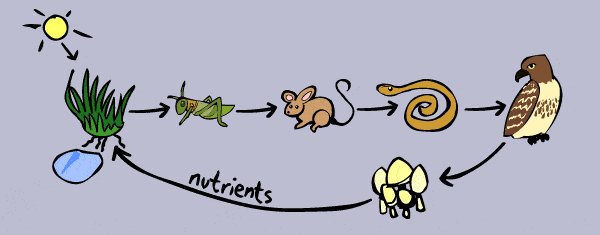
a system of food chains that shows the transfer of energy  is termed
a)
food web
b)
food chain
c)
prey
d)
predator
80.
an organism that can produce its own food through photosynthesis
a)
consumer
b)
heterotroph
c)
autotroph
d)
herbivore
81.
Biodiversity is 
a)
the variety of species within an ecosystem
b)
a large number of the same species in an ecosystem
c)
an abundant amount of the same primary consumers 
d)
the ability to have an abundant source from the same species
82.
All energy on Earth ultimately comes from what source?
a)
Water
b)
Sun
c)
Consumers
d)
Oxygen
83.
What does a food chain represent?
a)
How all living organisms within a habitat are connected.
b)
All of the things that a particular animal eats.
c)
How plants create their own food.
d)
A single path of energy transfer within a habitat.
84.
What does the prefix hetero- in heterozygous mean?
a)
same
b)
different
c)
dating
d)
human
85.
The physical appearance of a trait is known as the-
a)
genotype
b)
phenotype
c)
characteristics
d)
intelligence