
 Worksheets
Unit 10 Review History of the Earth
Total questions: 82
Worksheet time: 4hrs 13mins

Which of these choices is the best definition of absolute dating?
determining the age of a rock layer by studying the fossils present
finding the age of an object compared to other objects
measuring the age of an object in years using any method
determining the amount of a radioactive isotope in an object
What is the method of measuring age that gives the most precise results?
radioactive dating, when scientists measure the levels of an isotopic element inside of an object
rate of sedimentation, which dates layers of Earth based on their thickness
law of superposition, which dates layers of Earth based on their order
relative dating, when scientists fill an object with carbon and measure how much will fit

Which method determines the relative age of Earth's sedimentary layers based on their organization?
rate of sedimentation
law of superposition
radioactive dating
Fossil Comparison

Which of these choices is an example of the way a geologist would use
relative dating (The Law of Superposition)?
determining the minerals that make
up rocks
determining the ages of rock by comparing the order of the layers
classifying rocks as igneous,
sedimentary, or metamorphic
using radioactive isotopes to
determine the exact age of rock samples

Which of these statements describes what happens during radioactive decay?
A Stable isotope interacts with an unstable isotope
A stable isotope breaks down and becomes unstable
An unstable isotope breaks down into a more stable isotope.
An unstable isotope interacts with another unstable isotope.
_______ is the amount of time it takes for 50% of the remaining radioactive material to decay into a stable material.
Radioactive decay
relative dating
law of superposition
What type of rock contains clues to the earth's past history?
Metamorphic Rock
Sedimentary Rock
Igneous Rock
Limestone Rock
Why is the Law of Superposition a law not a theory?
It says that rock layers are in order from oldest to youngest but does not explain why.
It is proven and not just a hypothesis
It explains why rock layers are in chronological order.
It is just a hypothesis but has not been proven.
What are Intrusions and Extrusions layers made from?
Igneous rock
Metamorphic rock
Sedimentary rock
Uranium
What law states that in undisturbed layers of sedimentary rocks, the lowest layers contain the oldest rocks (examples of relative dating)
Law of Cross-cutting
Law of horizontality
Law of Superposition
Law of Lateral continuity
Which is the most accurate method used in determining the age of a fossil?
Geological dating
Relative dating
Radioactive dating/Absolute dating
Law of Superposition
Just north of Orlando, there are many farmlands. There are also fossil excavation sites. At these sites, fossils of ancient horses and pigs can be found. Shark teeth and other marine fossils can also be found. Which of the following options best explains how that is possible?
Marine animals learned to walk on land.
People left them there when they no longer wanted them.
The area used to be underwater.
Birds dropped the bones there after finishing eating the animal.
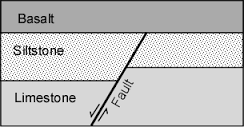
Look at the image. Put the events in order from oldest to youngest.
Limestone
Siltstone
Fault
Basalt

The image on the left follows the Law of Superposition. The image on the right shows tilting that occurred after the layers were deposited. Which is the oldest layer in the image on the right (the tilted layers)?
Layer A
Layer B
Layer C
Alfred Wegener found fossils of now-extinct tropical plants that require a lot of moisture in Antarctica. How did the plants become extinct?
The plant has always been in the south pole region, but temperatures dropped dramatically and the plant could not adapt.
Tectonic plates shifted from warmer climates near the equator to the much colder area of the Earth over a long period of time.
Animals in Antarctica ate the plant to extinction.
The climate changed.
The Law of Superposition states _______________________________.
In all rock layers, the oldest layer is at the bottom and each upper layer is younger.
Old rocks are at the bottom.
In undisturbed horizontal rock layers, the oldest layer is at the bottom and each upper layer is younger.
Index fossils help us understand the relative age of rocks.

What is the absolute age of a rock?
The age determined by the things around it.
The age of an igneous rock.
The age determined by radioactive dating.
The time it takes for half of the radioactive atoms in an element to decay.
What is the relative age of a rock?
The age determined by the things surrounding it.
The age of an igneous rock.
The age determined by radioactive dating.
The time it takes for half of the radioactive atoms in an element to decay.
Which of the following is LEAST likely to help you determine the age of sedimentary rocks?
Analyze seismic data to determine when radioactive isotopes decay into stable isotopes.
Look for index fossils in the rock layers.
Apply absolute dating methods to determine the amount of radioactive isotope decay that can be found within sedimentary rocks.
Determine the relative age of the fossil layers by using the law of superposition.
Which of the following is an example of absolute dating?
A rock layer is 23,000 years old because the Law of Superposition says so.
The top rock layer is the youngest layer.
A rock layer is between 23,000 and 30,000 years old.
A rock layer has fossils, but the layers above and below do not have fossils.
Review of the previous unit: How are mountains formed?
Subduction
Convergent boundaries
Divergent boundaries
Transform boundaries

Which of the following statements is true?
The bottom image shows that Layer E remains the oldest layer.
The bottom image shows that Layer X is the youngest layer.
The bottom image shows that Layers A to E are in the same order as in the first image, but some folds and erosions (unconformities) have occurred.
The bottom image shows that Layer E is the youngest layer.

The diagram shows a geologic cross-section from a region.
What are the relative ages of the rocks from oldest to youngest ?
W
V
Y
X
Z

The diagram is a geologic cross section in an area where a river has exposed a cliff of sedimentary rock layers. The rock layers are labeled A-I. Line XY represents a gap in geologic record.
Use the diagram below to answer the question
Which layer is the oldest?
Layer A
Layer F
Layer G
Layer I

The diagram is a geologic cross section showing sedimentary rock. Which letter represents the igneous intrusion?
Layer W
layer X
Layer Y
Layer Z

The diagram shows layers of sedimentary rock. Assuming that this rock formation is undisturbed, What is the relative age of layer C?
It is the youngest rock layer.
It is the oldest rock layer.
It is older than B and younger than D.
It is younger than B and older than D.

Put the events in order from oldest to youngest.
C
B
A
D
E
Fossilized marine organisms were found on top of Mount Everest, which is about 29,000 feet above sea level. What does this indicate about the geologic history of Mount Everest?
Two tectonic plates with different densities caused the denser plate with marine fossils to rise and form the Himalayas.
Two tectonic plates with different densities caused one plate to subduct into the ocean, raising the other with marine fossils to the top of Mount Everest.
Two tectonic plates with the same density caused one to subduct into a transform boundary, fossilizing marine organisms before forming the Himalayas.
Two tectonic plates with the same density collided, pushing the plate with marine fossils upward to form the Himalayas and Mount Everest.
Determining whether an object or event is older or younger than other objects or events is called _____________.
fossil
geologic column
relative dating
super position
unconformity


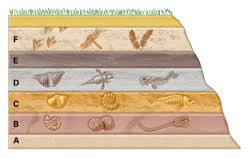


Which law of geology tells you that layer A is older than layer B?
law of horizontality
law of really old dirt
ice wedging
law of superposition
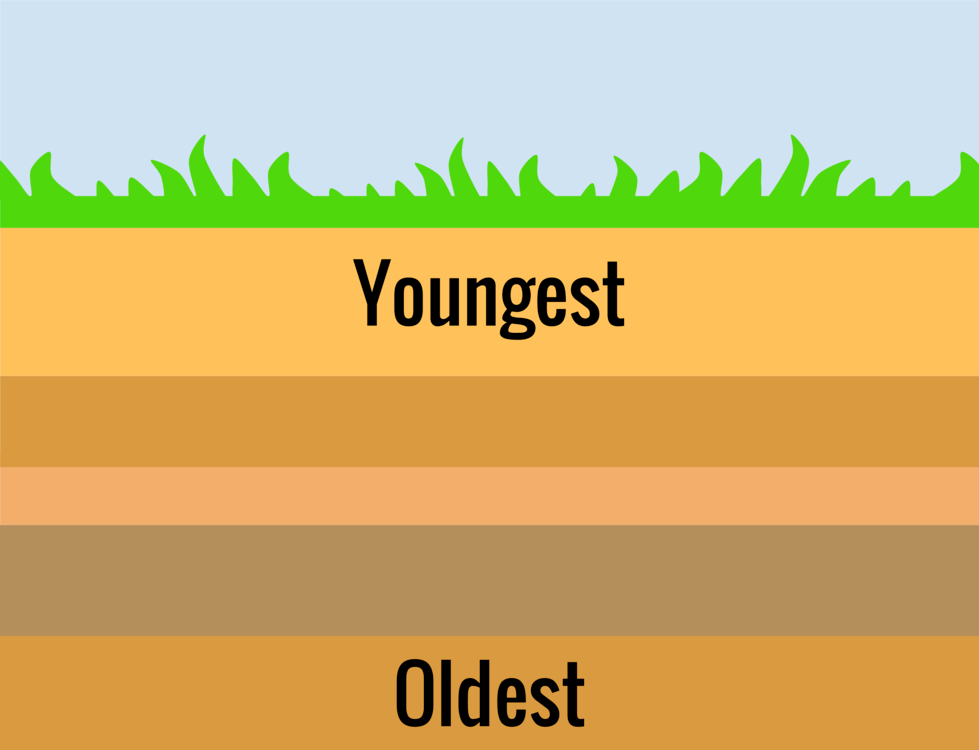
What geologic principle(or law) is best displayed here?
Superposition
Original horizontality
Cross-cutting relationships
Inclusions

Which layer is OLDER? Layer E or Intrusion A?
Layer E
Intrusion A
A gap in the geologic record due to an event such as erosion is known as a(n)_______________.
fault


She knows that some marine fossils are found on top of mountains because the plates were once under water but have converged and created uplift


How does the type of material a dog house is made of affect the temperature inside of it. Identify the independent variable.

Which rock layer contains fossils of the most recently evolved organisms?
The bottom layer (layer 4)
The middle layer (layer 2)
The topmost layer (layer 1)
The second topmost layer (layer 3)
What role do fossils play in understanding Earth's history? Choose the best answer.
Fossils are used to date rocks and minerals.
Fossils provide evidence of past life and help scientists understand the evolution of organisms and changes in the environment.
Fossils are primarily used for creating art and decoration.
Fossils only represent the organisms that are currently alive.
How can scientists determine the relative age of rock layers?
By applying the Law of Superposition and examining the sequence of layers.
By measuring the radioactive decay of isotopes in the rocks.
By comparing the mineral composition of different layers.
By analyzing the fossil content of the layers.
Where are the oldest fossils typically found according to the Law of Superposition?
Near the top of the rock layers.
In the middle of the rock layers.
Near the bottom of the rock layers.
Scattered randomly throughout the layers.
What is the difference between relative age and absolute age?
Relative age is the actual age in years, while absolute age is the age of a rock layer compared to other layers.
Relative age is the age of a rock layer compared to other layers, while absolute age is the actual age in years.
Relative age refers to the age of fossils, while absolute age refers to the age of rocks.
Relative age is determined by the size of the rock, while absolute age is determined by the color of the rock.

E
B
C
D
A

C
E
D
B
A

In the diagram, what does letter D represent?
A rock layer
An earthquake
An unconformity
An inclusion

List from youngest to oldest
D
C
E
A
B
When scientists used half-life, radiometric dating or carbon dating, what are they trying to determine about geological artifact?
Relative age
Sequential age
Approximate age
Absolute age
When determining absolute age, what is the term used for the amount of time it takes for half of the atoms in a sample of a radioactive element to decay into atoms of another element.
Half-life
Radioactive decay
Radiometric dating
Decomposition rate
Fossils made from organisms that were fairly common and existed only during a certain span of time, used to determine the age of rock layers.
Index Fossils
Unconformities
Inclusions
Trace Fossils
A gap in the sequence of sedimentary rock layers caused by erosion.
Inclusion
Unconformity
Cross-cutting
Isotope
1-Radioactive dating is used to find:
the locations of index fossils
the identities of index fossils
the absolute ages of rocks and fossils
the relative ages of rocks and fossils

Which layer is OLDER? Layer M or Intrusion P?
Layer M
Intrusion P

Which layer is OLDER? Layer E or Fault H?
Layer E
Fault H
How do we know that Intrusion A is YOUNGER THAN Layer C?
Law of Superposition
Law of Cross Cutting Relationships
Law of Inclusions
Law of Unconformities

How do we know Layer D is OLDER THAN Layer A?
Law of Superposition
Law of Inclusions
Law of Cross Cutting Relationships
Law of Unconformities

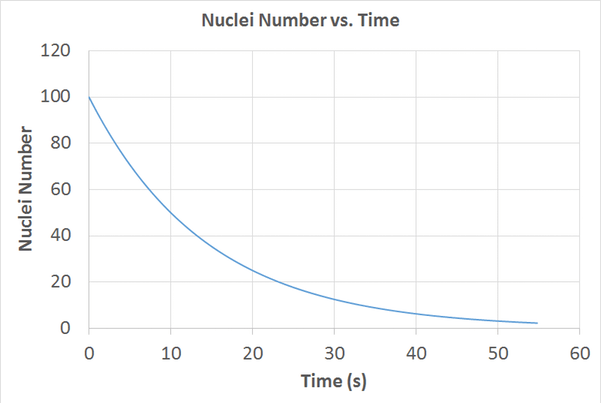
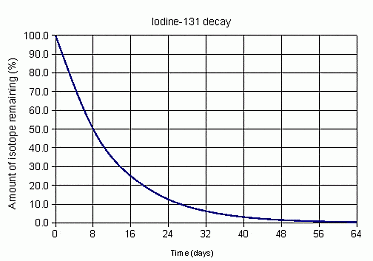
What is the Half life of this isotope?
5 seconds
10 seconds
15 seconds
20 seconds
Which layer is OLDER? Intrusion M or Layer D?
Intrusion M
Layer D

Ammonites are only found during a specific time period. This makes them a...
Trace Fossil
Index Fossil
Cast Fossil
Mold Fossil
Gap in the rock record caused by erosion and deformation.
Original Horizontality
Unconformity
Superposition
Uniformitarianism
Cross-Cutting

