
 Worksheets
Unit 3 Review
Total questions: 80
Worksheet time: 49mins


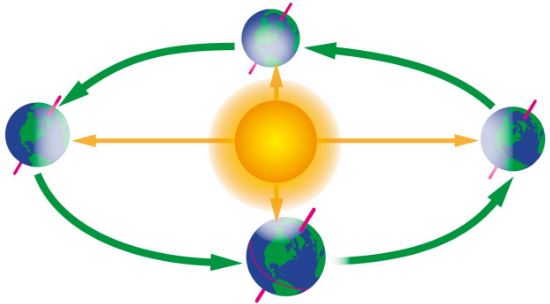
Why do we experience the changing of the season on the earth?
distance from the sun
rotation of the earth
change in solar output
tilt of the earth's axis



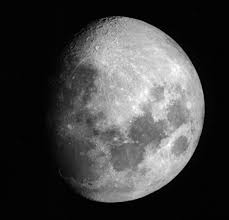
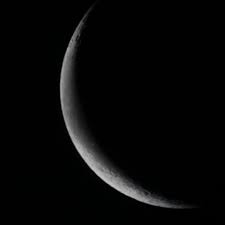
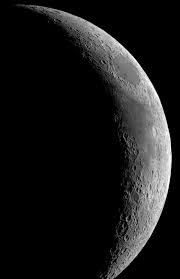
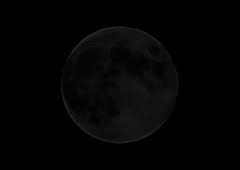
Name the moon phase
First Quarter
Third Quarter
New Moon
Full Moon
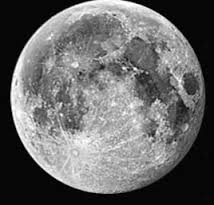
Name the moon phase
First Quarter
Third Quarter
New Moon
Full Moon
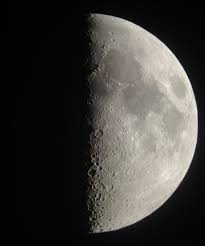
Name the moon phase
First Quarter
Third Quarter
New Moon
Full Moon
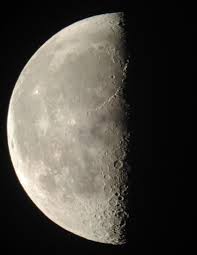
Name the moon phase
First Quarter
Third Quarter
New Moon
Full Moon

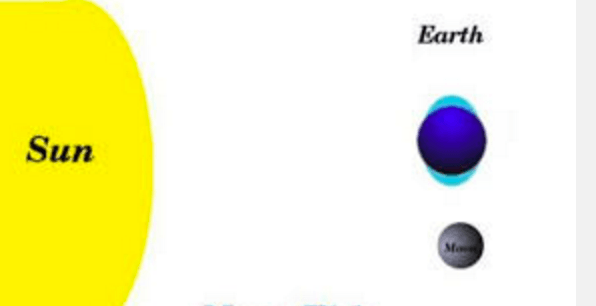
Which moon phase is shown in this diagram?
new moon
1st quarter
full moon
3rd quarter

Which moon phase is shown in this diagram?
new moon
first quarter
full moon
3rd quarter


What phase is this?
First Quarter Moon
Third Quarter Moon
Waxing Gibbous Moon
Waning Gibbous Moon

What phase is this?
Full Moon
First Quarter Moon
Third Quarter Moon
New Moon

Name the phase of the moon for letter a
First Quarter
Third Quarter
Waxing Gibbous
Waning Gibbous

What is the darkest inner part of the eclipse called, where a total eclipse can be viewed?
Total
Umbra
Partial
Penumbra

What is the larger outer lighter part of the eclipse called, where only a partial eclipse can be viewed?
Total
Umbra
Partial
Penumbra

In order to have an eclipse, the Moon, Sun and Earth have to be?
Below each other
Above each other
In alignment
In different solar systems

A lunar eclipse can occur only during the _________________.
Full Moon
New Moon
3rd Quarter
1st Quarter

A solar eclipse can occur only during the _________________.
Full Moon
New Moon
3rd Quarter
1st Quarter

Which type of eclipse occurs when the Moon comes directly between Earth and the Sun?
Lunar Eclipse
Solar Eclipse
Which type of eclipse occurs when the Earth comes directly between Sun and the Moon?
Lunar Eclipse
Solar Eclipse

What does number 1 in the image above represent?
Umbra
Penumbra
What does number 2 in the image above represent?
Umbra
Penumbra
During what phase of the moon can a lunar eclipse occur?
1st Quarter
Full Moon
3rd Quarter
New Moon
What has to happen for a solar eclipse to occur?
The sun must be directly between Earth and the moon.
The moon must be directly between Earth and the Sun.
Earth must be directly between the Sun and the moon.
Venus must block the light to Mercury
What happens when the Earth's entire shadow falls on the moon?
Lunar eclipse
Solar eclipse
Partial eclipse
Werewolves
This type of eclipse occurs when the moon blocks all of the sunlight from reaching Earth!
Lunar Eclipse
Solar Eclipse
Partial Eclipse
Vampires
Tides are caused mainly by what?
Moon’s gravitational pull
Sun's gravitational pull
Earth's gravitational pull
Jupiter's gravitational pull
Most places on Earth experience about how many high and low tides in 24 hours?
1 high and 1 low tide
2 high and 2 low tides
4 high and 4 low tides
There are no tides on Earth

What type of tide occurs during a new moon phase and a full moon phase?
Neap Tide
Spring Tide
Normal Tide
Tide detergent
What type of tide occurs during a first quarter moon phase and a third quarter moon phase?
Neap Tide
Spring Tide
Normal Tide
Tide detergent
If the Sun, Earth, and Moon are in perfect alignment, the Earth would have a _______ tide.
Spring
Neap
Normal
Roll
If the Sun, Earth, and Moon are at a 90 degree angle, the Earth would have __________. (Hint: Ninety degree angle!)
Spring Tide
Neap Tide
Normal Tide
Roll Tide
What natural phenomenon can be viewed from North America on April 8th, 2024?
Total Lunar Eclipse
Total Solar Eclipse
Blood Moon
Pluto
A light year is the
Speed at which light travels
Distance that light travels in one year
Distance between the sun and the earth.
Distance at which light no longer exists.
What is an astronomical unit (A.U.)?
The time it takes light to travel one year
The distance between the Earth and the Moon
The distance between the Earth and the Sun
The distance between the Earth and the Neptune
What do we use astronomical units to measure?
Distances in our solar system.
How far our solar system is from other solar systems in our galaxy.
Distances between galaxies.
The distance from one side of the universe to the other.
Why do we use light years and astronomical units to measure distances in space?
Scientists want to sound smart.
Hubble discovered these units and wanted to use them.
Space is too small to use km, it wouldn't make sense.
Space is too big, vast and enormous to use traditional units - we need bigger units!
Which of the following scenarios would be appropriate to use light years?
From the sun to Earth
From Earth to Neptune
From the Milky Way to its closest galaxy
Asteroid Belt to the Kuiper Belt
Which of the following scenarios would we use Light Years to determine, NOT Astronomical Units (AU)?
Distance from Mercury to Saturn
Distance from Sun to Neptune
Distance from Earth to Sun
Distance from Sun to the Betelgeuse Star
Which correctly states the distances from Earth, from closest to farthest?
Sun, Moon, Pluto, Asteroid Belt, Milky Way Galaxy
Sun, Moon, Pluto, Asteroid Belt, Milky Way Galaxy
Moon, Sun, Asteroid Belt, Pluto, Milky Way Galaxy
Moon, Sun, Pluto, Asteroid Belt, Milky Way Galaxy
Which of the following is CLOSEST to planet Earth?
Jupiter
Andromeda Galaxy
Earth's Moon
The Sun
Which of the following is FARTHEST from planet Earth?
Jupiter
Andromeda Galaxy
Earth's Moon
The Sun
Which term describes the motion of the planets around the sun?
Rotation
Revolution
Fast
Galaxy
The process of Earth spinning on its axis is referred to as
Rotation
Revolution
Ellipse
Dizzy
Earth is tilted on its
axis
oval
pole
galaxy
The amount of time it takes Earth to revolve around the sun is a
24 hours
Day
Month
Year
T or F The sun revolves around the Earth
True
False
How many seasons are there in the United States?
1
4
6
None
T or F The Earth revolves around the Sun
True
False
When the hours of daylight and darkness are equal everywhere on Earth, the following occurs...
solstice
eclipse
summer
equinox
T or F The Earth rotates around the Sun
True
False
T or F Earth's rotation is responsible for day and night!
True
False
T or F The Earths tilt and revolution cause day and night!
True
False
The position of the ________, _______ and ________ explains moon phases, eclipses and tides.
Earth
Sun
Moon
Milky Way
What phase is this?
Full Moon
First Quarter Moon
Third Quarter Moon
New Moon

