wayground logo

Free Printable Worksheets

NEW

Font size

S
M
L
XL
Worksheets

Atoms and Molecules

Total questions: 77

Worksheet time: 1hrs 17mins

Name
Class
Date
1.

What do we call a substance composed of only one type of atom?

a)

coefficient

b)

element

c)

compound

d)

molecule

2.
What do we call a chemical substance made up of 2 or more different types atoms bonded together?
a)
formula
b)
atom
c)
subscript
d)
compound
3.
Bonds between atoms in a molecule form as a result of the sharing  of?
a)
formulas
b)
electrons
c)
atoms
d)
chemicals
4.
When __________ form, the elements lose there individual chemical properties and take on new properties.
a)
compounds
b)
atoms
c)
subscript
d)
formula
5.
H2O2← ?
This number tells the number of atoms present.
a)
coefficient
b)
molecule
c)
subscript
d)
atom
6.

2H2O

This number tells how many molecules of a particular compound are present.

a)

coefficient

b)

subscript

c)

compound

d)

element

7.

2H2O

How many Hydrogen atoms are present in the formula?

a)

2

b)

4

c)

1

d)

10

8.

2H2O

How many Oxygen atoms are present in the compound?

a)

2

b)

4

c)

1

d)

5

9.
2H2O
How many H2O molecules are present?
a)
1
b)
4
c)
2
d)
8
10.
Which compound has the most atoms?
a)
H2O
b)
O2
c)
C3H6O3
d)
NaCl
11.
This type of bond is formed when elements share electrons:
a)
ionic
b)
metallic
c)
covalent
d)
polar
12.
Groups (also known as Families) on the periodic table have similar:
a)
properties
b)
formulas
c)
atomic numbers
d)
atomic masses
13.
The Atomic Number is the same as the number of:
a)
protons
b)
electrons
c)
protons and neutrons
d)
electron shells
14.
The Atomic Mass (or Atomic Weight) is the same as the number of:
a)
electrons
b)
neutrons
c)
protons and electrons
d)
protons and neutrons
15.

Which of the following represent a compound?

a)
Ru
b)
Fe
c)
HO
d)
Pb
16.
The Period numbers are the same as:
a)
the number of valence electrons
b)
the number of neutrons
c)
the number of energy levels
d)
the number of rainbows
17.
What is a molecule?
a)
Two or more atoms bonded together
b)
One element
c)
One atom
d)
Solid, Liquid, Gas
18.
A tiny, negatively charged particle that moves around the nucleus of an atom
a)
electron
b)
condense
c)
acid
d)
diffusion
19.
The positive particles of an atom are 
a)
electrons 
b)
positrons 
c)
neutrons 
d)
protons 
20.
the central region of an atom where its neutrons and protons are is its 
a)
nucleus 
b)
electron cloud
c)
core 
d)
center 
21.
an atom with atomic number 6 would have how many protons 
a)
6
b)
12
c)
3
d)
cannot be determined 
22.
Particles in an atom that are neutral and have no charge are 
a)
negatrons 
b)
electrons 
c)
neutrons 
d)
protons 
23.
A particle that moves around the nucleus is a(n)...
a)
Proton
b)
Neutron
c)
Electron
d)
Quark
24.

What does the 1.00794 stand for?

a)

mass number

b)

atomic number

c)

average atomic mass

d)

number of protons

25.
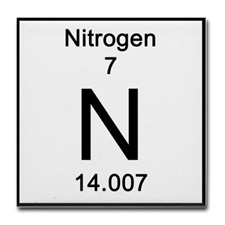
What is the number of protons that the element in this image contain?
a)
14
b)
7
c)
15
d)
18
26.

If an atom has 12 protons, which of the following must it also have to be considered a neutral atom?

a)

12 neutrons

b)

12 electrons

c)

12 protons

d)

24 protons and neutrons

27.
If an atom has 10 protons, 10 neutrons, and 10 electrons, what is the mass of the atom?
a)
10
b)
20
c)
30
28.

What charge does an atom have when it GAINS electrons?

a)

Positive

b)

Negative

c)

Neutral

29.

What two particles determine the mass number?

a)

Protons and electrons

b)

Electrons and neutrons

c)

Protons and neutrons

30.

When an atom loses an electron, it becomes a(n) _____________ ion.

a)

positive

b)

negative

c)

neutral

d)

polyatomic

31.

If the mass number of this chlorine atom is 36, how many neutrons does it have?

a)

17

b)

18

c)

19

d)

can't be determined

32.

What is the atomic number of this atom shown in the Bohr model?

a)

11

b)

12

c)

13

d)

can't be determined

33.

What is the mass number of the atom shown in the Bohr model?

a)

11

b)

12

c)

23

d)

Can't be determined

34.

Is this atom an ion? If so what would it's charge be?

a)

Yes, 1-

b)

No it is neutral

c)

Yes, 1+

d)

Can't be determined

35.
An atom with an unequal number of protons and electrons is said to have (a) ___.
a)
no charge
b)
balance
c)
charge
d)
unbalance
36.
Two atoms of the same element but with different mass numbers are called________
a)
electrons
b)
isotopes
c)
variables
d)
electron cloud
37.
An atoms overall charge is 
a)
positive 
b)
depends on its mood 
c)
neutral 
d)
negative 
38.
If an atom has 3 electrons, how many protons does it have?
a)
1
b)
2
c)
4
d)
3
39.
Ions are: 
a)
atoms with a positive or negative charge
b)
atoms with no charge
c)
atoms with ONLY a positive charge
d)
atoms with ONLY a negative charge
40.

How many neutrons does the isotope of lithium have? (the mass is 8)

a)

8

b)

3

c)

4

d)

5

41.

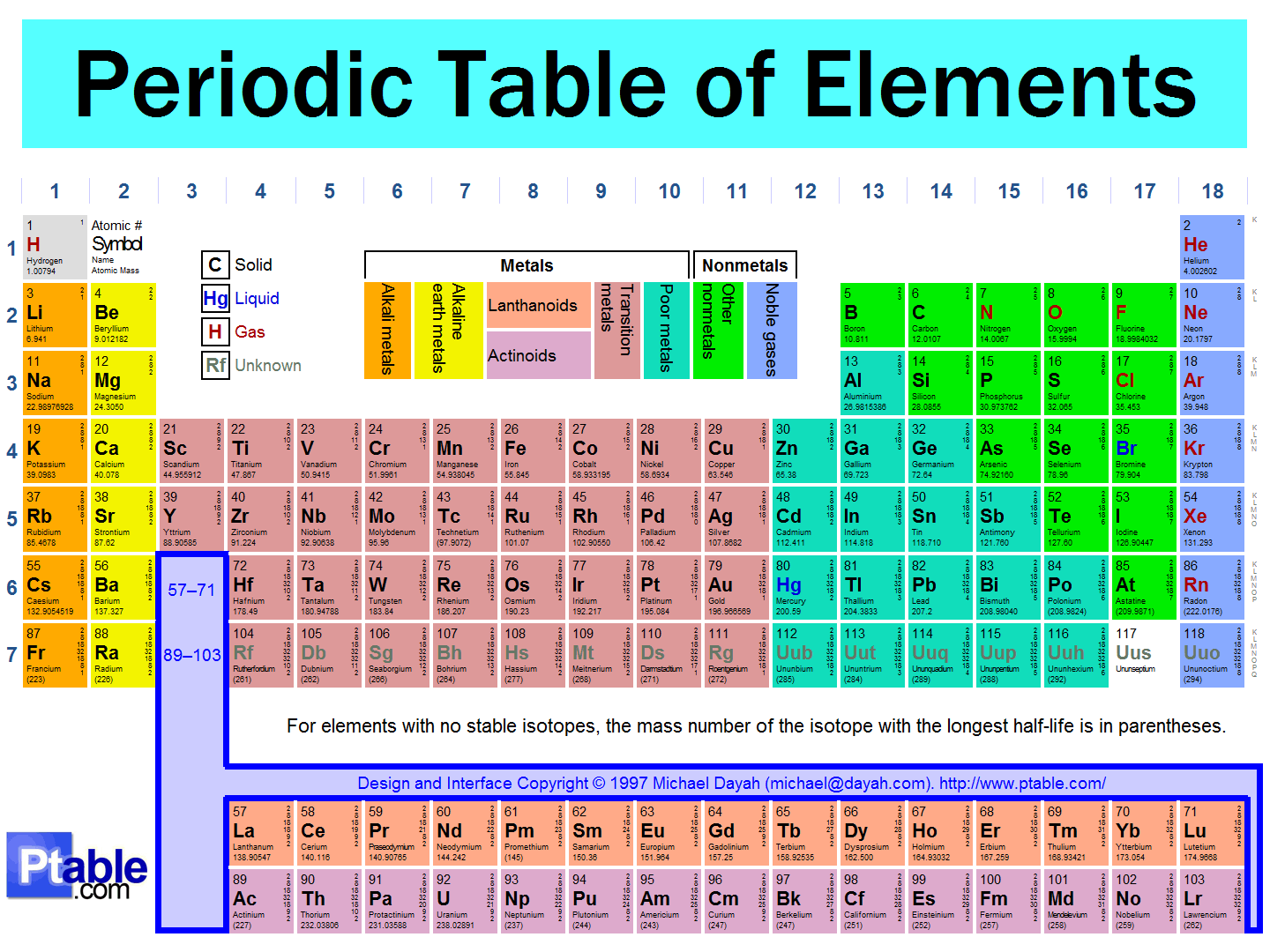
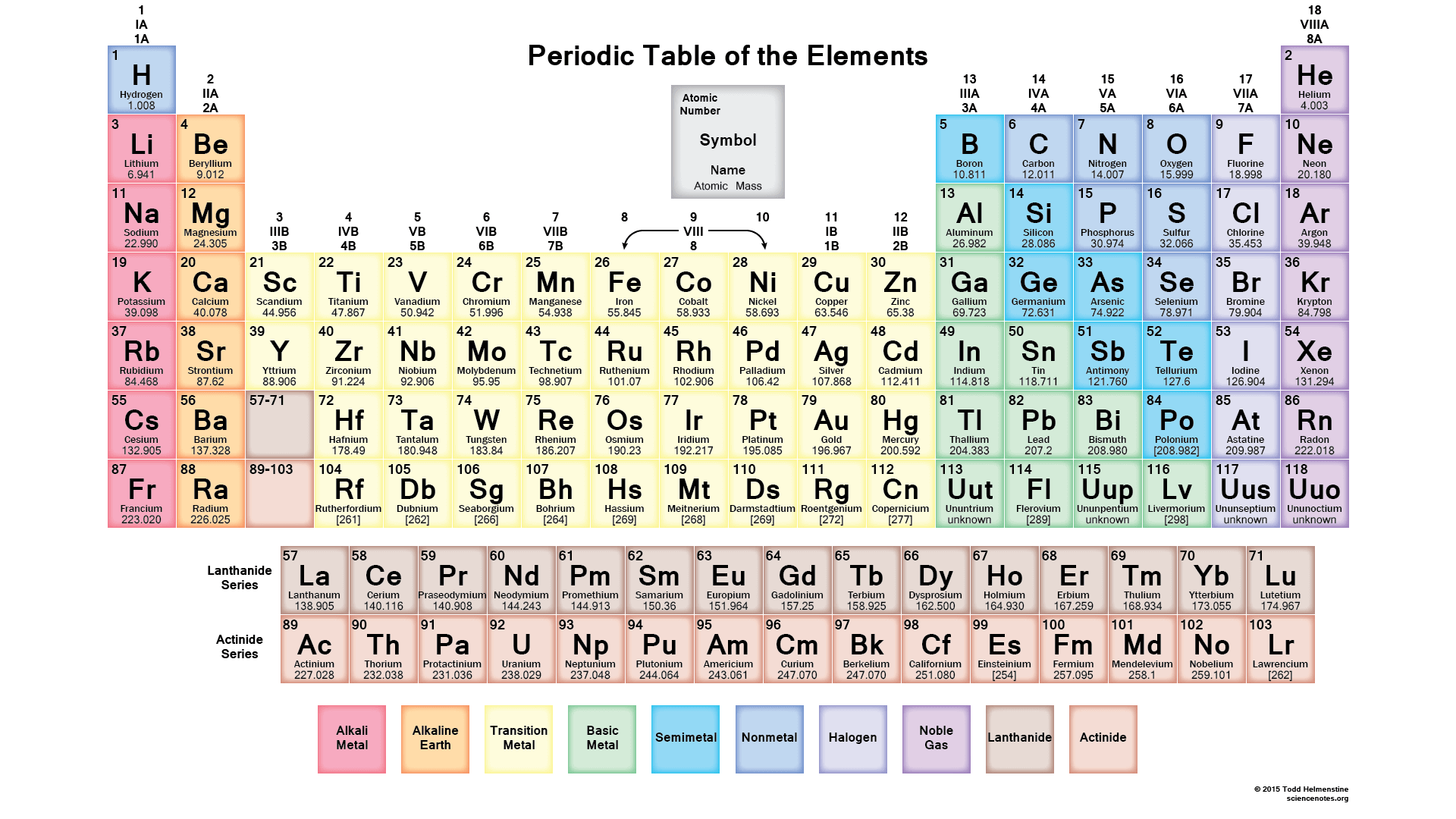
Use a periodic table to help you determine the element in the image. (Hint: Use the # of protons.)

a)

carbon

b)

lithium

c)

beryllium

d)

nitrogen

42.

Use a periodic table to help you determine the element in the image. (Hint: Use the # of protons.)

a)

boron

b)

beryllium

c)

neon

d)

lithium

43.
What is the mass of an atom if it has 11 protons, 12 neutrons, and 11 electrons?
a)
22
b)
11
c)
34
d)
23
44.

The vertical (up and down) columns in the Periodic Table are called

a)

groups

b)

towers

c)

periods

d)

atomic numbers

45.
The Modern Periodic Table of Elements is arranged by
a)
atomic mass
b)
atomic number
c)
valence electrons
d)
number of isotopes
46.
Sodium (Na) is found in period 
a)
3
b)
2
c)
4
d)
1
47.
Sodium (Na) is found in group 
a)
1
b)
2
c)
3
d)
4
48.
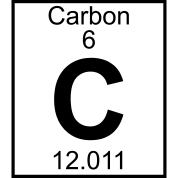
What does the 6 represent?
a)
atomic mass
b)
atomic number
c)
element name
d)
chemical symbol 
49.
What does 12.011 represent?
a)
atomic mass
b)
atomic number
c)
element name
d)
chemical symbol 
50.
What does the C represent?
a)
atomic mass
b)
atomic number
c)
element name
d)
chemical symbol 
51.
These are found on the Periodic Table.
a)
Compounds
b)
Elements
c)
Mixtures
52.

What are valence electrons?

a)

Any of an atom's electrons

b)

Electrons located on the first energy level

c)

Electrons not attached to any atom

d)

electrons located on the outer energy level

53.

What period is Lead (Pb) in?

a)

6

b)

4

c)

Metals

d)

4A

54.

How many electrons does Barium (Ba) have?

a)

13

b)

2

c)

71

d)

56

55.

What is the ionic charge of Phosphorus (P)?

a)

+5

b)

-3

c)

+3

d)

-5

56.

How many neutrons does Bromine (Br) have?

a)

35

b)

80

c)

45

d)

7

57.

What period contains the element Plutonium (Pu)?

a)

8

b)

6

c)

7

d)

Plutonium doesn't exist

58.

How many valence electrons does a carbon atom have?

a)

8

b)

4

c)

2

d)

6

59.

symbols must have at least

a)

1 cap. letter

b)

2 cap. letters

c)

2 lower case letters

d)

any letter you want

60.
An element is made up of only one kind of _____.
a)
isotope
b)
plastic
c)
atom
d)
metal
61.
What subatomic particles are located in the electron cloud?
a)
quarks
b)
protons
c)
electrons
d)
neutrons
62.
Which is an electron?
a)
A
b)
B
c)
C
63.
Which is a proton?
a)
A
b)
B
c)
C
64.
Which item on this element square represents the atomic number?
a)
13
b)
Al
c)
Aluminum
d)
26.981538
65.
The small number to the right of an elemental symbol  ( H2) is called?
a)
 a subscript 
b)
a coefficient 
c)
a variable 
d)
a divisor 
66.
A series of numbers and letters that are used to represent a molecule
a)
physcial property 
b)
chemical property 
c)
chemical formula 
d)
atom
67.
How many different elements are in this chemical formula: C2H2ClK3
a)
6
b)
8
c)
2
d)
4
68.
How many Aluminum are in Al2O3?
a)
3
b)
2
c)
5
69.
How many Sodium (Na) are in 6NaCl?
a)
1
b)
12
c)
6
70.
Which of the following statements is true about the molecule below?
4NH4C2H3O2
a)
There are 48 total atoms
b)
There are 5 total elements
c)
There are 7 Hydrogen atoms
d)
There are 12 total atoms in this molecule
71.
What is the subscript for the following molecule?
2CaClO3
a)
2
b)
3
c)
Both 2 & 3
d)
Calcium
72.
What is the coefficient for the following molecule?
4Fe2(CO3)3
a)
2
b)
3
c)
Both 2 & 3
d)
4
73.

Does oxygen have a high or low ionization energy?

a)

high

b)

low

74.

When forming an ionic bond, will Na gain or lose electrons?

a)

gain

b)

lose

75.

Sodium and Chlorine will form a(n)

a)

ionic bond

b)

metallic bond

c)

covalent bond

76.

When bonding covalently, how many bonds does Sulfur want to make?

a)

1

b)

2

c)

3

d)

4

77.

What will the charge on phosphorus be if it bonds with a metal?

a)

+3

b)

-3

c)

+5

d)

-5