wayground logo

Free Printable Worksheets

Font size

S
M
L
XL
Worksheets

Fossils Chapter 13

Total questions: 51

Worksheet time: 2hrs 47mins

Name
Class
Date
1.
Age, in years, of a rock or other object
a)
Absolute Age
b)
Relative Age
c)
Radiometric dating
d)
Radioactive decay
2.
Fossil created when sediment fills a mold and hardens.
a)
Original remains
b)
Cast
c)
Mold
d)
Permineralized Remains
3.
Earth processes occurring today are similar to those that occurred in the past.
a)
Unconformities
b)
Uniformitarianism
c)
Principle of Superposition
d)
Radiometric Dating
4.
The remains, imprints or traces of prehistoric organisms.
a)
Trace Fossil
b)
Fossil
c)
Original Remains
d)
Permineralized remains
5.
Remains of an organism that lived during a specific time that is used to define the age of a particular rock layer.
a)
Fossil
b)
Trace fossil
c)
Index fossil
d)
Original remains
6.
Actual organism or parts of an organism protected from decay.
a)
Permineralized remains
b)
Trace fossil
c)
Index fossil
d)
Original remains
7.
Fossils in which the spaces inside are filled with minerals from ground water
a)
Permineralized remains
b)
Trace fossil
c)
Index fossil
d)
Original remains
8.
People who study fossils and reconstruct the appearance of animals.
a)
archaeologist
b)
paleontologist
c)
ecologist
d)
anthropologist
9.
If rocks are undisturbed, older layers are under younger layers.
a)
Uniformitarianism
b)
Unconformities
c)
Principle of Superposition
d)
Radiometric dating
10.
Any gap in a rock record
a)
Uniformitarianism
b)
Unconformities
c)
Principle of Superposition
d)
Radiometric dating
11.
A fault can be useful in determining which of the following for a group of rocks?
a)
absolute age
b)
radiometric age
c)
index age
d)
relative age
12.
Which process forms new elements?
a)
radioactive decay
b)
uniformitarianism
c)
permineralization
d)
superposition
13.
About how old is Earth based on radiometric dating?
a)
2000 years
b)
5000 years
c)
3.5 billion years
d)
4.6 billion years
14.
Sediments increase the chance that a dead organism will turn into a fossil by
a)
keeping it afloat
b)
helping it to be decomposed by bacteria
c)
protecting it from decomposition
d)
giving it fertilizer
15.
What type of fossils would these be called?
a)
Cast & mold
b)
Original remains
c)
Permineralized remains
d)
Trace fossil
16.
What type of fossils would these be called?
a)
Cast & mold
b)
Original remains
c)
Permineralized remains
d)
Trace fossil
17.

What type of fossils would these be called?

a)

Cast & mold

b)

Original remains

c)

Permineralized remains

d)

Carbon Film

18.
What type of fossils would these be called?
a)
Cast & mold
b)
Original remains
c)
Permineralized remains
d)
Trace fossil
19.
Identify the unconformity.
a)
Angular unconformity
b)
Disconformity
c)
Nonconformity
d)
Uniformitarianism
20.
Identify the unconformity.
a)
Angular unconformity
b)
Disconformity
c)
Nonconformity
d)
Uniformitarianism
21.

Which of the following would make it more likely that an organism WILL BECOME a fossil? (Choose all that apply)

a)

Buried quickly after death

b)

Organism had hard parts

c)

A scavenger discovers the organism

d)

After death it is protected from microorganisms (such as bacteria)

22.

How many grams of a 24 gram sample is left after 3 seconds if its half-life is 1 second?

a)

5 grams

b)

3 grams

c)

1/8 grams

d)

12.5 grams

23.
Using relative age what is the order of the following labeled items in the picture from oldest to youngest.
a)
A, B, C, D, E
b)
C, B, D, E, A
c)
A, E, D, B, C
d)
E, D, C, B, A
24.
 The diagram shows several rock outcrops separated by large distances. In each outcrop are several fossils. Which of the fossils shown is an index fossil?
a)
A
b)
B
c)
C
d)
D
25.
If a substance has a half-life of 5 years and there is 1/16 of the original material left, how old would the sample be?
a)

5 years old

b)

10 years old

c)

15 years old

d)

20 years old

26.
After the third half-life, how much of the sample is left?
a)

1/2

b)

1/3

c)

1/16

d)

1/8

27.

If 64 mg of iodine-131 is given to a patient, how much is left after 24 days? The half-life of iodine-131 is 8 days.

a)

8 mg

b)

3 mg

c)

12.5 mg

d)

512 mg

28.

What is the % of the parent isotope remaining after 2 Half Lives.

a)

50%

b)

25%

c)

12.5%

d)

6.25%

29.
Which of the following correctly lists the layers in order from oldest to youngest?
a)
A, B, C, D, E
b)
E, B, C, D, A
c)
E, D, C, B, A
d)
C, B, A, D, E
30.
Choose the correct order of relative ages for the rock layers below, starting with the youngest, and finishing with the oldest layer.  
a)
A, E, B, C, D
b)
A, B, C, D, E
c)
E, A, D, C, B
d)
E, D, C, B, A
31.

Which of the following is a photo of an Angular Unconformity

a)
b)
c)
d)
32.

All of these rock layers are sedimentary rock. That means that this unconformity is a(n):

a)

Nonconformity

b)

Disconformity

c)

Angular Unconformities

d)

Uniformitarianism

33.

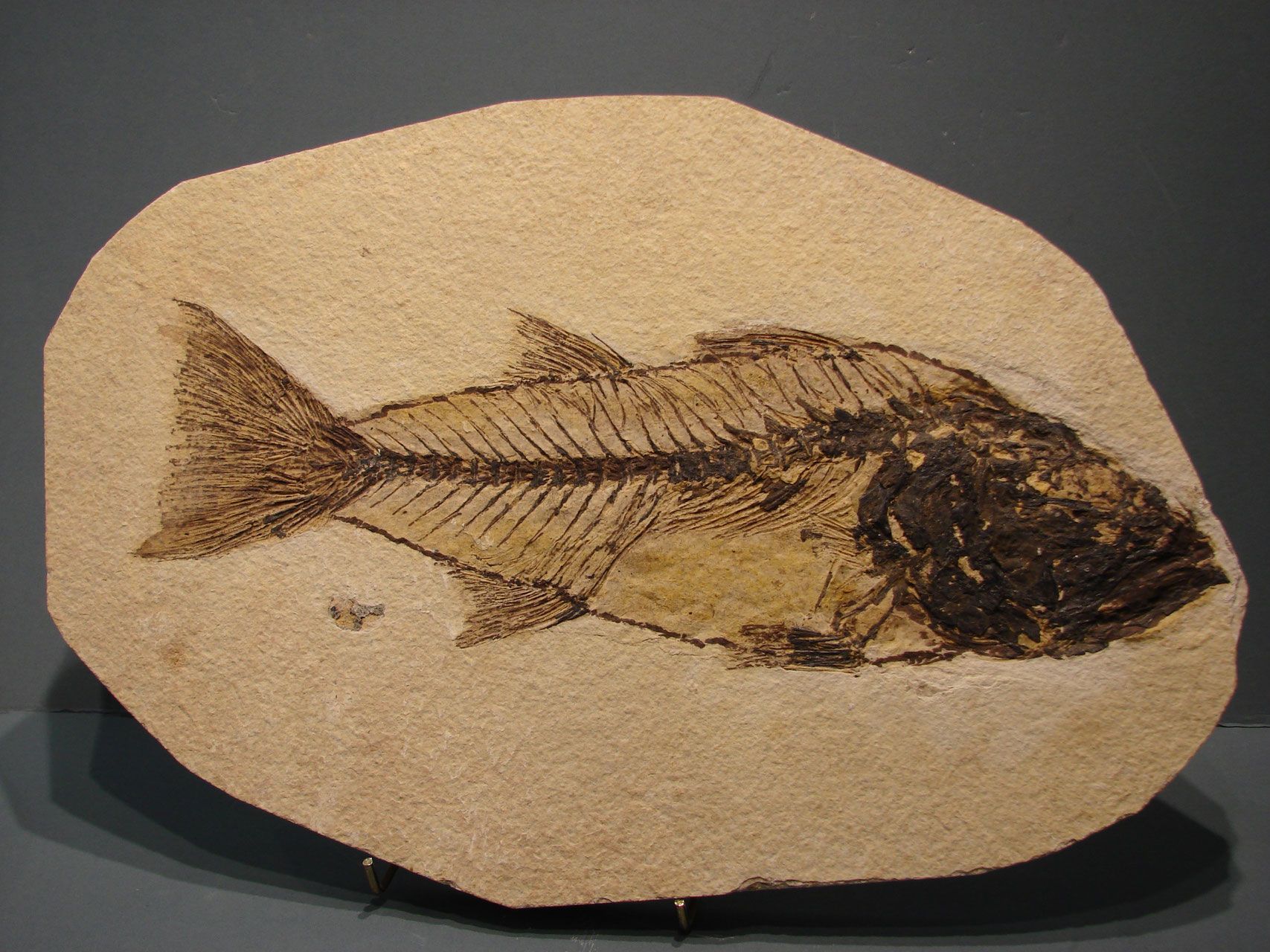
If a scientist found a fish fossil in the desert, what can they infer?

a)

An animal ate the fish.

b)

The water covered the area long ago.

c)

Today's fish looks the same

d)

The fish is endangered.

34.

The time it takes for half of the atoms in an isotope to decay.

a)

radiometric dating

b)

radioactive decay

c)

carbon dating

d)

half life

35.

The breaking down of some isotopes and particles

a)

radiometric dating

b)

radioactive decay

c)

carbon dating

d)

half life

36.

Method used to calculate the absolute age of a rock

a)

radiometric dating

b)

radioactive decay

c)

carbon dating

d)

half life

37.

Shell-shaped mineral found in a rock cavity

a)

cast

b)

mold

c)

original remains

d)

permineralized remains

e)

trace fossil

38.

Insect found preserved in amber from a pine tree

a)

cast

b)

mold

c)

original remains

d)

permineralized remains

e)

trace fossil

39.

Dinosaur tracks in rocks

a)

cast

b)

mold

c)

original remains

d)

permineralized remains

e)

trace fossil

40.

Dinosaur leg bone containing quartz instead of calcium

a)

cast

b)

mold

c)

original remains

d)

permineralized remains

e)

trace fossil

41.

Thin cavity in a rock showing where a shell has decayed.

a)

cast

b)

mold

c)

original remains

d)

permineralized remains

e)

trace fossil

42.

fossil made from a thin film of carbon atoms and molecules

a)

cast

b)

mold

c)

original remains

d)

permineralized remains

e)

Carbon Film

43.

The cross sections represent three geologic columns, I, II, and III, exposed at three different locations. The rock layers have not been overturned. What layer is the oldest?

a)

A

b)

C

c)

F

d)

I

e)

G

44.

Scientist can possibly tell how large a dinosaur was by examining fossil footprints.

a)

True

b)

False

45.

The fossil record of life on earth is incomplete.

a)

True

b)

False

46.

Only dinosaurs have been fossilized.

a)

True

b)

False

47.

All living things that die become fossils.

a)

True

b)

False

48.
Fossils give clues about the past.
a)
True
b)
False
49.

Most fossils are found in _____________________rocks.

a)

igneous

b)

sedimentary

c)

metamorphic

d)

petrified

50.

Most fossils form from animals or plants that once lived in or near _____________

a)

deserts

b)

ice tundras

c)

water

d)

forests

51.

A sample of wood that originally contained 100 grams of carbon-14 now contains only 25 grams of carbon-14. Approximately how many years ago was this sample part of a living tree? (Carbon-14 half-life is 5,730 years)

a)

22,920 years

b)

5,730 years

c)

11,460 years

d)

17,190 years