
 Worksheets
Cells Test Review
Total questions: 50
Worksheet time: 1hrs 20mins
Name
Class
Date
1.
Which is true of prokaryotic and eukaryotic cells?
a)
Prokaryotic cells are larger than eukaryotic cells.
b)
Eukaryotic cells do not have nuclei, and prokaryotic cells do have nuclei.
c)
Prokaryotic cells lack membrane-bound organelles, and eukaryotic cells contain membrane-bound organelles.
d)
Eukaryotic cells are simpler than prokaryotic cells.
2.
How are prokaryotes and eukaryotes similar?
a)
They both contain membrane-bound organelles.
b)
They both have cell membranes.
c)
The both have nuclei.
d)
They both have chloroplasts.
3.
Which of the following would be found in both eukaryotic AND prokaryotic cells?
a)
chloroplast
b)
cytoplasm
c)
nucleus
d)
endoplasmic reticulum
4.

Prokaryotes have a nucleus.
a)
True
b)
False
5.
There are three parts to the cell theory. Which is NOT one of those parts?
a)
All organisms are composed of one or more cells.
b)
The cell is the basic unit of structure and organization in organisms.
c)
Cells spontaneously arise from carbon and nutrients carried in the bloodstream.
d)
All cells come from pre-existing cells.
6.

Examine the cell diagrams shown. Which of the following choices identifies the eukaryotic cell for the correct reason?
a)
Cell A, because it is a single cell
b)
Cell A, because a nuclear membrane contains the cell’s DNA
c)
Cell B, because it is much smaller
d)
Cell B, because it contains genetic material
Cell B, because it contains genetic material
7.
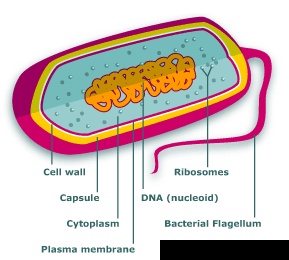
Which type of cell?
a)
Prokaryote
b)
Eukaryote
8.

What does this organism use for movement?
a)
Pseudopod
b)
Cilia
c)
Flagella
d)
legs
9.
The ____________ regulates what enters and leaves the cell.
a)
mitochondria
b)
cell membrane
c)
golgi bodies
d)
cytoplasm
10.
This organelle creates the energy for the cell
a)
mitochondria
b)
cell membrane
c)
ribosome
d)
endoplasmic reticulum
11.
_________________ convert light into chemical energy.
a)
cholorplast
b)
mitochandria
c)
lysosomes
d)
ribosomes
12.

The "powerhouse" of the cell- it makes energy for the cell.
a)
Nucleus
b)
Vacuole
c)
Mitochondria
d)
Cell Wall
13.

The "brain" of the cell- it controls all cell activities.
a)
Mitochondria
b)
Vacuole
c)
Nucleus
d)
Cell Membrane
14.
This organelle helps plants keep their rigid structure.
a)
Cell wall
b)
Cell membrane
c)
Chloroplast
d)
Nucleus
15.
What type of cell(s) have a nucleus?
a)
Plant Cell Only
b)
Plant and Animal Cells
c)
Animal Cells
16.
Acts like a gatekeeper- allowing some materials to pass through it, but not others.
a)
cytoplasm
b)
cell membrane
c)
mitochondria
d)
vacuoles
17.
What type of cell(s) have cell walls?
a)
Plant cells only
b)
Both plant and animal cells
c)
Animal cells only
18.
Which of the following is NOT a type of eukaryotic cell?
a)
mushroom cell
b)
pea leaf cell
c)
bacterial cell found in Swiss cheese
d)
alligator stomach cell
19.
Plants and animal cells are examples of ___ cells
a)
prokaryotic cells
b)
eukaryotic cells
20.
Bacteria is what kind of cell?
a)
Eukaryotic
b)
Prokaryotic
21.
Packages proteins into vesicles and ships them out.
a)
Endoplasmic Reticulum
b)
Ribosomes
c)
Golgi Apparatus
d)
Nucleus
22.

I make proteins for the cell. What am I?
a)
ribosome
b)
mitochondria
c)
chloroplast
d)
lysosome
23.
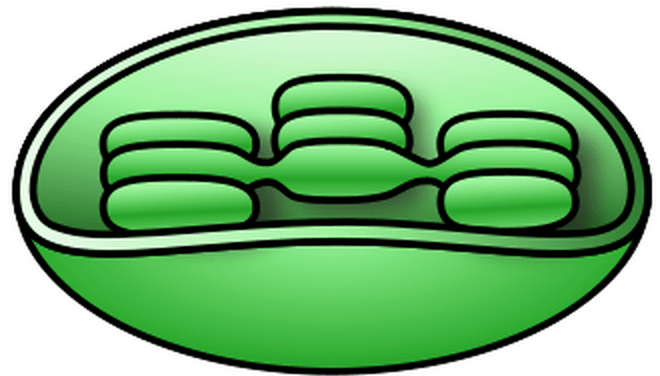
I am only found in a plant cell. What am I?
a)
cell wall
b)
mitochondria
c)
cytoplasm
d)
chloroplast
24.
Who looked at cork and named the cell?
a)
Robert Hooke
b)
Van Leeuwenhoek
c)
Robert Brown
d)
Francesco Redi
25.

Which statement reflects one of the major components of the cell theory?
a)
All living things are multi-cellular.
b)
Organs are the basic unit of structure and function for all living things.
c)
All cells come from previously existing cells.
d)
Every organism has a reproductive system to ensure survival of the species.
26.

The prefix aqua means?
a)
water
b)
outside
c)
under
27.
auto-
a)
middle
b)
self
c)
under, lower than, inferior
d)
above, beyond
28.
sub-
a)
not, opposite of root word
b)
with, jointly
c)
cause to
d)
below, inferior
29.
bi
a)
through
b)
two
c)
under, less than
d)
half
30.
Prefix meaning of bio
a)
plant
b)
dog
c)
animal
d)
life
31.
The suffix in the word leukocyte means
a)
cell
b)
place
c)
guide, tube
d)
blood
32.
-elle, -ella
a)
bend
b)
the state or condition
c)
the study of
d)
small
33.
-logy
a)
bend
b)
the state or condition
c)
small
d)
the study of
34.
What does the prefix hyper- mean?
a)
able to be
b)
stupid
c)
over, beyond, above
35.
Hypo means
a)
below
b)
against
c)
angle
d)
across
36.
iso
a)
below
b)
equal
c)
side
d)
above
37.
poly
a)
parrot
b)
many
c)
one
d)
not
38.
sub
a)
way
b)
ill
c)
under, less than
d)
correct
39.
mono
a)
three
b)
disease
c)
single
d)
two
40.
Micro:________:: Macro :__________
a)
small;large
b)
large;tiny
c)
blood;disease
d)
water;life
41.
multi-
a)
many
b)
foot
c)
form
d)
like
42.
cyto-
a)
cell
b)
side
c)
like
d)
blood
43.
poly
a)
parrot
b)
many
c)
one
d)
not
44.
pro-
a)
before
b)
across
c)
equal
d)
side
45.
Which prefix means look?
a)
scope
b)
aud
c)
pre
d)
tele
46.
What does the prefix "trans-" mean?
a)
across, change, through
b)
under or beneath
c)
among, between, middle
d)
not
47.
What prefix means "three?"
a)
tree
b)
thri
c)
tri
d)
try
48.
The prefix uni- means __________.
a)
same
b)
alike
c)
one
d)
many
49.
The suffix meter means
a)
measure
b)
distance
c)
follow
d)
lead
50.
A single-celled organism that lacks a membrane-bound nucleus, mitochondria, or any other membrane -bound organelle .
a)
Prokaryote
b)
Eukaryote
c)
Nucleus
d)
Single-celled organism
100 %

