
 Worksheets
Chemistry of Life
Total questions: 51
Worksheet time: 40mins
Name
Class
Date
1.

Which of the following shows the correct hydrogen bonding in water molecules?
a)
A
b)
B
c)
C
2.
A monosaccharide is a
a)
carbohydrate
b)
lipid
c)
nucleic acid
d)
protein
3.
Which of the following organic compounds is the main source of energy for living things?
a)
carbohydrates
b)
lipids
c)
nucleic acids
d)
proteins
4.
Plants store glucose in the form of
a)
starch
b)
glycogen
c)
cellulose
d)
chitin
5.
Animals store glucose in the form of
a)
cellulose
b)
glycogen
c)
wax
d)
lipids
6.
What element must be present for a molecule to be considered organic?
a)
nitrogen
b)
water
c)
hydrogen
d)
carbon
7.
Polymers form through _____________
a)
hydrolysis
b)
dehydration synthesis
c)
ATP synthesis
d)
monomerization
8.
A monomer splits from a polymer through
a)
ATP synthesis
b)
monomerization
c)
hydrolysis
d)
condensation reaction
9.
What are the 5 elements that are present in macromolecules?
a)
CHONFe
b)
CPNaHO
c)
CHONP
d)
HHeNFCl
10.
The 4 macromolecules are
a)
vitamins, lipids, water, micronutrients
b)
micronutrients, macronutrients, water, vitamins
c)
Lipids, Waxes, Vitamin A, Water
d)
Carbohydrates, Lipids, Proteins, Nucleic Acids
11.

What type of carbohydrate is this?
a)
polysaccharide
b)
disaccharide
c)
monosaccharide
d)
it isn't a carbohydrate
12.

What type of carbohydrate is this?
a)
polysaccharide
b)
disaccharide
c)
monosaccharide
d)
it isn't a carbohydrate
13.
What type of carbohydrate is this?
a)
polysaccharide
b)
disaccharide
c)
monosaccharide
d)
it isn't a carbohydrate
14.

What is this molecule?
a)
sucrose
b)
glucose
c)
lipid
d)
a disaccharide
15.

The molecule of amylose that you see in the
a)
disaccharide
b)
polypeptide
c)
polysaccharide
d)
monosaccharide
16.
What substances are classified as lipids?
a)
Fats, sugars, phosphates
b)
DNA and RNA
c)
Triphosphates, glyercol-lipids and testosterone.
d)
Fats, oils, waxes, hormones
17.
Where in a plant or animal would you find phospholipids?
a)
In the blood (for animals) or sap (for plants).
b)
In the digestive system.
c)
In the cell membranes.
d)
In the energy storage organs.
18.
Which of these are examples of sterols?
a)
Triglycerides, phospholipids, DNA
b)
Cholesterol, insulin, blood
c)
Cholesterol, estrogen, testosterone
d)
Monosacchardes, disaccharide, polysaccharides
19.

Which of the following molecules make up the basic structure of a cell membrane?
a)
waxes
b)
steroids
c)
fatty acids
d)
phospholipids
20.

This molecules is a
a)
amino acid
b)
nucleic acid
c)
carbohydrate
d)
lipid
21.

This molecule is a
a)
carbohydrate
b)
nucleic acid
c)
protein
d)
lipid
22.

Which macromolecule is this?
a)
carbohydrate
b)
lipid
c)
protein
d)
nucleic acid
23.
The characteristic that all lipids have in common is----
a)
made of lots of double bonds
b)
acidic when mixed with water
c)
no high energy content
d)
do not dissolve in water
24.
Saturated fats are __________ at room temperature.
a)
liquid
b)
gases
c)
plasma
d)
solid
25.

This picture shows what type of lipid?
a)
unsaturated fat
b)
wax
c)
saturated fat
d)
steroid
26.
A "kinky structure" due to the double bonds between carbon atoms creates a lipid known as what?
a)
saturated fat
b)
wax
c)
steroid
d)
unsaturated fat
27.

The diagram shows a bond forming between two amino acids. What is the name of this reaction?
a)
Dehydration Synthesis
b)
Hydrolysis
c)
Pepysis
d)
Oxidation
28.

The diagram shows a bond forming between two amino acids. What is the name of the resulting bond?
a)
Peptide Bond
b)
Glycosidic Linkage
c)
Ester Bond
d)
Hydrogen Bond
29.

The primary sequence of a protein refers to the:
a)
Order of amino acids
b)
α-Helix or β-Pleated Sheet
c)
Interaction of subunits
d)
Hydrogen Bonding
30.

The number of amino acids used to produce proteins for all living things is:
a)
20
b)
∞
c)
15
d)
42
31.

The structure of proteins can be changed by environmental factors such as temperature or pH.
a)
True
b)
False
32.

The bond that joins amino acids are called:
a)
Peptide Bonds
b)
Ester Bonds
c)
Glycosidic Linkages
d)
Phosphodiester Bonds
33.

From the nucleotide on the right, which part is labeled 2?
a)
Phosphorous
b)
Nitrogenous Base
c)
DNA
d)
Sugar
34.

The monomer, building block, of carbohydrates is called -
a)
Amino acid
b)
Fatty Acid
c)
Nucleotide
d)
Monosaccharide
35.
There are _____ different kinds of amino acids.
a)
20
b)
23
c)
46
d)
26
36.
Which group of organic molecules serve as long-term energy storage and waterproof coverings?
a)
proteins
b)
carbohydrates
c)
lipids
d)
nucleic acids
37.
Which group of organic molecules speed up chemical reactions and serve as immune defense mechanisms?
a)
proteins
b)
carbohydrates
c)
nucleic acids
d)
lipids
38.
In an Exergonic reaction, heat is ________.
a)
Absorbed
b)
Created
c)
Destroyed
d)
Released
39.
In an Endergonic reaction, heat is ________.
a)
Released
b)
Absorbed
c)
Created
d)
Destroyed
40.
What are all of the chemical reactions that occur within an
organism referred to?
organism referred to?
a)
Enzymes
b)
Macromolecules
c)
Metabolism
d)
Activation Energy
41.
What is the energy needed to start an chemical reaction referred to?
a)
Cascading Energy
b)
Potential Energy
c)
Kinetic Energy
d)
Activation energy
42.

What is being represented by the letter A in the image?
a)
Substrate
b)
Enzyme
c)
Product
d)
Complex
43.

What is being represented by the letter B in the image?
a)
Substrate
b)
Enzyme
c)
Substrate
d)
Product
44.
If an enzyme becomes over heated what effect, if any, will the heat have on the enzymatic activity?
a)
The enzyme will not store much chemical energy.
b)
The enzyme will not be able to catalyze reactions.
c)
The enzyme will lose its net electrical charge.
d)
The enzyme will lose stored genetic information.
45.
REVIEW: A scientist analyzing an unknown substance has determined that it consists of carbon, hydrogen and oxygen. During experimentation, she determines that the substance is soluble in oil but not in water. Which of the following macromolecules is the unknown substance most likely to be?
a)
carbohydrate
b)
nucleic acid
c)
lipid
d)
protein
46.
REVIEW: Which of the following properties of water enables it to move from the roots to the leaves of plants?
a)
Water expands as it freezes.
b)
Water exhibits cohesive behavior.
c)
Water can moderate temperatures.
d)
Water is an excellent solvent.
47.
Which statement describes the polarity of a water molecule?
a)
The oxygen end has slight positive charge and the hydrogen end has a slight negative charge
b)
The oxygen end has a slight negative charge and the hydrogen end has a slight positive charge
c)
Electrons are shared evenly between the hydrogens and the oxygen.
d)
The charge on each end of the molecule is balanced.
48.
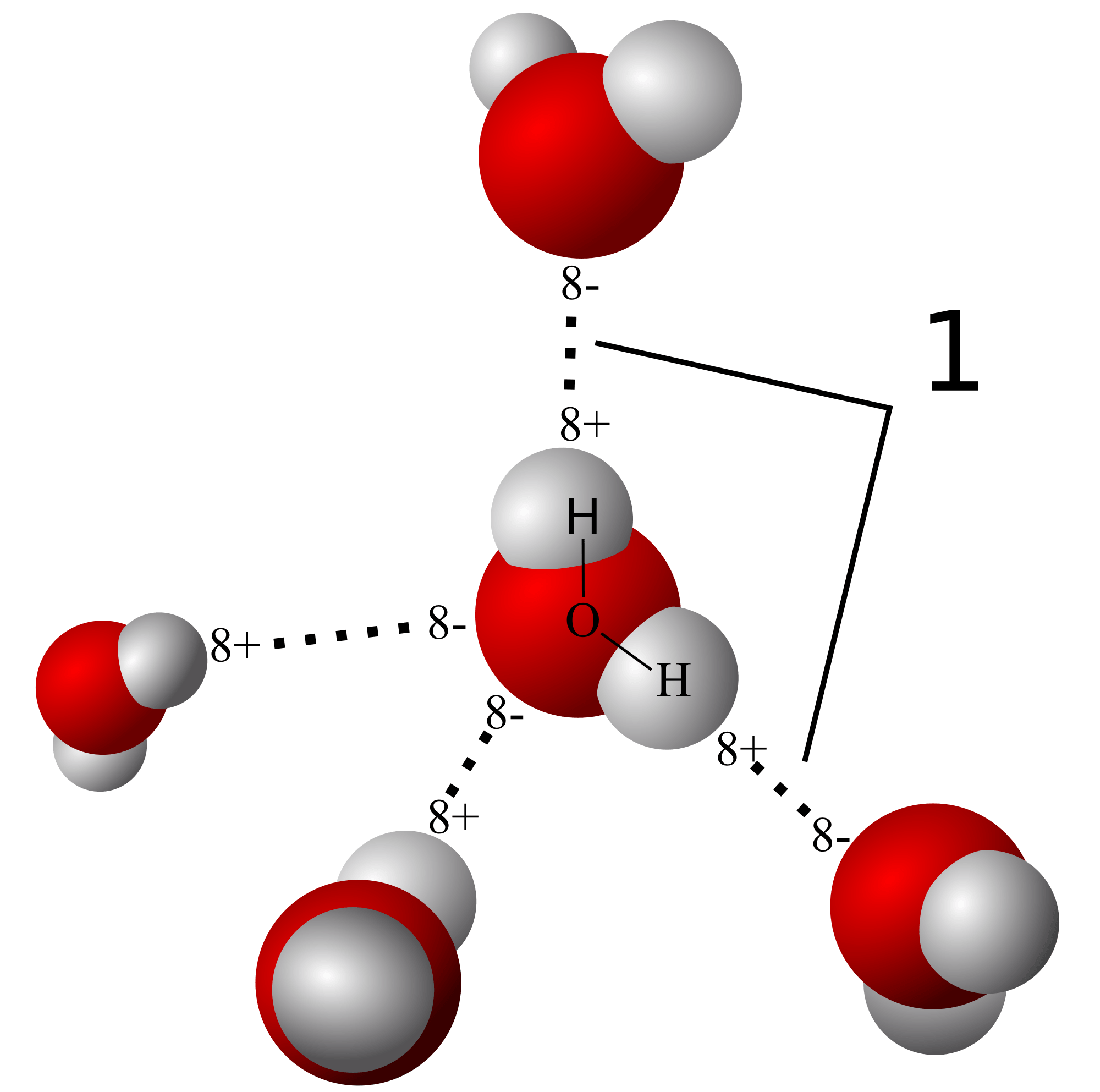
Attractions between water molecules are called
a)
Covalent bonds
b)
Ionic bonds
c)
Polar bonds
d)
Hydrogen bonds
49.

Steroids have what kind of structure?
a)
long chain of hydrogen/carbons with a glycerol group
b)
CHO in a hexagonal shape
c)
4 fused rings
d)
polar head and two fatty acid tails
50.

Identify this molecule
a)
monosaccharide
b)
steroid
c)
disaccharide
d)
fatty acid
51.
If a plant is in nitrogen deprived soil, then what is the most affected?
a)
The production of sucrose
b)
The production of starch
c)
The production of carbohydrates and proteins
d)
The production of proteins and nucleic acids.
100 %

