wayground logo

Free Printable Worksheets

NEW

Font size

S
M
L
XL
Worksheets

Evolution & Populations

Total questions: 50

Worksheet time: 37mins

Name
Class
Date
1.
Traits that help an organism survive are called....
a)
evolution
b)
natural selection
c)
adaptations
d)
habitats
2.
Most adaptations that help an organism survive are passed on from parent to child as ___traits?
a)
adaptable
b)
physical
c)
more
d)
inherited
3.
Differences that exist naturally among members of a population or species___?
a)
mutation
b)
adaptation
c)
variations
d)
evolution
4.
Almost all populations have some variation.
a)
true
b)
false
5.
Change in a gene or chromosome is called 
a)
evolution
b)
variation
c)
mutation
d)
adaptation
6.
Which statement best describes the process of evolution?
a)
Populations can survive in different locations on earth
b)
Environmental conditions limit the number of species on Earth
c)
Populations grow when resources are abundant
d)
The traits of a species can change over time
7.
What is the term used when all individuals of species die?
a)
Evolution
b)
Natural Selection
c)
Extinction
d)
Artificial Selection
8.

Which are evidence for evolution?

a)

Fossil Records

b)

Embryology

c)

Molecular Evidence

d)

All the above

9.
Which organisms are most likely to survive?
a)
the best adapted
b)
the fastest
c)
the strongest
d)
the most domesticated (tamed)
10.
Which is an example of a trait that is an adaptation for cold climate but not for warm climate?
a)
thick fur and fat
b)
long claws
c)
camoflauge
d)
poisonous chemicals
11.
Almost all adaptations started off as?
a)
selective breeding
b)
physiological
c)
structural
d)
mutation
12.
Which of the following would NOT be an adaptation?
a)
Long, strong running legs
b)
Claws with a powerful grip
c)
camouflage
d)
A defective heart valve
13.
Fossils found in the lower layer of rocks are ________ than those found at higher layer
a)
older
b)
Same age
c)
Younger
d)
tougher
14.
Modern whales developed their traits through natural selection.  What occurs during the process of natural selection?
a)
Organisms choose mates from other species to create new species
b)
Breeders selectively cross organisms with desired traits
c)
Only the fittest organisms can survive and reproduce
d)
Organisms remain exactly the same over time.
15.
Mutations are a change in what?
a)
DNA
b)
tRNA
c)
genotype
d)
phenotype
16.
Organisms with the most advantageous traits will survive.  This is commonly known as ___.
a)
theory of evolution
b)
variations
c)
survival of the fittest
d)
ecosystems
17.
Organisms that share a common ancestor have features that have different functions, but similar structures.  These are called...
a)
vestigial structures
b)
analogous structures
c)
homologous structures
d)
fossil structures
18.
Similarity of early embryos of different species of vertebrates suggests?
a)
no evolutionary relationships between the groups
b)
recent common ancestry
c)
similar environments in the past
d)
evolution from a distant common ancestor
19.
What do you call the differences in a trait, like eye color (blue, brown, green, gray,...)?
a)
genes
b)
variations
c)
traits
d)
theories
20.
Two organisms that are closely related would have
a)
very similar DNA sequence
b)
exactly the same DNA sequences
c)
no proteins in common
d)
completely different DNA sequence
21.
Protein sequences in one organism that resemble those of another suggest a 
a)
coincidence
b)
lack of evolutionary relationship
c)
great number of mutations
d)
shared ancestry
22.
Which of these best illustrates Natural Selection?
a)
A population monopolized all of the resources in its habitat, forcing other species to migrate.
b)
A community whose members work together utilizes all existing resources and migratory routes.
c)
An organism with favorable genetic variations will tend to survive and breed successfully.
d)
The largest organisms in a species receive the only breeding opportunities.
23.
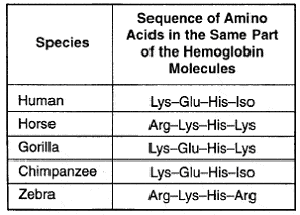
You look at two species and see very similar amino acid sequences. What does this likely tell you?
a)
These are the same animal.
b)
These animals have a common ancestor.
c)
These animals are not likely related.
d)
These animals are likely becoming one species.
24.
A flash flood carried a raft of Amazon ants away from their original population. There is enough distance between the two groups, that they will never meet in nature again. What type of reproductive barrier is this?
a)
behavioral isolation
b)
temporal isolation 
c)
gametic isolation
d)
geographic isolation 
25.
Some female peacocks prefer males with large, colorful tales while other female peacocks prefer males with no tail at all. Females are beginning to only mate with the type of males with the tail they prefer. What type of reproductive barrier is this?
a)
behavioral isolation
b)
hybrid sterility 
c)
temporal isolation
d)
mechanical isolation 
26.
What is a species? 
a)
A group of organisms that can mate with each other and produce fertile offspring. 
b)
A group of organisms that can mate and produce offspring even if those offspring are infertile.
c)
A group of organisms that genetically are very different from each other. 
d)
Indivual organisms that live in the same environment. 
27.
The term for the formation of new and distinct species over the course of evolution is...
a)
speciation
b)
biological species concept
c)
reproductive barrier
d)
natural selection
28.

The emergence of new rivers or streams that separates a population from reproducing is a type of ____________ isolation.

a)

Temporal

b)

Mechanical

c)

Behavioral

d)

Geographic

29.

What is another name for natural selection?

a)

survival of the smartest

b)

survival of the fastest

c)

survival of the biggest

d)

survival of the fittest

30.

Which of the following is NOT an example of natural selection?

a)

People selectively breeding hamsters.

b)

Insect populations developing resistance to certain pesticides.

c)

Bacteria becoming resistant to antibiotics.

d)

Male birds of certain species developing colorful feathers to attract female mates.

31.

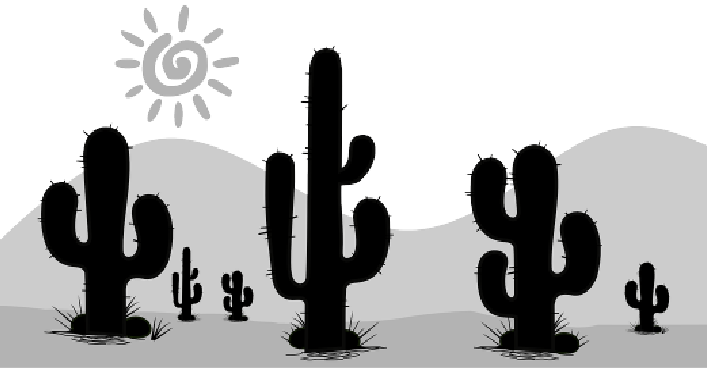
What is this an example of?

a)

diversity of species

b)

variation

c)

vestigial structures

d)

DNA studies

32.

When individuals choose traits possessed by the opposite sex it is called…

a)

Mutation

b)

Gene Flow

c)

Genetic Drift

d)

Sexual Selection

33.

Which of the following is an example of the bottleneck effect?

a)

Cheetah populations reach their lowest levels with reduced diversity and as they rebound are so genetically similar they appear to be inbred.

b)

Affected individuals with blue skin can trace their ancestry back to one of the first settlers in the region.

c)

The environment of a fox population changes and over time foxes who are white survive and pass on their genes to their offspring.

d)

Humans choose two dogs they like the characteristics of and breed them together.

34.

Which of the following is an example of the founder effect?

a)

Humans choose two dogs they like the characteristics of and breed them together.

b)

Affected individuals with blue skin can trace their ancestry back to one of the first settlers in the region.

c)

The environment of a fox population changes and over time foxes who are white survive and pass on their genes to their offspring.

d)

Cheetah populations reach their lowest levels with reduced diversity and as they rebound are so genetically similar they appear to be inbred.
35.

Natural Selection is driven by a change in the environment and survival of the

a)

Earth

b)

Fastest

c)

Fittest

d)

Biggest

36.
Change over time describes.....
a)
Speciation 
b)
Selective Breeding 
c)
Evolution 
d)
Adaptation 
37.
Genetic drift is change in the allele frequency of a population due to...
a)
random chance
b)
natural selection
c)
non-random mating (sexual selection)
d)
artificial selection
38.
 Genetic Drift is more likely to happen in... 
a)
aquatic populations
b)
small populations
c)
terrestrial populations
d)
older populations
39.
A virus killed most of the seals in the North Sea (e.g. dropped the population from 8000 to 800).  In an effort to help preserve the species, scientists caught 20 of the remaining seals and used them to start a new population in the northwest Pacific Ocean.  Which of the following statements would accurately describe the new   population?  
a)
The new seal population is genetically less diverse than the original population 
b)
The new seal population is genetically more diverse than the original population
c)
There is equal genetic variety compared  to the original population 
d)
None of the answers
40.
A change in the genetic composition of a population as a result of descending from a small number of colonizing individuals is called:
a)
founder effect
b)
bottleneck
c)
genetic drift
d)
gene flow
41.
Natural selection states that organisms are best suited for their environment if they ____________ and ____________.
a)
Survive and Reproduce
b)
Survive and Predate
c)
Survive and Parasitize
d)
Survive and Adapt
42.

According to the Skittle/bead lab, Genetic drift (bottleneck or founder) tends to ___________ genetic variation (diversity)

a)

Increase

b)

Decrease

c)

Stabilize

d)

Exaggerate

43.

(True/False) In the skittle/bead lab, genetic drift could result in the loss of a color from the population.

a)

True

b)

False

44.

When two species reproduce at a different times, the situation is called:

a)

temporal selection

b)

temporal drift

c)

temporal isolation

d)

temporal effect

45.

The formation of new species

a)

Speciation

b)

Evolution

c)

Natural selection

d)

Mutations

46.

Genetic drift is driven by chance, not Natural Selection.

a)

true

b)

false

47.

What causes competition to occur in an environment?

a)

Good conditions make resources plentiful.

b)

Organisms struggle for a limited resource.

c)

Members of a population have different roles.

d)

A population falls below the environment’s carrying capacity.

48.

Carrying Capacity is

a)

the capacity of what one person can carry per day

b)

how many animals you have in your daily bag limit at the end of the year

c)

wildebeest at a watering hole with zebras

d)

the maximum number of population size that the ecosystem can support

49.

The Red dotted line reperesents what?

a)

Carrying Capacity

b)

Average of population

50.
The image represents a population of organisms in a pattern of _____________ growth.
a)
logistic
b)
exponential