
 Worksheets
Nature of Light
Total questions: 10
Worksheet time: 8mins
Name
Class
Date
1.
Electormagnetic radiation travels through a vacuum at a speed of
a)
186,000 m/s.
b)
125 m/s
c)
3.00 x 10⁸ m/s
d)
It depends on the wavelength
2.
The wavelength of light that has a frequency of 1.20 x 10¹³ s-1 is
a)
25.0 m
b)
2.50 x 10⁻⁵ m
c)
0.0400 m
d)
2.5 m
3.
Of the following, what type of radiation has the shortest wavelength?
a)
X-ray
b)
Radio
c)
Microwave
d)
Visible
4.
What is the wavelength of light (in nm) that has a frequency of 3.22 x 10¹⁴ s-1?
a)
932
b)
649
c)
9.66 x 10²²
d)
0.00154
5.
The energy of a photon that has a wavelength of 12.3 nm is?
a)
1.51 x 10⁻¹⁷ J
b)
4.42 x 10⁻²³ J
c)
1.99 x 10⁻²⁵ J
d)
1.62 x 10⁻¹⁷ J
6.
A spectrum containing only specific wavelengths is called a ____ spectrum.
a)
Visible
b)
Line
c)
Continous
d)
Rydberg
7.
Which electron would be most likely to absorb red light?
a)
n = 2 --> n = 3
b)
n = 3 --> n = 2
c)
n = 1 --> n = 7
d)
n = 7 --> n = 1
8.

Which type of electromagnetic radiation produces the heat we can feel coming from the toaster?
a)
Radio waves
b)
Infrared waves
c)
X-rays
d)
Gamma rays
9.
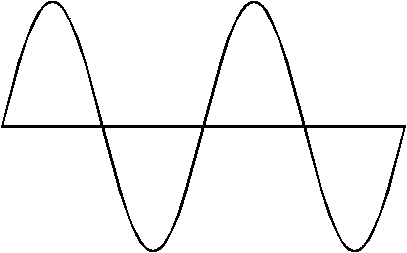
How many waves are in this picture?
a)
1
b)
2
c)
3.5
d)
4
10.
What did Einstein NOT conclude from his experiments with the photoelectric effect?
a)
Energy is quantized.
b)
Light may behave like a particle.
c)
A particle of light is called a photon.
d)
Electrons can behave like particles and like waves.
100 %

