
 Worksheets
Monache Periodic Table Test Review
Total questions: 56
Worksheet time: 46mins
Name
Class
Date
1.
Most of the volume of an atom is composed of
a)
empty space
b)
the nucleus
c)
subatomic particles
d)
protons
2.
The Atomic Mass is equal to the total number of.....
a)
protons + electrons
b)
electrons + neutrons
c)
protons + neutrons
3.
In the modern periodic table elements are arranged by:
a)
atomic mass
b)
atomic number
c)
valence electrons
d)
number of isotopes
4.
What is the atomic number?
a)
the number of protons
b)
the number of protons and neutrons
c)
the number of neutrons
d)
the number of protons and electrons
5.
What is the mass number?
a)
the number of protons
b)
the number of protons and neutrons
c)
the number of neutrons
d)
the number of protons and electrons
6.
The subatomic particle with no charge.
a)
neutron
b)
quark
c)
electron
d)
proton
7.
The subatomic particle with a positive charge.
a)
neutron
b)
electron
c)
proton
d)
nucleus
8.
The subatomic particle with a negative charge.
a)
neutron
b)
photon
c)
proton
d)
electron
9.
Electrons are found in the ___ of an atom.
a)
Nucleus
b)
Center
c)
Empty space
d)
Electron cloud
10.
Which of the following is NOT an alkali metal
a)
Li
b)
Cl
c)
K
d)
Cs
11.
When an atom gains an electron, it becomes
a)
more electronegative
b)
smaller
c)
larger
d)
more positive
12.
How many Valance electrons does Iodine Have?
a)
6
b)
16
c)
7
d)
17
13.
Which is a halogen?
a)
Helium
b)
Chlorine
c)
Oxygen
d)
Neptune
14.

The atoms along the staircase are called
a)
metals
b)
nonmetals
c)
metalloids
d)
noble gases
15.
In the modern periodic table elements are arranged by:
a)
atomic mass
b)
atomic number
c)
valence electrons
d)
number of isotopes
16.
Xenon (Xe)
a)
alkali metal
b)
alkaline earth metal
c)
halogen
d)
noble gas
17.
Gold (Au)
a)
Transition Metal
b)
Alkali Metal
c)
Alkaline Earth Metal
d)
Heavy Metal
18.

Name group 2 on the periodic table.
a)
alkali metals
b)
alkaline earth metals
c)
noble gases
d)
transition metals
19.
How many electrons does Oxygen have?
a)
8
b)
6
c)
10
20.
This element is a metal:
a)
Carbon
b)
Oxygen
c)
Iodine
d)
Silver
21.
How many electrons are in the outer shell of Sodium?
a)
1
b)
8
c)
2
22.
How many outside electrons does phosphorus have?
a)
5
b)
2
c)
8
23.
Which atom has the largest atomic radius?
a)
potassium
b)
rubidium
c)
francium
d)
cesium
24.
Which statement correctly and completely identifies a trend?
a)
Atomic radius decreases across a period and increases down a group.
b)
Electronegativity decreases across a period and decreases down a group.
c)
Ionization energy increases across a period and increases down a group.
d)
Ionic radius increases across a period and increases down a group.
25.
Atomic radius generally increases as we move __________.
a)
down a group and from right to left across a period
b)
up a group and from left to right across a period
c)
down a group and from left to right across a period
d)
up a group and from right to left across a period
26.
Generally, as you move across and down the periodic table
a)
atomic numbers decrease
b)
atomic size decreases
c)
electronegativity increases
d)
atomic mass increases
27.
If sulfur has a -2 charge, how many electrons does it have?
a)
18
b)
14
c)
16
d)
32
28.
Anything that has mass and takes up space is called
a)
volume
volume
volume
b)
matter
c)
magnetism
d)
electricity
29.
Example for physical property
a)
odor
b)
burns in air
c)
reacts with water to create hydrogen gas
d)
rust
30.
Which is an example of a physical property?
a)
rusting
b)
boiling point
c)
combustion
d)
reactivity with water
31.
Flammability (burns): Chemical or Physical Property
a)
Chemical Property
b)
Physical Property
32.
Melting Point: Chemical or Physical Property
a)
Chemical Property
b)
Physical Property
33.
Reacts with Water: Chemical or Physical Property
a)
Chemical Property
b)
Physical Property
34.
Hardness: Chemical or Physical Property
a)
Chemical Property
b)
Physical Property
35.
Luster: Chemical or Physical Property
a)
Chemical Property
b)
Physical Property
36.
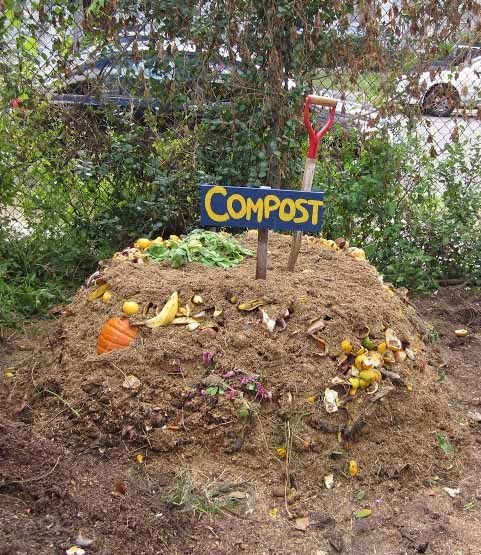
A compost pile in the backyard for the garden
a)
Heterogeneous
b)
Homogeneous
37.
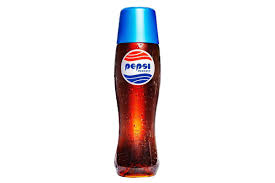
Pepsi
a)
Heterogeneous mixture
b)
homogeneous mixture
38.
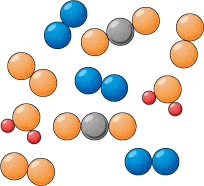
It is a pure substance containing two or more different kinds of atoms.
a)
element
b)
mixture
c)
compound
39.
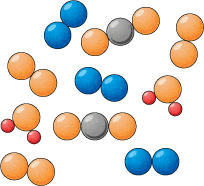
A pure substance containing only one kind of atom.
a)
element
b)
mixture
c)
compound
40.
Electronegativity is...
a)
how good an atom is at attracting electrons
b)
the ability of an atom to lose electrons
c)
the energy required to remove an electron from a specific atom
d)
how easy it is to make friends.
41.
Which of the following has six valence electrons?
a)
Sodium
b)
Iodine
c)
Oxygen
d)
Neon
42.
How do the following two elements bond together?
K1+ S2-
K1+ S2-
a)
KS
b)
K8S
c)
K6S3
d)
K2S
43.
How do the following two elements bond together?
Al3+ O2-
Al3+ O2-
a)
AlO
b)
Al2O3
c)
Al3O6
d)
Al3O2
44.
When an atom loses a valence electron, it becomes a(n) _____________ ion.
a)
positive
b)
negative
c)
neutral
d)
polyatomic
45.
Carbonate
a)
Cr2O4-2
b)
CH3COO-
c)
CO3-2
d)
CN-
46.
Cyanide
a)
CrO4-2
b)
Cr2O4-2
c)
CO3-2
d)
CN-
47.
Nitrite
a)
NO2-
b)
NO3-
c)
MnO4-
d)
NH4+
48.
Phosphate
a)
PO4-3
b)
O2-2
c)
OH-
d)
CO3-2
49.
Sulfate
a)
S2O3-2
b)
O2-2
c)
SO4-2
d)
SO3-2
50.
OH-
a)
Hydroxide
b)
Carbonate
c)
Peroxide
d)
Nitrite
51.
NH4Cl
a)
ammonium chloride
b)
ammonium chlorine
c)
nitrogen hydrogen chloride
d)
nitrogen chloride
52.
calcium phosphate
a)
CaPO4
b)
Ca2(PO4)3
c)
Ca3PO4
d)
Ca3(PO4)2
53.
Name the following ionic compound: MgSO4
a)
magnesium sulfoxide
b)
magnesium sulfide
c)
magnesium sulfate
d)
magnesium oxide
54.
C2H3O2-
a)
Acetate
b)
Nitrate
c)
Bicarbonate
d)
Carbonate
55.
Which has the same number of electrons as Cl1- ?
a)
Kr
b)
Ne
c)
K+1
d)
F-1
56.
What is NOT true of Oxygen and Sulfur?
a)
They are in group 16
b)
They have 6 valence electrons
c)
They have the same number of total electrons
d)
They tend to gain 2 electrons.
100 %

