
 Worksheets
VSEPR shapes and polarity
Total questions: 56
Worksheet time: 30mins
Linear
Bent
Trigonal Planar
Tetrahedral
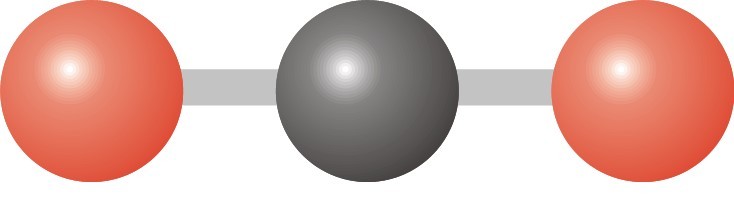
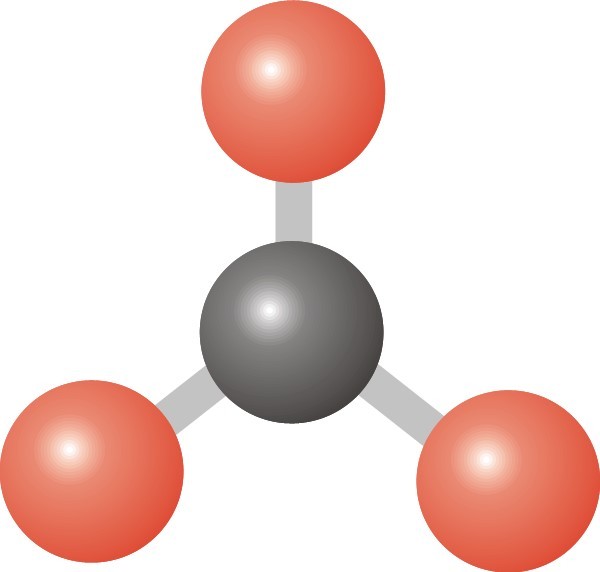
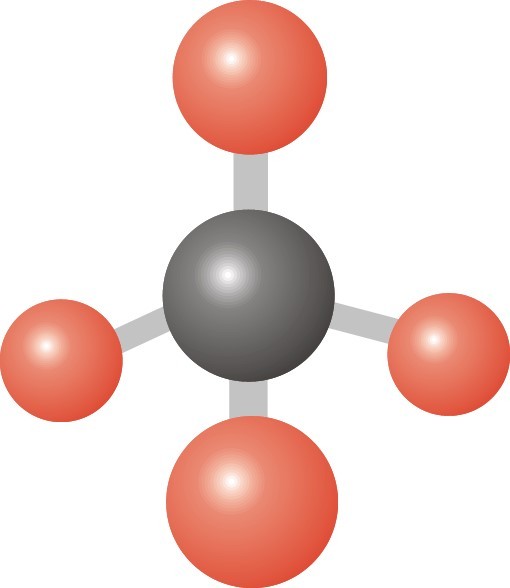
What molecular geometry would PH3 have?
Trigonal Pyramidal
Trigonal Bipyramidal
Bent
Linear


H2 is a ____ molecule.
polar
non-polar
HCl is a _____ molecule.
polar
non-polar
C-H bond in CH4 is ______.
polar
non-polar
SiCl4 is a ______ molecule.
polar
non-polar
A covalent bond is a chemical bond where two atoms share__________.
protons
neutrons
valence electrons
the same group on the periodic table
Covalent bonds form between 2 or more atoms of ______________.
metals
metaloids
nonmetals
I don't know
A molecule that has a partial positive end and a partial negative end because of unequal sharing of electrons is a _______________.
nonpolar molecule
polar molecule
ionic compound
metalic compound
Polar molecules have
no charges.
slight positive and negative charges on opposite ends of the molecules.
only positive charges.
either positive or negative charges, but not both.
Phosphorus has an electronegativity value of 2.1. Chlorine's electronegativity value is 3.0. What type of bond will these two elements form?
ionic
nonpolar covalent
polar covalent
metallic


What is the measure of the tendency of an atom to attract bonding electrons called?
ionization energy
electron charisma
dipole momentum
electronegativity

Electronegativity decreases as you move from top to bottom on the periodic table because ___
the increased electrons shield each other from the protons
there are more protons in the atoms
there are fewer electron shells
of the asymmetrical electron distribution

Electronegativity increases from left to right on the periodic table because there are ___
fewer protons in the atoms
more protons in the atoms
fewer electron shells
more electron shells
In a polar covalent bond, the electrons are shared ________________
equally
unequally
The atom closer to the electrons in a polar molecule develops ______________
a positive charge
a negative charge
no charge
The atom further from the electrons in a polar molecule develops ____________
a positive charge
a negative charge
no charge
What is the name for the separation of charges in a polar molecule
Dipole
electrogradient
charge field
Hydrogen (electronegativity 2.2) forms a covalent bond with chlorine (electronegativity 3.2). Which atom in the resulting molecule will develop a negative charge?
hydrogen
Chlorine
neither
Which of these symbols is used to represent a partial charge in a polar molecule?


Is the molecule pictured polar or non-polar?
Polar
Non-Polar

Is the molecule pictured polar or non-polar?
Polar
Non-Polar

Is the molecule pictured polar or non-polar?
Polar
Non-Polar
Is F-F a polar molecule?
yes
no
impossible to tell from the information given
The most electronegative atom in the Periodic table is _______________.
Fluorine
Francium
Neon
Phosphorous

Which of the following is true about this tetrahedrally shaped molecule?
non polar bonds, polar molecule overall
nonpolar bonds, non polar molecule overall
polar bonds, non polar molecule overall
polar bonds, polar molecule overall

Why is the molecule nonpolar?
There are nonbonding pairs on the central atom.
There are different types of elements bonded to the central atom.
The molecule is linear and both of the atoms bonded to the central atom are the same.
It just is!

Classify the following molecule.
polar
nonpolar

Is the following molecule polar or nonpolar?
polar - there are different elements bonded to the central atom
nonpolar - the central atom has no lone pairs of electrons
polar - the central atom has a lone pair of electrons
nonpolar - the atoms bonded to the central atom are all the same


Which of the following is the correct Lewis diagram for ammonia, NH3?


What would be the bond angle between atoms in this molecule?
180
120
90
109

What 3-D shape would this molecule have: H2S ?
bent
tetrahedral
linear
trigonal pyramidal
Which of these is incorrect?


Which two statments are correctly involved in determining the shape of a molecule.
How many regions of negativity there are around the central atom.
Repulsion between negative regions leads to maximum separation.
Attraction between lone pairs of electrons leads to minimum bond angle.
Double bonds have double the repulsive force leading to greater separation.
According to the Octet Rule, atoms of elements react with each other in order to attain ____ electrons in their outermost energy level or shell.
2
4
6
8
10

