
 Worksheets
Global Trade and Commercial Revolution
Total questions: 67
Worksheet time: 50mins
Name
Class
Date
1.
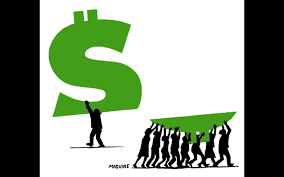
What is capitalism?
a)
government control of production and goods
b)
private control of production and goods for profit
c)
employee control of production, goods, and profit
d)
international control of production and goods for profit
2.
Colonization supported the European economic policy of mercantilism by providing what?
a)
a way to get rid of excess silver and gold
b)
a place to store raw materials for future use
c)
finished products to sell in Europe
d)
a market for selling goods
3.
What helped the middle class to grow?
a)
Guild memberships increased.
b)
Peasants made more money.
c)
More people started businesses.
d)
The nobles sold land to peasants.
4.
Which of the following was NOT a principle of mercantilism?
a)
Export more than you import.
b)
Import more than you export.
c)
Settle as many colonies as possible
d)
Gain as much gold and silver as possible.
5.
Mercantilism can best be described as what?
a)
the idea that a colony should be self sufficient and able to provide for itself
b)
the idea that a nation needs to strongly equip its colonies to defend itself in case of foreign attack
c)
the idea that the religion of a colony should differ from the religion of the mother country
d)
the idea that a nation�s power is related to its wealth and needs a favorable balance of trade with its colonies
6.
What caused Asians to close their doors to "outsiders"?
a)
Excessive trading posts
b)
Over Colonization
c)
Buddhism
d)
Christianity
7.
What did Asia do when they felt like their cultural and religious values were disregarded?
a)
started the Great Awakening
b)
declared a religious war
c)
practiced Isolationism
d)
Accepted Christianity
8.
What type of European presence could be found in Asia?
a)
Trading posts only; no colonies
b)
Several colonies spread across the continent
c)
British, French, and Spanish plantation colonies
d)
French trading post colonies
9.
Why did Europeans feel it was necessary to have slave labor?
a)
They had been raised around slave labor all of their lives.
b)
They had learned of the practice after visiting Africa.
c)
They were multiple tribal battles that forced Africans into slavery.
d)
They were needed to work on plantations because there was a shortage of natives and servants.
10.
Which country first started capturing Africans to use for slave labor?
a)
Netherlands
b)
England
c)
Portugal
d)
France
11.
What is the main characteristic of a settler colony?
a)
Large farms are established to grow cash crops
b)
Religious sects form villages with no ties to Europe
c)
Coastal ports are set up for trading purposes
d)
settlements of people establish living areas
12.
How were many English colonies governed?
a)
They elected representatives.
b)
They were ruled by the elected King.
c)
Viceroys were sent to oversee them.
d)
They had no form of organized government.
13.
What best describes the idea that a country exports more than it imports?
a)
capitalism
b)
Colonialism
c)
favorable balance of trade
d)
Mercantilism
14.
What is the taking of lands, controlling them politically and economically?
a)
Communism
b)
Mercantilism
c)
Capitalism
d)
Colonialism
15.
What is a major component of capitalism?
a)
taxes placed on imported goods
b)
government control of wealth
c)
government makes a profit
d)
private ownership
16.
What was the role of colonies under the policy of mercantilism?
a)
They produced manufactured goods forthe mother country.
b)
Colonies were forced to provide raw materials and to buy manufactured goods.
c)
They imported raw materials for good production.
d)
They competed in the global trade market.
17.
What were some things that led to capitalism?
a)
having colonies
b)
taxes and middle class
c)
mercantilism, middle class, and international trade
d)
market economy and private ownership
18.
Why were relations between Europe and Asia was amicable (friendly)?
a)
Asia had a strong trade market.
b)
They treated each other as equals.
c)
Europe feared the military power of Asia.
d)
Asia was indebted to Europe, owing them millions of dollars.
19.
What is the Middle Passage?
a)
The route taken by slaves to the New World.
b)
The route taken by raw materials to Europe.
c)
The route taken by refined materials to the New World.
d)
The route taken by refined materials to Africa.
20.
The impact of Mercantilism was that
a)
The rate of slavery in the Americas went down
b)
Trade was limited in the Atlantic
c)
The Colony grew wealthy
d)
The Mother Country grew wealthy
21.
A country will generally make money if
a)
it imports more than it exports.
b)
it has agriculture as its only form of making money.
c)
it exports more than it imports.
d)
it has ship building as its only form of making money.
22.
What was the reason Europeans started to explore during the Age of Exploration?
a)
To find a shorter route to Asia to continue trade
b)
To find new lands
c)
To spread religion
d)
To make new friends
23.
What common purpose did Spain, France, and England share for establishing colonies in the new world?
a)
They were all seeking to spread religion
b)
They all were seeking to make a profit
c)
They were all seeking to own more land
d)
They were all seeking to create plantation colonies
24.
How did the astrolabe improve navigation leading to the New World’s discovery?
a)
Allowed sailors to travel faster
b)
Allowed sailors to determine which way was North
c)
Allowed sailors to tell time
d)
Allowed sailors to determine their latitude using sun and stars
25.
Why were colonies a critical component of the practice of mercantilism?
a)
Colonies sold manufactured goods to their mother country
b)
Colonies made a profit
c)
Colonies provided inexpensive raw materials and resources.
d)
Colonies were not involved in mercantilism
26.
Cash crops were the primary source of wealth for which type of colonies?
a)
Trading post
b)
Plantation
c)
Settler
d)
Large
27.
What circumstances encouraged the Atlantic Slave Trade in North and South America?
a)
The deaths of Native Americans and the need for laborers on plantations
b)
The deaths of colonist and the need for laborersn plantations
c)
Desire to spread religion
d)
Capitalism
28.
The movement from mercantilism to capitalism increased wealth and allowed for the growth of a new social class. What was this new social class?
a)
Wealthy
b)
Nobility
c)
Upper class
d)
Middle class
29.
What was Spain’s political policy in the New World (how did they rule)?
a)
Colonist were ruled
b)
Colonist were allowed to make choices based on popular vote.
c)
Colonists were ruled by a viceroy who acted as the governor and reported to the king.
d)
Colonists were loosely governed, but had to remain loyal Catholics.
30.

Which “Big 5” country colonized the highlighted area?
a)
England
b)
France
c)
Portugal
d)
Netherlands
31.

Which “Big 5” country colonized the highlighted area?
a)
Spain
b)
Portugal
c)
France
d)
Netherlands
32.

Which “Big 5” country colonized the highlighted area?
a)
England
b)
Spain
c)
France
d)
Portugal
33.

Which “Big 5” country colonized the highlighted area?
a)
England
b)
France
c)
Spain
d)
Netherlands
34.

Which “Big 5” country colonized the highlighted area?
a)
England
b)
Spain
c)
Netherlands
d)
France
35.
The development of mercantilism, the rise of the middle class, and the developing market economy were critical to the advancement of which of the following?
a)
isolationism
b)
capitalism
c)
communism
d)
mercantilism
36.
How were these European nations able to dominate the natives of the Americas during the 1600 and 1700s?
a)
The use of the steam engine in ships by the European nations
b)
European culture and ideas were introduced to the Native Americans
c)
European scientific and technological advancements
d)
European trade practices became more advanced as a result of expansion
37.

The process of growing raw materials in the colonies and turning them into finished products that are sold is _____________. Its main goal is to make the mother country wealthy.
a)
Columbian Exchange
b)
capitalism
c)
enslavement
d)
mercantilism
38.
Under the theory of Mercantilism, how was wealth defined?
a)
The amount of gold a country had
b)
A nation's ability to produce
c)
A country's diversity in materials
d)
How many colonies it controlled and owned
39.

Who could be considered the father of Capitalism?
a)
Adam Smith
b)
John Locke
c)
Voltaire
d)
Charles-Louis Montesquieu
40.
How did England define a "favorable balance of trade?"
a)
It bought more goods than it sold
b)
It sold more goods than it bought
c)
All trade would be balanced
d)
It forced colonists to mine gold and silver
41.

The trade system developed by the colonies between Europe, the West Indies and Africa was called...
a)
Salutary or Benign Neglect
b)
Mercantilism
c)
Triangular Trade
d)
Navigation Acts
42.
Mercantilism is when
a)
Raw materials were bought cheaply by the colony and sold as refined materials to the 'Mother Country'
b)
Raw materials were bought cheaply by the 'Mother Country' and sold as manufactured goods to the colony
c)
When merchants sold their goods for high prices to working class citizens
d)
When working class citizens were forced to sell their products to make profits
43.
What products came out of England to supply its colonies?
a)
Timber and Furs
b)
Rum and Guns
c)
Manufactured Goods
d)
Slaves and Ships
44.

Based on the map, what kind of products were going from America to Europe?
a)
Cash crops
b)
Indentured Servants
c)
Food Crops
d)
Manufactured goods
45.
What was the Triangular Trade Route?
a)
New York to Baltimore to Phoenix
b)
Europe to West Africa then to the Americas
c)
Australia to China to Japan
d)
Europe to Madacascar to Swaziland
46.
the Columbian Exchange contains which of the following
a)
Animals
b)
Diseases
c)
Plants
d)
All the above
47.
in Mercantilism the colony makes (1)____ which the mother country turns into (2)___
a)
(1) technologies (2) raw materials
b)
(1) raw materials (2) finished products
c)
(1) finished products (2) raw materials
d)
(1) raw materials (2) technologies
48.
How did nations who used mercantilism decrease imports?
a)
by imprisoning people who purchased imported goods
b)
by creating propaganda about foreign-made goods
c)
by destroying all imported goods
d)
by placing high tariffs on foreign goods
49.
Who controls and regulates trade in a mercantilist economy?
a)
the indivdual citizens
b)
the government
c)
only tax payers
d)
the voters
50.
Which of the following describes a favorable balance of trade?
a)
The mother country should import more than it exports.
b)
The mother country should export more than it imports.
c)
The mother country should export the same amount of goods as other countries.
d)
The mother country should import all of its resources from other nations.
51.
What is the main goal of mercantilist nations?
a)
Gain as much gold and silver as possible
b)
Share wealth with other nations
c)
Make colonies wealthy
d)
Import many goods from other nations
52.
Large Agricultural enterprises where crops are grown for sale
a)
Plantation
b)
Farmhouse
c)
Colony
d)
Mercantilism
53.
Which group of people became the backbone of the middle class during the 1600s and 1700s?
a)
merchants and businessmen
b)
clergy and nobles
c)
peasants and farmers
d)
astronomers and mathematicians
54.
Which of the following was NOT a reason the early explorers began colonize the New World?
a)
To search for gold and riches
b)
To make friends with the Native Americans
c)
To spread their religion
d)
The explorers wanted to gain glory for their country.
55.
What new technology helped the explorers improve navigation in the 1400ś?
a)
compass
b)
astrolabe
c)
improved maps
d)
all of the choices
56.
Long, narrow ship that could carry many goods over a long distance.
a)
compass
b)
technology
c)
navigation
d)
caravel
57.
What inventions by the Arabs, made European exploration possible?
a)
GPS, satellite, radio waves
b)
Guitar, magnifying glass, algebra
c)
Coffee, toothbrush, hospitals
d)
Astrolabe, compass, triangular sails
58.
To sell to other countries
a)
Commerce
b)
Mercantilism
c)
Import
d)
Export
59.
To buy from other countries
a)
Mercantilism
b)
Commerce
c)
Import
d)
Export
60.
The idea that a country gains power By exporting more goods than they import to get more gold and silver
a)
Mercantilism
b)
Cottage Industry
c)
Commerce
d)
Wealth
61.
A settlement of people living in a new territory controlled by the homeland
a)
Slaves
b)
Cottage Industry
c)
Town
d)
Colony
62.
What was one reason the Europeans were better able to conquer native people in the new world?
a)
Europeans had better weapons and technology
b)
Europeans had more soldiers on the continent
c)
Europeans spoke the native lanquage
d)
Europeans had faster ships
63.
Which two nations led the way for European expansion?
a)
France and England
b)
England and Portugal
c)
Spain and France
d)
Spain and Portugal
64.
What was the most "deadly" weapons that the Europeans brought to the Americas killing thousands?
a)
guns
b)
gunpowder
c)
diseases
d)
spears
65.
Who had better relationships with the Native Americans?
a)
Portuguese
b)
English
c)
Spanish
d)
French
66.

What does this image represent?
a)
Middle Passage
b)
Salem Witch Trials
c)
Columbian Exchange
d)
Triangular Trade
67.
Which nation used encomienda, policy that gave settler's the right to demand taxes or labor from Native Americans living on the land
a)
Netherlands
b)
Portugal
c)
Spain
d)
French
100 %

